

Corroded aluminum door frames can make a sliding glass door look worn, feel rough, or become difficult to operate. Before ordering a new handle, check whether the real problem is the track, rollers, lock, sill, threshold, or frame.
A comfortable grip can improve daily use, but a retrofit handle won't straighten a bent stile or rebuild damaged aluminum. Start with a careful inspection, then match the repair to the failed part. The steps below show where a handle upgrade fits and when the frame needs professional attention.
Key Takeaways
- Check the rollers, track, lock, sill, threshold, and frame before replacing hardware.
- Test the door with steady pressure near the existing handle. Twisting or slamming can hide the actual problem.
- White oxidation may be cosmetic, while deep pitting, a bent stile, or a damaged sill can require professional repair or door replacement.
- Never remove a heavy glass panel without proper support and experience.
- A compatible retrofit handle can improve grip without drilling or altering the door.
- Luuv Handle fits sliding doors with a 7.25-inch by 1-inch door plate.
- The handle is made in the USA, is patented until 2037, and requires no alteration to the door and no drilling.
Inspect the Frame Before Choosing a Repair
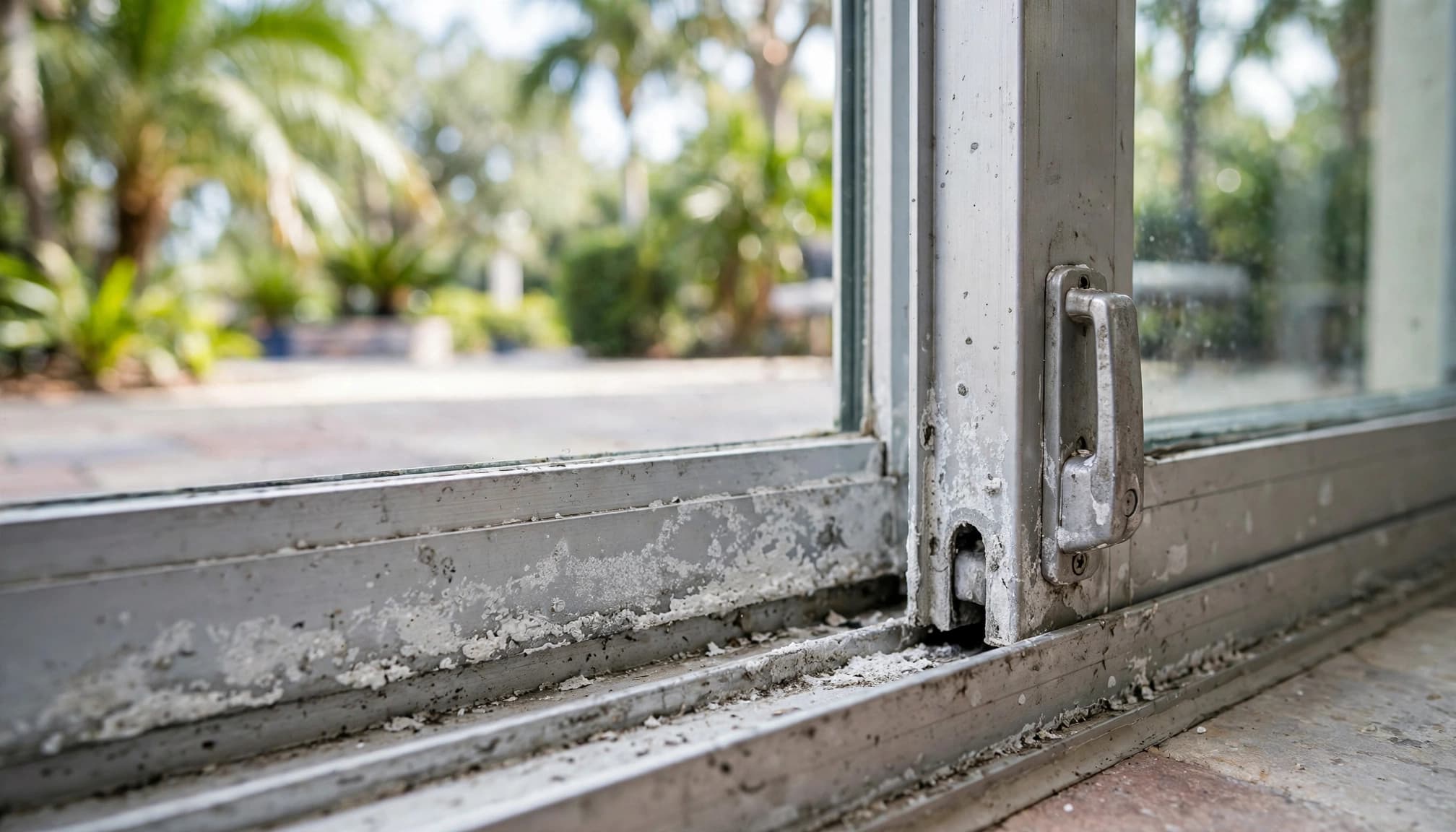
Corrosion often appears near the lower track, sill, corners, fasteners, and handle plate. Those areas collect moisture and debris, but the visible residue may not tell you how far the damage extends.
Check movement before touching the hardware
Open and close the panel slowly with steady pressure near the existing handle. The door should move with consistent resistance. Chattering, dragging, jumping, or severe grinding points to a movement problem rather than a grip problem.
Inspect the rollers and track first. Then check the lock, sill, threshold, and drainage paths. Look at the reveal around the panel as well. Uneven gaps can indicate roller misalignment or a frame that is no longer square.
If the door moves smoothly but the recessed pull is shallow, loose, or uncomfortable, the handle may be the only part that needs an upgrade.
Look for signs of structural damage
White, powdery residue can appear on aluminum with surface oxidation. However, corrosion that has caused deep pitting, flaking, holes, or a distorted frame needs a closer inspection.
Also look for:
- A bent vertical stile around the glass
- A sill that feels soft or damaged
- A jamb pulling away from the wall
- Cracks or stress marks in the glass
- Hardware screws that no longer hold securely
- A panel that cannot close evenly
Take clear photographs before removing anything. Include the lower track, handle plate, lock area, sill, and any damaged corners. These images can help a door technician identify the likely repair without asking you to remove the panel.
Can Corroded Aluminum Door Frames Be Repaired?
The answer depends on the depth and location of the corrosion. A professional may be able to address limited surface damage, but severe deterioration can affect the frame's strength, alignment, water management, or glass support.
Surface oxidation needs the right treatment
Do not choose an abrasive, chemical cleaner, coating, or sealant based only on the color of the residue. The wrong product can remove the finish, damage nearby weatherstripping, stain the sill, or hide continuing corrosion.
A qualified door professional can identify the aluminum finish and recommend a compatible cleaning or repair process. Ask whether the work will address only the appearance or also protect the affected area from more moisture.
Keep the track and drainage openings clear, but avoid adding heavy oil to the track. Oil can collect grit and create a rough paste that makes the door harder to move.
Deep damage changes the repair decision
A bent stile, badly pitted track, damaged sill, or weakened mounting area may not respond to surface treatment. Roller adjustments can correct some alignment problems, but they cannot straighten a warped frame or repair a failing rough opening.
Stop the DIY process and call a qualified sliding-door technician or contractor when the glass is cracked, the frame is bent, the jamb is damaged, or the panel grinds severely. Heavy patio doors are difficult to control, and removing one without proper support can cause glass damage or serious injury.
A new handle improves the part you grip. It does not repair the aluminum that supports the glass or carries the rollers.
Match the Repair to the Actual Problem
A sliding glass door is a system of connected parts. Replacing one part can help, but it won't correct a different failure.
Repair the track or rollers first
If the door drags, sticks, or jumps, inspect the track and rollers before changing the handle. Dirt, a damaged rail, or worn rollers can make you pull harder than usual. That extra force may loosen hardware and place stress on the frame.
A minor alignment issue may improve after controlled roller adjustment. Make small changes, test the panel after each one, and watch whether the gaps around the door become more even.
Roller replacement is more involved because the panel may need to come out of the track. Leave that work to a professional if you don't have another person, proper support, and experience handling large glass panels.
Repair the lock when security has failed
A retrofit grip is not a replacement for a failed lock. If the latch doesn't engage, the keeper is damaged, or the lock no longer holds the panel closed, address that problem first.
Lock the door and test the latch without lifting or forcing the panel. If the latch misses its keeper, roller alignment may be the cause. If the hardware itself has failed, a locksmith or sliding-door technician can match the lock, mounting points, and door thickness.
When a Replacement Handle Makes Sense
A larger grip makes sense when the panel rolls correctly, the lock works, and the original recessed pull is difficult to use. This is a separate improvement from frame repair, but it can reduce twisting and tugging during everyday operation.
Confirm the plate size before ordering
Luuv Handle retrofit products fit sliding doors with 7.25-inch by 1-inch door plates. Measure the existing plate before ordering and compare its shape and position with the product requirements.
The retrofit design installs over compatible existing hardware. The original lock and latch remain in place, so you aren't replacing the security mechanism simply to get a better grip. Review the sliding door handle retrofit FAQs before purchasing if you're unsure about compatibility.
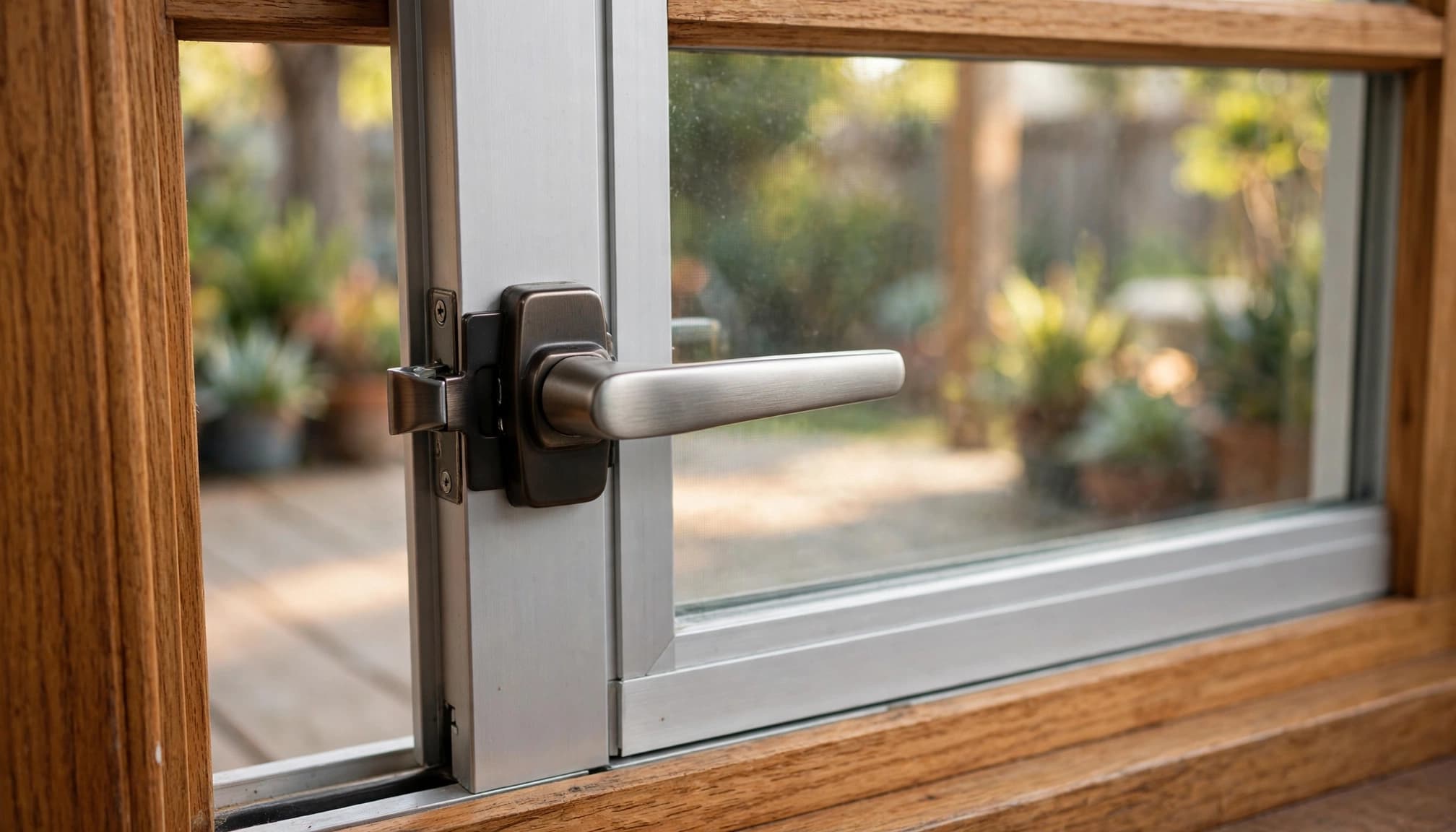
Luuv Handle is made in the USA and uses steel with a water-resistant oak grip. White and bronze finishes are available, along with interior, exterior, and inside-and-outside options. The product is patented until 2037 and requires no alteration to the door and no drilling.
Choose a handle that suits the door
An interior handle can improve access from inside the home, while an exterior model gives you a more substantial grip from the patio side. An inside-and-outside bundle can make sense when both sides are uncomfortable to use.
Check clearance with a sliding screen before installing an exterior handle. The handle should not interfere with the screen panel, latch, weatherstripping, or nearby trim.
For a bronze finish, review the bronze sliding glass door replacement handle. A white finish may blend better with light-colored frames and trim. The white sliding glass door replacement handle provides that alternate appearance.
Install the Retrofit Handle Without Drilling
The handle installation is separate from corrosion treatment. Complete any frame inspection or professional repair first, then install the grip only after the door panel moves and locks correctly.
Use the existing screws and plate
Luuv Handle's installation takes about 30 seconds when the existing plate matches the required dimensions. The process uses the current mounting hardware instead of requiring new holes.
The handle is made in the USA, is a patented product until 2037, and requires no alteration to the door and no drilling. That makes it useful for homeowners, renters, and property managers who want a more comfortable grip while preserving the original frame and lock.
Do not force the handle onto a bent, brittle, or badly corroded plate. The mounting surface must be strong enough to hold the fasteners securely.
Follow the mounting sequence
The basic installation sequence is:
- Loosen the screws from the inside of the door.
- Move to the outside and slide the bottom of the handle up over the existing plate.
- Set the top cap over the upper part of the plate.
- Pull the handle down until the cap and lower section seat correctly.
- Return inside and tighten the screws.
The sliding glass door handle installation guide provides the manufacturer's mounting sequence. Tighten the fasteners securely, but avoid excessive force that could damage a brittle or weakened plate.
Check the Door After the Repair
Open and close the glass panel several times after the frame inspection or handle installation. Use a normal grip and steady pressure. The door should move without scraping, jumping, or forcing the new handle against the frame.
Test the lock with the panel fully closed. The latch should engage without lifting, pushing, or pulling the door into position. Also check the clearance between the handle and any screen door.
If the new grip feels secure but the panel still grinds, the handle has not solved the underlying movement problem. Recheck the rollers, track, sill, and frame rather than tightening the handle further.
Schedule routine inspections twice a year. Check the track, drainage paths, seals, weatherstripping, fasteners, and visible frame surfaces. After a storm, look for new damage around the sill and exterior finish.
FAQ About Corroded Aluminum Sliding Doors
Can I repair aluminum corrosion with a new handle?
No. A new handle addresses grip and control, not damaged aluminum. It can be a useful upgrade when the frame, track, rollers, and lock still work correctly.
Does Luuv Handle fit every sliding glass door?
No. The verified fit is for sliding doors with a 7.25-inch by 1-inch door plate. Measure the existing hardware and check the compatibility information before ordering.
Do I need to drill or remove the original handle?
No. The retrofit design installs over compatible existing hardware. It requires no alteration to the door and no drilling, while the original lock and latch stay in place.
When should I call a professional?
Call a qualified technician or contractor when the glass is cracked, the aluminum stile is bent, the jamb is damaged, the sill feels soft, or the panel grinds severely. Professional help is also appropriate when removing the heavy glass panel or replacing rollers.
Conclusion
Repairing a corroded aluminum sliding door frame starts with identifying the actual failure. Check movement, rollers, track, lock, sill, threshold, and frame condition before buying replacement hardware.
When the door operates properly but the original pull is hard to grip, a compatible retrofit handle can improve daily use without drilling or altering the door. Luuv Handle is made in the USA, patented until 2037, and designed to fit over qualifying existing hardware. The right repair protects the frame while giving you a better grip where you use the door every day.