

A gap beside your patio door deserves attention before you reach for a tube of caulk. Sliding glass door frame repair starts with identifying what has separated and whether the door remains safe to use.
Your first priority is frame stability, especially if the gap is growing or the panel has become difficult to move. A replacement handle can improve grip later, but it won't secure a loose frame.
Start by checking the visible joint without dismantling the door.
Key takeaways before you touch the door
- Stop using the door if the frame moves, the glass is cracked, or opening requires force.
- Photograph the separation and nearby damage before arranging an assessment.
- Keep frame repairs separate from handle upgrades; a retrofit grip belongs on a stable, properly operating door.
The cause needs to be identified before choosing a repair. Covering the gap can hide the condition without resolving it.
Start sliding glass door frame repair with a safe inspection
Look at the door from inside and outside, wherever you can do so safely. Keep the glass panel in place.
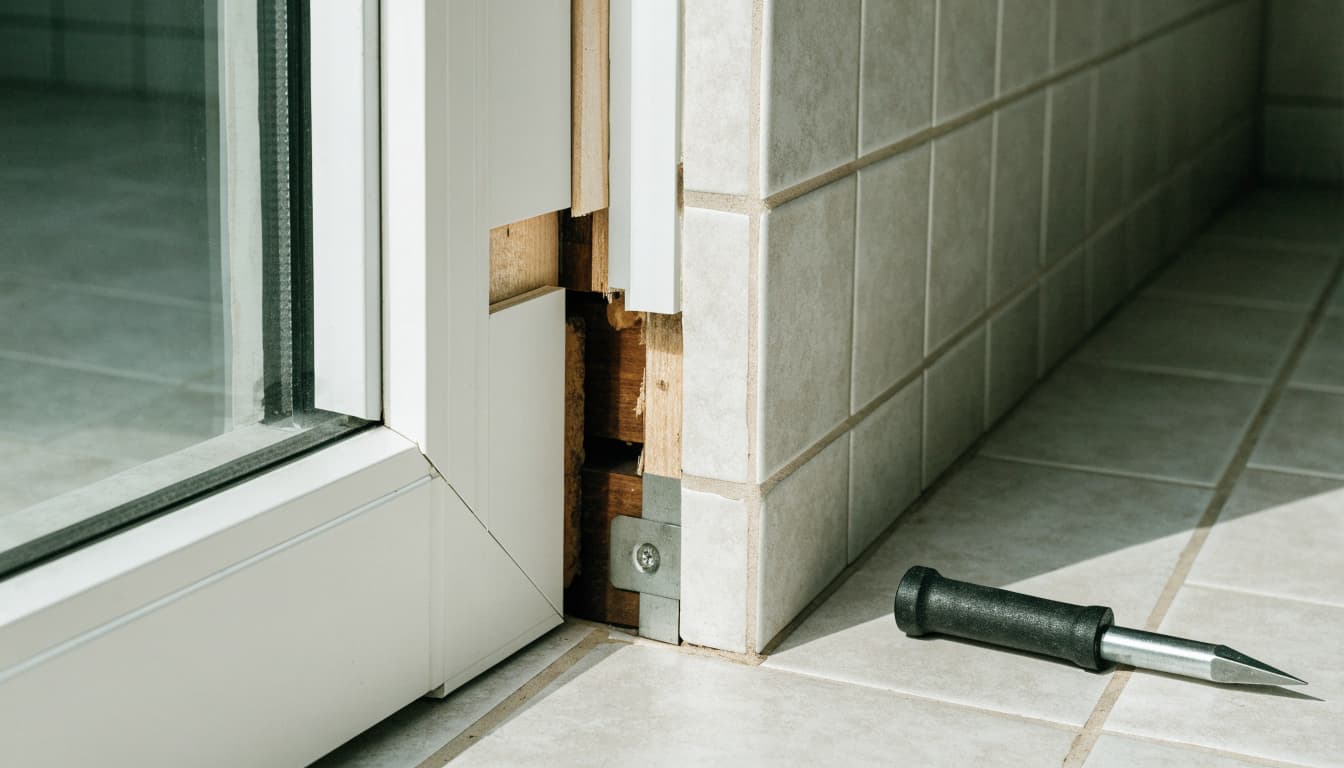
Identify which part appears separated
The perimeter frame surrounds the opening. The moving glass panel travels within it, while decorative trim covers the joint beside the wall.
Look closely at where the gap begins and ends. A separation beside trim doesn't establish that the frame itself has moved. Likewise, a crooked panel doesn't prove the wall connection has failed.
Take photographs of the full doorway and close-ups of the affected joint. Record the date and visible gap width without inserting anything into the opening. Those details help a contractor understand whether the condition is changing.
Recognize warning signs that need prompt help
Active interior leaks, stained trim, soft flooring, and blackened or crumbly material deserve professional assessment. A widening gap or visible frame movement also calls for prompt attention.
Don't pry up the frame, remove the glass, or pull away trim to investigate. Disassembly can expose concealed damage and protective layers that require professional handling.
If you rent, report the condition to your landlord or property manager. Send the photographs and explain whether the door still closes and locks.
Check door movement without forcing the panel
Only test operation if the glass appears intact and the frame feels stable during normal use. Stop immediately if anything shifts or grinds severely.
Notice where resistance occurs
Open the door slowly using its existing handle. Observe whether resistance occurs at one location or throughout the travel.
A repeated catch deserves inspection of that section of track. Visible debris may explain resistance, but it doesn't establish why the frame-to-wall joint has separated.
If the panel drags throughout its travel, a technician should check the rollers and alignment alongside the frame. Don't lift the panel by its handle or tug harder to complete the test.
Describe the symptom precisely when booking service. "It catches halfway open" is more useful than "the whole door is broken."
Check the latch without changing it
Close the door gently and see whether the latch meets its strike without lifting or pushing the panel sideways. A latch that suddenly misses needs assessment before you order replacement lock parts.
Record whether the locking problem appeared before or after you noticed the gap. That sequence gives the technician useful context.
A working latch doesn't prove the frame's connection to the wall is sound. Security hardware and frame stability need separate checks.
If the door won't secure, arrange prompt service and avoid relying on it as a locked entrance.
Choose a repair plan after the cause is identified
A qualified sliding-door technician or contractor should assess the separation before recommending work. The plan should address the findings, not simply make the joint look tidy.
Establish whether the existing door is serviceable
Ask the contractor to evaluate the perimeter frame, surrounding opening, glass, sill, panel movement, and locking hardware. These checks determine whether repairing the existing installation is appropriate.
Request a clear explanation of what has separated and what evidence supports the diagnosis. The visible gap alone isn't enough to select a repair.
Don't pull the jamb toward the wall or fill the opening before this assessment. Either action can obscure the original condition.
For impact-rated doors, choose someone familiar with the door system and its installation requirements. Keep any available manufacturer information ready.
Compare repair with complete replacement
A complete replacement may be worth considering when the frame has extensive damage, the insulated glass has failed, or several components need work.
However, a gap doesn't automatically mean you need a new patio door. Ask for separate repair and replacement proposals when both are reasonable options.
Compare what each proposal restores, including secure mounting, weather protection, smooth movement, and dependable locking. Replacement involves more than selecting a new handle or panel.
Leave heavy glass removal to qualified professionals. They can manage the panel safely and assess the surrounding opening as part of the job.
Compare quotes by scope, not just price
Sliding glass door frame repair quotes are useful only when they describe comparable work. A low figure may cover an inspection or cosmetic finish rather than the complete problem.
Use these questions to clarify each proposal.
| Quote detail | What to ask |
|---|---|
| Diagnosis | What has separated, and how was that confirmed? |
| Included work | Does the price cover the identified frame problem and associated damage? |
| Completion checks | Will you test door movement, locking, and the repaired connection? |
| Warranty | Which labor and materials are covered, and for how long? |
Choose the proposal with a clear scope before comparing the totals.
Ask how the contractor will handle concealed damage discovered during the work. Written approval for additional charges helps prevent surprises.
Also confirm whether the estimate includes finishing work, cleanup, and disposal if replacement is necessary. Those items can affect the final cost.
Send photographs and the door's manufacturer information before the appointment, if available. However, don't expect photographs alone to establish the condition behind the visible joint.
Keep the completed invoice and any warranty documentation. If the separation returns, the original findings and repair scope will help the next assessment.
Test the finished door and keep drainage clear
Before accepting the completed work, open and close the door several times with steady pressure. The panel should travel without severe scraping, jumping, or a need to lift it.
Check that the latch engages without forcing the panel sideways. Then review the repaired joint with the contractor and ask which changes would warrant another visit.
Keep accessible tracks and drainage openings clear of debris. Exterior doors need their intended drainage paths to remain open, so don't cover those openings during cleaning or cosmetic work.
Inspect seals, weatherstripping, and the surrounding finish twice a year. After storms, check for fresh staining, interior moisture, or changes at the frame-to-wall joint.
If a gap reappears, photograph it and contact the contractor rather than repeatedly covering it. Recurring separation needs another assessment.
Maintenance helps you notice trouble early. It doesn't replace a sound repair or confirm that a concealed connection is secure. Keep using the manufacturer's care instructions for your particular door.
Upgrade the handle only after the frame is secure
Once the door slides, closes, and locks correctly, consider whether the existing pull still feels awkward. A sliding glass door replacement handle addresses grip as a separate issue.
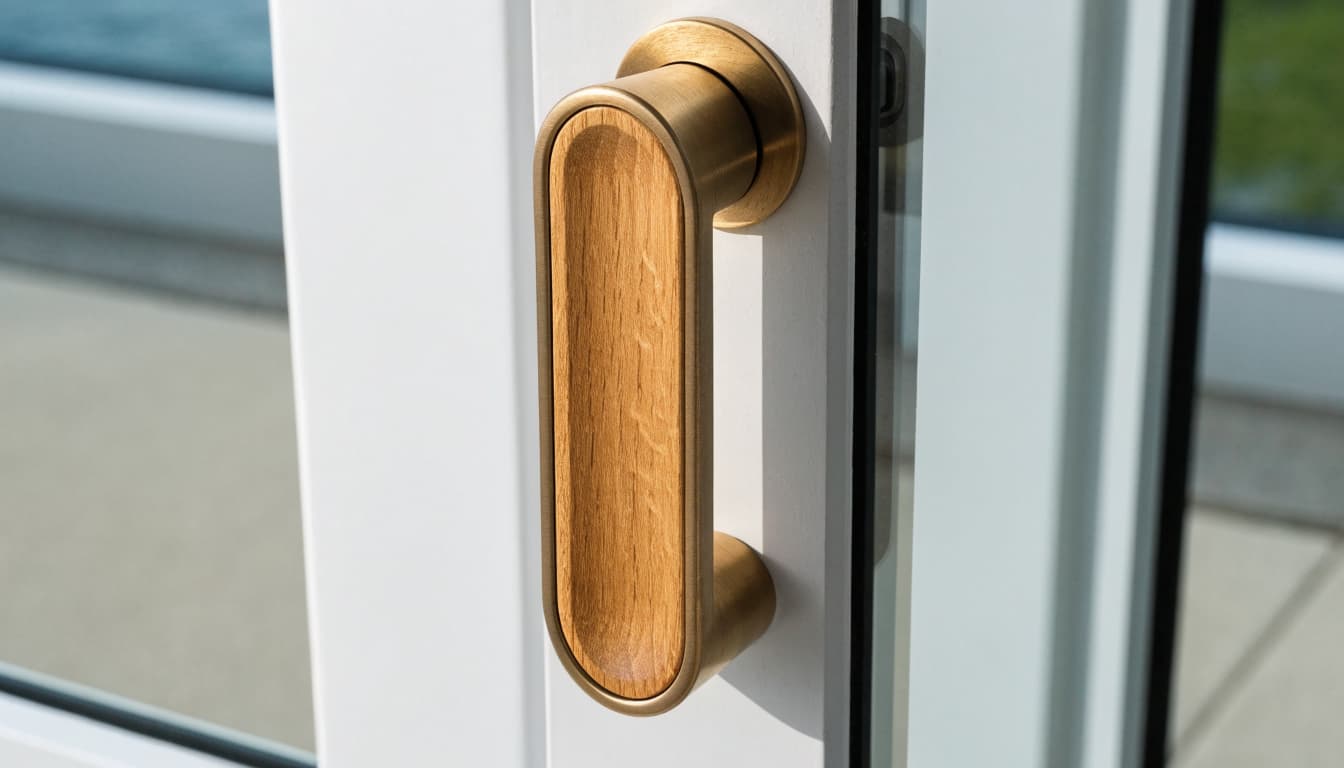
Measure before choosing a retrofit
Luuv Handle retrofit products fit sliding doors with 7.25-inch by 1-inch door plates. Measure the existing plate and review the sliding door handle retrofit FAQs before ordering.
Confirm the correct interior or exterior model and check clearance with any sliding screen. A compatible grip shouldn't interfere with normal door operation.
The retrofit fits over existing hardware rather than replacing the locking mechanism. Your original lock and latch remain in place, so they need to work properly first.
A larger handhold won't correct a separating frame, damaged track, or failed latch. Resolve those conditions before upgrading the grip.
Keep the upgrade separate from structural work
Luuv Handle is made in the USA by a veteran-owned Southwest Florida business. It uses steel and water-resistant oak, with white and bronze options.
It's a patented product protected until 2037. The retrofit requires no alteration to the door and no drilling, preserving the existing hardware.
Luuv Handle describes installation as taking about 30 seconds on compatible doors. The sequence involves loosening the interior screws, fitting the retrofit over the plate, seating it, and retightening the screws.
Follow the sliding door handle installation instructions for the complete mounting sequence. Afterward, check the grip, screen clearance, and latch operation.
Frequently asked questions about frame separation
Can I close the gap with caulk?
Don't treat caulk as a frame repair. Have the separation assessed first, because covering the joint doesn't establish whether the frame is secure. Any finishing work should follow the confirmed repair plan.
Will roller adjustment fix the frame?
Roller adjustments change the moving panel's position. They don't establish or restore the perimeter frame's connection to the wall. A technician should distinguish panel alignment problems from the visible separation before recommending work.
Can a new handle stop the frame pulling away?
A handle upgrade improves the handhold on a compatible, working door. It doesn't secure the frame to the wall. If you need extra force to move the panel, address that resistance before installing a retrofit grip.
Repair the connection before improving the grip
Successful sliding glass door frame repair depends on a confirmed diagnosis and work that addresses the separation. A tidy-looking joint alone doesn't establish frame stability.
Once the door is secure and operates correctly, a compatible retrofit handle can make daily use more comfortable. Keep those jobs separate: repair the door's connection first, then improve the handhold.