

Seeing haze inside your patio door glass can make a clean room look neglected, but moisture between panes usually points to a failed seal, not dirty glass. A foggy sliding glass door often looks worse in humid weather, yet the real problem sits inside the sealed insulated glass unit where a cloth cannot reach.
That distinction matters because wiping the surface won't restore insulation, while replacing the entire door may be unnecessary. First identify the moisture source, then choose the repair that fits the glass and hardware.
Why a foggy sliding glass door gets cloudy between panes
Insulated glass units contain two panes separated by a spacer. The space between them holds sealed air or insulating gas, and a seal around the edges keeps outside moisture away from the cavity.
The insulated glass seal has failed
Over time, the edge seal can weaken because of age, strong temperature changes, sunlight, impact, or movement in the frame. Once the seal develops a gap, humid air enters the space between the panes.
That moisture condenses on the inner surfaces of the glass. The result may look like a soft gray film, white haze, or visible droplets that appear and disappear with changing temperatures.
Sliding doors in warm, humid areas often show this problem sooner because the glass experiences frequent heat cycles. However, age and seal quality matter more than climate alone.
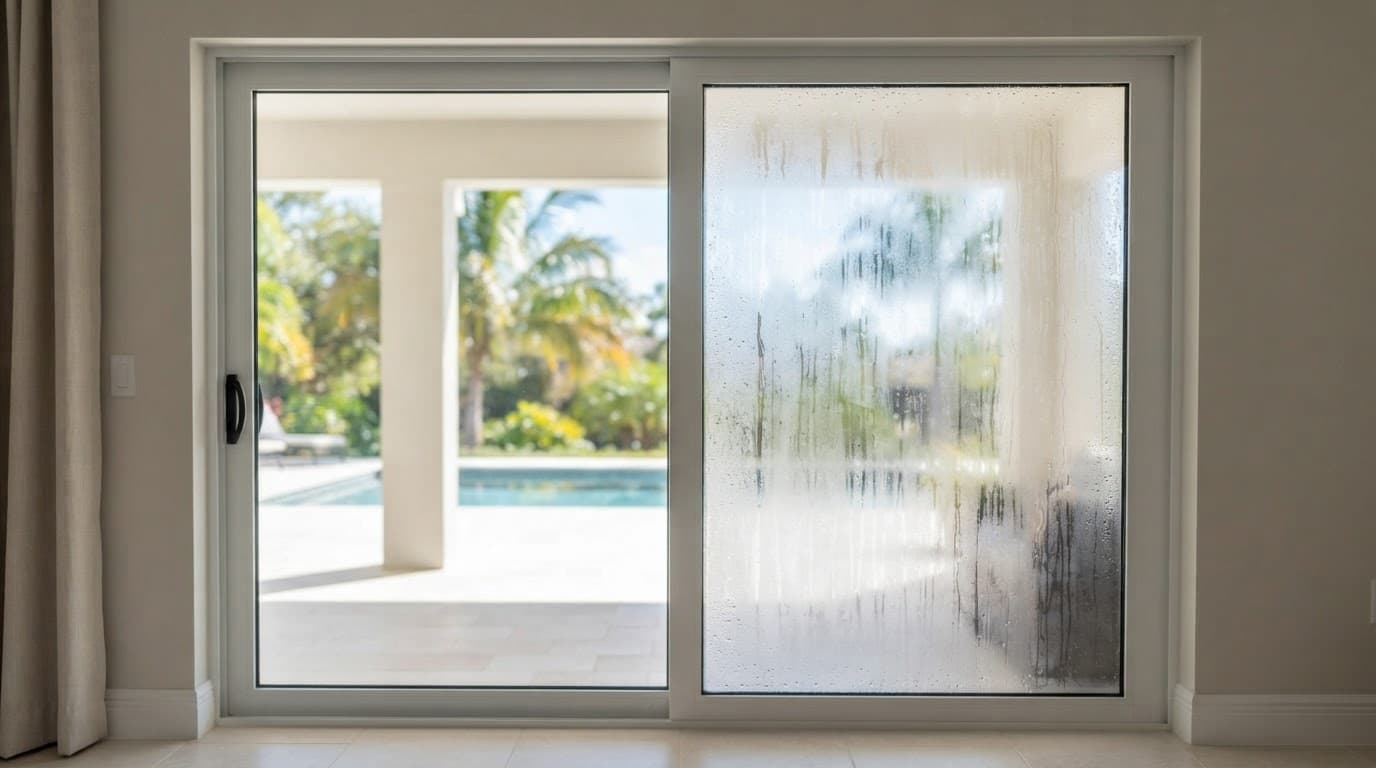
Why the haze won't wipe away
Surface cleaning only reaches the outside faces of the glass. It cannot remove condensation trapped inside the sealed unit.
A failed seal can also reduce the door's insulating performance. The panel may allow more heat transfer, which can increase indoor discomfort and make heating or cooling less efficient. The cloudy appearance is the most obvious warning, but lost insulation is another reason to address it.
Surface condensation or a failed seal?
Not every cloudy sliding door has damaged insulated glass. Condensation can form on the room side when warm, humid indoor air touches cold glass. Outdoor condensation can also appear when humid air meets a cooler exterior pane.
The location of the moisture provides the first clue.
Condensation on the surface
If the moisture wipes away with a dry or slightly damp cloth, it sits on the surface. Indoor humidity, poor air circulation, and a large temperature difference can cause this type of fogging.
Bathrooms, kitchens, and rooms with open doors to humid patios are common trouble spots. A dehumidifier, better ventilation, or improved airflow may reduce the problem.
Outdoor moisture can be normal, especially in the morning. It doesn't automatically mean the glass has failed.
Condensation between the panes
Run a cloth across both sides of the panel. If the haze remains in the same place, the moisture is likely inside the insulated glass unit.
Look closely at the edges, too. Fogging that begins around the perimeter often points to seal failure. If droplets remain trapped after the outside surfaces are clean, cleaning products won't solve it.
Moisture that stays visible after both glass surfaces are wiped is usually inside the sealed unit, not on the door.
What fixes a foggy sliding glass door?
For a foggy sliding glass door, the standard solution is to replace the failed insulated glass unit. A glass contractor or qualified door company can remove the old panel and install a new sealed unit in the existing frame.
Replace the insulated glass unit
Replacing only the glass usually costs less disruption than replacing the complete door. The new unit must match the opening's width, height, thickness, spacer design, and safety requirements.
Ask the contractor to confirm whether the original panel uses tempered glass, Low-E coating, or a particular tint. Sliding patio doors commonly use safety glass, so the replacement should match the door's original specifications and local requirements.
If the frame remains straight and the rollers, lock, and track work well, glass replacement may be all you need.
Consider a full door replacement
A complete door may make more sense when the frame is warped, the track is badly damaged, the rollers have failed, or the lock no longer works. Full replacement also gives you the chance to improve energy performance and update the frame.
Before choosing that route, check the door warranty. Some manufacturers cover insulated glass seal failures for a limited period, even when the rest of the door remains in good condition.
Measure before ordering replacement glass
Accurate measurements prevent delays and expensive ordering mistakes. Don't rely on the visible glass size alone.
Record the opening details
Measure the visible panel and the frame opening, then confirm the glass thickness if possible. A professional can verify the exact dimensions after removing the stops or old unit.
Write down the door manufacturer, model number, tint, coating, and whether the panel is fixed or slides. Photos of the frame, rollers, lock, and glass edges can also help a contractor identify the correct replacement.
Check the surrounding hardware
A foggy panel and a difficult handle are separate problems, but both affect daily use. Test the rollers and lock while the door is open. If the door drags, forcing it can place extra stress on the frame and replacement glass.
Repair worn rollers before installing new glass when possible. A door that moves smoothly puts less strain on its seals and hardware.
When a replacement handle is the better upgrade
Fogged glass requires glass work, but a hard-to-grip handle doesn't require a new door. A Sliding Glass Door Replacement Handle can improve opening and closing when the original recessed pull is too small, loose, or uncomfortable.
Luuv Handle's retrofit design fits over most standard existing sliding door handles with a 7.25-inch by 1-inch door plate. It keeps the original lock and latch in place, so you don't need to remove the original hardware.
The Luuv Handle is made in the USA and is a patented product until 2037. The retrofit requires no alteration to the door and no drilling. Installation takes about 30 seconds by loosening the inside screws, sliding the handle into position, and tightening the screws again. Follow the Luuv Handle installation instructions for the complete process.
Choose the right handle setup
An interior handle works well when you mainly need a better grip from inside the home. An inside-and-outside set makes the door easier to operate from both sides, which helps on patios, lanais, balconies, and rental properties.
Luuv Handle offers white and bronze finishes, with steel and water-resistant oak construction. Before ordering, confirm your door plate measurements and review the sliding door handle retrofit FAQs if you're unsure about compatibility.
A handle upgrade won't clear moisture trapped inside the glass. It can, however, address the separate problem of difficult operation while you repair or replace the failed panel.
Reduce the chance of future fogging
You can't restore a failed glass seal with household cleaner. Still, regular door care can reduce stress on the frame and help the replacement last.
Keep the track free of grit, leaves, and pet hair. Clean the rollers and adjust them when the panel begins to drag. Avoid slamming the door, and inspect the frame after storms or impact.
Control indoor humidity when surface condensation appears. Use bathroom exhaust fans, improve airflow, and keep furniture from blocking nearby vents. These steps won't repair a failed insulated unit, but they can prevent confusion between normal surface moisture and condensation between panes.
Conclusion
Moisture trapped between sliding door panes usually means the insulated glass seal has failed. Replacing the sealed glass unit is often enough when the frame, rollers, and lock still work properly.
A new handle solves a different issue. If the door is difficult to grip, a Made in the USA Luuv Handle adds a stronger hold without drilling or altering the door. Diagnose the glass first, then choose the repair that matches the actual problem.