

White spots on your patio door can spoil the view, even when the door works perfectly. Removing hard water stains from glass starts with confirming that the marks are surface deposits, then following the door manufacturer's approved cleaning instructions.
However, cloudy glass can also point to surface damage or moisture inside a sealed unit. Identifying the cause helps you avoid paying for cleaning when the pane needs repair.
Start by checking where the marks sit and what type of glass your sliding door has.
Key Takeaways
- Surface mineral deposits, etched glass, and moisture between panes need different solutions.
- The door manufacturer's care instructions should guide stain removal, particularly when the glass has a coating or film.
- A sliding glass door replacement handle addresses an uncomfortable grip, while glass cleaning addresses the view.
Treat the glass, movement, and hardware as separate maintenance issues. That makes it easier to choose work that solves the problem.
Identify Hard Water Stains on Sliding Door Glass
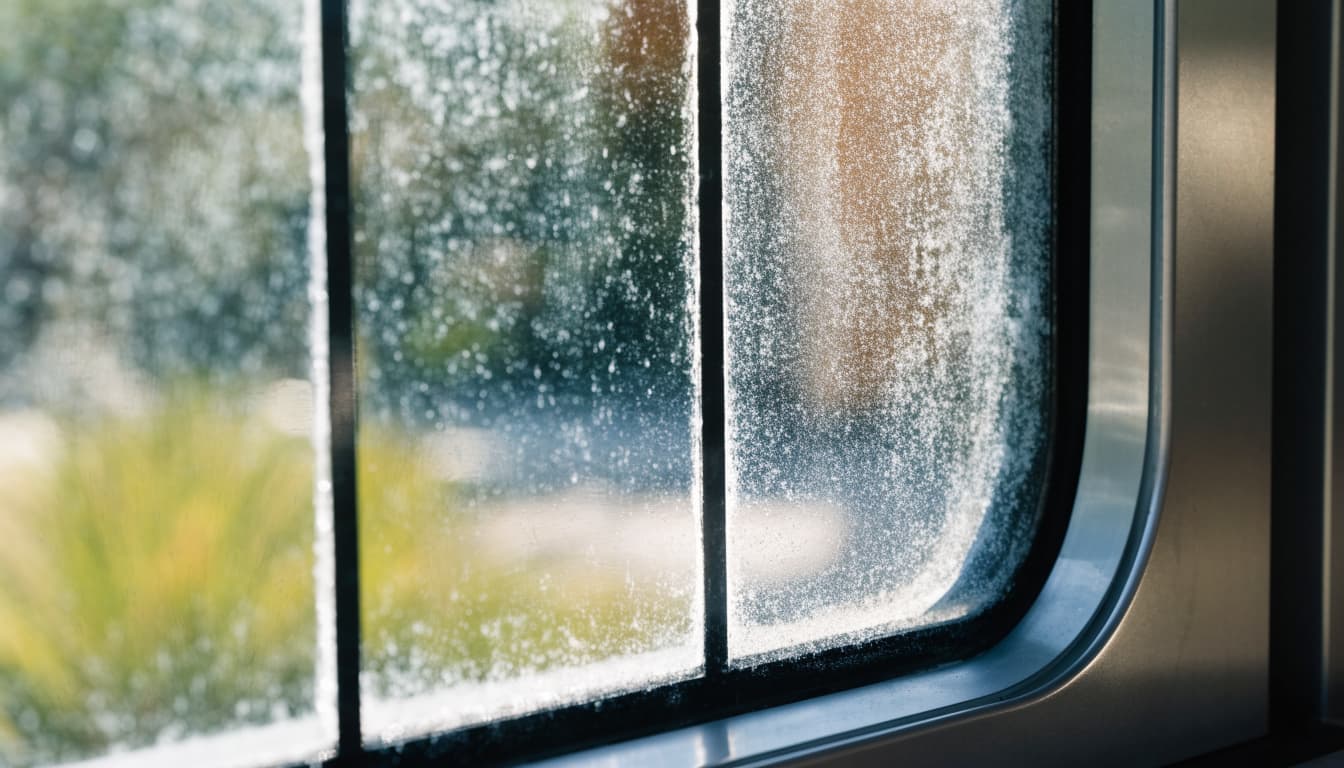
Hard water contains dissolved minerals, including calcium and magnesium. When droplets evaporate, those minerals can remain on the glass as spots or a cloudy film.
Look for deposits on an exposed surface
Mineral marks often resemble pale rings, scattered white dots, or streaks along a recurring water path. On an exterior slider, their location may correspond with sprinkler spray or runoff.
However, appearance alone doesn't prove that hard water caused the marks. Construction residue, salt deposits, and ordinary grime can also affect clarity. Describe both the pattern and its location when discussing the door with a cleaning professional.
A useful description is more precise than "the glass is dirty." Note whether the marks cover the whole pane or cluster near one edge.
Separate surface marks from internal haze
A double-pane door has an enclosed space between its panes. If the cloudiness sits inside that space, cleaning the exposed surfaces won't reach it.
Moisture between panes often points to a problem with the insulated glass unit's seal. That calls for a glass-service assessment rather than a stain-removal appointment.
Surface etching creates another complication. Deposits sit on the glass, while etching changes the surface itself. A professional can assess whether the remaining haze is removable residue or permanent damage.
Check the Glass Before Choosing a Cleaning Method
Sliding doors can contain different glass types, coatings, and aftermarket films. The correct care instructions depend on what is present on the surface you intend to clean.
Find the door's care documentation
Look for the manufacturer's name in your purchase records, warranty paperwork, or door identification information. For example, Andersen, Pella, and Milgard publish care information for their products.
Match the guidance to your door model when possible. Instructions for ordinary exposed glass may differ from instructions for specialty finishes or applied films.
If you inherited the door with the home, the original installer or manufacturer may help identify it. Mention any known tinting, replacement glass, or later modifications because those details can change the applicable care requirements.
Confirm whether a coating or film is present
A tinted appearance doesn't tell you whether the glass itself is tinted or an applied film creates the color. Likewise, a low-emissivity designation doesn't identify every accessible surface treatment.
Ask which surface the manufacturer's cleaning directions cover. For aftermarket window film, the film manufacturer's instructions also matter.
Product compatibility comes first. A method suitable for one pane shouldn't become the default for every sliding door. This matters most when the door's glass history is unclear or a previous owner added a treatment.
Plan Stain Removal Around the Manufacturer's Instructions
Once you establish that the marks are surface deposits, use the manufacturer's approved process as your starting point. General household advice doesn't account for every glass finish, frame material, or installed film.
The following information helps you obtain useful guidance:
- Identify the door model and any known glass treatment.
- Describe which side has stains and where the deposits are concentrated.
- Explain any previous cleaning attempts and their results.
- Ask for the approved procedure for mineral deposits on that surface.
This preparation gives customer support or a service provider something concrete to assess. It also helps distinguish routine care from restoration work.
Clarify what the instructions cover
Care instructions may discuss ordinary dirt without addressing established mineral buildup. If that happens, ask the manufacturer how its guidance applies to your stains.
Also clarify whether the procedure covers the glass only or nearby frame and hardware surfaces. A sliding door combines several materials, so one care recommendation may not apply to everything surrounding the pane.
Set a realistic result before work begins
Ask whether the proposed work aims to remove deposits, improve clarity, or assess possible surface damage. Those are different outcomes.
A provider shouldn't promise flawless glass before determining whether the haze includes etching. Agree on how the finished result will be evaluated.
This is particularly useful for large patio doors, where a small clear area can look encouraging while the rest of the panel still needs assessment.
Choose a Professional for Persistent Mineral Buildup
Professional help makes sense when the glass type is uncertain or the marks remain after manufacturer-approved care. Look for someone who understands the difference between cleaning glass and restoring a damaged surface.
Ask about comparable glass experience
Describe the door as a sliding patio door, rather than requesting a general window-cleaning quote. Include whether the affected pane faces indoors or outdoors and whether it has a known film.
Ask whether the provider has handled mineral deposits on comparable glass. Also ask how they determine whether a surface is etched.
A clear explanation of the assessment is more useful than a blanket promise to remove every mark. The provider should distinguish what they can clean from what may require a glass specialist.
Compare the scope of the quotes
Two quotes may cover different work. One could include routine cleaning of both sides, while another includes an assessment of persistent deposits.
Check whether the quote includes the fixed panel as well as the moving panel. Frames, tracks, and screens may be separate services.
Also ask how the provider handles stains that remain after the agreed work. A written scope should explain what you are buying and which results aren't guaranteed.
Moisture between panes is beyond the reach of surface cleaning. Make sure a quote addresses the location of the haze, not simply its appearance.
Judge the Result Before Considering Glass Replacement
A clearer pane after cleaning supports the conclusion that at least some of the cloudiness came from surface deposits. However, remaining marks deserve another assessment before you authorize more work.
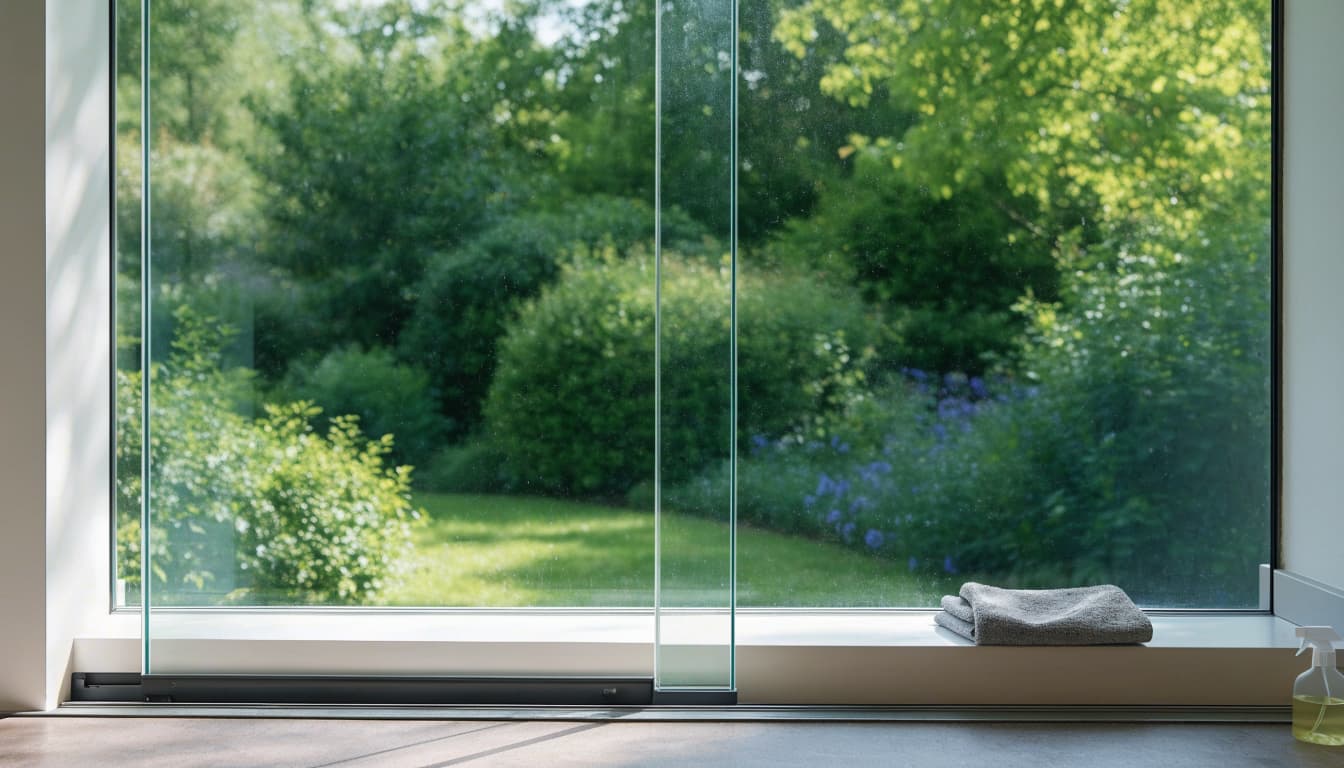
Ask the provider to distinguish remaining deposits from scratches, etching, or internal moisture. Each finding leads to a different decision.
Surface damage may require a glass-restoration assessment. Moisture inside an insulated unit requires evaluation by a glass or door specialist. Neither diagnosis automatically means the entire sliding door needs replacement.
The frame, moving panel, rollers, and locking hardware also matter. When those parts remain serviceable, the appropriate work may focus on the glass unit rather than the complete door.
Keep the assessment and quote specific. "Cloudy patio door" describes a symptom; "mineral deposits on the exterior surface" or "moisture between panes" identifies a problem that someone can price.
Before comparing replacement proposals, ask exactly which component each contractor intends to replace. A pane, an insulated glass unit, a moving panel, and a complete door are different scopes.
Address an Uncomfortable Handle as a Separate Upgrade
Clear glass improves the view, but it doesn't change how the door feels in your hand. Likewise, a new grip won't remove mineral stains or repair damaged glass.
Check door movement before changing the grip
Assess the track, rollers, lock, sill, and threshold before ordering hardware. A panel that drags or grinds needs its movement problem addressed first.
Meanwhile, a smoothly moving door can still have a shallow recessed pull that's uncomfortable to use. In that situation, a retrofit handle can provide a more substantial handhold.
The existing latch should still engage correctly. A handle upgrade complements working hardware; it doesn't rebuild a failed lock or correct a bent track.
Match a retrofit handle to the existing plate
Luuv Handle fits over compatible existing hardware with a 7.25-inch by 1-inch door plate. Review the sliding door handle retrofit FAQs and confirm those dimensions before ordering.
Luuv Handle is made in the USA, is a patented product protected until 2037, and requires no alteration to the door and no drilling. Its steel construction and water-resistant oak grip are available in white and bronze.
The retrofit leaves the original lock and latch in place. For a compatible door, installation uses the existing mounting hardware rather than creating new holes.
Also check clearance with any sliding screen. A comfortable grip should fit the complete doorway arrangement, not just match the frame's finish.
Frequently Asked Questions
Does cloudy sliding door glass always have hard water stains?
Cloudiness has several possible causes. Mineral deposits can sit on an exposed surface, but scratches, etching, and moisture between panes can also reduce visibility.
The location of the haze is the first distinction to make. Surface cleaning can address accessible deposits; it can't reach moisture enclosed inside an insulated glass unit.
A manufacturer's care instructions or a professional assessment can help establish which problem you have. That's a better basis for deciding on cleaning or repair than appearance alone.
Can I upgrade the handle without replacing the door?
Yes, when the door and existing hardware are compatible with a retrofit product. Luuv Handle fits over the existing plate while retaining the original lock and latch.
Its sliding door handle installation guide explains the mounting sequence: loosen the interior screws, position the handle over the plate, seat the top cap, and retighten the screws.
Confirm fit before installation. A larger grip can improve control on a working slider, but roller trouble, a damaged frame, or a failed latch requires a separate repair.
Restore the View by Matching the Fix to the Cause
Removing hard water stains from sliding door glass begins with a surface-deposit diagnosis and care instructions matched to the pane. Persistent haze deserves an assessment before you commit to restoration or replacement.
Keep glass clarity and door operation separate. The right glass service restores the view where possible, while a compatible handle upgrade addresses an uncomfortable grip.