

A replacement handle can look perfect online and still fail to fit your door. The difference often comes down to one overlooked number: the spacing between the mounting screws.
Before you buy a Sliding Glass Door Replacement Handle, take a few careful measurements. When you measure sliding door handle dimensions correctly, you can compare products with confidence and avoid a return trip.
How to Measure a Sliding Door Handle Accurately
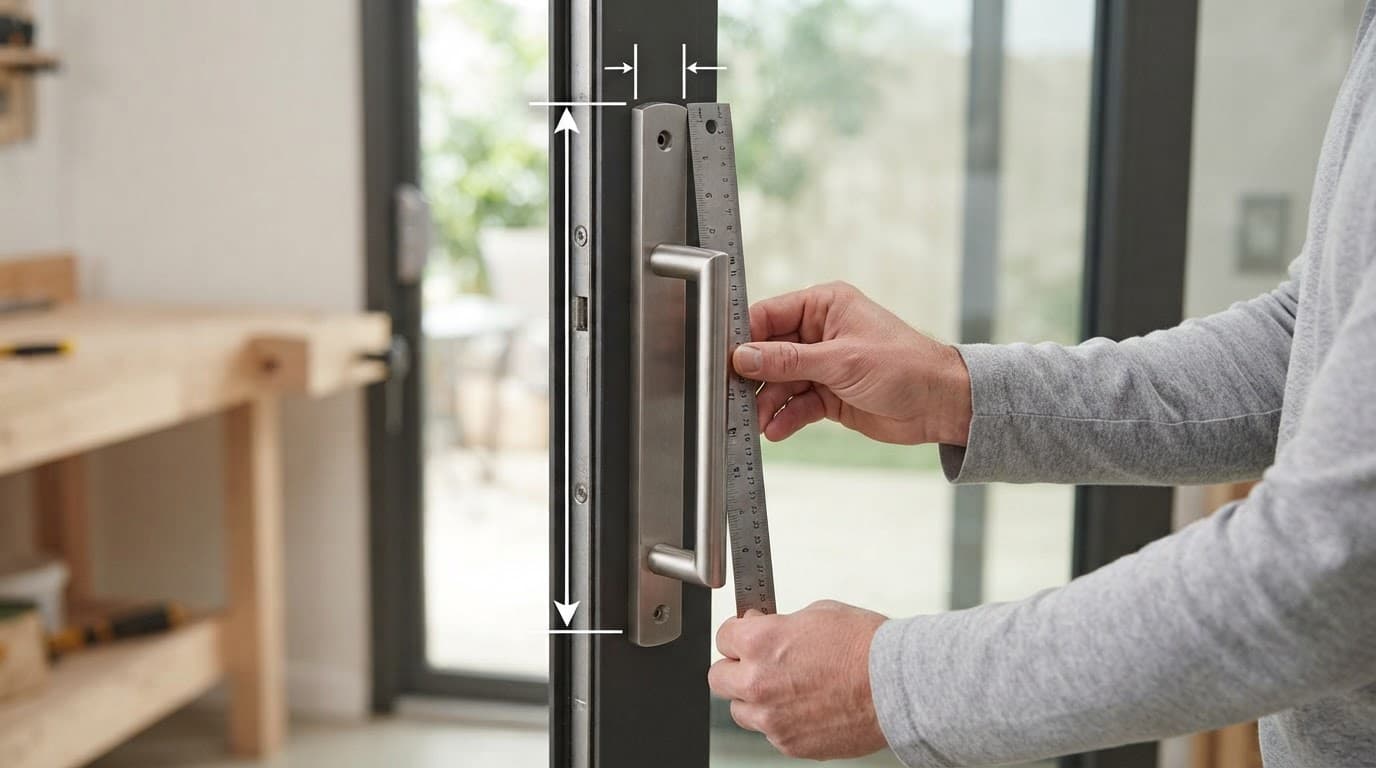
Keep the existing hardware in place while you measure it. Most sliding door handles attach to a narrow vertical plate, and that plate provides the dimensions that matter.
Begin with the door closed
Close and latch the sliding door first. This lets you see how the handle, lock, and door frame sit together. If the door is hard to move, don't force it while measuring.
Use a metal tape measure or a ruler with clear inch markings. A small caliper helps with narrow plates and door thickness, although it isn't required.
Take a straight-on photo of both sides of the handle before you begin. The photos help you confirm lock direction, screw locations, and finish when it is time to order.
Measure between screw-hole centers
The most important number is the center-to-center screw spacing. Measure from the center of the top mounting screw to the center of the bottom mounting screw, not from one edge of a screw head to another.
Write the number down to the nearest 1/16 inch. A measurement that is off by even 1/4 inch can rule out a standard replacement handle.
If screws sit under decorative caps, carefully lift the cap with a thin flat tool. Avoid removing the handle unless you need to inspect damaged hardware.
Record Every Dimension That Affects Fit
Screw spacing matters most, but it does not tell the whole story. The backplate must cover the old mounting area, and the new grip must clear the frame and lock.
Check the backplate and handle projection
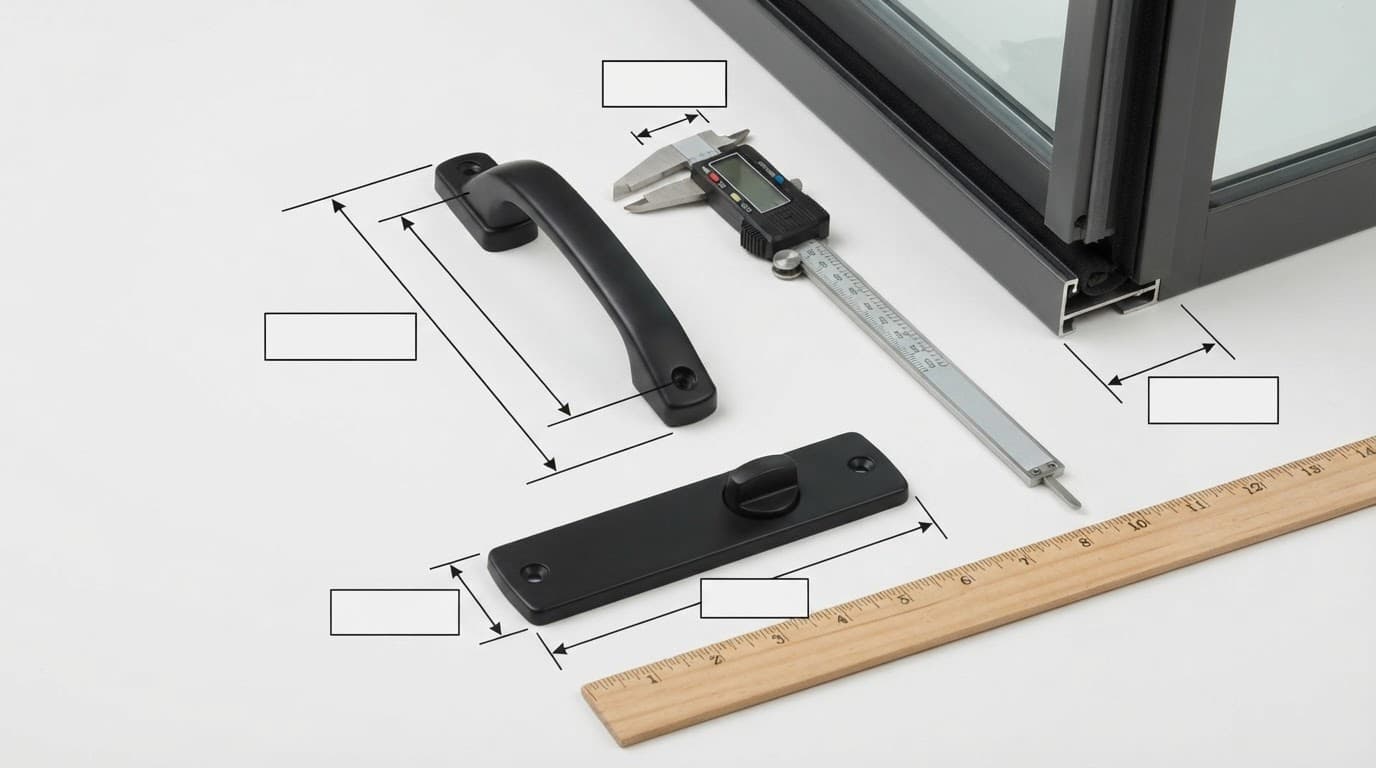
Measure the backplate from top to bottom, then side to side. Next, measure how far the handle projects from the door surface. This matters when blinds, screen doors, or tight wall clearances sit nearby.
Use this quick reference as you measure:
| Measurement | Where to measure | Why it matters |
|---|---|---|
| Screw spacing | Center of top screw to center of bottom screw | Confirms mounting compatibility |
| Backplate height | Top edge to bottom edge | Covers old holes or marks |
| Backplate width | Left edge to right edge | Must fit on the door stile |
| Handle projection | Door face to outermost grip edge | Prevents clearance problems |
| Door thickness | Interior face to exterior face | Helps with full replacement hardware |
Also note the width of the door's vertical stile, the narrow frame section where the handle mounts. A wide decorative backplate can overlap glass or protrude past the stile.
Identify the lock and handle orientation
Look at the inside and outside of the door. Is the thumb latch above the pull, below it, or built into the handle? Does the door slide left or right when viewed from inside?
Those details affect a full hardware replacement. They matter less for an overlay-style grip that leaves the original latch in place, but they are still useful when comparing options.
Measure the hardware you have, not the space you wish the new handle would cover. A longer pull does not fix mismatched mounting holes.
Match Measurements to the Replacement Style
A traditional replacement requires compatible screw spacing, door thickness, lock type, and inside-outside hardware. If corrosion, stripped screws, or a broken latch caused the problem, replacing the complete assembly may be the right call.
However, many doors still lock properly but have a shallow, uncomfortable finger pull. In that case, a retrofit handle can add a full grip without disturbing working hardware.
Consider a retrofit handle for standard plates
Luuv Handle retrofit products fit sliders with a 7.25-inch by 1-inch door plate. They clamp over the existing hardware, so the original lock and latch remain in place.
The product is made in the USA and is patented until 2037. It requires no alteration to the door and no drilling, which is helpful for renters, condo owners, and anyone protecting a door warranty.
Browse the available sliding glass door replacement handles after confirming your plate size. White and bronze options can suit common trim and frame colors.
Decide whether you need one side or both
Measure both sides if you want exterior and interior grips. Hardware can differ slightly, particularly on older doors or doors that received repairs over time.
A single-side handle suits a door that is awkward to open only from one room. An inside-and-outside set makes more sense when both sides have small recessed pulls.
Avoid Common Measuring Mistakes Before Checkout
Don't measure a detached handle while it lies at an angle. Lay it flat, then measure its true length and plate dimensions. Also, don't guess based on a photo, since perspective can make a plate look wider than it is.
Check whether your measurements use inches or millimeters. If a manufacturer lists millimeters, convert carefully, then compare the full specification sheet rather than only the overall handle length.
Finally, inspect the screws and the area around them. Cracked plastic, loose lock parts, or damaged door stiles may need repair before any new hardware goes on. For fit questions about a 7.25-inch plate, the sliding glass door handle fit guide gives useful installation details.
Final Thoughts
Accurate measurements turn a frustrating handle replacement into a straightforward home repair. Center-to-center screw spacing, backplate size, projection, door thickness, and lock orientation give you the full picture.
For a compatible retrofit option, the right plate measurement can mean a stronger grip in about 30 seconds, without drilling or changing the door itself. Measure twice, then order for the hardware already on your door.