

A sliding glass door that drags, rattles, or jumps may need new rollers, but the material alone doesn't decide how long the repair will last. The answer to nylon vs steel sliding door rollers depends on the wheel design, track condition, door weight, alignment, moisture, and the quality of the replacement part.
Before ordering rollers, clean the track and check the panel's alignment. Dirt, loose adjustment screws, and a shallow handle can create symptoms that look like roller failure. Once you identify the actual problem, you can choose between repair options with fewer surprises.
Nylon vs steel sliding door rollers: what the evidence shows
Material is only one part of the roller
Nylon and steel rollers can both be found in sliding glass door systems. However, a wheel's material doesn't tell you everything about its service life. The bearing, housing, wheel diameter, load rating, track shape, and installation quality also affect performance.
A well-matched roller may work reliably because it fits the door and track correctly. A poorly matched part can wear quickly, regardless of whether the wheel is nylon or steel.
The available information doesn't establish a universal winner between nylon and steel. Without controlled testing on the same door, track, load, and conditions, declaring one material longer-lasting would be guesswork.
What a buyer should compare
When reviewing replacement rollers, look for evidence about the complete assembly rather than a material label alone. Ask whether the part matches your door model, whether the manufacturer provides a warranty, and whether the roller has been tested under a load similar to your panel.
Also check the track. A bent rail, deep groove, or worn running surface can damage new rollers. If the door continues to drag after installation, the problem may be the track or frame rather than the wheel.
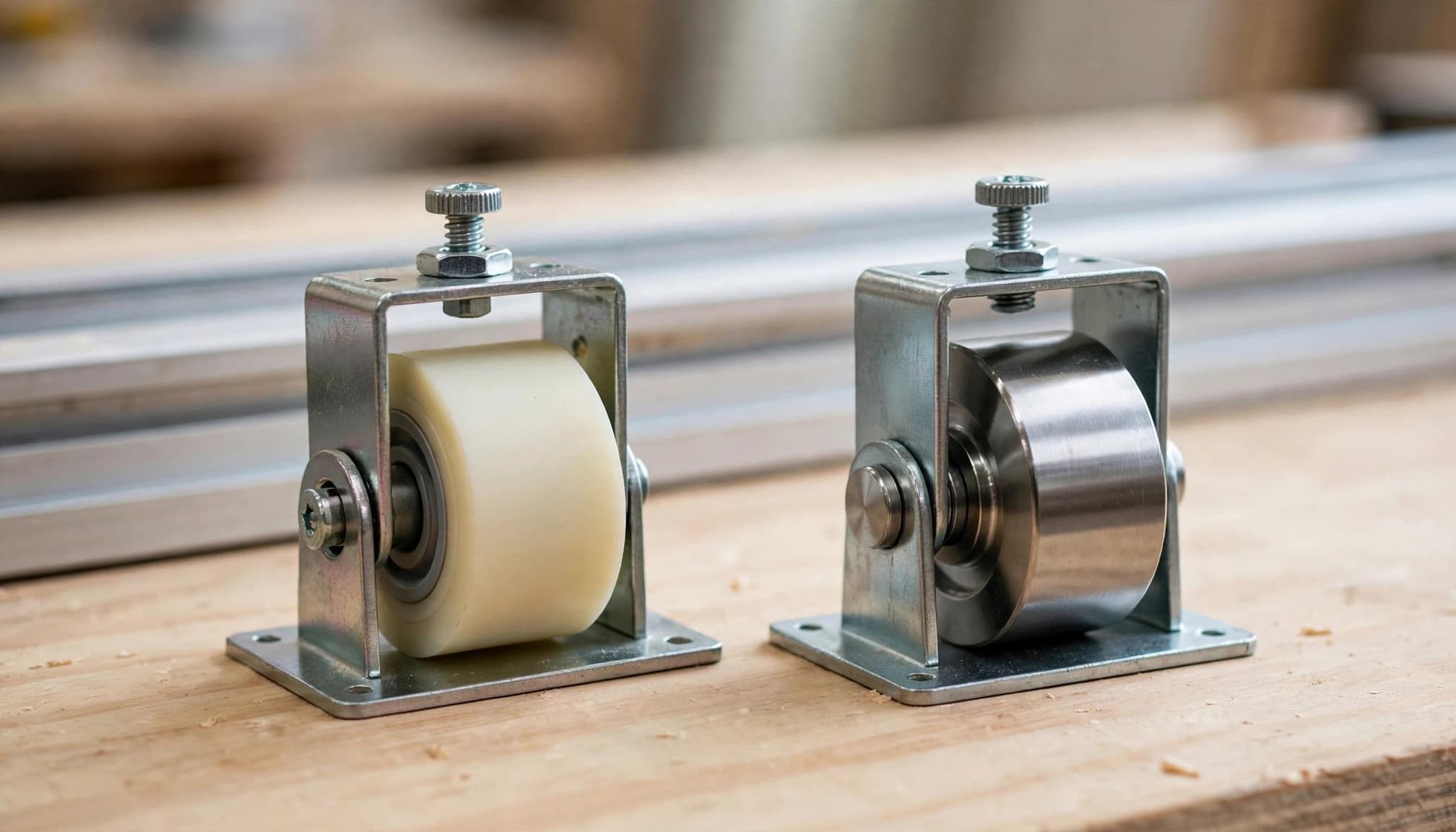
The materials look different, but appearance alone cannot prove which roller will last longer. Fit, alignment, and the condition of the track matter just as much.
What determines sliding door roller life?
Track condition and door alignment
A clean, straight track gives the roller a predictable path. Sand, pet hair, paint chips, and small stones increase friction and can create flat spots or uneven wear. Vacuum the lower channel first, then wipe it with a damp cloth and mild cleaner. Dry the area before testing the door.
Look for dents, deep grooves, rust, and flattened sections. A replacement roller cannot correct a rail that has been crushed or badly worn. Some doors use a removable track cap, while others have a rail formed into the sill. The replacement must match the original design.
Alignment matters too. A panel that sits low on one side may rub the frame or place more weight on one roller. Adjust the screws near the lower corners in small, equal changes. Test the door after each adjustment, and stop if the frame binds or the glass shifts.
Moisture, debris, and daily use
Exterior doors face rain, humidity, salt air, and windblown grit. Those conditions can affect both the roller assembly and the track. Keep drainage openings clear so water doesn't remain in the sill, especially after heavy rain or patio cleaning.
Avoid heavy oil in the track. Grease can attract dust and form a gritty paste around the wheels. If the door manufacturer permits lubrication, use a small amount of a product designed for sliding-door rollers or tracks.
The way you pull the door also matters. A centered, comfortable grip helps you apply force along the track. Pulling from a small recessed pocket or from the edge can twist the panel and increase resistance.
A new roller can fail early when it runs on a damaged track. Inspect the rail before deciding that the wheel material caused the problem.
How to tell whether the rollers are failing
Start with cleaning and a simple movement test
Close the door, then open it with steady pressure. A healthy panel may feel heavy because glass is substantial, but it shouldn't grind, jump, or catch at the same point repeatedly.
Clean both channels before making a diagnosis. If movement improves, debris may have caused the problem. If the door still drags, check whether one side sits lower, whether the panel rocks, or whether the bottom edge scrapes the sill.
A gentle lift test can also reveal excessive play. With the door closed, lift the panel slightly without forcing it. Too much movement may point to worn rollers, loose adjustment hardware, or a damaged frame. Avoid lifting a large glass panel aggressively.
Know when the repair needs professional help
Roller assemblies often sit inside the lower section of the sliding panel. Reaching them may require removing the panel, which can be heavy and awkward. Large doors, impact glass, narrow access areas, and second-story locations can increase labor and safety concerns.
Call a qualified door professional if the glass is difficult to handle, the track is badly damaged, the frame has shifted, or the door repeatedly comes off its track. Ask whether the estimate includes panel removal, roller adjustment, track correction, cleanup, and a final latch test.
A repair company should also match the replacement roller to the door system. A part that appears close in size may sit too high, too low, or at the wrong angle.
Sliding door repair costs and roller replacement value
Typical roller and track costs
Roller parts alone often cost about $15 to $60. Professional replacement for a standard sliding door may range from roughly $245 to $585 installed. Lighter jobs can begin around $145, while heavy impact-glass panels may approach $685 because they require more careful handling.
Track repair can add about $175 to $400. That work may include cleaning, straightening, replacing a worn rail, or installing a track cover. These figures are useful for comparing estimates, but the final price depends on access, door size, glass type, and the condition of the frame.
| Repair need | Common price range or concern |
|---|---|
| Roller parts only | $15 to $60 |
| Lighter professional roller work | $145 to $245 |
| Standard professional roller replacement | $245 to $585 |
| Track repair added to the job | $175 to $400 |
| Heavy impact-glass access | Up to about $685 |
A higher estimate isn't automatically unreasonable. A $500 quote may include panel removal, matched rollers, track repair, adjustment, and testing. A lower quote may cover only the part.
Compare the scope, not only the total
Ask whether the estimate includes compatible rollers, labor, track inspection, alignment, cleanup, and warranty coverage. Also confirm whether the technician will test the lock after the panel is adjusted.
If the frame and rail are sound, replacing the rollers may restore smooth movement. If the sill is damaged or the opening has shifted, new wheels may offer only temporary improvement.
When a handle upgrade makes more sense
A grip problem is different from a roller problem
A door can roll correctly while remaining difficult to open. Many older sliding doors have a shallow recessed pull that gives your fingers little room. Cleaning the track won't fix an uncomfortable grip.
A comfortable handle lets you pull along the panel with less twisting. That can improve daily use for homeowners, renters, and property managers without disturbing the roller system, lock, or latch.
A Sliding Glass Door Replacement Handle is useful when the panel moves properly but the original pull is hard to hold. Fix movement problems first, then address the handle.
Luuv Handle's retrofit design
Luuv Handle makes retrofit interior and exterior handles for compatible sliding doors. The products fit over existing hardware, so you don't remove the original handle or change the lock and latch.
Before ordering, measure the existing plate. Luuv Handle's compatible doors use a 7.25-inch by 1-inch plate size. The company's sliding glass door handle FAQs provide the fit details and explain how the retrofit design works.
Luuv Handle is made in the USA and is a patented product until 2037. It requires no alteration to the door and no drilling. The retrofit handle installs over compatible hardware in about 30 seconds.
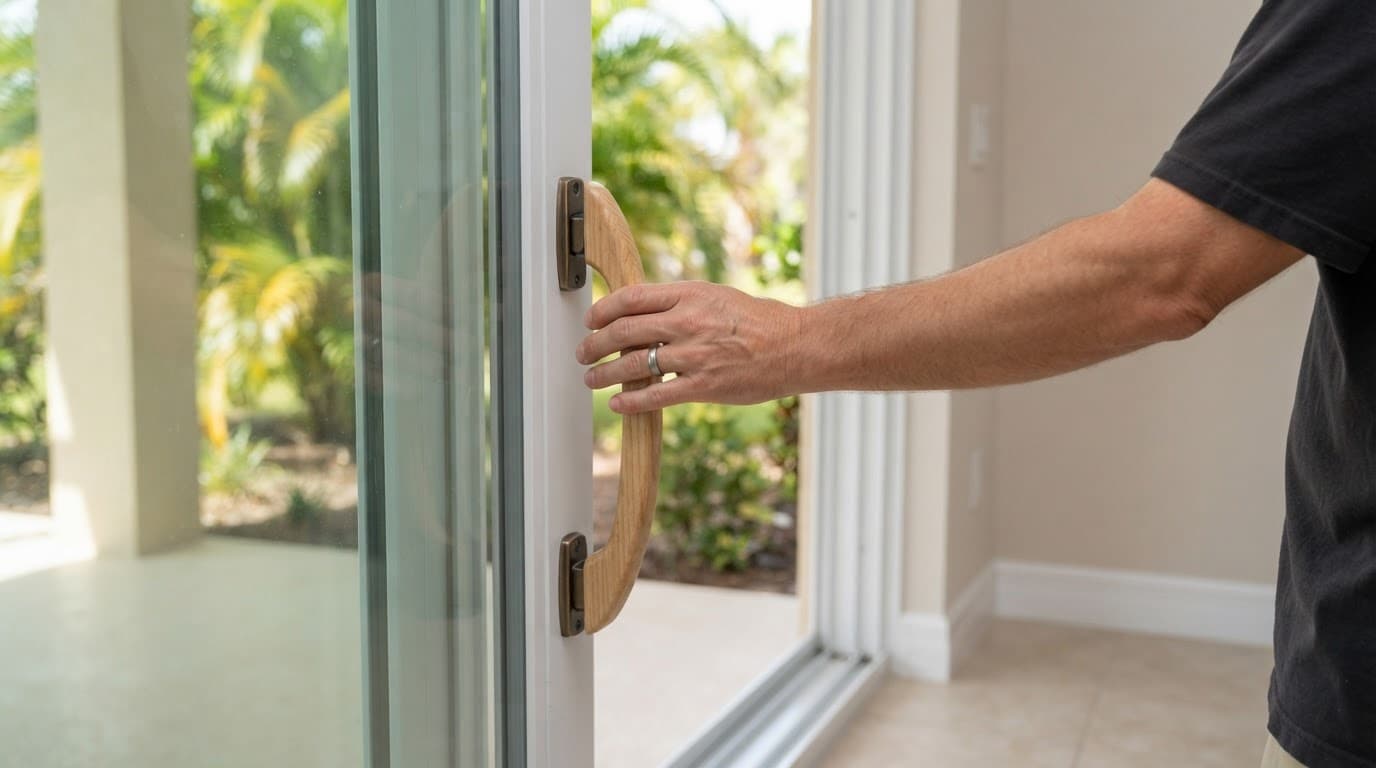
The handle doesn't replace a failed roller. It addresses a separate problem, giving you a larger, easier-to-grip pull after the door is properly aligned.
Interior, exterior, and bundle options
Luuv Handle offers white and bronze finishes, along with interior, exterior, and inside-and-outside configurations. A listed bronze exterior model shows a page price of $30, while a listed white interior model shows $22. Both pages also indicate sold-out status in the available product information, so check current availability before ordering.
The white handle page lists a 30-day guarantee and the same 7.25-inch by 1-inch plate specification. For a compatible door, follow the sliding glass door handle installation instructions: loosen the interior screws, position the handle over the existing plate, slide it into place, and tighten the screws.
Key takeaways
- Nylon and steel can both work well, but material alone doesn't prove which lasts longer.
- Clean the track before buying parts, since sand and debris can mimic roller failure.
- Check for flat spots, seized wheels, uneven gaps, rocking, scraping, and repeated sticking.
- Inspect the rail and frame because damaged supporting parts can ruin replacement rollers.
- Compare repair estimates by included work, not just the final price.
- A handle upgrade helps with poor grip, while roller repair corrects movement problems.
- Luuv Handle is made in the USA, patented until 2037, and requires no door alteration or drilling when the existing plate is compatible.
Frequently asked questions
Are steel sliding door rollers always better than nylon?
No. The supplied information doesn't provide controlled testing that proves steel lasts longer than nylon. The better choice depends on the complete assembly, door weight, track condition, environment, and manufacturer support.
Should I replace rollers before cleaning the track?
Clean and inspect the track first. Vacuum sand, hair, grit, and other debris, then test the door. If it still drags or jumps, inspect the adjustment screws, roller assemblies, rail, and frame.
Can a new handle fix a sliding door that drags?
A handle can make a smooth-moving door easier to grip, but it won't repair worn rollers, a bent track, or a misaligned frame. Correct the movement problem before installing a new grip.
Does Luuv Handle require drilling?
No. Luuv Handle requires no drilling and no alteration to the door. It fits over compatible existing hardware, while the original lock and latch remain in place. Confirm the 7.25-inch by 1-inch plate measurement before ordering.
Conclusion
The question of nylon vs steel sliding door rollers has no reliable one-material answer without comparable testing. Start with the track, alignment, debris, and roller condition, then compare replacement parts by fit, design, warranty, and installation quality.
If the door rolls smoothly but the recessed pull is difficult to use, a retrofit handle can solve that separate problem. With compatible hardware, Luuv Handle provides a made-in-USA grip that requires no drilling or door alteration, so your next repair can focus on the part that actually needs attention.