

Before replacing a stubborn sliding door, find out whether the problem is the glass or your grip. Choosing patio door glass depends on your home's safety requirements, exposure, and existing door construction.
Tempered glass and laminated glass deserve different questions, especially when you're comparing storm protection or replacement options. Meanwhile, a door that slides and locks properly may only need a more comfortable handhold.
Start by separating the glass decision from the hardware problem, then compare what each proposed replacement includes.
Key Takeaways
- Match replacement glass to the door's specifications and applicable local requirements before choosing an upgrade.
- Tempered safety glass, laminated glass, and an impact-rated door assembly aren't interchangeable descriptions.
- Compare documented whole-door performance rather than assuming one glass type automatically improves insulation or security.
- A retrofit handle can improve your grip on a working slider, but cracked glass, damaged frames, and grinding rollers need separate attention.
How Tempered and Laminated Patio Door Glass Differ
The distinction starts with construction. However, the product label alone doesn't answer every question about safety, weather protection, or compatibility.
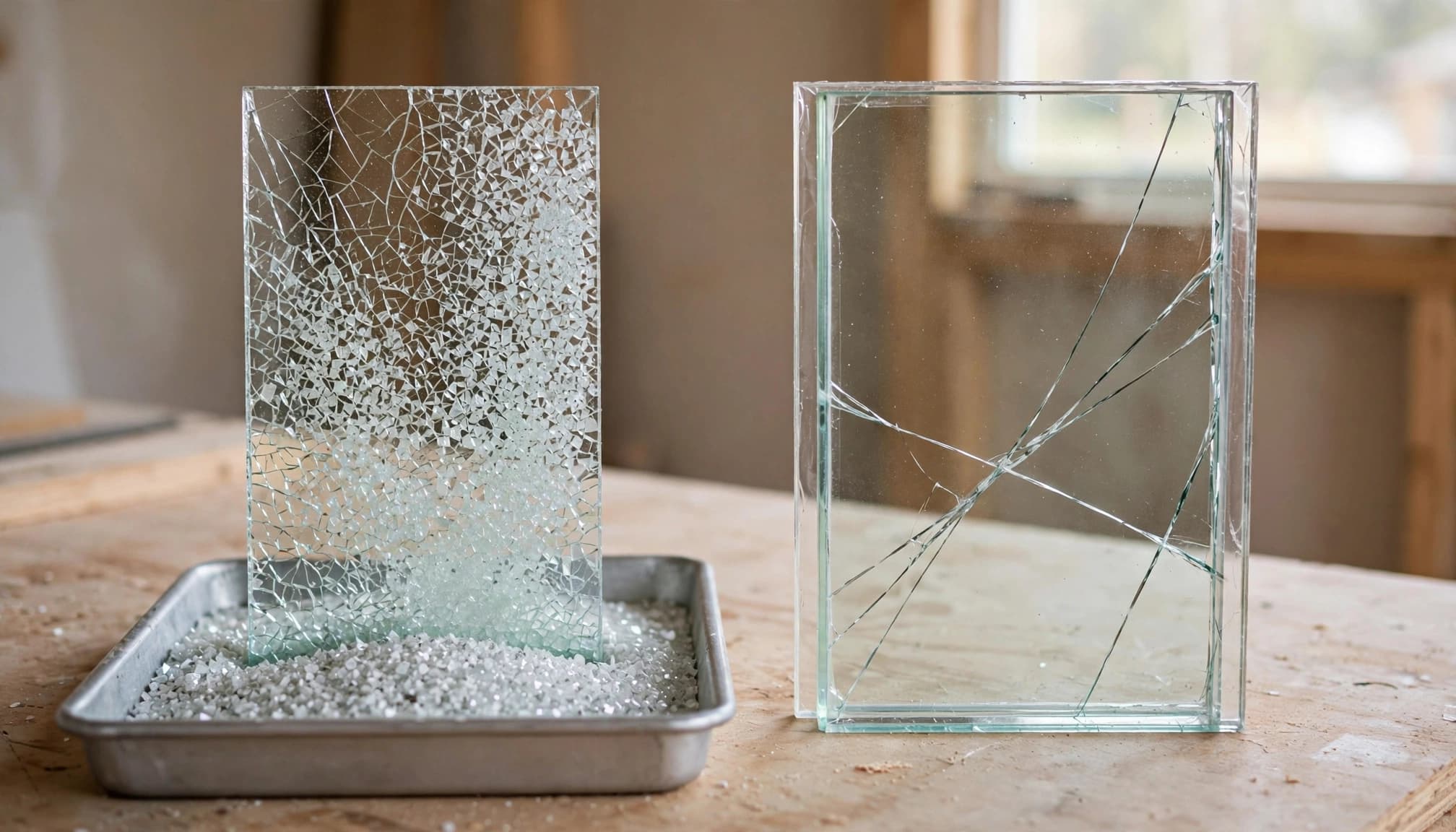
Tempered glass: identify the safety glazing
Tempered glass is common in sliding patio doors. Its characteristic break pattern produces smaller pieces rather than the long shards associated with ordinary annealed glass.
That doesn't make damaged tempered glass safe to keep using. Once it cracks, a patch cannot restore its original strength.
Before ordering a replacement, ask the glazier to check the markings on the intact panel. Those markings can help identify the existing safety glazing. Also confirm the replacement's thickness, dimensions, and compatibility with the door.
Laminated glass: check the specified construction
For a laminated option, ask the supplier to identify the glass layers and bonded interlayer in the proposed unit. The quote should describe the actual glazing construction, not simply call it "upgraded glass."
Ask what safety classification the unit carries and how the manufacturer documents its performance after breakage. Also confirm whether your existing panel can accept it.
A laminated specification doesn't, by itself, establish hurricane protection, forced-entry resistance, or suitability for your door. Those questions require documentation for the product you're buying.
Match the Glass to Safety and Storm Requirements
Your priorities matter, but local requirements and the door manufacturer's specifications come first. This is especially important for homeowners in coastal Florida.
Everyday safety and security need separate checks
Ask your installer which safety-glazing requirements apply to the patio door. Then request replacement glass that meets those requirements and matches the approved installation.
For security concerns, assess the entire door. A working latch, sound jamb, properly aligned panel, and compatible lock all deserve attention.
If a supplier recommends laminated glazing for security, request documentation for that claim. Ask whether the stated performance covers the glass alone or the complete door assembly.
Likewise, replacing a handle won't repair a broken lock or damaged mounting points. An easier grip and a functioning security system are separate needs.
Storm protection depends on the documented assembly
In storm-prone areas, your location and building rules may require impact-resistant glazing or approved protective measures. Have a qualified installer confirm what applies to your home.
Request the relevant product approval and installation requirements for the proposed door or replacement unit. The paperwork should match the model and configuration you're purchasing.
A glass description alone doesn't confirm that an existing patio door meets local impact requirements.
If the original assembly carries an approval, ask whether the proposed glass replacement preserves it. Don't assume that adding a different pane creates an approved impact-resistant door.
Compare Comfort Using Whole-Door Specifications
The tempered-versus-laminated choice doesn't settle every comfort question. When comparing patio door glass, include the insulated unit, coatings, and documented door performance.
Ask about insulation and solar heat
If afternoon sun overheats the room, discuss low-E coatings and solar-control options with the supplier. Also ask whether the replacement should match the coating on the adjacent panel.
Where available, review the National Fenestration Rating Council (NFRC) label or manufacturer performance documentation. Ask the supplier to explain the U-factor and solar heat gain coefficient for each proposed configuration.
Compare equivalent products. A glass-only description and a whole-door rating don't provide the same information.
Check appearance and noise claims
Replacing one panel can create a visible mismatch. Different tint, coatings, or reflectivity may make one side look darker or greener.
Ask to see a sample alongside the existing glass before approving the order. View it in daylight because indoor lighting can hide differences.
For traffic or neighborhood noise, request documented acoustic performance for the proposed product. Ask how the frame, seals, and installation affect the result.
Avoid paying for a promised improvement based solely on the words "laminated" or "premium." Have the supplier connect the recommendation to a measurable specification.
Confirm Replacement Compatibility Before Comparing Prices
A replacement must fit the existing system. Start with the door's manufacturer and model, then have a professional measure the glass and inspect the panel.
Use these questions to compare the scope of each proposal.
| Quote detail | What to confirm |
|---|---|
| Glass specification | Safety classification, thickness, tint, and coatings |
| Replacement scope | Glass only, insulated unit, moving panel, or complete door |
| Existing frame | Whether it can accept the proposed glazing |
| Installation | Removal, fitting, sealing, and operating adjustments |
| Documentation | Applicable approvals, warranty, and maintenance requirements |
The useful comparison is the complete installed scope, rather than the lowest headline price.
A quote for replacing glass inside a sound frame differs from one that includes a new moving panel. Similarly, damaged rollers or a bent stile can add work beyond glazing.
Ask the contractor to separate those repairs in the estimate. Include removal and disposal so you don't discover extra charges after choosing an installer.
Also confirm who will test the door afterward. The panel should roll without scraping, close evenly, and latch without lifting or pushing it into position.
If you're considering heavier replacement glazing, have the installer confirm compatibility with the frame and operating hardware. Don't approve a substitution based only on matching width and height.
Know When Glass Damage Needs Professional Help
Cracked patio door glass needs prompt professional attention. Stop operating the affected panel and keep people away from damaged edges.
If tempered glass suddenly shatters, stay clear of the opening. Wear closed shoes and block access until a qualified professional can secure the area.
Moisture between panes is a different symptom. It points to a problem within the sealed insulating unit, so cleaning the exposed surfaces won't remove it.
A glass professional can determine whether the insulated unit needs replacement while the existing frame remains usable. However, a bent aluminum stile, damaged jamb, or severe grinding may require a broader door repair.
Heavy sliding panels are difficult to remove safely. Roller replacement sometimes involves lifting the panel out, which creates a risk of injury and glass damage without proper support.
Leave cracked glazing, damaged frames, and difficult panel removal to a qualified sliding-door technician. For a failed keyed exterior lock, a locksmith may also be appropriate.
When a Sliding Glass Door Replacement Handle Is Enough
Glass replacement won't solve an uncomfortable finger pull. Once the glazing is secure, check how the door moves before buying new hardware.
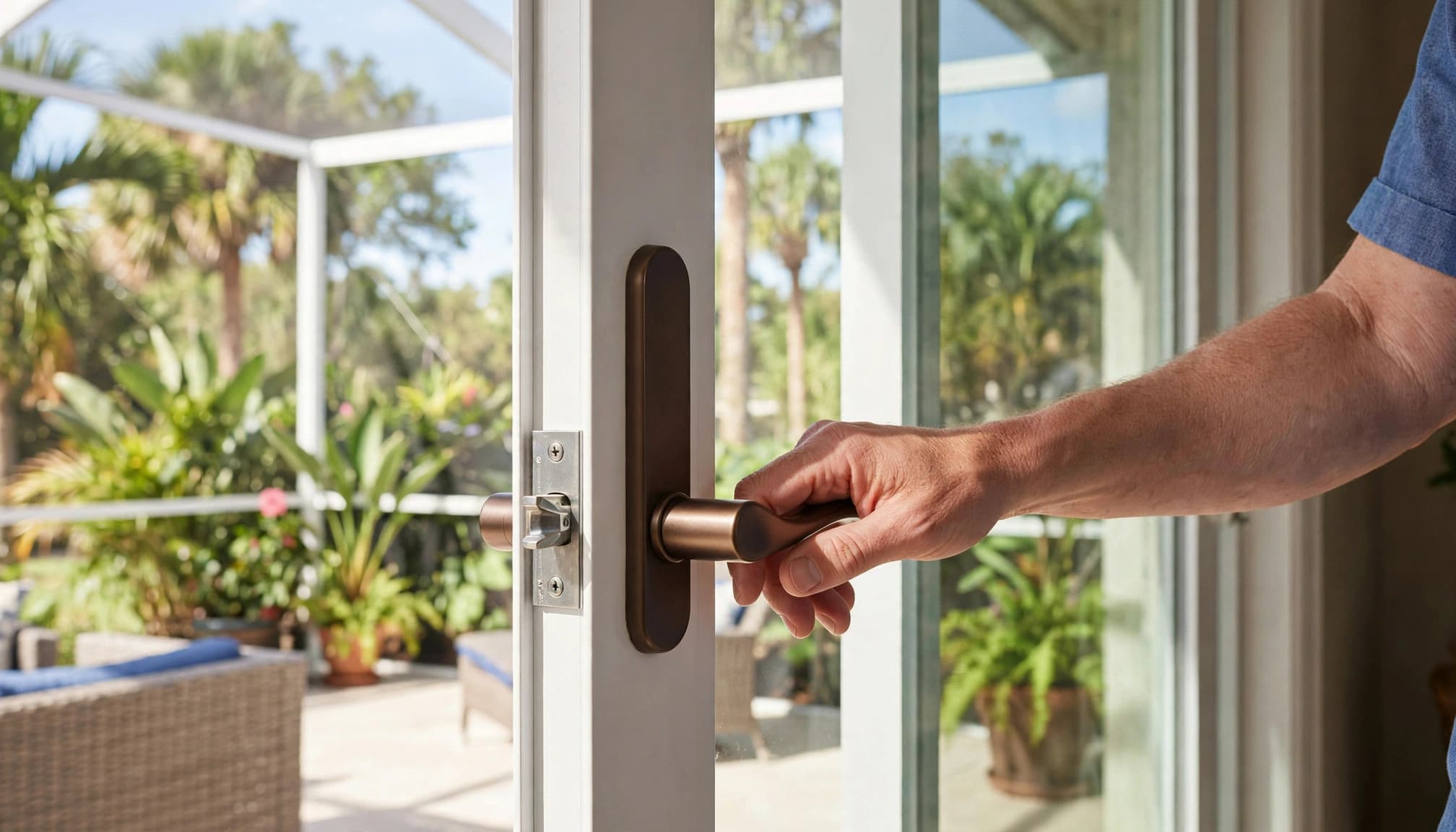
Separate a poor grip from a dragging panel
Clean the track and test the panel with steady pressure near the existing handle. Check the rollers, sill, threshold, and latch.
If the door grinds, jumps, or requires force, address that mechanical problem first. A larger grip cannot repair damaged rollers or a bent track.
However, a smooth-running door with a shallow recessed pull may benefit from a retrofit handle. The original hardware must be sound because the retrofit adds a handhold over it.
Choose a compatible no-drill retrofit
Luuv Handle is made in the USA by a veteran-owned Southwest Florida business. Its patented design is protected until 2037, and it requires no alteration to the door and no drilling.
The handles combine steel construction with a water-resistant oak grip, with white and bronze options available. They fit over compatible existing hardware while leaving the original lock and latch in place.
Before ordering, measure the plate. Luuv Handle specifies a 7.25-inch by 1-inch plate; review the sliding door handle retrofit FAQs and check sliding-screen clearance.
Installation involves loosening the interior screws, positioning the handle over the existing plate, seating it, and retightening the screws. Follow the sliding door handle installation instructions for the correct mounting sequence.
Luuv Handle describes installation as taking about 30 seconds on a compatible door. Afterward, test the grip, door movement, and latch before regular use.
Frequently Asked Questions
Should I choose tempered or laminated glass for my existing slider?
Start with the door's original specifications and local requirements. Ask a qualified supplier to compare compatible options and document any claimed improvement. The right choice depends on the complete installation, so don't select glazing based solely on its name or an upgrade label.
Does laminated glass automatically make a door hurricane-rated?
No. Have your installer verify the applicable approval for the proposed assembly and installation. If you're replacing glass in an approved door, ask whether the replacement preserves that approval. Your local requirements determine what protection the opening needs.
Can I upgrade the handle without replacing the glass?
Yes, if the glass is sound, the door operates correctly, and the hardware is compatible. For an indoor grip upgrade, the bronze interior sliding door handle fits over compatible existing hardware. Measure the plate and verify clearance before ordering.
Choose the Glass for the Door You Have
The right patio door glass matches your door's construction, applicable requirements, and documented performance needs. Compare complete specifications before approving a replacement.
Then address daily operation separately. Secure glass and a properly aligned panel come first; a compatible retrofit handle can improve the grip without changing the door.
A stubborn slider deserves the repair that matches its actual problem.