

A cracked patio door changes more than the view. It can weaken a safety barrier, let humid air into your home, and make every trip to the lanai feel less secure.
Patio door glass repair can be the right call for small surface damage or a failed seal. However, a true crack through the pane usually calls for replacement, especially on a frequently used sliding door. Start by identifying the damage, then choose a fix that protects both the glass and the door's everyday function.
Start With Safety and a Close Look
Keep children and pets away from damaged glass until you know its condition. Avoid slamming the slider or forcing it past a sticking point, since vibration can extend a crack without warning.
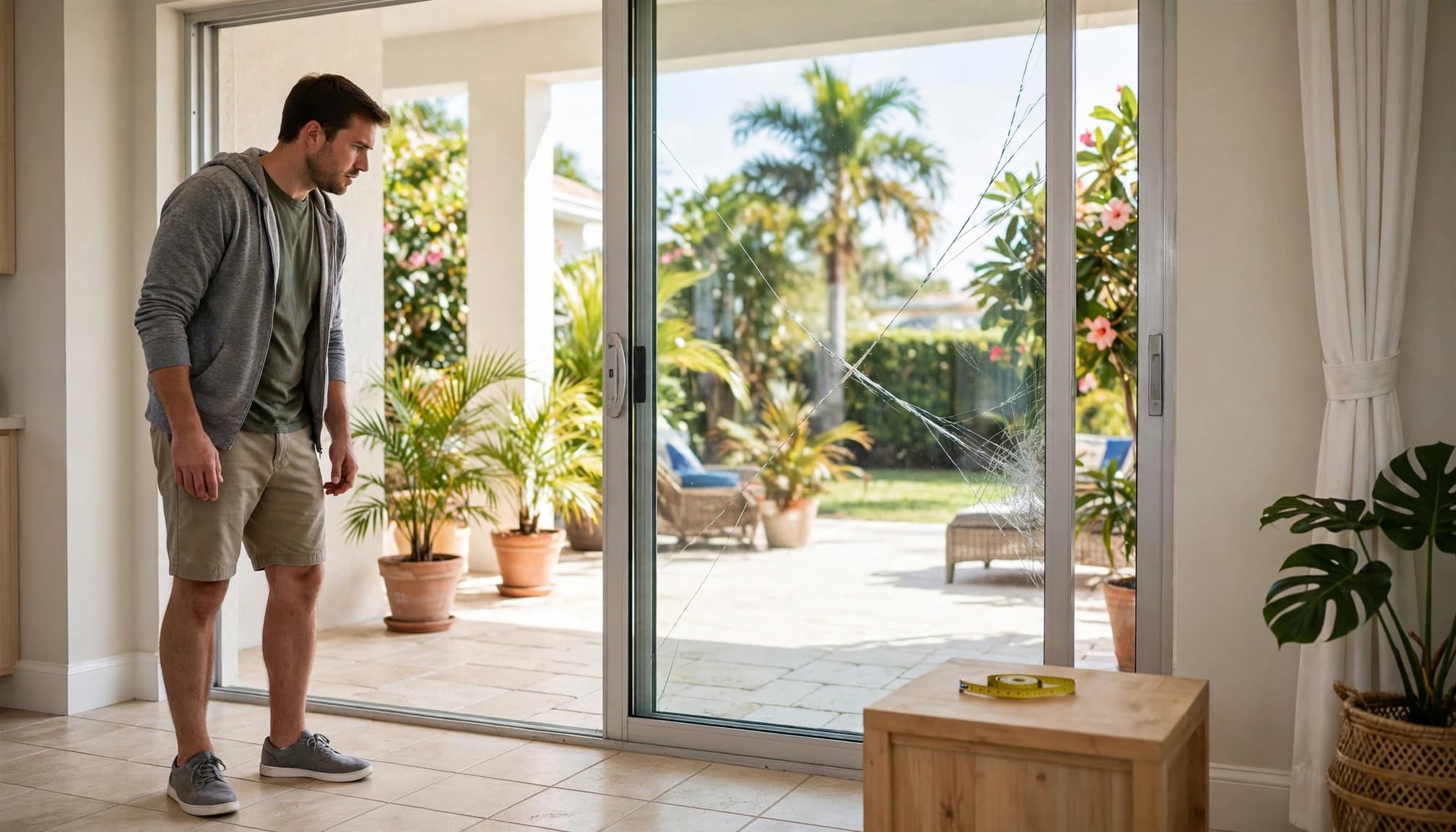
Look at the pane from both sides in daylight. A scratch, a cloudy area, and a hairline fracture may look similar at first, yet they need different solutions.
Check whether the damage reaches the glass edge
A crack that touches the edge of the glass is more serious than a small flaw near the center. Door frames place pressure on the perimeter of the pane. As a result, an edge crack often grows when the door rolls, the frame heats up, or a strong storm passes through.
Long cracks, branching cracks, and cracks that feel rough on either side of the pane are also warning signs. Covering them with tape may reduce the risk of loose fragments for a short time, but it won't restore strength.
Confirm whether you have one pane or an insulated unit
Many patio doors use insulated glass units, often called IGUs. These consist of two panes separated by a sealed airspace. If you see fog, moisture droplets, or a milky haze between the panes, the seal has failed.
The glass may remain intact, but the insulating value has dropped. In that situation, patio door glass repair often means replacing the sealed glass unit, not attempting to dry it out or reseal it in place.
A crack in a sliding door pane can spread from normal rolling and closing forces, even if the damage first appears small.
When Patio Door Glass Repair Is Enough
Repair makes sense when the damage is cosmetic and the structure of the pane remains sound. It can save money and avoid unnecessary work, but only when the repair matches the real problem.
Surface scratches may be repairable
Light scratches on glass can come from windblown grit, abrasive cleaning pads, or pets brushing against the door. If your fingernail does not catch in the mark, a professional may be able to polish it with a glass-safe compound.
Deep scratches are different. Polishing too aggressively can distort the view or weaken the pane. Skip household abrasives, steel wool, and DIY tricks involving toothpaste. They can leave a larger cloudy patch than the original scratch.
Minor frame and seal problems need separate fixes
Sometimes the glass looks damaged because the surrounding components are failing. Dried exterior caulk, worn weatherstripping, and clogged weep holes can allow water or drafts around the door frame.
A contractor can replace weatherstripping or renew an exterior seal without replacing sound glass. Still, do not use caulk to hide a crack. Sealant can block water for a short period, but the glass remains compromised.
Photo by La Miko
Signs That Glass Replacement Is the Safer Choice
Replace the pane when the crack passes through the glass, grows over time, or creates sharp edges. A patio door sees repeated movement and temperature changes, so damaged safety glass should not stay in service.
In Florida and other storm-prone areas, the decision also affects weather protection. Your local building rules and the door's location may require a particular type of safety or impact-rated glass.
Tempered glass cannot be patched
Most sliding patio doors use safety glazing, commonly tempered glass. Tempered glass is designed to break into small pieces rather than long, sharp shards. Once it cracks, it cannot be repaired back to its original strength.
A glass professional will remove the damaged panel and install a matching replacement. If the glass suddenly shatters, stay clear of the opening, wear closed shoes, and block the area until help arrives.
Replace the insulated unit when the seal fails
Fogging between panes does not always mean the glass will break. Yet it does mean the insulating unit has lost its seal. The trapped moisture cannot be cleaned from the exterior surface.
Replacing only the insulated unit may be possible if the frame, rollers, track, and sash remain in good shape. This approach preserves the existing door while restoring a clear view and better temperature control.
Decide Whether the Whole Door Needs Replacement
A cracked pane does not automatically mean you need a new sliding door. First, assess the door as a complete system. Glass replacement is usually the practical option when the frame is straight, the locking hardware works, and the door still slides smoothly.
Whole-door replacement becomes more reasonable when several major parts have failed together. A corroded frame, leaking sill, rotten surrounding structure, or damaged tracks can turn a glass-only job into a short-lived fix.
Compare the condition of the frame, track, and rollers
Open and close the door slowly. Grinding, dragging, or a panel that jumps on the track can point to worn rollers or debris in the rail. Those parts are often repairable, but they add to the project cost.
Check for water stains at the bottom corners and soft drywall near the opening. Water damage around the frame needs attention before new glass goes in. Otherwise, you may replace a pane while the source of the leak remains.
Ask for a glass-only estimate and a full-door estimate
A clear estimate should identify the type of glass, labor, disposal, and any needed sash or frame work. If your current door has low-E coating, tint, grids, or impact-rated glass, ask the installer to match those features.
This comparison helps you avoid replacing a serviceable door because of one broken component. On the other hand, it exposes cases where a full replacement offers better value than repeated repairs.
Match Replacement Glass to Your Home
A new pane should fit the door's opening and performance needs, not merely fill the space. The installer must measure the glass and glazing system accurately. Even a small measurement error can cause stress on the edges or poor sealing.
For doors exposed to strong sun, low-E glass can reduce solar heat gain while keeping the room bright. In coastal areas, ask whether your location requires impact-resistant glazing or a specific approval for exterior doors.
Keep safety glass and tint consistent
Match the existing glass as closely as possible when only one panel needs replacement. A different tint or coating can make one side of the doorway look darker, greener, or more reflective.
Safety glazing also matters. Patio doors need glass that meets applicable safety requirements. The glass shop can identify the markings on the intact panel and recommend an appropriate replacement.
Don't forget the rollers after new glass goes in
New glass can change the panel's weight and balance. After installation, the door should roll without scraping, latch without lifting, and close evenly against the jamb.
Have the installer adjust the rollers if the panel drags. A smooth-running door places less stress on the new glass, the frame, and the hardware you use every day.
Upgrade the Handle Once the Glass Is Secure
A new pane is a good time to look at the door handle. Many older sliders have a shallow finger pull that becomes hard to grip, particularly when the rollers are not perfectly adjusted.
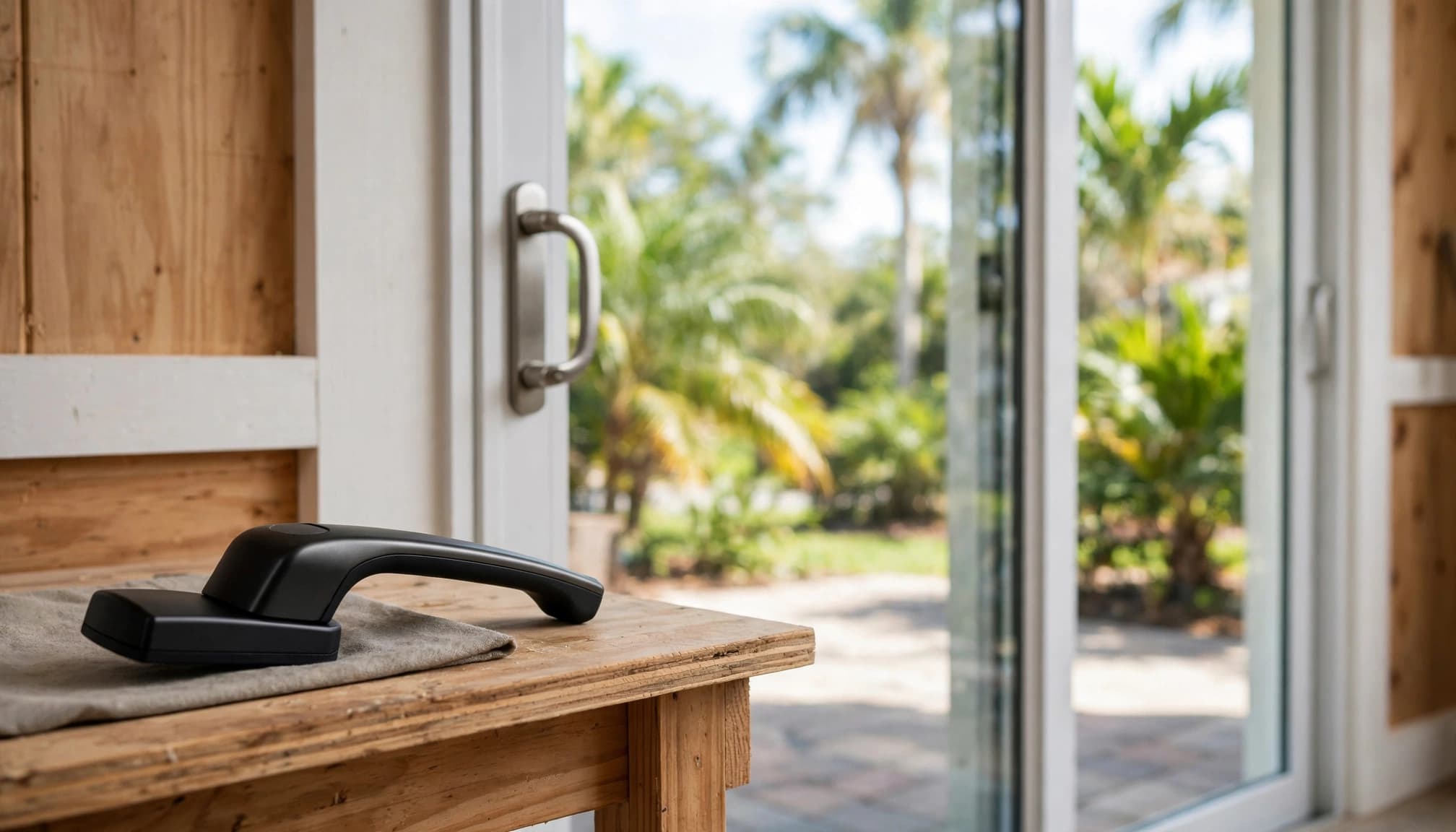
Choose a retrofit sliding glass door replacement handle
A sliding glass door replacement handle should improve your grip without creating another repair project. Luuv Handle fits over compatible existing hardware, so you keep the original lock and latch in place.
The handle is made in the USA from steel and water-resistant oak. Its patented design is protected until 2037. Most importantly, it requires no alteration to the door and no drilling, which helps protect a newly repaired panel and preserves the existing door hardware.
Before ordering, confirm that your slider has a 7.25-inch by 1-inch door plate. Review the sliding door handle compatibility details before choosing an interior, exterior, or inside-and-outside setup.
Install it after glass work is complete
Wait until the glass installer has finished adjustments and cleaned the door. Then add the replacement handle after testing the door's movement and lock.
The retrofit installation takes about 30 seconds on a compatible door. You loosen the interior screws, slide the handle over the existing plate, set the top cap, then tighten the screws. The Luuv Handle installation instructions show the complete sequence.
Prevent Another Patio Door Glass Problem
You can't prevent every accident, but regular care reduces stress on your patio door. Clean the bottom track with a vacuum and a soft brush. Grit under the rollers makes the panel drag and can cause hard impacts when you close it.
Keep outdoor furniture and tools clear of the glass path. During high winds, secure loose patio items that could strike the door. Also inspect exterior seals each season for gaps, peeling caulk, or water intrusion.
Use gentle cleaning methods
Wash the glass with a mild, non-abrasive cleaner and a soft microfiber cloth. Avoid harsh scouring pads, especially near the edges where damage can become more serious.
For the track, wipe away moisture after heavy rain and clear the weep holes with care. Water needs a route out of the frame. Blocked drainage can lead to corrosion, staining, and a sticky sliding panel.
Close the door without forcing it
If the door suddenly feels heavy or catches on the track, stop forcing it. Clean the rail first, then arrange roller adjustment or repair if needed.
A handle with a comfortable grip makes controlled closing easier. However, it should never be used to overpower a door that is misaligned or jammed. Fix the source of the resistance before it causes more damage.
A Clear View Starts With the Right Fix
Patio door glass repair works for light surface damage, sound glass with failed surrounding seals, and certain insulated-unit problems. A through-crack, shattered pane, or compromised safety glass needs replacement instead.
Address the glass first, then check the rollers, seal, lock, and handle. A secure pane and an easy-to-grip retrofit handle make the door safer and more comfortable to use every day.