

A line across your patio door can look permanent before you know what caused it. When patio door glass scratches catch the afternoon sun, it's tempting to reach for a polish and start rubbing.
The right fix depends on what the mark is, its depth, and the glass construction. Cleaning addresses surface contamination, while actual glass damage needs a separate assessment.
Start by identifying the mark before choosing a treatment or ordering replacement glass.
Key Takeaways
- Inspect the glass from both sides, but don't judge repairability from appearance alone.
- Use manufacturer-approved, non-abrasive cleaning methods before investigating a persistent mark.
- Leave scratch correction to a glass professional who can check the pane, coatings, and possible distortion.
- Treat cracks and moisture between panes as separate problems that surface cleaning won't resolve.
- Upgrade an uncomfortable handle only after the glass is safe and the door rolls correctly.
Identify the Mark Before Attempting Scratch Repair
A scratch, a streak, and a reflection can look similar in strong sunlight. First, inspect the closed door without pushing against the pane or forcing the slider.
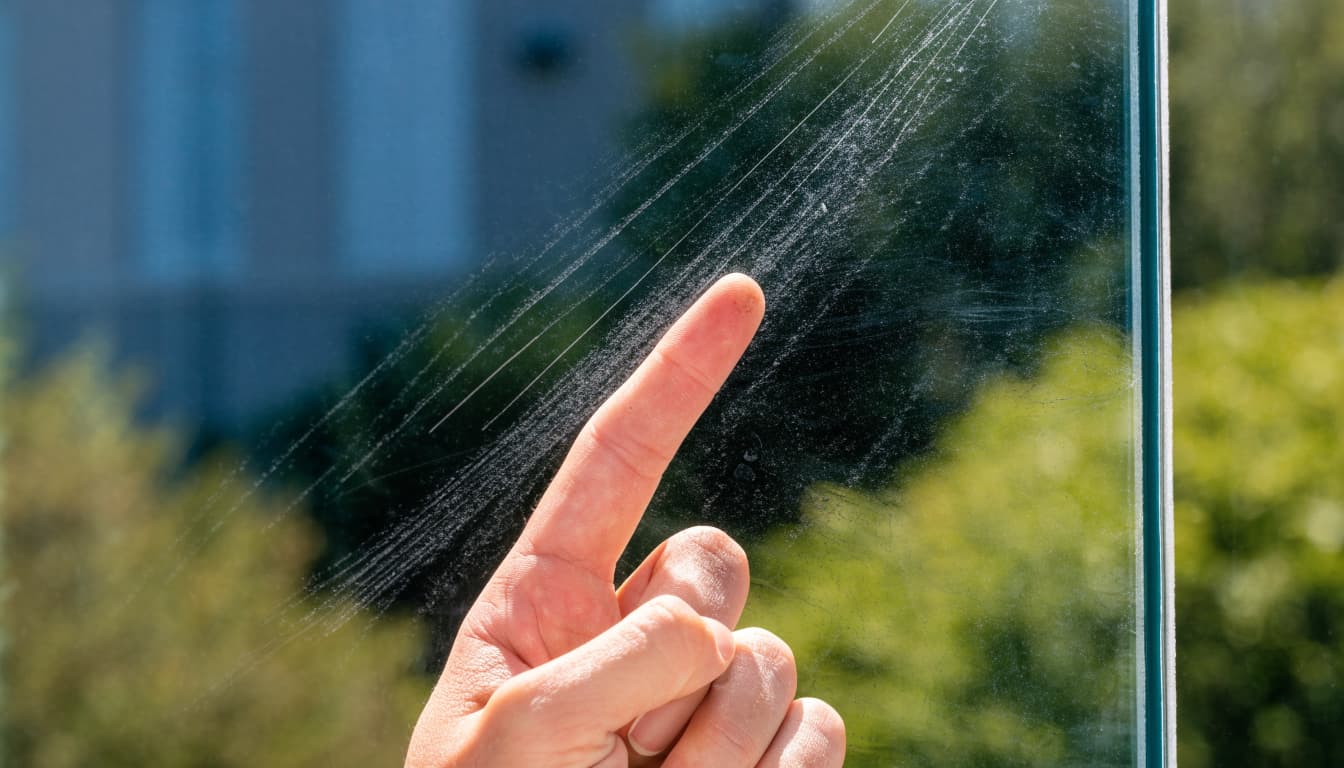
Locate the mark without testing its depth
Look from indoors and outdoors in daylight. Then change your viewing angle to see whether the line remains visible.
Photograph the area from several positions, including one wider image showing its location on the door. These photos help a glass shop distinguish a localized mark from a broader problem.
However, appearance alone doesn't establish depth or repairability. Avoid scraping the line, pressing on it, or running a sharp object across it. If it branches, reaches an edge, or resembles a fracture, stop handling the area and arrange an inspection.
Clean gently before drawing conclusions
Loose dirt and cleaning residue can obscure the glass beneath them. Follow the door manufacturer's care instructions, using an approved non-abrasive cleaner and a clean, soft cloth.
Remove loose grit before wiping. Otherwise, trapped particles can drag across the pane.
Inspect the area again once it's dry. A persistent line deserves further assessment, but persistence doesn't automatically mean replacement is necessary. Note which side of the pane shows the mark most clearly, and share that information with the technician.
Which Patio Door Glass Scratches Need Expert Assessment?
Actual scratches involve damage to the glass surface. Whether corrective work makes sense depends on more than how noticeable the line looks.
A glass professional needs to consider the damaged area, the glazing type, and the appearance you expect afterward.
Surface condition affects the repair decision
Windblown grit, abrasive cleaning pads, and contact with nearby objects can damage patio door glass. Yet knowing the likely cause doesn't tell you whether a treatment will produce an acceptable result.
Ask the technician to assess the depth and extent of the damage before discussing correction. Several marks across a broad area may require a different approach than one isolated line.
Also explain when you notice the damage. A mark visible only in angled sunlight creates a different cosmetic concern than one that interrupts your view throughout the day.
Coatings and glass construction matter
Patio doors can contain tempered glass, laminated glass, or insulated glass units. Some also include tint or Low-E coatings.
These details affect the repair plan. Don't assume a technique suitable for one pane is suitable for every sliding door.
Look for an etched mark near a lower corner, plus any manufacturer label on the frame. Photograph those details rather than trying to identify the glass yourself. A qualified shop can use them to determine what further checks are needed.
Skip Household Scratch-Removal Shortcuts
Toothpaste, scouring powders, abrasive pads, and steel wool are poor starting points for an unidentified mark. They introduce another variable before you know the glass type or the original damage.
Likewise, a product advertised for glass polishing isn't automatically suitable for your patio door. Avoid power tools or polishing attachments without a glass-specific assessment.
Scratch correction can involve removing glass around the damaged area. Excessive treatment may change the view through the pane or leave a larger cloudy patch. That risk matters on a broad, sunlit door.
Before approving scratch correction, ask whether the work could leave visible distortion and what happens if the result is unacceptable.
Don't use windshield resin kits as a substitute for evaluating damaged door glazing. Patio door glass has different construction and safety requirements.
For homeowners, the useful first steps are observation, gentle cleaning, and gathering product details. Leave decisions about material removal to the glass specialist.
Recognize Damage That Calls for Replacement
Some problems that resemble patio door glass scratches involve the pane's integrity or its sealed construction. Neither should receive a cosmetic treatment without diagnosis.
Cracks need a safety-first response
A line that branches, extends toward an edge, or appears to pass through the pane needs prompt professional attention. Keep children and pets away, and avoid operating the door until someone qualified checks it.
Tempered safety glass cannot regain its original strength through a patch once it has cracked. Tape or sealant doesn't restore that strength.
If glass has shattered, block access to the area and arrange professional removal. Don't attempt to lift a heavy sliding panel yourself.
Replacement may involve only the glass rather than the complete door, depending on the condition of the surrounding components.
Moisture between panes points to a different problem
An insulated glass unit contains two panes separated by a sealed space. Fog, droplets, or a milky appearance inside that space can indicate seal failure.
Because the moisture sits between the panes, cleaning the accessible surfaces won't address it. Ask a contractor to confirm whether the sealed unit needs replacement.
Check the door warranty before authorizing work. Some manufacturers provide coverage for insulated-glass seal failures.
When the sash, frame, track, and rollers remain serviceable, replacing the insulated unit may preserve the rest of the door. A foggy pane alone doesn't automatically justify replacing everything.
Get an Estimate That Matches the Actual Damage
Request a diagnosis before comparing prices. A quote for cosmetic correction isn't directly comparable to one for a new insulated glass unit.
Describe the mark's location, when you first noticed it, and whether its appearance has changed. Include photos of the glass, frame label, and glazing markings.
Then ask the contractor to explain the proposed result. Will the work address appearance, damaged glazing, or a failed seal? For cosmetic work, ask what residual marks or distortion might remain.
A replacement estimate should identify the glass specification, labor, glazing materials, and disposal. It should also clarify any sash, roller, or frame work.
In Southwest Florida and other coastal locations, the contractor should check applicable impact and safety requirements. Replacement glass must meet current requirements for the installation, rather than merely resemble the old pane.
Finally, compare glass-only work with full replacement when several components have problems. A straight frame and reliable hardware support a different decision than a warped sash, damaged track, and recurring leaks.
Prevent New Marks Without Overworking the Door
Scratch prevention starts with keeping abrasive material away from the glass. Use clean cloths, and replace or wash them when they collect grit.
Keep patio furniture, planters, and other hard objects clear of the moving panel. During windy weather, secure items that could strike the door.
Also pay attention to how the slider moves. Grinding, scraping, or a need to lift the panel while opening it points to a mechanical problem.
Clean accessible track debris according to the manufacturer's instructions. However, don't force the door if resistance continues. Worn rollers, damaged rails, or misalignment may need professional correction.
Drainage matters, too. Keep weep holes clear so water can leave the frame, and inspect weatherstripping for wear.
These checks protect the whole assembly. They also help separate a glass problem from moisture, movement, or hardware trouble before you spend money on the wrong repair.
Improve the Handle After the Glass Is Safe
A clear pane won't solve a recessed pull that gives your fingers little room. If the door rolls smoothly but remains awkward to grip, a sliding glass door replacement handle may address that separate problem.
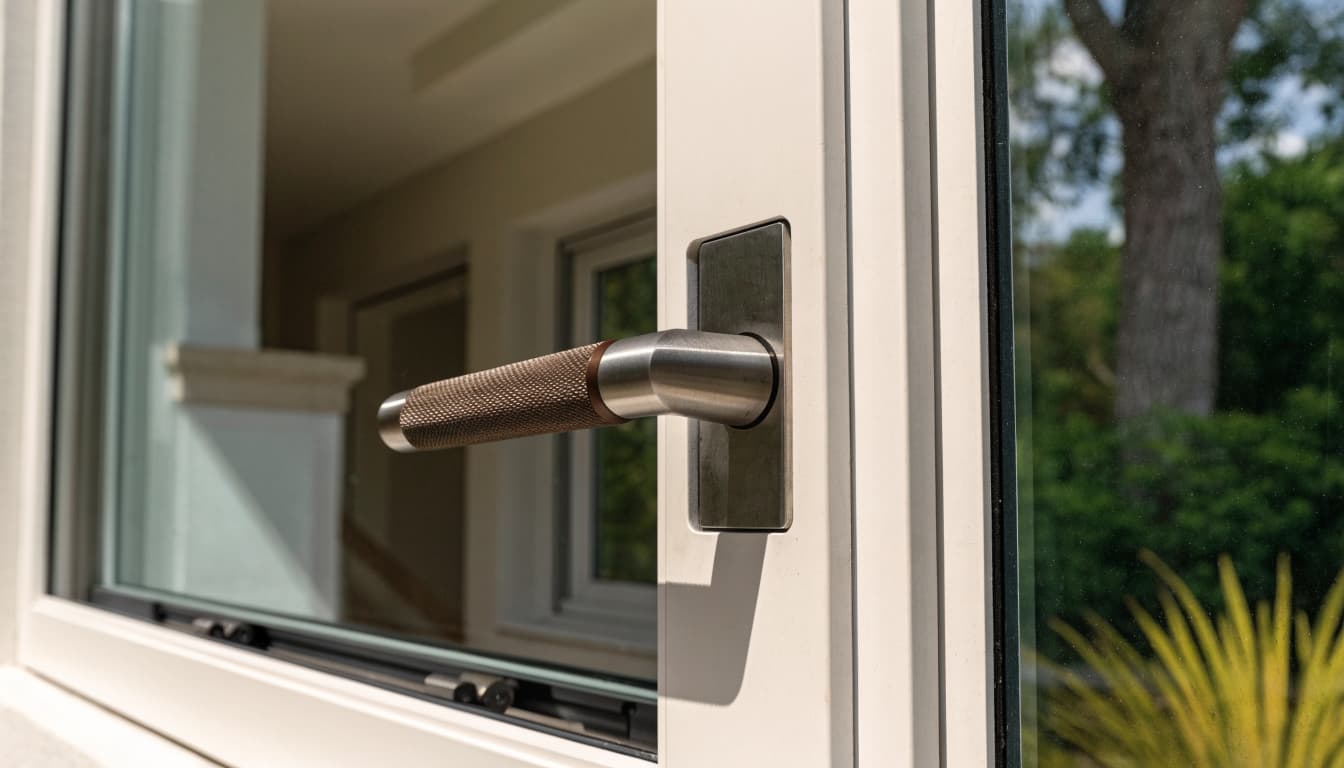
Luuv Handle is made in the USA and is a patented product until 2037. Its retrofit design requires no alteration to the door and no drilling, while keeping the original lock and latch in place.
The handle uses steel and oak, with white and bronze options. However, fit comes first. Luuv's handle compatibility and installation FAQs specify compatibility with 7.25-inch by 1-inch door plates.
Measure the existing plate before ordering. Don't assume every sliding door uses the same hardware.
For a compatible door, the Luuv Handle installation instructions describe loosening the existing screws from inside, fitting the handle over the exterior plate, seating it, and retightening the screws.
Wait until glass work and roller adjustments are complete before fitting the handle. A better grip improves everyday use, but it doesn't repair scratched glass or overcome a jammed panel.
Frequently Asked Questions About Scratched Patio Glass
Does a visible scratch mean I need a new door?
A visible line alone doesn't establish that you need replacement glass or a complete door. First, confirm what the mark is and have persistent damage assessed.
If replacement glass is necessary, the contractor should inspect the sash and surrounding hardware. Sound components may allow glass-only replacement. Full-door replacement deserves consideration when several major parts have failed or the frame is damaged.
Should I replace the handle while arranging glass work?
Plan the handle upgrade separately, and wait until the glass is safe and the panel moves correctly. This avoids adding hardware while a contractor is removing or adjusting the door.
Check compatibility before buying. A retrofit handle can improve grip on suitable existing hardware, but it won't correct a cracked pane, failed insulated unit, worn roller, or unreliable latch.
Choose the Fix That Protects Your View
Patio door glass scratches need a diagnosis before a treatment. Gentle cleaning and careful observation help establish the starting point; professional assessment determines what damaged glass needs.
Keep glass safety and handle comfort separate. Once the pane is sound and the slider moves correctly, a compatible handle upgrade can make daily use easier without disturbing the door.