

A sliding door can move smoothly and still make you stretch, bend, or pinch a shallow pull every time you use it. Comfortable reach matters more than a handle position that looks right on the door.
The right patio door handle height depends on who uses the slider, how they approach it, and whether the existing hardware can be moved at all. Before buying a replacement handle or planning new holes, test the reach you have and identify what makes the door awkward to use.
Is there a standard patio door handle height?
There isn't one height that feels comfortable for every household. A position that suits a tall adult may be awkward for a shorter person or someone who uses a wheelchair. The shape of the grip matters, too. A shallow recess can feel difficult even when it sits at an easy-to-reach height.
On an existing sliding glass door, the handle usually sits on a vertical plate that works with the lock and latch. Moving that plate isn't a simple matter of shifting the pull upward. It may require new mounting holes, compatible hardware, and changes to the lock setup.
For a useful comparison, measure from the finished floor to the center of the area your hand grasps. Measuring to the top of the plate or the lock thumb turn gives you a different number. If you're planning a new door for a public or shared space, check the accessibility and building requirements that apply to that project before choosing hardware.
How to find a comfortable patio door handle height
You can judge reach without committing to a new handle position. Use the door as you normally would, then notice what your shoulder, wrist, and fingers have to do.
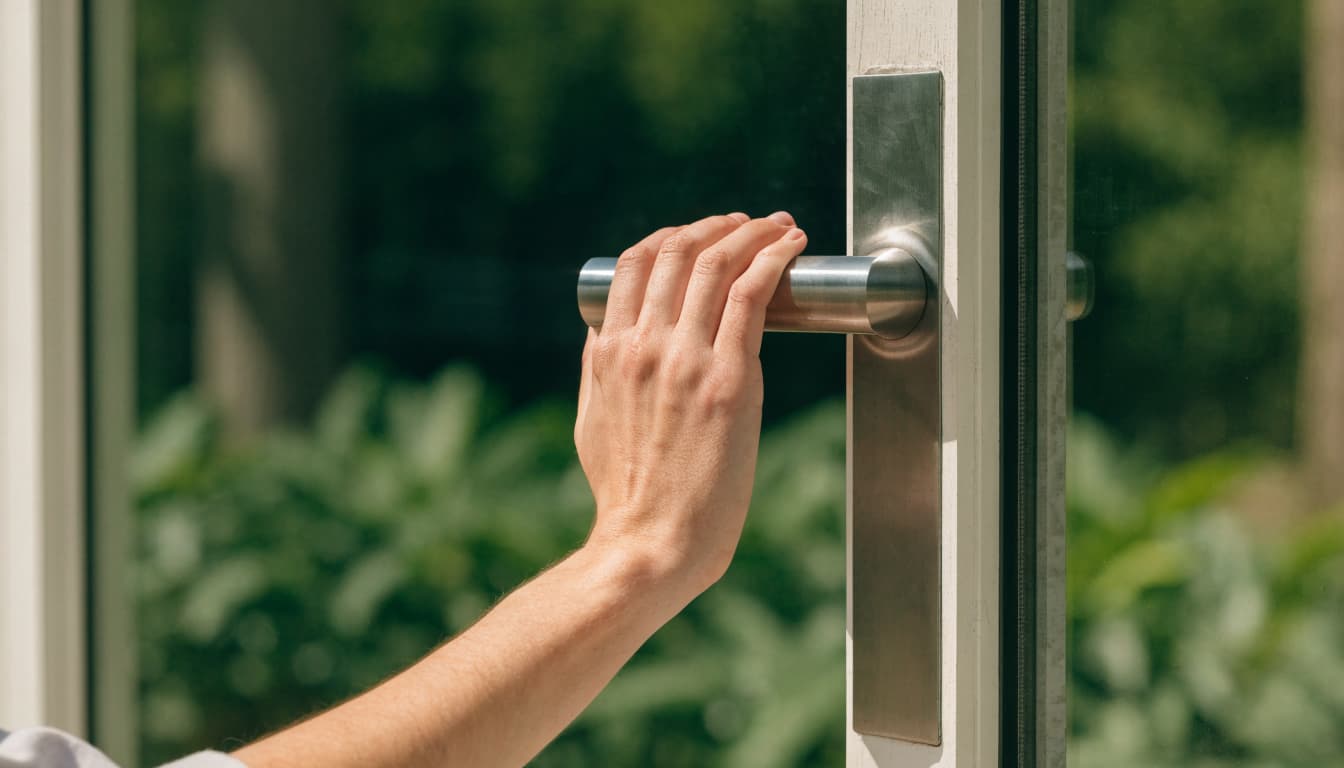
Start where you naturally stand
Stand squarely in front of the door, with room to move your arm. Reach toward the handle without raising your shoulder or bending sharply at the waist. Your wrist should stay fairly straight as you begin to pull.
Next, slide the door through its full travel. Opening is only half the test: closing a heavy panel can demand a firmer grip. If you have to change your stance or pinch the hardware to bring the door home, note where the effort occurs. A more substantial grip may help even if the handle stays at the same height.
Test the people and routines that matter
Ask other regular users to open and close the slider from their usual position. Someone carrying patio items may approach differently from someone using a cane or walker. Also check whether a shorter user can reach the lock without stretching.
For a proposed new installation, a small piece of painter's tape can mark a possible grasp point without marking the frame permanently. Have each person reach for it from both sides. Keep the actual lock location and door design in mind; the tape tests comfort, not whether hardware can safely mount there.
Check the space around the handle
A reachable handle can still be uncomfortable if the surrounding door setup leaves no room for your hand. Look at the closed door, then watch the handle's path as the panel moves.
Leave room for fingers and the screen
Check the gap between the handle and any sliding screen. A deeper pull needs enough clearance to travel without striking the screen frame or its handle. Make the same check near the jamb when the glass panel closes.
Your fingers also need room behind the grip. If they rub against the glass or frame, you may end up pulling with your fingertips. A handle you can hold with your palm is often more useful than a taller or lower version of the same shallow pull.
Keep the lock and approach usable
Try the latch while standing in your normal opening position. A large grip shouldn't block the thumb turn or make you reach around it to lock the door. Outside, check the same operation after the screen is in place.
Keep mats, planters, and furniture away from the doorway. Clear floor space lets you stand close enough to pull steadily instead of twisting your arm around an obstacle. An even, stable surface underfoot matters when you need to put some force into a heavy slider.
Check the door's movement before blaming handle height
A poor grip and a dragging door can feel similar. If the panel resists movement, changing the patio door handle height won't remove the force needed to roll it.
Test the panel with steady pressure
With the door unlocked, move it slowly in both directions. Listen for grinding or chatter and notice whether it catches at the same point each time. Vacuum grit from the bottom track and use a soft brush for debris in the corners. Avoid heavy oil that can hold onto dirt.
Then close the door and test the latch. It should engage without lifting the panel or slamming it against the jamb. If it doesn't, the rollers, alignment, or lock may need attention.
Know when a handle isn't the repair
A bent frame, damaged track, cracked glass, or door that barely moves needs more than a better handhold. Don't force the panel to prove you can open it. A qualified sliding-door technician can diagnose movement and alignment problems before you spend money on new hardware.
Once the door rolls and latches properly, reassess the grip. If your fingers still struggle to hold the pull, the handle itself is a sensible place to make an improvement.
Measure the existing hardware before ordering
If your door already has a handle, its plate dimensions are more useful than an estimated mounting height. Measure with the hardware in place so you can compare the actual door with the product requirements.
Check the plate and nearby clearance
Close and latch the door first. Use a rigid ruler or a metal tape to measure the plate's height and width, then take straight-on photos of both sides. A side photo helps show how far the current handle projects toward a screen or jamb.
Luuv Handle retrofit products fit sliders with 7.25-inch by 1-inch door plates. That fit requirement matters even though the handle goes over the existing hardware. Check the sliding door handle compatibility and fit guide before ordering, particularly if the plate has an unusual shape or the door is older.
Match measurements to the type of replacement
A conventional handle-set replacement may require you to match the center-to-center distance between mounting screws, along with the lock style and handle orientation. Measure between the centers of the screw heads, not their outside edges.
A clamp-on retrofit works differently because the original plate, lock, and latch stay in place. You don't need to relocate the lock to get a larger grip. Still, a retrofit won't raise or lower the existing handle assembly, so decide whether the current position is reachable before choosing one.
Choose a better grip when the existing position works
When the handle is within easy reach but difficult to grasp, a larger pull can solve the daily problem without changing its mounting position. This is where a sliding glass door replacement handle that fits over existing hardware may be more practical than rebuilding a working lock setup.
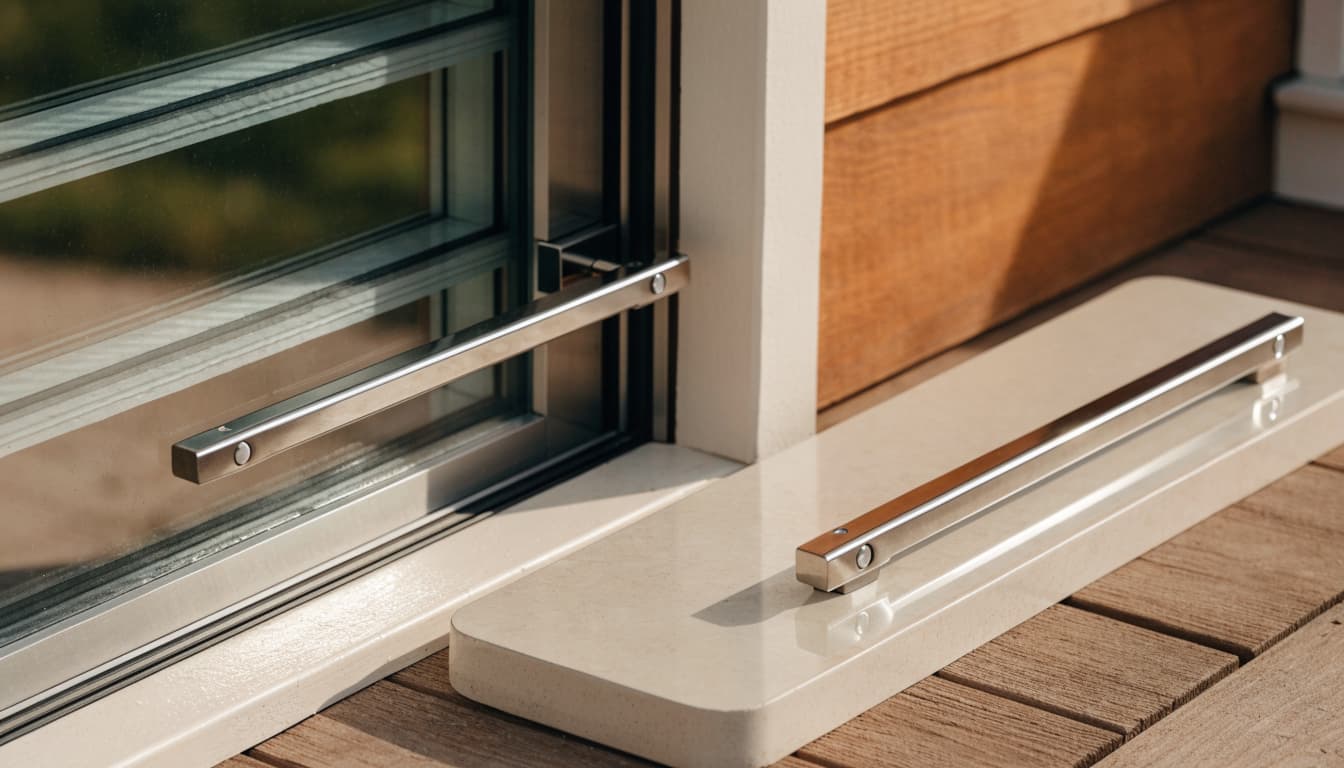
Consider a no-drill retrofit
Luuv Handle fits over compatible existing hardware and leaves the original lock and latch in place. It's made in the USA, and its patented design is protected until 2037. Installation requires no alteration to the door and no drilling.
The handles use steel and water-resistant oak, with white and bronze options. For a door that opens easily from inside but has a hard-to-grip outside pull, a white exterior sliding door handle is one option to compare with your plate and frame finish. Check the handle's projection against any screen before buying.
Think about the trip back inside
It's easy to judge a handle while leaving the house and forget the return trip. If the exterior pull is shallow, closing the door behind you may still strain your fingers. Test both sides with the glass and screen in their usual positions.
For a compatible light-colored door, a white interior and exterior handle bundle offers a matching grip on each side. Choose the sides you use, rather than assuming an interior-only upgrade will fix every awkward reach.
Install the handle, then test the whole door
A compatible retrofit avoids drilling, but it still needs to sit securely over the existing plate. Luuv Handle describes installation as taking about 30 seconds on a suitable door. Allow more time to check fit and operation rather than rushing the final test.
The sliding glass door handle installation instructions show the sequence: loosen the screws from inside, slip the handle over the outside plate from the bottom, set the top cap, pull the handle down into place, and tighten the screws from inside. Don't overtighten or continue if the handle won't seat as shown.
Before relying on the door, move it while it's unlocked. Confirm the new grip clears the jamb and screen throughout its travel. Then check the lock with the door open, followed by another check when it's closed. The handle should feel firm, and the original latch should work normally.
Key Takeaways
- Judge patio door handle height by natural reach during both opening and closing, not by appearance alone.
- If the existing position feels reachable, a fuller grip may help without moving the plate or lock.
- Check plate dimensions, screen clearance, and door movement before choosing a retrofit. A dragging panel needs repair, not a stronger pull.
Frequently Asked Questions
Can I mount a retrofit handle higher than the original?
A handle that fits over the existing plate stays at that plate's position. Luuv Handle's no-drill design adds a grip to compatible hardware; it doesn't relocate the lock assembly. If the current position is out of reach, ask a door professional about hardware and door options before planning new holes.
What if one person likes the height and another doesn't?
Have both people test the complete opening and closing motion. If everyone can reach the plate but someone struggles to pinch the pull, a fuller grip may be a practical compromise. If a user cannot reach the hardware safely, changing the grip alone won't solve that problem.
Will a new handle make a heavy door easier to slide?
A better grip can give your hand more control, but it won't fix worn rollers, track damage, or a misaligned latch. Check that the panel moves smoothly and locks correctly first. Repair movement problems before asking a new handle to cope with the extra force.
Find the position that works in daily use
The most useful handle position is one you can reach comfortably while opening, closing, and locking the door. Test those motions from both sides before treating height as the problem.
If the existing plate is reachable and the slider moves well, grip may be the missing piece. Measure the plate, check clearance, and choose hardware that makes the door easier to use without disturbing what already works.