

A patio door can look closed while its latch barely touches the keeper. That leaves the home exposed and often points to a worn lock, poor alignment, or a handle that no longer moves the mechanism correctly.
Replacing a patio door mortise lock can restore reliable latching, but the safest repair starts with diagnosis. If the lock still works and the real problem is a shallow, cracked, or uncomfortable pull, a retrofit handle may solve the daily-use problem without opening the door edge.
Key Takeaways
- A mortise lock sits inside the narrow edge of the sliding panel.
- Match the replacement by faceplate length, screw locations, backset, and latch direction.
- Test the lock with the door open before closing the panel.
- Do not force a handle when the latch misses the keeper.
- A retrofit handle is different from a mortise-lock replacement.
- Luuv Handle fits compatible doors with 7.25-inch by 1-inch plates.
- Luuv Handle is made in the USA, patented until 2037, and requires no door alteration or drilling.
Identify the Problem Before Removing Hardware
Replacing the wrong part can leave the original fault untouched. First determine whether the lock has failed, the door has shifted, or the handle simply feels difficult to use.
Check the latch with the door open
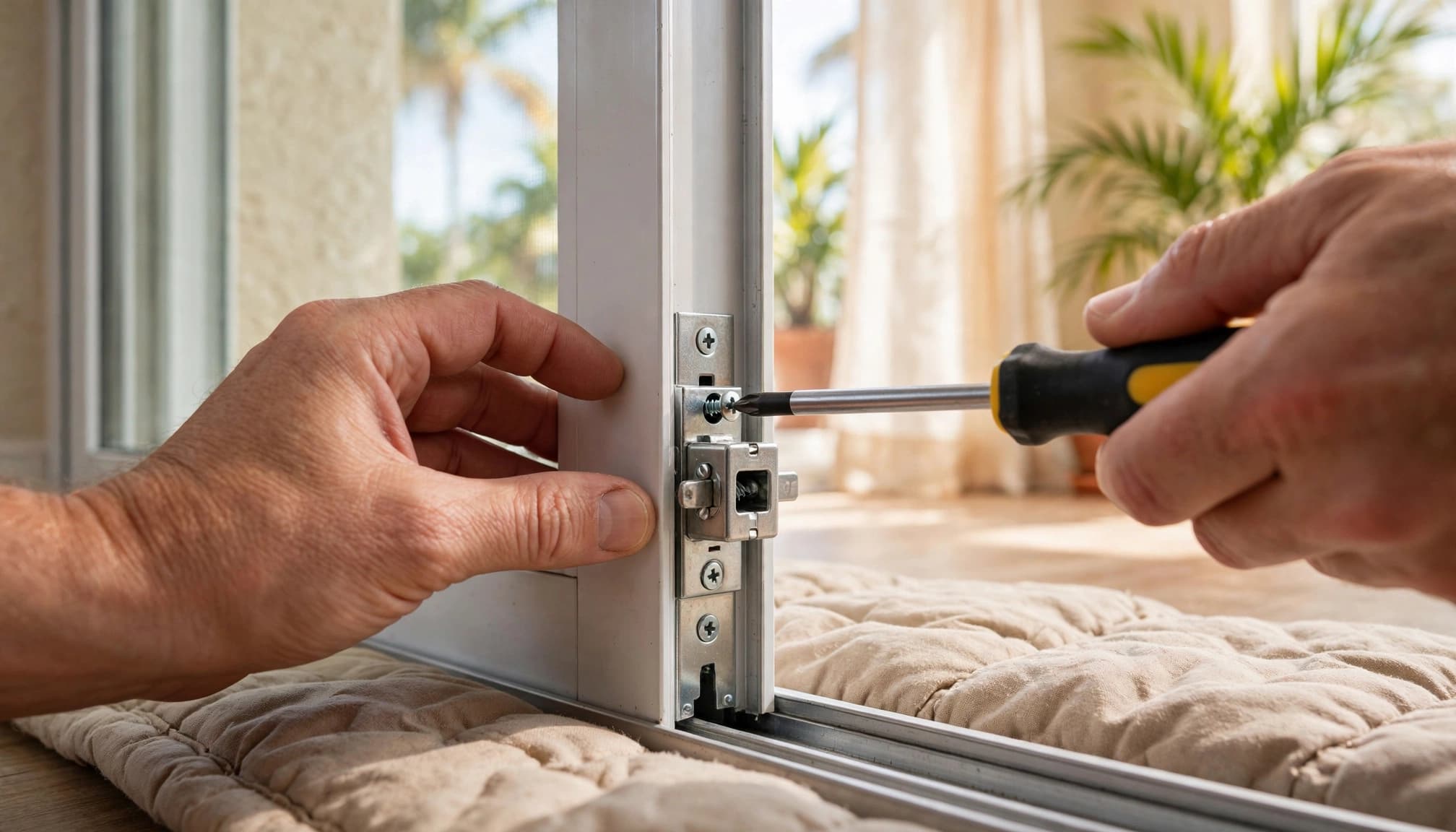
Keep the sliding panel open while you inspect the lock. Look at the narrow edge that meets the frame when the door closes. A mortise-style lock normally has a metal faceplate and a hook, tongue, or bolt that moves when you operate the thumbturn or lever.
With the door open, operate the lock several times. The latch should extend and retract smoothly. If the thumbturn spins freely while the latch stays still, the spindle or internal lock may have failed. A gritty movement, loose handle, or cracked trim also deserves attention before you order parts.
Next, close the panel gently and observe the contact point. If the latch works with the door open but misses the keeper when closed, the lock may be fine. Dirt in the track, worn rollers, or a sagging panel can change the height and prevent proper engagement.
Match the replacement mortise lock
Take photographs of both sides of the handle before disassembly. Also photograph the lock faceplate and the keeper in the frame. These images preserve the original orientation if the part has an unusual hook direction or handed design.
Measure and compare the replacement against the old lock. Check:
- Faceplate length and width
- Screw-hole locations
- Backset from the door edge
- Latch or hook shape
- Direction in which the latch moves
- Handle and spindle connection
Similar-looking patio-door locks often use different screw spacing or hook shapes. When possible, bring the old part to a locksmith or hardware supplier. A replacement that looks close may still fail to fit the narrow door cavity.
Prepare for a Safe Mortise-Lock Repair
Glass panels are heavy, and sliding doors have sharp edges and pinch points. A careful setup reduces the chance of damaging the panel or losing control of the hardware.
Stabilize the panel and clear the area
Work with the door open and prevent it from sliding while you handle the lock. Clear rugs, furniture, planters, and other items from both sides of the opening. Wear closed-toe shoes, work gloves, and safety glasses.
If the panel must be lifted or removed to reach another component, get help from a capable adult. Do not try to control a large glass panel alone. Keep a padded, stable place nearby if the panel needs to rest temporarily.
Avoid working with the door closed. If a replacement lock binds during installation, you could end up unable to reopen the panel. Testing while the door is open gives you access to the latch and handle from both sides.
Keep temporary security practical
Until the latch engages reliably, secure the opening when nobody is home. A snug wood dowel in the inside track can prevent the panel from sliding open, but it is only a temporary measure.
Make sure everyone in the household knows that the dowel is in place and can remove it quickly. Never block a doorway that someone may need for emergency escape. A compatible security bar or auxiliary lock can also help, provided it does not obstruct a required exit.
Do not use excessive pulling to compensate for a latch that will not engage. Force can bend the handle, damage the keeper area, or worsen an alignment problem. Repair the cause of the failed latch before relying on the door again.
Replace the Patio Door Mortise Lock Carefully
Once you confirm that the lock itself has failed, compare the new part with the old one before removing anything. This prevents a long repair from becoming a search for missing orientation or hardware details.
Remove and compare with the door open
Keep the panel open and supported. Remove the interior handle or trim only as far as needed to access the lock connection. Hold exterior hardware while loosening fasteners so it does not drop or pull against the glass.
Remove the old mortise mechanism from the door edge according to the replacement manufacturer's instructions. Keep screws, covers, and small parts in a tray. Do not discard the old lock until the new part has been compared against it.
The replacement should match the original faceplate position, screw pattern, backset, and latch direction. If the new body does not sit flat or the faceplate holes do not line up, stop. Do not enlarge holes or force the lock into the cavity without confirming compatibility.
Reconnect the handle and test before closing
Fit the new lock and reconnect the handle or spindle without fully tightening every fastener. Start screws by hand to avoid cross-threading. Tighten evenly and only until the hardware is secure.
With the door still open, operate the thumbturn or lever several times. The latch should extend fully, retract fully, and return consistently. A stiff movement may mean the handle is crooked, the spindle is not centered, or the lock is not seated correctly.
After the open-door test succeeds, close the panel gently. Confirm that the latch enters the keeper without lifting, pushing, or slamming the door. Lock and unlock it several times. If the latch misses, inspect panel height and keeper alignment before blaming the new lock.
When a Retrofit Handle Is the Better Fix
A mortise-lock replacement restores the internal locking mechanism. It does not automatically make a shallow factory pull easier to grip. When the latch works but the handle is uncomfortable, a retrofit can avoid unnecessary disassembly.
Keep the original lock in place
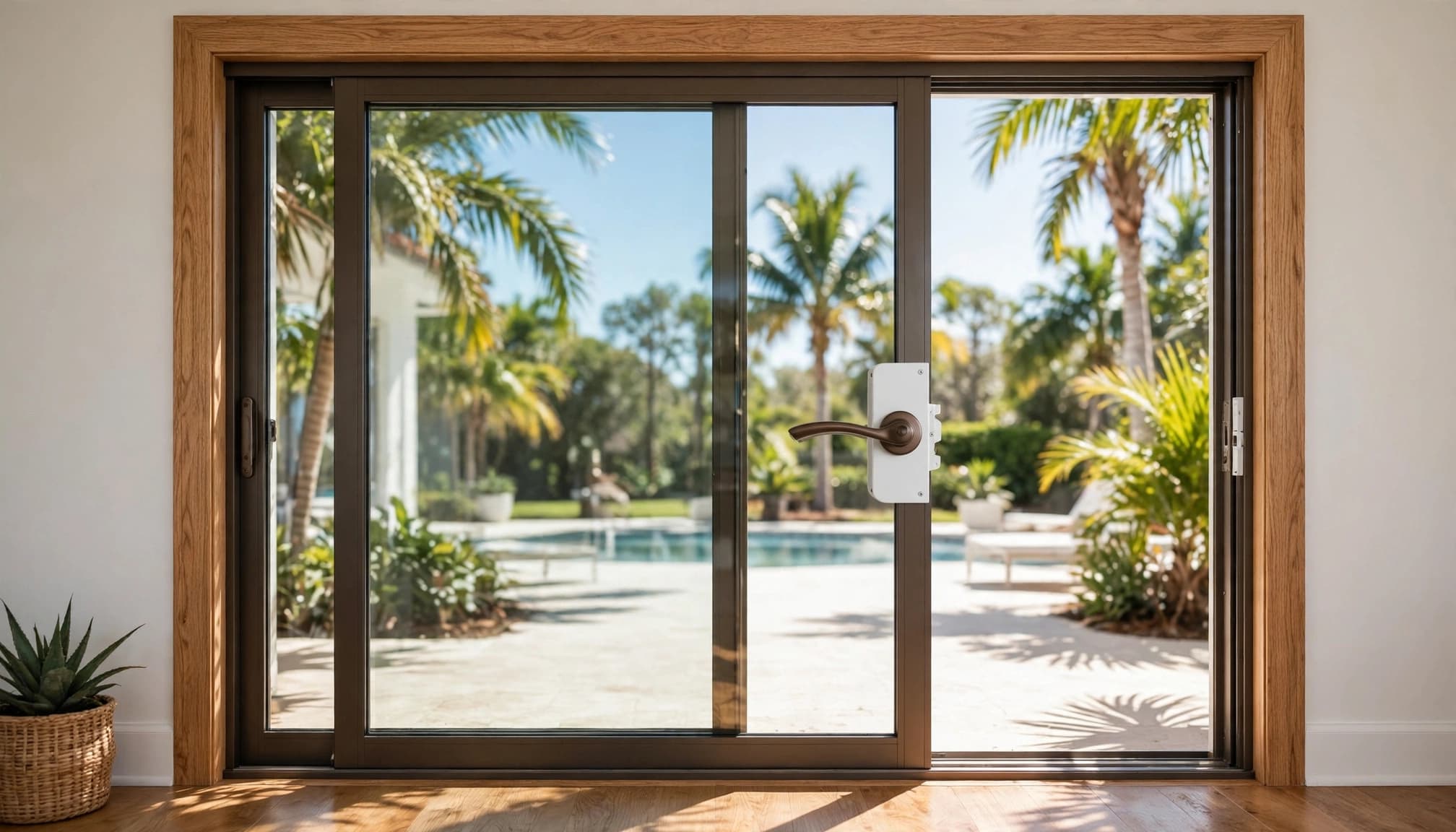
A Sliding Glass Door Replacement Handle can improve grip without changing the lock itself. Luuv Handle's retrofit design fits over compatible existing hardware, so the original handle, latch, and lock remain in place.
That distinction matters. The product is not a replacement mortise mechanism, and it does not repair a failed latch. It gives you a stronger handhold when the door works but the recessed factory pull is hard to use, especially with wet hands or limited grip strength.
Luuv Handle is made in the USA and is patented until 2037. It requires no alteration to the door and no drilling. The steel-and-oak construction is offered in white and bronze finishes, with water-resistant oak suited to exterior-facing sliders.
Confirm the plate size and installation method
Before ordering, measure the visible door plate. Luuv Handle products are made for compatible sliders with 7.25-inch by 1-inch door plates. The company describes the retrofit as fitting over most standard sliding glass door handles, so it should not be treated as a universal fit.
The installation uses the existing mounting area. Luuv's instructions call for loosening the screws from inside, sliding the handle into position, setting the top cap, and tightening the screws from inside. Compatible installations take about 30 seconds.
For a detailed sequence, follow the Luuv Handle installation instructions. The sliding door handle retrofit FAQs also confirm that the original lock and latch remain usable after installation.
Finish the Repair With Function Tests
A repair is complete only when the door closes, latches, locks, and opens without force. Test the whole assembly rather than judging the job by appearance.
Test the lock while the door is open
Operate the latch about 10 times with the panel open. It should move with steady resistance and return fully each time. Listen for grinding, chatter, or a sudden jump in movement.
Check that the handle remains level and firm. If it shifts, loosen the fasteners slightly, center the handle, and tighten evenly. Avoid overtightening because excessive pressure can crush vinyl, distort a thin backplate, or bind the spindle.
Then slide the panel slowly. It should move on the track without scraping or jumping. A handle cannot correct worn rollers, a damaged track, or a door that has dropped out of alignment.
Test the closed door without forcing it
Close the panel gently and confirm that the latch seats fully in the keeper. The lock should engage without lifting the door, pushing the panel, or slamming it into the frame.
If the latch works only when you lift the panel, inspect roller adjustment and alignment. If it works open but misses closed, look at the keeper and the panel height. A new mortise lock will not correct a door that is sitting too low or too high.
Once the door works, vacuum the track and inspect the keeper screws. Run the lock through several cycles each month, especially after wind-driven rain, yard work, or renovations. Avoid slamming the panel because repeated impact stresses the latch, rollers, keeper, and handle.
Choosing a Replacement Handle After the Lock Repair
The right handle depends on which side of the door needs a better grip. An interior handle may be enough when the exterior pull already works well. An inside-and-outside set makes sense when people use the door from both directions.
Luuv's bronze exterior handle page lists a regular price of $30, while its interior bronze option is designed for compatible 7.25-inch by 1-inch plates. Product pricing and availability can change, so confirm the current listing before ordering. The bronze sliding glass door replacement handle is one available example.
For coordinated access on both sides, review the inside-and-outside retrofit handle bundle. The bundle information includes real oak handles and offset right- and left-hand options. A white sliding glass door replacement handle offers a lighter finish for doors where bronze would not match the existing trim.
Choose the handle only after the door rolls correctly and the mortise lock engages. A comfortable grip can make it easier to pull the panel fully shut, but it cannot repair worn rollers, a bent frame, or a failed latch.
Frequently Asked Questions
Can I replace the handle without replacing the mortise lock?
Yes, when the lock and latch still work. A retrofit handle can fit over compatible existing hardware and leave the original lock in place. If the latch does not move, the thumbturn spins freely, or the handle cannot operate the mechanism, diagnose the lock before choosing a grip upgrade.
How do I know whether the mortise lock is bad?
Test it with the door open. If the latch will not extend, retract, or stay in position, the internal mechanism may have failed. If it moves smoothly open but misses the keeper when closed, check alignment, rollers, and panel height first.
Can I install a retrofit handle on any sliding glass door?
No. Confirm the door plate dimensions and hardware shape before ordering. Luuv Handle specifies compatibility with 7.25-inch by 1-inch door plates and most standard sliding glass door handles. Measure your existing plate instead of relying on appearance.
When should I call a professional?
Get help when the frame is bent, the glass is damaged, the panel is difficult to lift, the lock uses an unusual multi-point system, or the replacement does not match the original part. A technician can identify the lock and adjust the panel without forcing delicate hardware.
Conclusion
A safe patio door mortise lock replacement begins with a clear diagnosis. Match the internal lock by its measurements and latch design, work with the panel open, and test every function before trusting the door.
When the lock still works but the factory pull is hard to use, a retrofit handle is a simpler answer. A compatible Luuv Handle is made in the USA, patented until 2037, and installs with no alteration to the door and no drilling. The best repair is the one that fixes the actual fault while preserving the parts that already work.