

A sliding patio door can become frustrating long before it needs to be replaced. Patio door repair often restores smooth movement, a reliable latch, or a better grip without disturbing the entire opening.
Start by matching the fix to the failed part. A clean track, adjusted rollers, secure glass, and a comfortable handle each solve different problems.
Identify the Problem Before You Replace Anything
A patio door is a system of glass, rollers, track, frame, lock, seals, and hardware. One weak part can make the whole door feel worn out.
A hard-to-grip handle is usually a hardware issue
Many older sliding doors have shallow recessed pulls. The door may still roll and lock correctly, but opening it can hurt your fingers or require an awkward tug.
That problem calls for a handle upgrade, not a new door. First, test the panel with steady pressure near the existing pull. If it glides and latches properly, the door itself may be in sound condition.
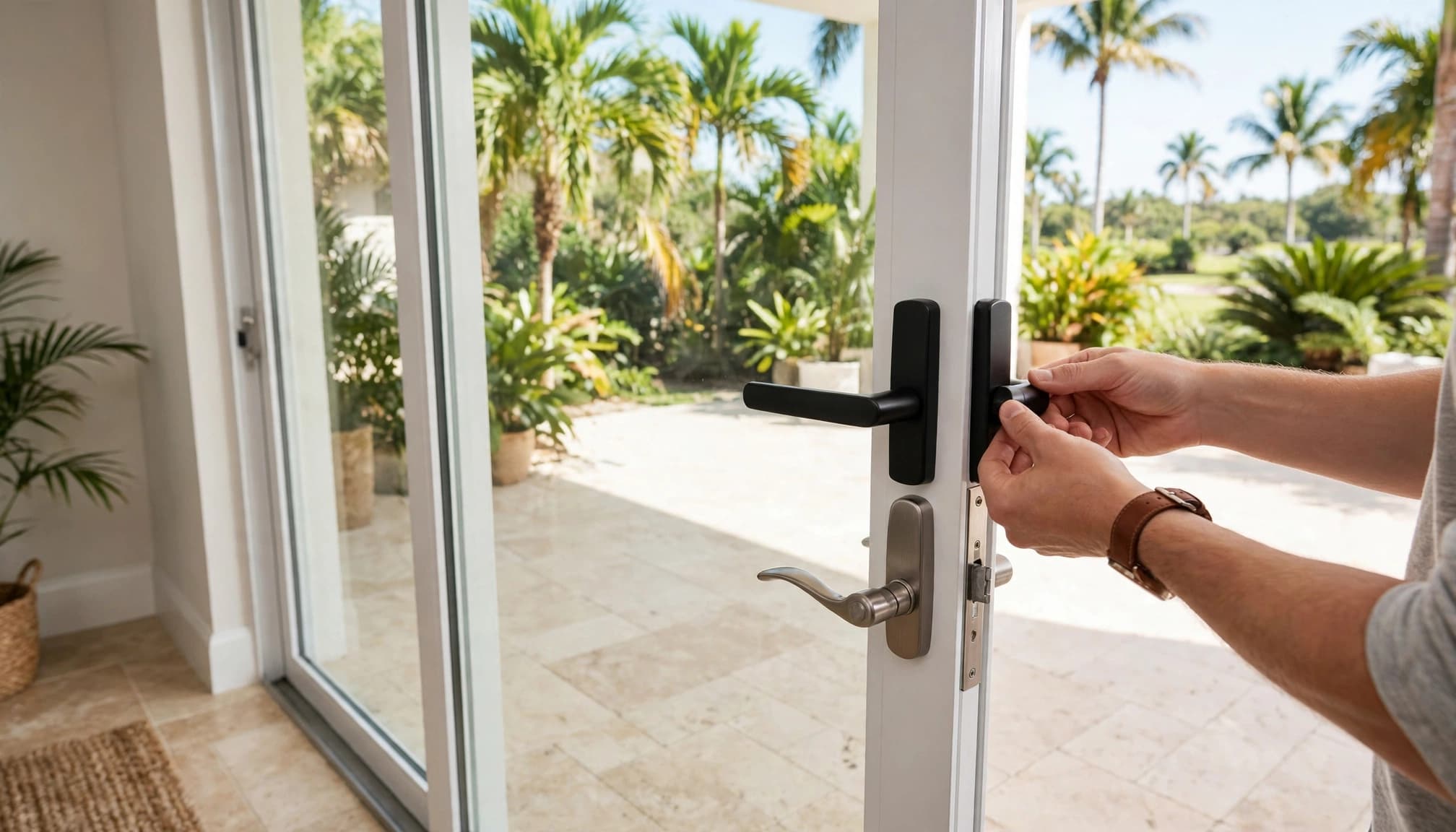
Dragging and latch trouble point to alignment
Clean leaves, sand, pet hair, and grit from the track before adjusting anything. Then open and close the panel several times. A smooth door should move with steady pressure, not scrape, chatter, or require you to lift the panel.
If the latch misses its strike plate, check panel alignment before replacing lock hardware. Small roller-height adjustments can restore the panel's position. Test the latch after every adjustment, because a door that slides open after locking needs prompt attention.
A handle improves control, but it cannot correct a dropped panel, worn rollers, or a latch that does not hold.
When Patio Door Repair Is Enough
Repair makes sense when the failure is limited and the main door structure remains solid. Replacing a whole unit for a single worn component creates more work than the problem requires.
Repair the moving parts when the frame is sound
A panel that drags in one spot may have debris in the track or a damaged running surface. A panel that grinds everywhere, drops suddenly, or remains difficult after cleaning may have worn rollers.
Roller replacement can require lifting a heavy glass panel out of its track. Don't remove the panel alone. If you cannot identify the roller system or safely support the glass, a sliding-door technician is the safer choice.
A door that drifts while unlocked may need alignment or roller adjustment. However, a locked panel that creeps open needs a closer inspection of the latch, strike plate, and lock.
Replace glass or the full door for major failures
A crack does not always mean the entire patio door needs replacement. Glass-only replacement can be practical when the sash is square, the track works, and the lock engages cleanly.
Fog or moisture between panes often indicates a failed insulated glass unit. A glass professional can assess whether the sealed unit can be replaced while the frame stays in service.
Full replacement becomes more reasonable when several major parts have failed together. Examples include a badly corroded or bent frame, extensive rot, a leaking sill, damaged surrounding structure, or tracks that cannot be repaired.
Use a Replacement Handle for a Better Daily Grip
Once the door rolls, closes, and locks as intended, the handle becomes the part you use every day. A larger grip can make a working slider easier to control without changing its basic hardware.
A Sliding Glass Door Replacement Handle fits a usability problem
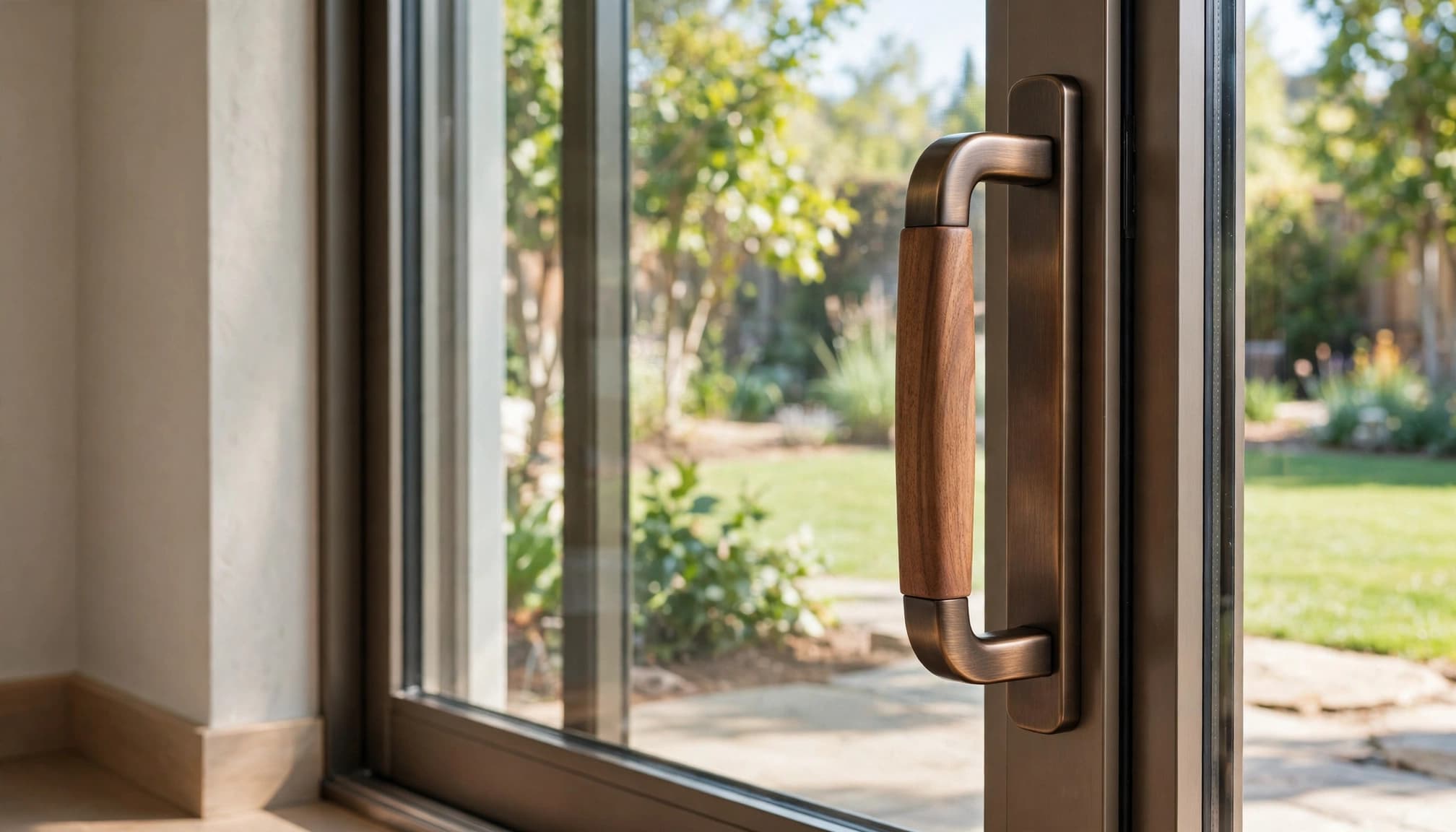
A Sliding Glass Door Replacement Handle is a practical option when the factory pull feels too small, cracked, loose, or uncomfortable. It should complement a sound door, rather than hide a mechanical fault.
Luuv Handle fits over compatible existing hardware, keeping the original latch and lock in place. The retrofit handle is made in the USA, patented until 2037, and requires no alteration to the door and no drilling.
That matters when you want a more substantial grip without cutting into the frame, drilling new holes, or removing the moving panel. The handle uses steel for strength and a water-resistant oak grip for patio conditions.
Choose the finish and coverage you need
White and bronze finishes can blend with common door frames, trim, and exterior hardware. Choose an interior handle if the inside pull is the daily annoyance. Choose an exterior option when access from the patio side needs improvement, too.
For a coordinated update on both sides, consider a white inside and outside sliding door handle bundle. Before buying, confirm your panel's direction and clearance near any screen door.
Confirm Patio Door Handle Compatibility First
A retrofit only works when the existing hardware matches the product's mounting requirements. Measuring before ordering avoids a frustrating return and prevents unnecessary changes to the door.
Measure the existing door plate
Luuv Handle retrofit products fit sliding doors with a 7.25-inch by 1-inch door plate. Measure the plate itself, not the overall handle or the recessed opening around it.
Also check that the new handle will not interfere with a screen door, blinds, or nearby trim. A compatible fit lets the handle install over the existing plate while preserving the original lock and latch.
The retrofit sliding glass door handle FAQ covers fit, materials, finish options, and the no-drill design. If your plate does not match the stated size, do not force the handle onto the door.
Install over the original hardware
For a compatible slider, installation takes about 30 seconds. Loosen the interior screws, slip the retrofit handle over the existing plate, set it into position, and retighten the screws.
The process does not require drilling, cutting, or removing the original handle. Follow the sliding patio door handle installation guide for the correct mounting sequence and a final fit check.
After installation, slide the door slowly and lock it several times. The handle should feel firm, while the door should still latch without lifting, slamming, or pushing the panel sideways.
Protect the Track, Sill, and Weather Seals
Routine care helps you spot small problems before they turn into a more involved patio door repair. It also keeps the newly improved grip from becoming a substitute for basic maintenance.
Sweep the track and clear exterior drainage holes so rainwater has a path out. Twice a year, inspect weatherstripping, seals, fasteners, and the sill for wear. After storms, look for standing water, stained trim, soft flooring, or changes around the frame.
Do not cover drainage paths with caulk. If water flows toward the interior, the sill flexes, or dampness keeps returning, arrange a professional inspection. Those signs can involve flashing, framing, or concealed water damage.
Know When to Call a Door Professional
Some problems carry safety and security risks. A professional can inspect the door without putting the glass, frame, or homeowner at greater risk.
Call for help if the glass is cracked, the aluminum stile is bent, the jamb is damaged, or the panel binds severely. Get prompt service when the lock will not hold, the door slides open after locking, or the frame appears loose.
Avoid prying up the frame or forcing a stuck panel. Repeated hard pulls can damage rollers and tracks further. A technician can identify whether the repair needs roller work, a manufacturer-matched rail, glass replacement, lock service, or a full door assessment.
Key Takeaways
- Clean the track and check the latch before deciding that the whole door needs replacement.
- Roller adjustments may correct a sagging panel, but severe grinding or damaged glass needs professional attention.
- A door with a sound frame, working lock, and smooth movement may only need a more comfortable handle.
- Luuv Handle fits compatible 7.25-inch by 1-inch door plates and installs over existing hardware.
- The handle is made in the USA, patented until 2037, and needs no door alteration or drilling.
- White and bronze options let homeowners update the grip while keeping the original latch and lock.
Frequently Asked Questions
Will a new handle fix a patio door that sticks?
A replacement handle can make a properly working door easier to open, but it will not repair worn rollers, a bent track, or panel misalignment. Clean the track first, then test the rollers and latch. Address mechanical problems before adding a new grip.
Do I need to remove the old sliding door handle?
No. A compatible Luuv Handle fits over the existing door plate. The original handle, latch, and lock remain in place, so the retrofit does not require door alteration or drilling.
How do I know if my door will fit the retrofit handle?
Measure the existing door plate. Luuv Handle retrofit products are designed for sliders with a 7.25-inch by 1-inch plate. Check handle orientation and screen-door clearance before ordering.
When is a full patio door replacement the better choice?
A complete replacement may be appropriate when the frame has extensive rot or corrosion, the sill leaks, the surrounding structure is damaged, or several major components fail together. Cracked glass, severe binding, and loose framing also deserve professional evaluation before you choose a repair path.
Choose the Smallest Fix That Solves the Real Problem
A patio door does not need replacement because its recessed pull is uncomfortable. First restore safe operation by cleaning the track, correcting alignment, and addressing damaged rollers or locks.
Then add a durable retrofit handle if the door needs a more comfortable grip. This approach protects the original door while making one of your home's busiest entry points easier to use.