

A sliding glass door can look closed while still leaving doubts about whether the latch has engaged. Good patio door security starts with a panel that rolls smoothly, closes fully, and locks without force.
Pin locks, track bars, and anti-lift blocks each address a different part of the door. A comfortable retrofit handle can also help you pull the panel completely shut, but it does not replace a failed lock or repair worn rollers. Start by identifying the actual problem, then choose upgrades that work together.
How the three layers improve patio door security
Sliding glass doors have several points that need attention. The latch holds the panel closed, the lower track controls movement, and the frame helps prevent unwanted lifting. Each upgrade supports a different point.
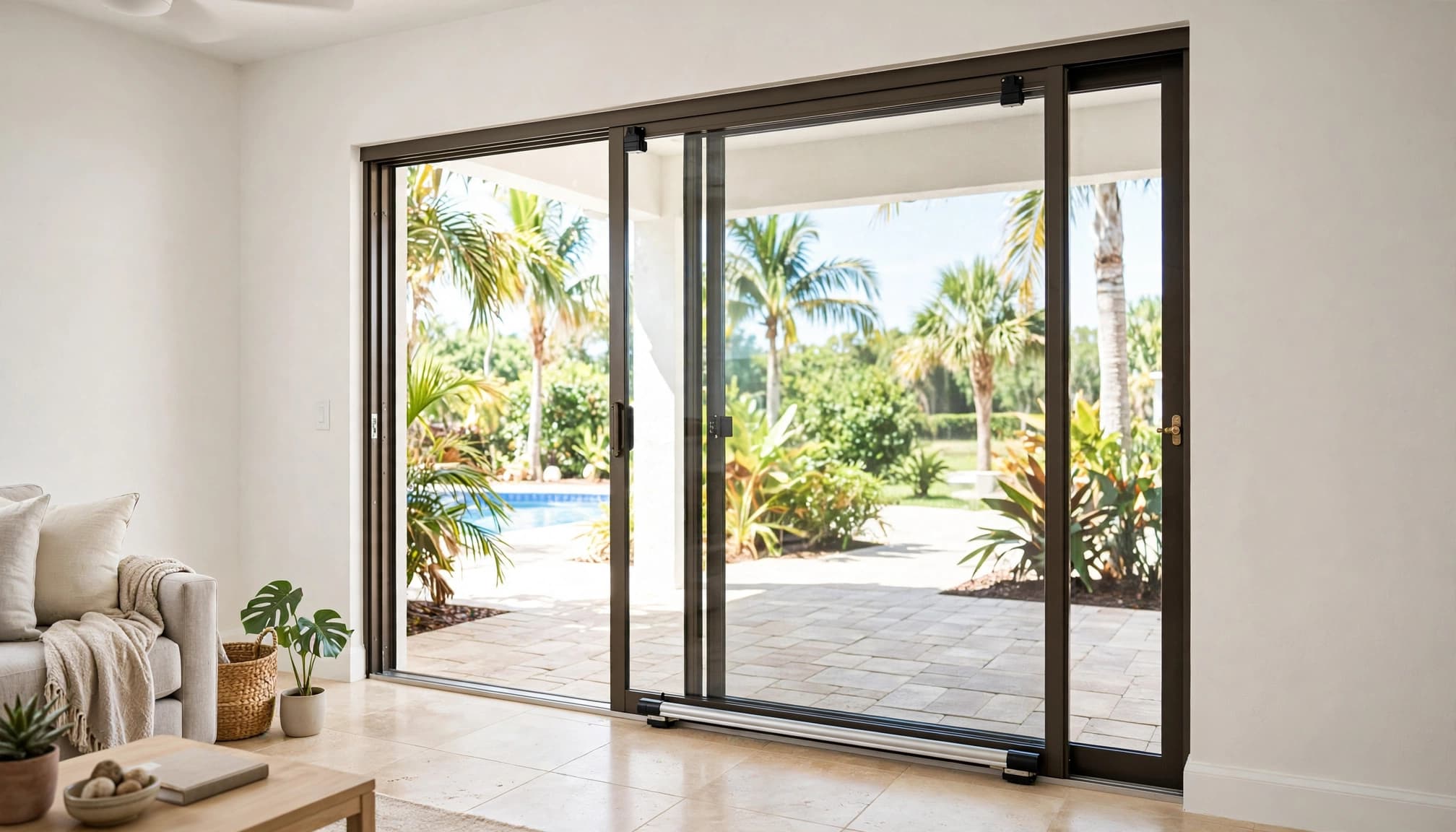
Pin locks secure the panels together
A pin lock passes through the stationary frame and the moving panel when the door is closed. This adds a physical connection beyond the built-in latch. Some designs mount near the meeting stile, while others fit through the frame at a lower position.
Check the product instructions before installation. The lock must align cleanly without forcing the glass panel or damaging the frame. Test the door several times after fitting it, then remove or disengage the pin before opening the panel.
A pin lock is useful only when the door closes squarely. If the panel stops short of the jamb, fix the alignment first.
Security bars block movement in the lower track
A removable security bar sits in the bottom track or between the sliding panel and the frame. When adjusted correctly, it limits how far the panel can move.
Measure the opening before buying one. The bar should fit firmly without bending the frame or preventing normal operation when removed. Keep it where everyone in the home can reach it, especially if the patio door is part of an emergency exit.
Security bars can add a second physical measure, but they shouldn't replace a working latch. Use one with care if children, older adults, or guests need to exit through the door quickly.
Anti-lift blocks address vertical movement
Anti-lift blocks fit near the upper frame or along the top of the sliding panel. Their purpose is to reduce the amount of vertical movement available when the door is closed.
The clearance must be precise. A block that presses against the panel can create drag, while one with too much space may not perform its intended function. Follow the hardware instructions and confirm that the panel still rolls freely after installation.
Never use an anti-lift block to compensate for a bent frame or badly worn rollers. Those problems need repair before adding extra hardware.
Check the existing door before adding security hardware
Many patio door problems begin with movement or alignment rather than the lock itself. A handle, bar, or pin cannot correct a damaged track.
Test the rollers, track, and latch
Open the panel slowly and pay attention to how it moves. A healthy door should travel with steady resistance instead of chatter, dragging, or sudden jumps. Clean out leaves, grit, and pet hair before making adjustments.
Inspect the track for dents and check the frame reveal for uneven gaps. A door that sits higher on one side may need a roller adjustment. When the panel is closed, the latch should engage its keeper without lifting, pushing, or slamming the door.
If the latch misses the keeper, adjust the rollers before replacing lock hardware. Pulling harder on the handle can bend the latch, damage the keeper, or worsen the alignment.
Know when the lock needs replacement
A working handle doesn't prove that the mortise lock works. Check whether the latch extends fully, retracts smoothly, and meets the keeper at the correct height.
Replacement may be appropriate when the latch no longer engages, the internal mechanism feels loose, or the handle mounting points are damaged. Match the new part to the existing lock style, screw spacing, door thickness, and handle orientation.
Cracked glass, a bent aluminum stile, a damaged jamb, or severe grinding calls for a qualified sliding-door technician. Heavy panels can weigh hundreds of pounds, and removing one without proper support can cause injury or glass damage.
Choose a replacement handle that fits the door
A hard-to-grip recessed pull can make a properly working door frustrating. Wet hands, limited grip strength, and a heavy panel all make a shallow factory pull harder to use.
A larger handle gives you more control when pulling the panel fully closed. That can make it easier to feel when the latch reaches the keeper, although the handle itself doesn't repair the lock.
Measure the existing plate first
Luuv Handle retrofit products are made for sliding doors with a 7.25-inch by 1-inch door plate. Measure the plate on your door before ordering, and check clearance between the exterior handle and any screen door.
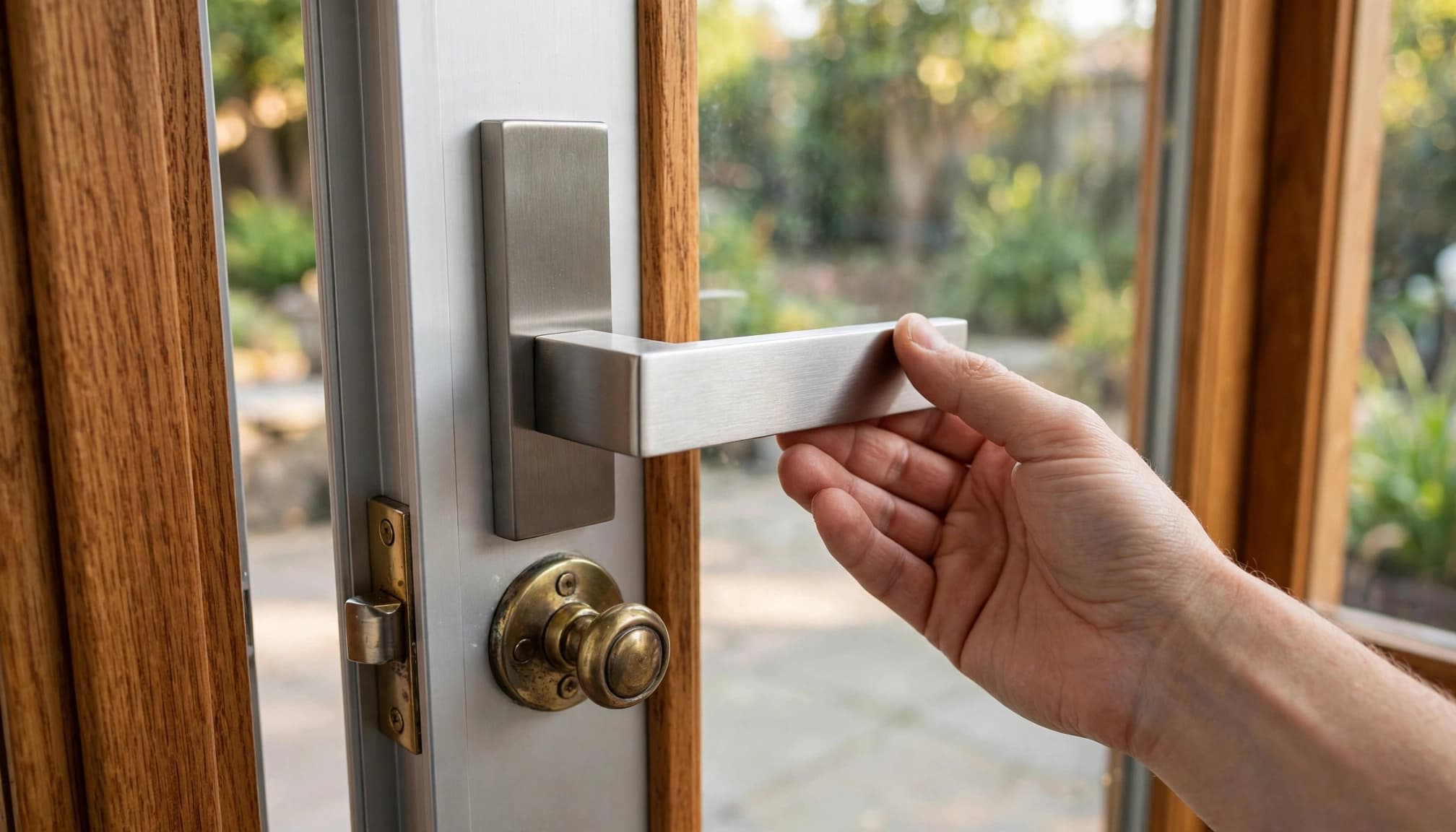
The retrofit design fits over compatible existing hardware. You keep the original lock and latch in place, so the new grip complements the door's security hardware instead of replacing it.
Review the retrofit sliding glass door handle FAQs before ordering if you're unsure about fit. A product that matches the plate dimensions still needs enough space around the frame and screen.
Pick the finish and coverage you need
Luuv Handle uses durable steel with a water-resistant oak grip. White and bronze finishes offer different looks, while interior, exterior, and inside-and-outside options cover different use patterns.
An interior handle may be enough when the door is opened mainly from inside. An inside-and-outside bundle makes more sense for a patio, lanai, rental property, or frequently used rear entrance.
A comfortable grip can also help prevent twisting and slamming. Those habits place extra stress on the rollers, latch, keeper, and frame.
Why a no-drill retrofit can be the right upgrade
A traditional handle replacement may require removing the original assembly or matching internal lock parts. That makes sense when the old hardware has failed, but it is unnecessary when the latch works and the main problem is grip.
Luuv Handle is made in the USA and is a patented product until 2037. It requires no alteration to the door and no drilling. Its retrofit design clamps over compatible existing hardware, preserving the original lock and latch.
Install it after the door operates correctly
Complete track cleaning, roller adjustments, glass work, and lock repairs before installing a new grip. The handle should improve control after the panel is already moving and closing correctly.
On a compatible door, installation takes about 30 seconds. The basic sequence is to loosen the interior screws, slide the handle over the existing plate, seat the top cap, and tighten the screws again from inside.
Follow the sliding glass door handle installation guide for the correct placement and fastening sequence. Do not overtighten the screws, because excessive pressure can affect the fit.
Test the complete door afterward
Open and close the panel several times with steady pressure. Confirm that the new handle feels rigid and that it doesn't rub the frame, screen, or weatherstripping.
Then close the door normally and operate the original latch. It should engage without shoulder pressure or repeated attempts. Test any pin lock, bar, or anti-lift block separately so you know each device can be engaged and removed properly.
A better grip can help you close the panel completely, but it cannot make a failed latch reliable.
Match each upgrade to the problem
The right combination depends on what you find during inspection. Avoid adding hardware simply because the door feels difficult to use.
Use a security device when the door already aligns
A pin lock, lower-track bar, or anti-lift block can add another physical measure when the panel closes squarely and the existing latch works. Choose based on the opening, frame clearance, and how quickly the door must open in an emergency.
Do not force a bar into a narrow track or install a block that causes the panel to drag. Added resistance can encourage slamming and may place stress on the frame.
Use a retrofit grip when the handle is the weak point
A Sliding Glass Door Replacement Handle makes sense when the rollers, track, latch, and keeper work properly but the original pull is too shallow, loose, or uncomfortable.
For a compatible door, Luuv Handle's steel-and-oak construction offers a larger handhold without changing the door. The bronze sliding glass door replacement handle is one available finish option, while white models provide a lighter appearance around white or neutral frames.
If the latch fails, choose a matching lock repair instead. A new grip should support a sound door, not hide a mechanical fault.
Key takeaways for a safer, easier-to-use slider
- Test the panel's movement before changing the handle or lock.
- Clean the track and adjust the rollers when the door drags or the latch misses.
- Use a pin lock, lower-track bar, or anti-lift block only after confirming fit and clearance.
- Keep emergency exit paths usable when adding removable security hardware.
- Measure the existing plate before ordering a retrofit handle.
- Luuv Handle fits compatible 7.25-inch by 1-inch door plates.
- The product is made in the USA, patented until 2037, and requires no alteration to the door or drilling.
- Keep the original lock and latch in service when they operate correctly.
Patio door security FAQ
Does a replacement handle make a patio door more secure?
It can improve control by giving you a stronger grip for pulling the panel fully closed. It does not replace the latch, repair worn rollers, or correct a damaged keeper. Check that the existing lock engages before treating the handle as an upgrade.
Will a pin lock work on every sliding glass door?
No. Pin locks vary by frame design, panel arrangement, and available clearance. Confirm the lock's requirements against your door, and test the panel after installation.
Can I use a security bar with a pin lock?
These devices address different movement points, so they may be used together when the door and frame allow it. Make sure the bar can be removed quickly and that neither device prevents a required exit.
How do I know if a Luuv Handle will fit?
Measure the existing door plate. Luuv Handle products are made for compatible sliders with a 7.25-inch by 1-inch plate. The original hardware stays in place, and the retrofit handle installs over it without door alteration or drilling.
Should I replace the handle or the whole lock?
Replace or repair the lock when the latch fails to engage, the mechanism is damaged, or the mounting points are compromised. Choose a retrofit handle when the lock works but the original recessed pull is difficult to grip.
Conclusion
Effective patio door security begins with a door that rolls smoothly, closes squarely, and latches without force. Pin locks, security bars, and anti-lift blocks can add separate layers when they fit the frame and still allow safe operation.
If the door works but the factory pull is uncomfortable, a no-drill retrofit handle can improve daily control without removing the original lock. Measure first, repair mechanical problems before adding accessories, and choose hardware that supports a reliable close.