

Worn patio door weatherstripping can let in drafts, dust, and rain even when the glass panel looks fine. If the room feels hotter or colder near the slider, or you see daylight around a closed edge, the seal deserves attention.
Replacing patio door weatherstripping isn't hard, but buying the wrong profile can make the panel bind. You also need to separate a sealing problem from a hard-to-grip handle, because each calls for a different fix.
Why Patio Door Weatherstripping Wears Out
Sliding doors rely on narrow seals that face sun, humidity, movement, and dirt. Over time, pile fibers flatten, vinyl hardens, and adhesive-backed foam loses its shape. Coastal air can speed up that wear, especially around frequently used doors.
Signs the seal needs replacement
Check the door while it's closed and locked. Look for these signs:
- A visible gap between the panel and frame.
- Daylight along the vertical edges or meeting stile.
- Air movement on a windy day.
- Water or dirt collecting inside the track.
- Frayed pile, cracked vinyl, flattened foam, or loose sections.
- A noticeable increase in outside noise.
Run your fingers near the frame without touching the seal. A draft often reveals a failed section. You can also close a sheet of paper in several spots. If it pulls out with almost no resistance, that area may not be compressing correctly.
Separate a seal issue from a track issue
A sliding panel that feels heavy doesn't always need new weatherstripping. Dirt in the bottom track, worn rollers, a sagging panel, or a damaged latch can create similar symptoms.
Clean the track first and check whether the panel rolls smoothly. If the door still drags, inspect the roller adjustment screws at the bottom. A replacement seal should improve the fit without stopping the panel from moving freely.
A thicker seal isn't automatically better. If it presses too hard against the panel, it can increase operating force and wear the rollers.
How to Find the Right Patio Door Weatherstripping
The correct replacement must match the seal's shape and attachment method. Color matters less than the profile, size, and location.
Identify the seal style
Many sliding doors use pile weatherstrip, sometimes called a brush seal. It has fuzzy fibers mounted on a narrow backing or carrier. Some versions include a plastic fin for added contact between the moving panel and frame.
Other doors use vinyl seals, foam tape, or interlocking strips at the meeting stile. The meeting stile is the vertical edge where two sliding panels come together. Fixed-panel seals can look similar, but they may attach differently.
Remove a short piece only if you can do so without damaging the remaining seal. Photograph both sides and compare the replacement's backing, pile height, and fin position. A hardware supplier or door manufacturer can often identify the profile from that sample.
Measure before ordering
Measure the full length of the existing strip, then add a small amount for trimming. Don't stretch the material while measuring. Stretching can cause the replacement to shrink after installation.
Record the following details:
- Seal location, such as frame, panel edge, or meeting stile.
- Backing width and thickness.
- Visible pile or vinyl height.
- Whether the strip slides into a groove, presses into a channel, or uses adhesive.
- Door brand or model, if available.
Avoid choosing a generic foam strip for a moving edge unless the door manufacturer recommends it. Adhesive foam can interfere with the panel, collect dirt, or peel away in heat and humidity. The best patio door weatherstripping matches the original attachment method.
Replace Patio Door Weatherstripping Without Damaging the Frame
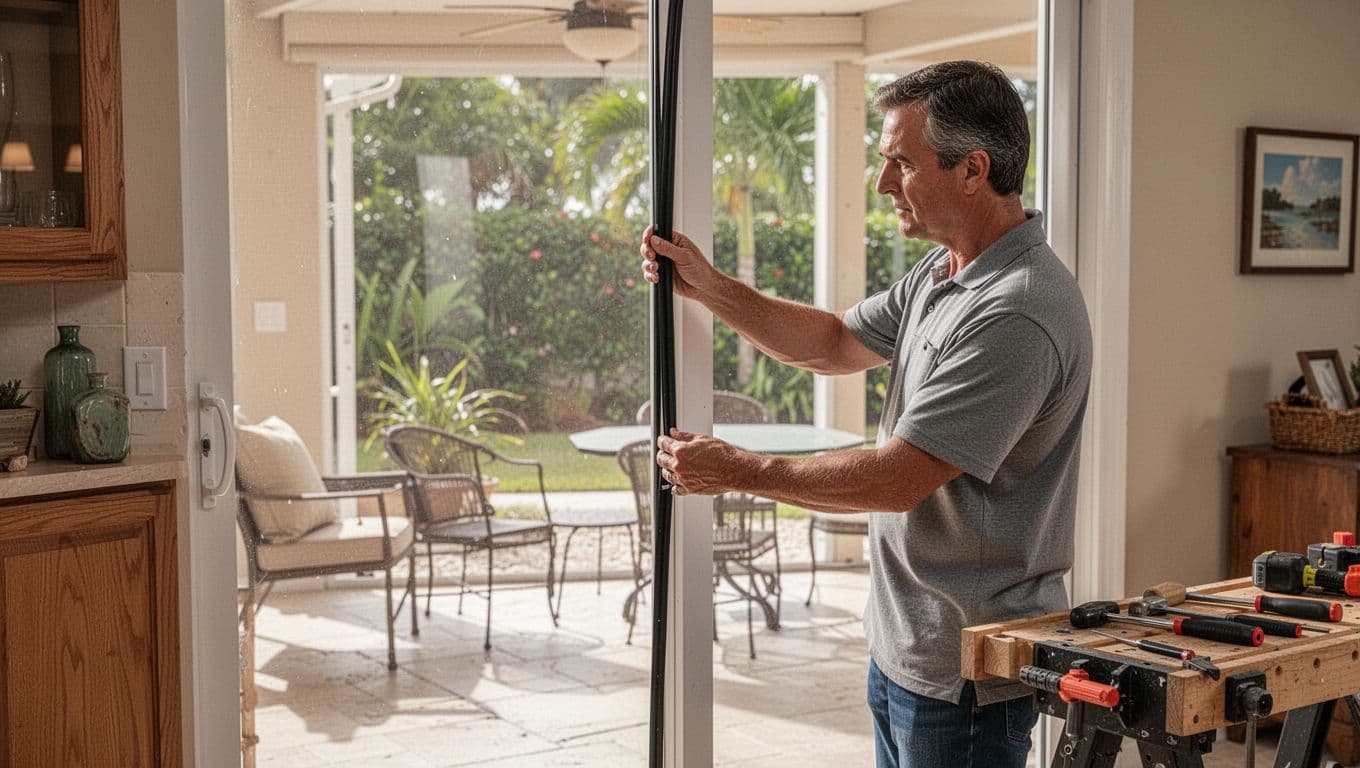
Gather the replacement seal, a screwdriver, needle-nose pliers, scissors or a sharp utility knife, mild soap, and a clean cloth. Wear gloves when handling an aluminum frame or removing a heavy panel.
- Open the door and inspect the attachment. Determine whether the seal slides into a channel, fits into a groove, or sticks to the frame. Take a photo before removing anything.
- Remove the old material carefully. Pull a channel-mounted strip out with pliers. If screws hold it in place, remove them and keep them in a small container. Use a plastic scraper for adhesive residue, so you don't gouge the frame.
- Clean and dry the surface. Remove dirt from the channel with mild soapy water. Let the area dry completely before installing adhesive-backed material. Avoid harsh solvents that can damage vinyl or finishes.
- Install the new seal in the same direction. Feed pile weatherstrip into its channel without stretching it. For adhesive products, press the strip down gradually while keeping it straight. Follow the original orientation at corners and meeting edges.
- Trim and test the door. Cut excess material with a clean, square cut. Close and lock the panel, then check for even contact. Open the door several times. It should glide without excessive resistance, and the latch should still align with the strike.
Some meeting-stile seals require panel removal. Sliding glass panels are heavy and awkward, so use a helper and follow the door manufacturer's removal instructions. Never force the glass panel against the frame.
After installation, wait for the seal to settle before making roller adjustments. If the door remains difficult to move, check the track and rollers rather than compressing the weatherstrip further.
When the Handle Is the Real Problem
Weatherstripping controls air and water leakage. It doesn't add a comfortable grip to a recessed or damaged handle. If the door seals properly but you struggle to open it, inspect the handle, screws, lock, and latch.
A retrofit handle can solve the grip problem without replacing the entire door panel. Luuv Handle products fit over most standard sliding glass door handles and keep the original lock and latch in place. Their compatibility guide lists doors with 7.25-inch by 1-inch door plates, so measure yours before ordering. You can find more sliding door handle fit information before choosing a style.
The installation takes about 30 seconds: loosen the existing screws, slide the handle into position, then tighten the screws. The retrofit design requires no alteration to the door and no drilling.
Luuv Handle is a veteran-owned Southwest Florida business. Its handles are made in the USA, use steel with water-resistant oak, and are a patented product until 2037. For a compatible white finish, see the sliding glass door replacement handle.
A new handle won't correct a draft, and new weatherstripping won't fix a cramped grip. Check both problems separately, then make the repair that matches what you find.
Conclusion
Good patio door weatherstripping should close the gaps without making the panel hard to operate. Match the replacement to the original profile, clean the channel, install it without stretching, and test the door before adjusting anything else.
If the seal works but the handle remains difficult to use, a retrofit option can improve the grip without drilling or changing the door. The right repair keeps the slider comfortable, secure, and easier to use every day.