

When your patio door won't close all the way, the handle may not be the real problem. Dirt in the track, worn rollers, a low panel, or a latch that no longer lines up can all stop the door before it reaches the jamb.
Start with the door's movement, then inspect the hardware. A smooth-running panel with an uncomfortable grip may need a retrofit handle, while a door that scrapes or binds needs attention at the track or rollers first.
Why a Patio Door Stops Short
A sliding door depends on several parts working together. The panel must sit at the right height, the rollers must move freely, and the latch must meet its keeper without force.
Start with the gap and movement
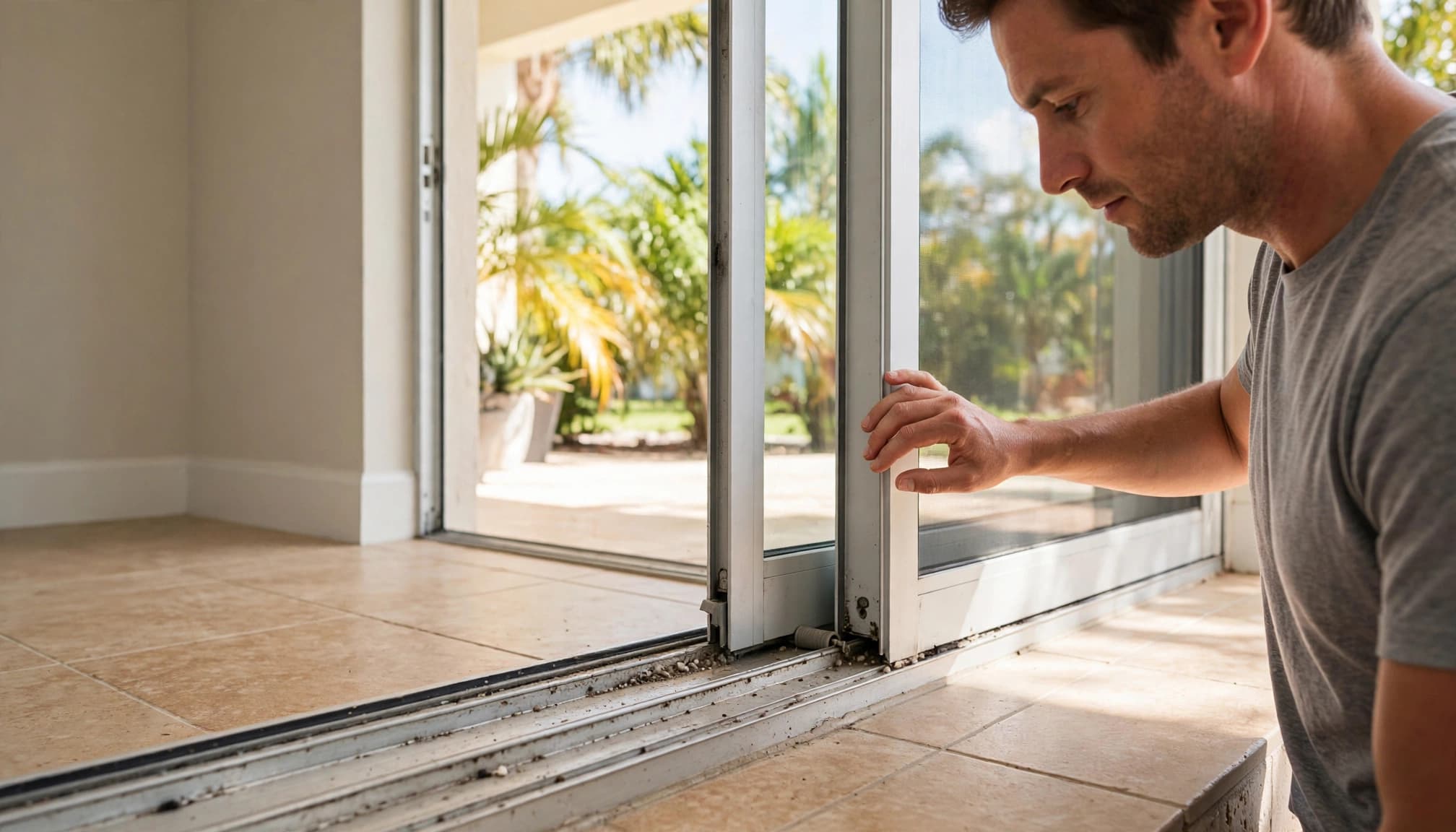
Close the panel slowly and look at the space around its edges. A wider gap at the top or bottom can point to a panel that sits unevenly. Rubbing near the sill often suggests that the door is riding too low.
Listen as you move it. Grinding, clicking, shaking, or sudden resistance usually deserves more attention than a loose handle alone. Also check whether the door improves after you move it several times. A rough first pass can indicate debris in the channel.
Separate the grip problem from the door problem
Try moving the panel with steady pressure near the existing handle. If it rolls smoothly but your fingers slip from a shallow recessed pull, the handle is probably making the door harder to use.
A handle won't repair a bent rail or worn roller. However, a better grip can reduce twisting and tugging once the panel moves and latches correctly.
Clean the Track Before Adjusting Anything
Sliding door tracks collect sand, hair, pet debris, leaves, and small stones because they sit close to the floor. Coastal homes can also collect fine sand and salt residue in the lower channel.
Remove debris without adding grease
Open the panel carefully and expose as much of the lower track as possible. Keep children and pets away while you work, and keep your fingers away from the roller area.
Use a vacuum with a narrow crevice attachment along both channels and into the corners. Follow with a soft brush or old toothbrush. Wipe the track with a damp cloth and mild cleaner, then dry the entire channel.
Avoid heavy oil and greasy household sprays. They may make the door feel smoother for a short time, but they trap dust and create sticky buildup. If the manufacturer allows lubrication, use a small amount of silicone-based dry lubricant made for sliding door tracks or rollers.
Inspect the rail after cleaning
Use a flashlight to look for dents, deep grooves, raised screws, rust, or flattened sections. Check the drainage openings in the sill as well. Blocked drainage can leave moisture around the track and roller assemblies.
After cleaning, slide the door several times. It should travel with steady resistance rather than grinding, jumping, or stopping in one place. If the door now closes and latches normally, routine cleaning may have solved the problem.
Check the Rollers and Panel Alignment
If the door still drags after cleaning, inspect its height and alignment before ordering a replacement handle. Most sliding glass doors have roller adjustment screws near the lower corners of the moving panel.
Make small, balanced adjustments
The adjustment screws may sit behind small plugs or inside openings in the frame. Their location and turning direction vary by manufacturer, so check the door manual when available.
Make a small adjustment on one side, then test the panel. If the result helps, make a similar adjustment on the opposite side. Many doors respond to roughly quarter-turn changes, but forcing the screw or turning it repeatedly can create a larger alignment problem.
The goal is a level panel that clears the sill, maintains an even reveal around the frame, and allows the latch to meet the keeper without lifting or pushing.
Know when to stop
Stop adjusting if the top rail begins to rub, the glass shifts, the panel feels unstable, or an adjustment screw resists. Raising the rollers too far can make the header bind. Leaving them too low can keep the bottom frame against the sill.
Worn rollers may have flat spots, seized bearings, corrosion, or damaged housings. Replacing them often requires lifting the heavy glass panel out of the frame. A qualified door technician can inspect the rollers, track, and opening without risking damage to the glass.
Choose a Compatible Replacement Handle
Once the door rolls and latches properly, inspect the existing handle and mounting plate. A loose, shallow, or difficult-to-grip pull can make a healthy sliding door feel broken.
Confirm the plate size first
Luuv Handle retrofit products fit sliders with a 7.25-inch by 1-inch door plate. Measure the existing plate before ordering, and compare the hardware with the product's compatibility information.
The retrofit design fits over most standard sliding glass door handles. It keeps the original handle hardware, lock, and latch in place rather than requiring you to remove the door hardware. Review the retrofit handle compatibility information before choosing a finish or configuration.
A sliding glass door replacement handle makes sense when the main problem is hand access, not panel alignment. It can give you a larger, more comfortable grip without changing the frame.
Match the finish and handle position
Luuv Handle options include white and bronze finishes, real oak grips, and offset right- or left-hand designs. An inside-and-outside set can be useful when both sides of the door need a stronger handhold.
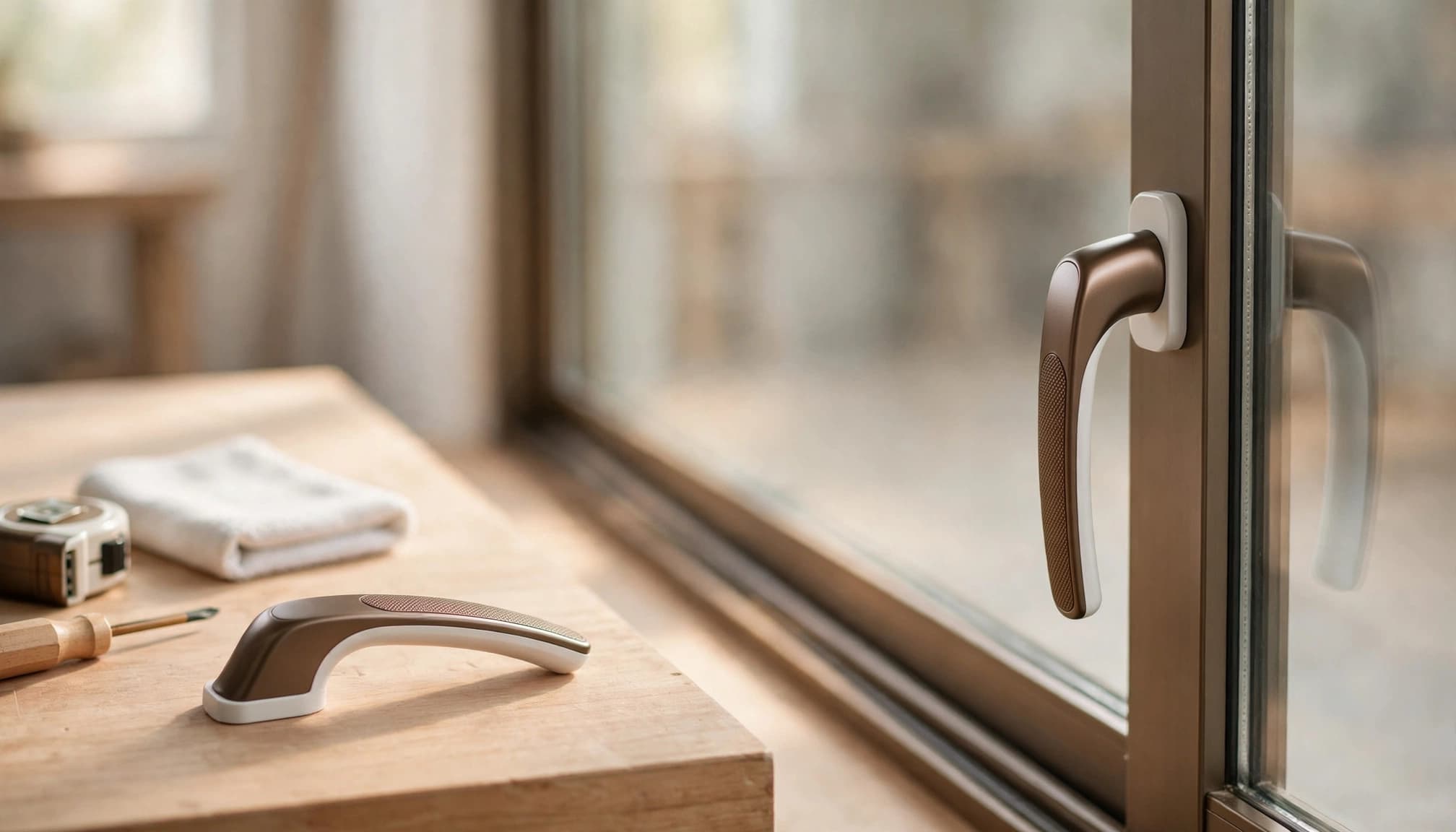
The handles use steel and water-resistant oak, which suits exterior-facing sliders exposed to humidity and rain. The products are made in the USA, and Luuv Handle is a patented product through 2037. The retrofit requires no alteration to the door and no drilling.
Install the Retrofit Handle Without Drilling
A compatible Luuv Handle installs over existing hardware instead of requiring new holes. That makes the upgrade useful for homeowners, property managers, and renters who want a better grip without changing the door.
Follow the installation sequence
The product instructions use a short process:
- Loosen the existing screws from the inside of the door.
- Move outside and slide the bottom of the new handle onto the existing plate.
- Set the top cap over the upper part of the plate.
- Pull the handle down until it seats.
- Return inside and tighten the screws.
The product page states that installation takes about 30 seconds on a compatible door. The retrofit sliding door handle installation instructions show the placement and fastening sequence.
Keep the original lock and latch in place. You don't need to drill, cut, alter the door, or remove the glass panel for this retrofit installation.
Test the door before finishing
Test the new grip with the door open first. Make sure the handle feels secure and doesn't interfere with the latch or frame. Then close the panel slowly and confirm that the latch engages without lifting, slamming, or forcing the door.
If the panel still stops short, remove pressure from the handle and return to the track, rollers, and alignment. The retrofit improves control, but it won't correct a damaged rail or failed roller assembly.
When the Handle Isn't the Whole Problem
A comfortable grip can change how the door feels, but it can't overcome serious mechanical resistance. Pay attention to symptoms that point beyond the handle.
Look for structural or roller damage
A panel that shakes, drops, scrapes heavily, or repeatedly comes off the track may have worn rollers or a damaged frame. Deep grooves and crushed sections in the rail can also prevent a new roller from running correctly.
Don't pry against the glass or try to remove a large panel by yourself. Sliding glass doors can be extremely heavy, and the roller assemblies may be hidden inside the lower frame.
Get help when the latch still misses
If cleaning and small roller adjustments don't restore alignment, a technician can check whether the panel, track, rollers, or opening has shifted. Professional inspection is especially sensible when the glass is loose, the frame is twisted, or the door won't remain stable.
A handle replacement is the right upgrade when the door operates correctly but the original pull is hard to hold. Track or roller repair comes first when the panel cannot travel or latch safely.
Key Takeaways
- Clean the entire lower track before adjusting rollers or buying hardware.
- Avoid household oil and heavy grease because they attract grit.
- Adjust rollers in small, balanced steps, and stop if the glass or frame becomes unstable.
- Measure the existing door plate before ordering a retrofit handle.
- Luuv Handle fits compatible 7.25-inch by 1-inch plates and installs over existing hardware.
- The product is made in the USA, patented through 2037, and requires no door alteration or drilling.
- A replacement handle improves grip, but it won't repair a bent track, worn roller, or misaligned panel.
FAQ About Patio Doors That Won't Close
Can a dirty track keep a patio door from closing?
Yes. Sand, hair, pet debris, and small stones can increase friction under the rollers. Vacuum both channels, brush the corners, wipe the track, and dry it fully before testing the door again.
Heavy oil usually makes the problem worse because it holds dust against the running surface. Use only a track or roller lubricant approved for the door, and apply it sparingly.
Should I adjust the rollers before replacing the handle?
Check the track and test the panel first. If the door scrapes, grinds, sits low, or has uneven gaps, inspect the rollers and alignment before focusing on the handle.
If the panel rolls smoothly but the recessed pull is too small or uncomfortable, a retrofit handle may solve the daily-use problem without disturbing the roller system.
Does the Luuv Handle require drilling or door modification?
No. The Luuv Handle fits over compatible existing hardware. It requires no alteration to the door and no drilling, while the original lock and latch remain in place.
Confirm that the existing plate measures 7.25 inches by 1 inch before ordering. The handle is made in the USA and is patented through 2037.
What if the new handle is installed but the door still won't close?
Check whether the panel was already dragging or misaligned. A replacement handle improves the grip, but it won't fix worn rollers, a bent track, loose glass, or a shifted frame.
Clean the track and test the latch again. If the panel still binds or the latch misses its keeper, stop forcing it and arrange a professional inspection.
Conclusion
When a patio door won't close all the way, diagnose the movement before replacing the handle. Clean the track, check the rollers, and confirm that the panel meets the latch without force.
Once the door operates correctly, a compatible retrofit handle can make opening and closing easier. Luuv Handle adds a stronger grip without drilling or altering the door, so the right repair addresses the actual problem instead of masking it.