

A patio door panel can look manageable until you lift it. Glass is heavy, edges chip easily, and a panel that enters the track crooked can damage rollers or scrape the frame.
When you reinstall patio door panel hardware after cleaning, repairs, or a roller replacement, patience matters more than speed. A careful setup protects the glass, keeps the track working properly, and helps the door glide again.
Before You Reinstall a Patio Door Panel, Check the Fit
Most sliding doors use a movable panel that rides on rollers in a lower track and sits inside an upper channel. However, track designs vary. Look at the door frame, roller screws, and panel orientation before attempting to lift anything.
If you took photos before removal, use them now. They can show which side faced indoors, where the rollers sat, and whether an anti-lift block or stop needs to go back in place.
Confirm the panel orientation
Set the panel upright on a padded blanket or cardboard, with the correct side facing the room. Keep the bottom edge off concrete, tile, or pavers. A small pebble can create a pressure point that chips tempered glass.
Check the weatherstripping as well. It should face the same direction it did before removal. Bent or loose pile weatherstripping can drag across the frame and make a properly installed panel feel hard to move.
Clean the upper and lower tracks
Vacuum dirt, leaves, pet hair, and old roller fragments from both tracks. Then wipe the channels with a damp cloth and dry them fully. Avoid packing grease into the track because it catches grit.
Inspect the bottom channel for dents and the top channel for loose screws. If the frame is bent, the glass is cracked, or the track has separated from the sill, stop and call a qualified door technician.
A patio door should never need brute force to enter its track. Resistance usually means the panel, rollers, or track needs another look.
Prepare the Work Area and Your Support
Clear furniture, rugs, and planters away from both sides of the opening. You need a direct path and a safe place to rest the panel if you need to reset your grip.
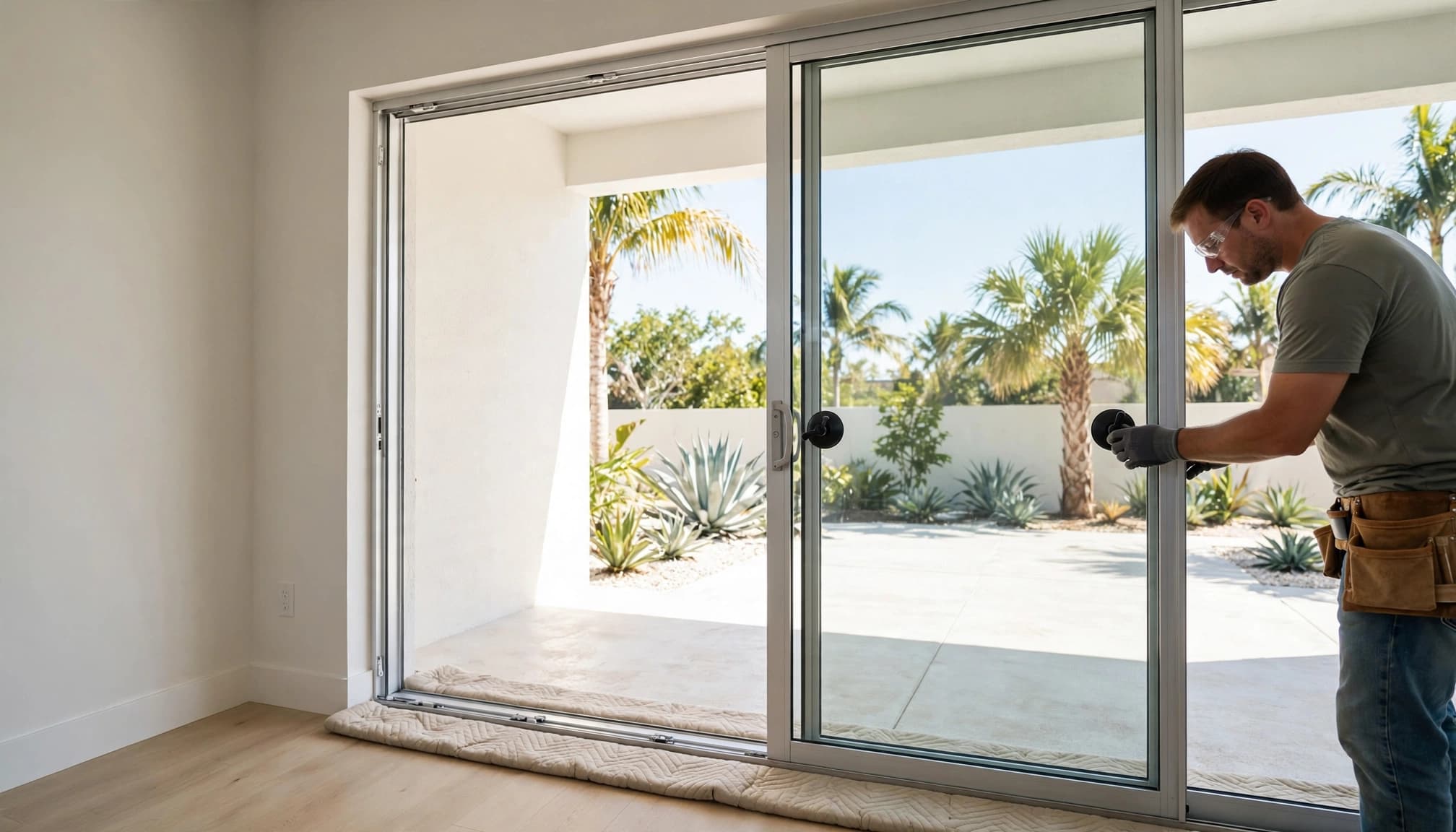
Wear closed-toe shoes, work gloves, and safety glasses. Ask a capable adult to help with large or heavy panels. Two people can keep the panel upright and avoid twisting it, which is safer for both the glass and your back.
Retract the rollers if your door allows it
Many sliding glass doors have adjustment screws near the lower corners. Turning these screws can raise the rollers into the panel, creating needed clearance during installation. Check your door manufacturer's instructions before turning them.
Back each adjustment screw off evenly. Don't remove it. If one roller stays extended farther than the other, the panel can enter the opening at an angle and bind.
Place a folded moving blanket along the threshold. It protects the sill while you position the bottom edge and gives you a safe landing spot if you need to lower the panel.
Lift the Panel Into the Track Without Forcing It
Bring the panel close to the opening while keeping it vertical. One person should guide each side when possible. Hold the frame, never the glass itself, and keep fingers away from the track.
Set the top edge first
Lift the panel high enough to place its top edge fully inside the upper channel. The top must clear the channel before you swing the bottom inward. A partial fit can let the panel slip out unexpectedly.
Once the top edge is seated, tilt the bottom toward the lower track. Lower it slowly until the rollers rest in the channel. Keep the panel square with the frame during this motion.
Lower the panel onto its rollers
With the panel resting in the lower track, gently slide it a few inches. If it stops, lifts, or rubs hard, remove it and inspect the roller height and track alignment. Don't slam the door or push harder.
After the panel moves freely, adjust the rollers a little at a time. Raise the panel until it clears the sill without scraping, but don't raise it so high that it binds against the upper channel.
Reinstall any anti-lift blocks, stops, or trim pieces that you removed. These small parts help keep the panel correctly positioned when the door is closed or lifted during use.
Test the Door, Lock, and Replacement Handle
Slide the door from fully open to fully closed several times. It should move with steady resistance, not chatter, drag, or jump. Check the reveal around the frame as well. Uneven gaps may mean one roller needs a minor adjustment.
Lock the door and confirm that the latch engages without lifting or pushing the panel. If the latch misses its keeper, adjust the rollers before changing the lock hardware.
Add a grip that doesn't require door modifications
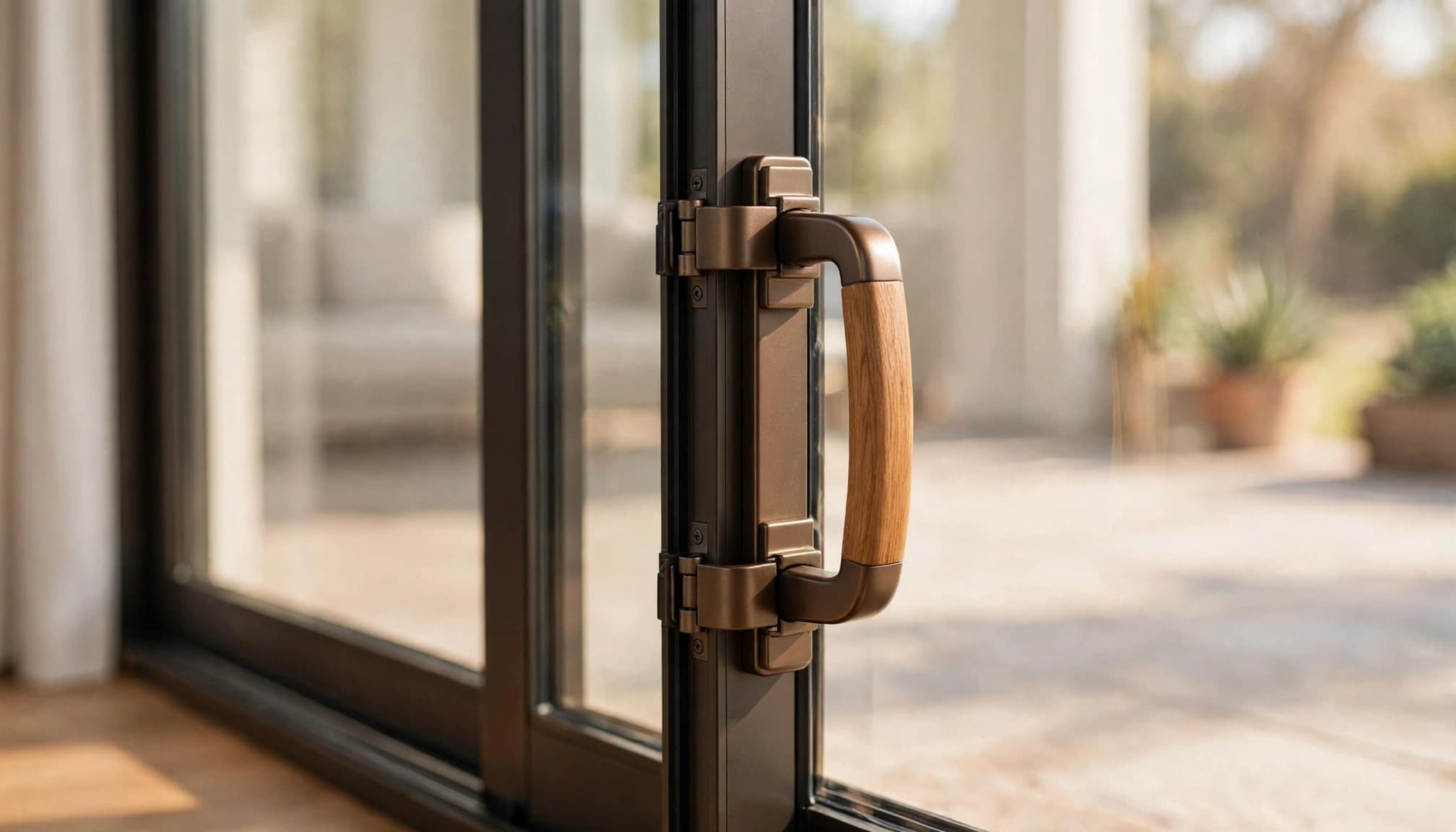
A working door can still be frustrating if its original recessed pull is shallow or difficult to grip. A Sliding Glass Door Replacement Handle can add a more comfortable handhold after the panel is back in place.
Luuv Handle is made in the USA, and it is a patented product until 2037. It requires no alteration to the door and no drilling. The retrofit design clamps over compatible existing hardware, so the original latch and lock remain in place.
Before ordering, confirm that your existing door plate measures 7.25 inches by 1 inch. Review the retrofit patio door handle compatibility details if you have an offset handle or an uncommon door configuration.
A Smooth-Sliding Door Starts With Careful Alignment
The safe way to reinstall a patio door panel is to clean the tracks, retract adjustable rollers, lift the top edge into place, and lower the panel without force. Small adjustments afterward are normal.
A properly seated panel protects the rollers, closes securely, and makes every trip to the patio easier. Finish the job with a comfortable, no-drill handle if the original pull still feels awkward.