

A hard-to-grip patio door can make a simple trip outside feel like a tug-of-war. Before you replace sliding door hardware, find out whether the problem is the grip itself or the door's movement.
A sliding glass door replacement handle can improve daily use without turning a small upgrade into a major repair. If the panel rolls smoothly and the existing pull is shallow, loose, or uncomfortable, a no-drill retrofit may be the right answer.
When You Can Replace Sliding Door Hardware Without Drilling
You can replace sliding door hardware without drilling when the existing mounting plate is sound and the new handle is designed to fit over it. This approach keeps the original door hardware, lock, and latch in place.
A retrofit handle addresses a grip problem. It doesn't repair a door that drags, scrapes, leans, or jumps in the track. Start by opening and closing the panel slowly. If it moves freely but feels awkward in your hand, the handle is likely the part worth changing.
Clean the track before blaming the handle
Sand, pet hair, paint chips, and small stones can make a healthy slider feel heavy. Vacuum the lower channel, brush out the corners, then wipe it with a damp cloth and dry it fully.
Avoid heavy oil or grease. Those products grab grit and can turn the track into a sticky paste. If cleaning restores easy movement, you have ruled out a roller or track issue.
A comfortable handle helps you guide a working door. It should never be used to force a panel that binds or grinds.
Know when the problem needs more than a handle
If the door catches in the same spot after cleaning, inspect the track for dents, deep grooves, rust, or raised edges. A panel that sits low on one side may need roller adjustment.
Worn rollers can have flat spots, cracked housings, or seized bearings. A warped frame, soft sill, cracked glass, or a track pulling away from the threshold calls for a qualified door professional. Don't try to remove a large glass panel alone.
Check the Existing Door Plate Before Ordering
No-drill hardware only works when the replacement fits the current plate. Measure the faceplate height and width, then note which side the handle sits on and where the lock is located.
Luuv Handle retrofit models fit sliders with 7.25-inch by 1-inch door plates. Check your dimensions rather than relying on a photo or a similar-looking door. A near match can sit crooked or interfere with the latch.
Choose a finish that fits the door
White hardware works well with many vinyl frames and light interior trim. Bronze offers more contrast against darker frames, wood tones, and screened lanais.
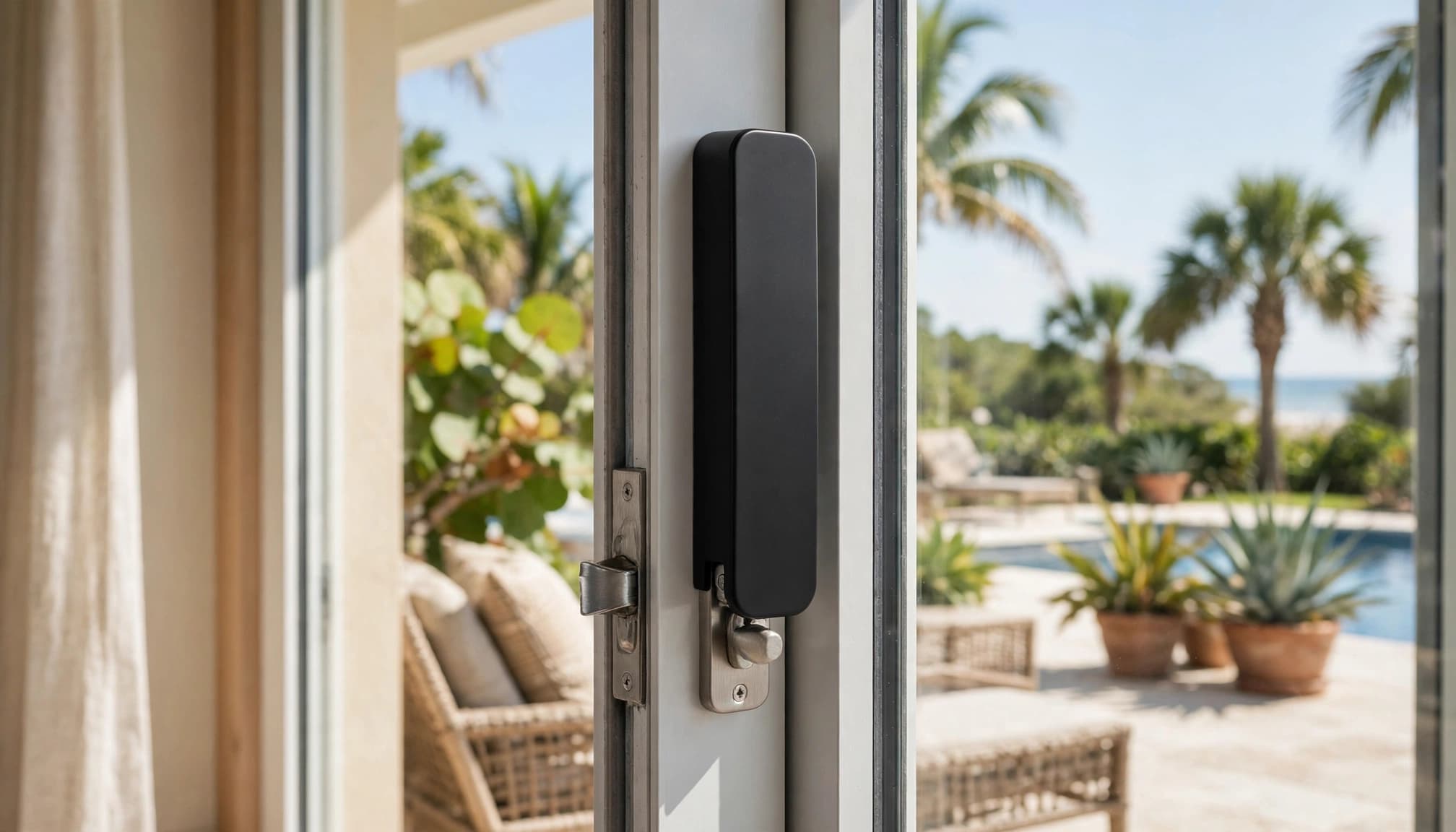
For a bright, clean finish, a white retrofit handle for sliding doors gives you a larger pull without replacing the original hardware. Each handle uses steel and water-resistant oak, so the oak grain adds natural variation.
Match the handle to how you use the door
An interior-only handle makes sense if the outdoor pull still feels secure. However, an inside-and-outside set is more practical for a frequently used patio, pool, or lanai entrance.
Property managers can also avoid unnecessary alteration between tenants. A handle that attaches over existing hardware keeps the door closer to its original condition.
How a No-Drill Handle Retrofit Installs
A proper retrofit mounts around the existing plate. You loosen the current screws, position the new handle over the hardware, then tighten the screws evenly. The original lock and latch remain where they are.
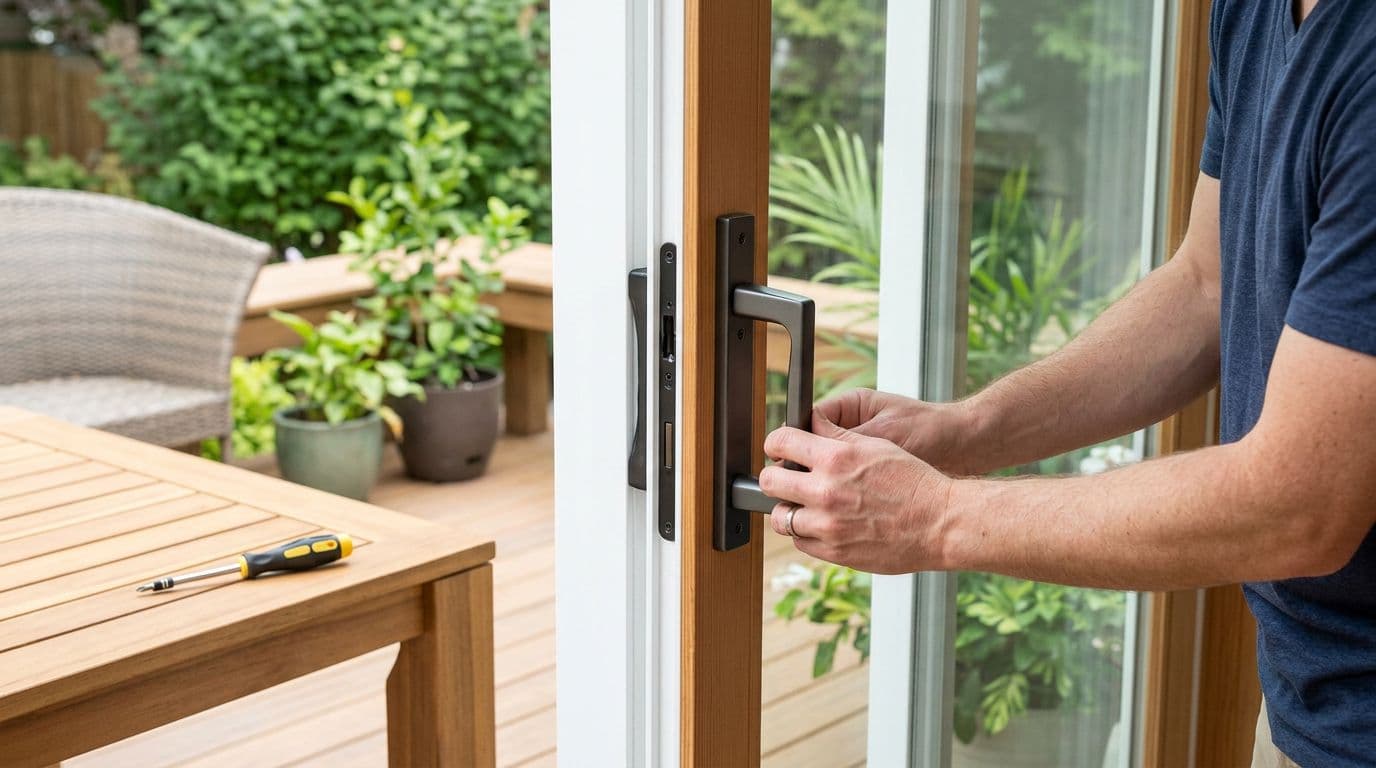
The installation takes about 30 seconds when the plate is compatible. There is no drilling, and it requires no alteration to the door. That matters when you want a stronger grip without new holes, patching, or frame damage.
Tighten screws evenly and test the latch
Keep the door partly open while working so you can access the hardware without pushing against the glass. Alternate between the upper and lower screws in small turns until the handle sits flat and rigid.
Then slide the panel several times. Check that the lock still engages its strike plate and that the handle doesn't shift. Stop if a screw spins freely, resists sharply, or pulls the plate away from the door.
Why a Retrofit Handle Is a Practical Upgrade
Factory finger pulls often leave little room for a full hand. That can lead people to pull from one corner, especially when carrying groceries or stepping in from the patio. A larger handle gives you more control over a smooth-moving panel.
Luuv Handle is made in the USA by a veteran-owned Southwest Florida business. Its patented design is protected until 2037, and its steel-and-oak construction is built for routine indoor and outdoor use.
Fix movement and grip as separate jobs
A clean track fixes friction. Roller adjustment corrects minor panel height issues. A retrofit handle improves the place where your hand meets the door.
You may need more than one repair if the door both drags and has a broken pull. Still, handle replacement should follow track cleaning and a basic movement check. That order prevents you from mistaking a roller problem for bad hardware.
Final Thoughts
You can replace sliding door hardware without drilling when the door plate is compatible and the panel itself moves correctly. Measure first, clean the track, and test the latch after installation.
A no-drill retrofit gives an older slider a more usable grip while keeping the lock, frame, and original hardware intact. The right repair starts with the part that actually failed.