

A crack in a sliding glass door can spread with one hard slide, a temperature change, or pressure on the frame. In most cases, sliding door glass replacement is safer and more durable than attempting to hide the damage.
Still, the right scope depends on the glass, the door frame, and how smoothly the panel operates. A sound frame may only need new glass, while worn rollers or a bent sash may justify replacing the full moving panel.
Start by making the door safe, then inspect what failed before requesting quotes.
Make a Cracked Sliding Door Safe First
Sliding door glass is often tempered safety glass, but a crack can weaken the entire pane. Keep children and pets away from the area, and avoid opening or closing the door until you know the glass is stable.
If the crack has reached an edge, crosses the pane, or sits near the handle or latch, treat the door as more likely to fail. Covering the area with painter's tape may help contain loose pieces temporarily, but tape does not repair the glass.
Block the door from moving
A moving panel twists slightly as it travels along its track. That force can turn a small crack into a shattered pane.
Lock the door if possible. Then place a clear barrier in front of it, such as patio furniture moved a safe distance away, so no one grabs the handle out of habit. If wind enters through the opening, secure the area with a temporary board or heavy plastic until a glass contractor can inspect it.
Wear closed-toe shoes, gloves, and eye protection if you must work near the door. Never press on the cracked area to test whether it feels solid.
Watch for signs of immediate failure
Loose fragments, a bulging pane, crunching sounds, or cracks spreading in several directions call for urgent service. Keep the door closed and leave glass removal to a qualified contractor.
A foggy white haze between glass layers is different. It points to a failed seal in an insulated glass unit. The panel may remain intact, yet it has lost clarity and some insulating performance. A contractor can confirm whether the sealed unit alone can be replaced.
When Sliding Door Glass Replacement Is the Safer Choice
Most cracked door glass cannot receive a lasting surface repair. Resin kits may work on a small windshield chip, but they are not an appropriate fix for tempered or insulated sliding-door glass.
Sliding door glass replacement makes sense when the frame is square, the track remains serviceable, and the panel rolls without excessive drag. In that case, a glass shop may replace the insulated glass unit or safety glass while keeping the existing door sash.
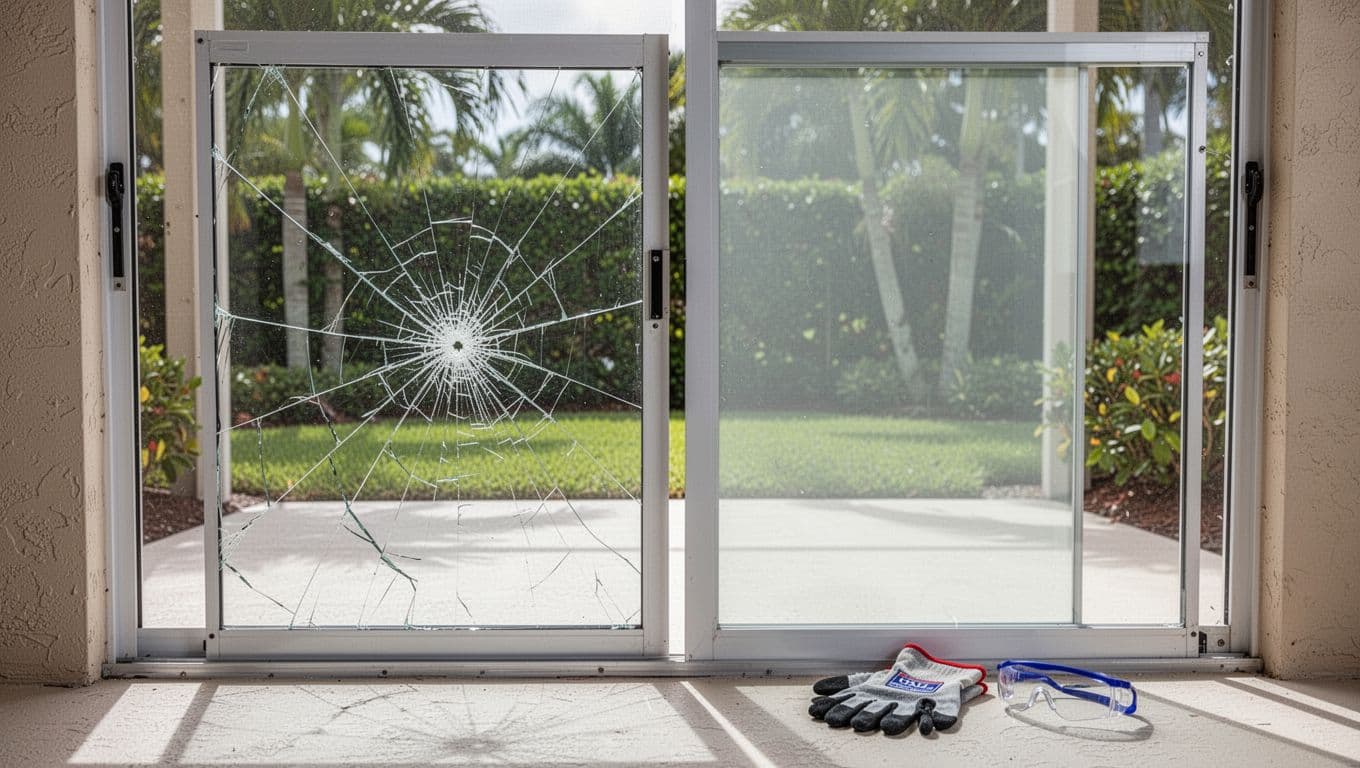
Replace the glass when the sash is still sound
Inspect the aluminum or vinyl sash around the pane. Straight corners, intact glazing stops, and no corrosion around the bottom rail are good signs. Also check whether the lock engages cleanly and the panel sits evenly in the opening.
A glass-only repair is often the practical choice after an accidental impact. For example, a patio chair blown into one side of an otherwise well-working slider may crack the glass without harming the sash or rollers.
The new glass must match the original requirements. Depending on the door, that might include tempered glass, laminated impact glass, insulated double-pane glass, Low-E coating, tint, or a specific thickness.
Replace the full panel when problems stack up
A new pane won't fix a bowed frame, corroded bottom rail, failed rollers, or a panel that scrapes the track. Those issues can stress fresh glass and make the door difficult to secure.
Full-panel replacement also makes sense if the old sash no longer holds glazing tightly. While the upfront expense is higher, it can prevent paying for glass now and a replacement panel soon after.
A replacement pane needs a stable sash. If the frame flexes or the rollers bind, repair the door mechanics before relying on new glass.
Compare the Scope of Each Quote
Two estimates can use the phrase "glass replacement" while covering very different work. Ask each contractor to state whether the price includes glass removal, disposal, new glazing materials, labor, adjustment, and cleanup.
Glass type affects the final price. A standard single tempered pane costs less than a custom insulated or impact-rated unit. Large panels, unusual tints, and coastal wind-load requirements can also add time and expense.
A glass-only quote should be detailed
Request the glass specifications in writing. The estimate should identify the pane's dimensions, thickness, safety rating, and whether it is a sealed insulated unit.
Also ask how the contractor will protect the track and rollers during removal. Metal fragments and glass grit can lodge in the bottom channel. If they remain there, the panel may drag even after the new glass is installed.
A full-panel quote should address the whole door
A complete moving-panel quote should include rollers, weatherstripping, lock alignment, and adjustment after installation. Those details matter because a panel that does not latch properly leaves a security and weather gap.
Use the quote's scope to compare the two paths:
| Choice | Usually fits when | Work to confirm |
|---|---|---|
| Glass-only replacement | Frame, track, and rollers are in good condition | Matching glass package and sash glazing |
| Full moving-panel replacement | Frame is bent, rollers fail, or sash corrosion is present | Rollers, locks, weatherstripping, and alignment |
The less expensive quote is only a good deal if it solves the condition that caused the crack or made the door hard to operate.
Measure Correctly Before Ordering Glass
Accurate measurements prevent the wrong replacement unit from arriving at your home. However, do not use a rough glass measurement as an order size. The visible glass area is smaller than the actual unit held inside the sash.
A glass contractor will usually measure the overall sash, the glass pocket, thickness, and glazing system. They may also check corner construction and identify markings on the original glass.
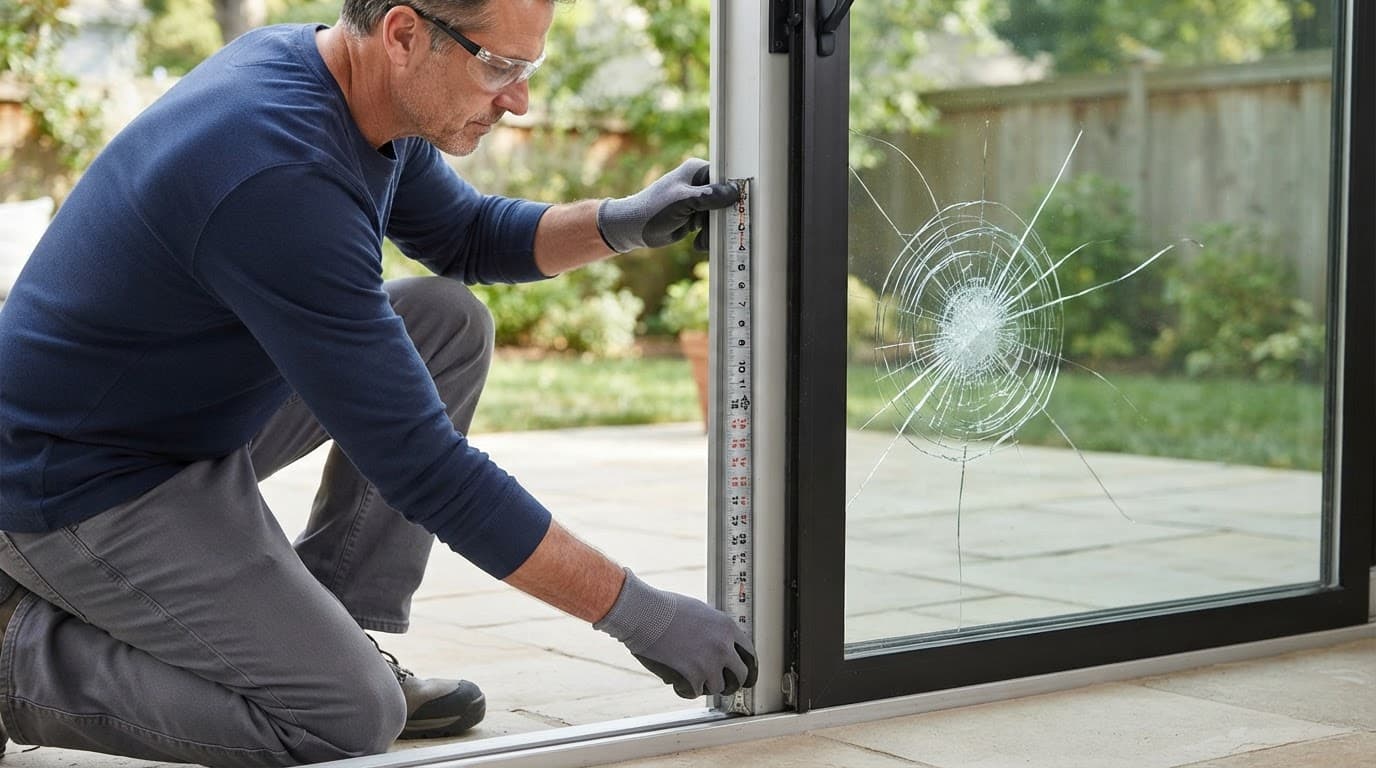
Record the door details before calling
Take clear photos of the full door, cracked area, track, lock side, and any labels on the frame. Note whether the damaged section is fixed or slides. Record the door's rough opening width and height, but label those measurements as reference only.
If the door came from a known manufacturer, look for a sticker or etched mark in a lower corner of the glass. The model number can help identify the right glass package and parts.
Ask about local code and glass requirements
Doors near pools, patios, and walkways often require safety glazing. In coastal areas, impact requirements may apply to replacement work, depending on the building and local rules.
A contractor should verify the required glass rather than copying an outdated pane. This matters when a previous owner installed mismatched glass or made an unapproved repair. Keep the invoice and product details after the work is complete, especially for a rental property or insurance claim.
Choose a Sliding Glass Door Replacement Handle After the Glass Work
New glass solves the broken panel, but it does not improve an old recessed pull that hurts your fingers or gives you little grip. Once the door is safe and adjusted, a Sliding Glass Door Replacement Handle can make daily use much easier.
First, confirm that the door slides freely. A large handle cannot overcome failing rollers, a dirty track, or a misaligned latch. Clean the bottom channel, remove grit, and have a technician adjust the rollers before deciding the pull itself is the problem.
Check handle fit before you buy
Measure the existing handle plate and note whether your door needs an interior, exterior, left-offset, or right-offset option. Luuv Handle retrofit products fit sliders with 7.25-inch by 1-inch door plates, so check the dimensions first.
The Luuv Handle compatibility requirements explain the fit details and show why the original handle and lock stay in place. This matters for homeowners who want more grip without replacing working latch hardware.
For a patio door used from both sides, an inside and outside retrofit handle bundle gives the same easy pull at each entry point.
Add grip without changing the door
Luuv Handle is made in the USA, is a patented product until 2037, and requires no alteration to the door and no drilling. Its slide-on design fits over compatible existing hardware, so the original lock and latch remain where they are.
The steel-and-oak handle is available in white and bronze finishes. Its water-resistant oak grip is useful on exterior-facing sliders that see humidity and rain. Installation takes about 30 seconds on a compatible door, using the existing mounting screws.
Follow the retrofit handle installation guide after glass work is finished and the panel is rolling correctly. Avoid adding hardware while a contractor is removing or adjusting the door panel.
Make the Repair Decision With the Whole Door in Mind
A cracked slider needs prompt attention because damaged safety glass can fail without much warning. When the sash, track, and rollers are sound, replacing the glass unit is often the sensible repair.
A bent frame, persistent roller trouble, or loose glazing shifts the decision toward a new moving panel. Match the replacement glass to the door's safety and performance requirements, then address the handle only after the panel operates properly.
A secure pane and a comfortable grip make the patio door safer to use every day.