

Ordering a new handle gets frustrating when "left" and "right" seem to change meaning from one product page to another. Sliding door handing is simple once you identify the moving panel and the viewing side before you shop.
A sliding glass door has a fixed panel and an operating panel. The handle belongs on the operating panel, but the correct offset or orientation depends on how that panel travels.
Take two minutes to inspect the door before ordering. It can save you the hassle of receiving a handle that doesn't match your setup.
Sliding Door Handing: Start With the Moving Panel
Stand inside your home, facing the glass door. Open it several inches and watch which panel moves along the track. The stationary panel is fixed, while the panel that slides is the active or operating panel.
Don't use the screen door as your reference. Its direction can differ from the main glass panel, especially on a patio door with separate sliding screens.
Use the direction the panel travels
If the operating glass panel moves toward the left as you face it from indoors, describe that action clearly: "the panel slides left when viewed from inside." If it moves right, use the same wording.
That description is more reliable than saying only "left-hand door." Manufacturers and sellers don't always use the same viewing position for their handing labels.
A left or right description is incomplete unless it also states whether you are facing the door from inside or outside.
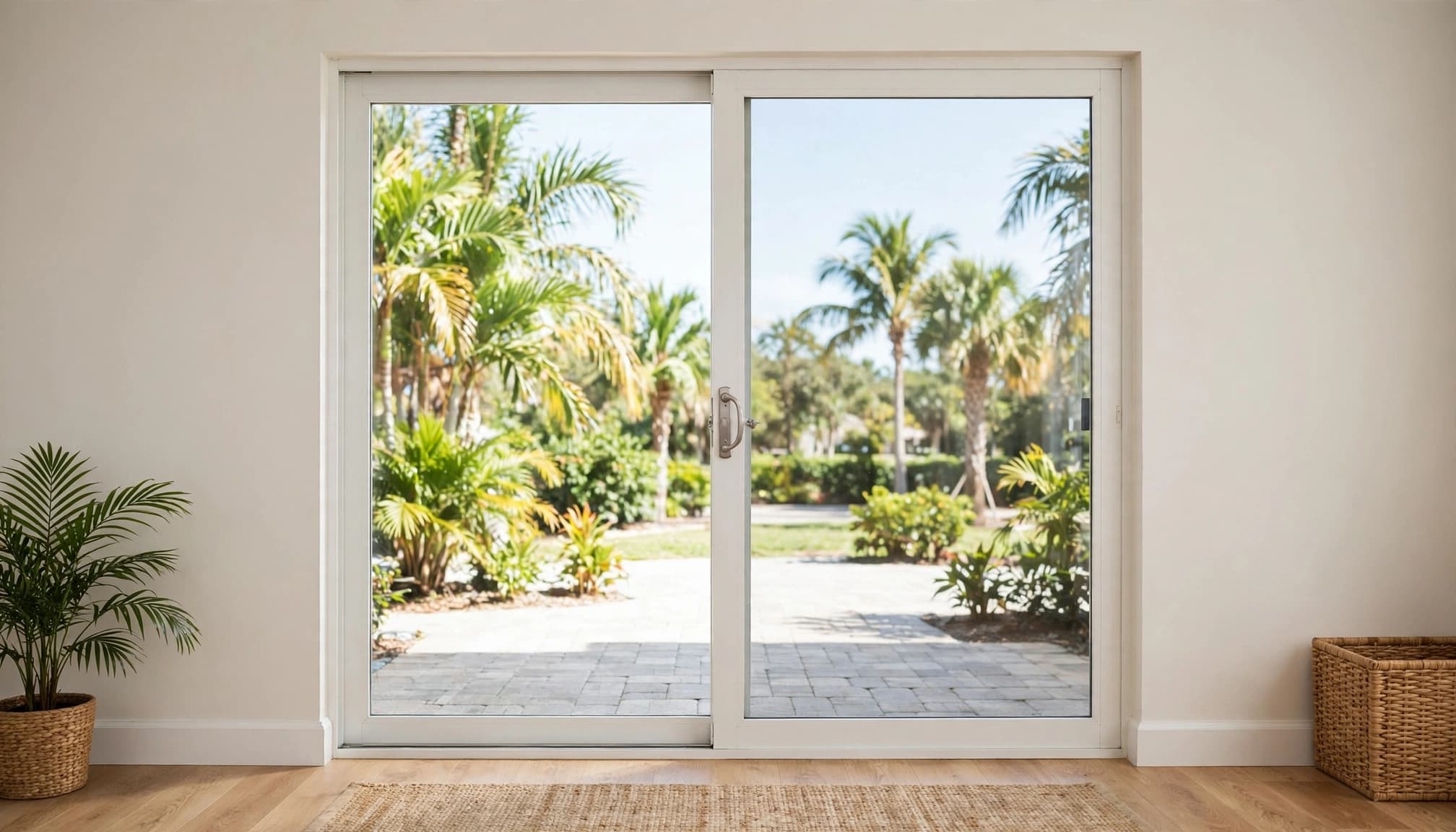
Locate the fixed panel before checking hardware
The fixed panel usually sits in a channel and doesn't travel when you unlock the door. Its edge may have fewer accessible hardware pieces than the operating side.
Next, look at the existing handle plate. Note whether the pull sits toward the left or right edge of the plate. This detail matters when you choose an offset replacement handle, particularly for doors with narrow clearances near a wall or vertical frame.
Why Left and Right Labels Can Cause Mistakes
Door handing depends on a point of view. Some sellers name the configuration while facing the exterior. Others use the interior view, the handle side, or the direction of travel. A label can be technically correct and still be wrong for your order.
Before buying, write down three facts:
- Which glass panel moves when you open the door.
- Which way that panel travels when viewed from inside.
- Which side of the existing plate holds the pull or grip.
A phone photo of the inside and outside hardware also helps. Include the door frame in each picture so the left and right sides are obvious.
Match the seller's orientation diagram
Look for an orientation chart on the product page. If it says "left offset" or "right offset," compare your photos with that exact diagram rather than guessing from the name.
For a retrofit product, the existing plate is the most useful reference. Check its width, height, screw placement, lock position, and handle offset. If any point looks unclear, review the sliding door handle fit and installation FAQs before placing the order.
Measure the Existing Handle Plate Too
Correct sliding door handing won't help if the new handle doesn't fit the plate. Measure the visible mounting plate, not only the old pull. Use a tape measure and record both dimensions before you remove or loosen anything.
Luuv Handle retrofit handles are fabricated for 7.25-inch by 1-inch door plates. That measurement should match your current hardware before you select a color or inside-and-outside set.
Check the lock and screw locations
Look at the interior side first. Most sliding door handles use screws that pass through the door to secure the exterior hardware. Keep the original lock and latch in place unless your replacement instructions say otherwise.
A Sliding Glass Door Replacement Handle should improve your grip without interfering with the lock, strike, or sliding path. Test the door's travel after installation. The handle should clear the frame and move smoothly through the full opening.
Choose the side you use most
An interior handle makes daily exits easier, while an exterior handle helps when you return from the patio, pool, or lanai. If both sides have shallow pulls, a matching pair gives you a more comfortable grip wherever you stand.
A white retrofit handle is one option for doors with light trim. Bronze works well with darker frames, wood tones, and many outdoor living areas. Color comes after fit, plate size, and the correct offset.
Install a Retrofit Handle Without Altering the Door
A retrofit handle fits over existing hardware rather than requiring a full handle replacement. That approach is useful for homeowners who want a better grip without opening up the door or replacing working locks.
Luuv Handle is made in the USA, and its patented design is protected until 2037. It requires no alteration to the door and no drilling. The steel-and-oak handle installs over compatible existing hardware, with water-resistant oak that suits humid patio areas.
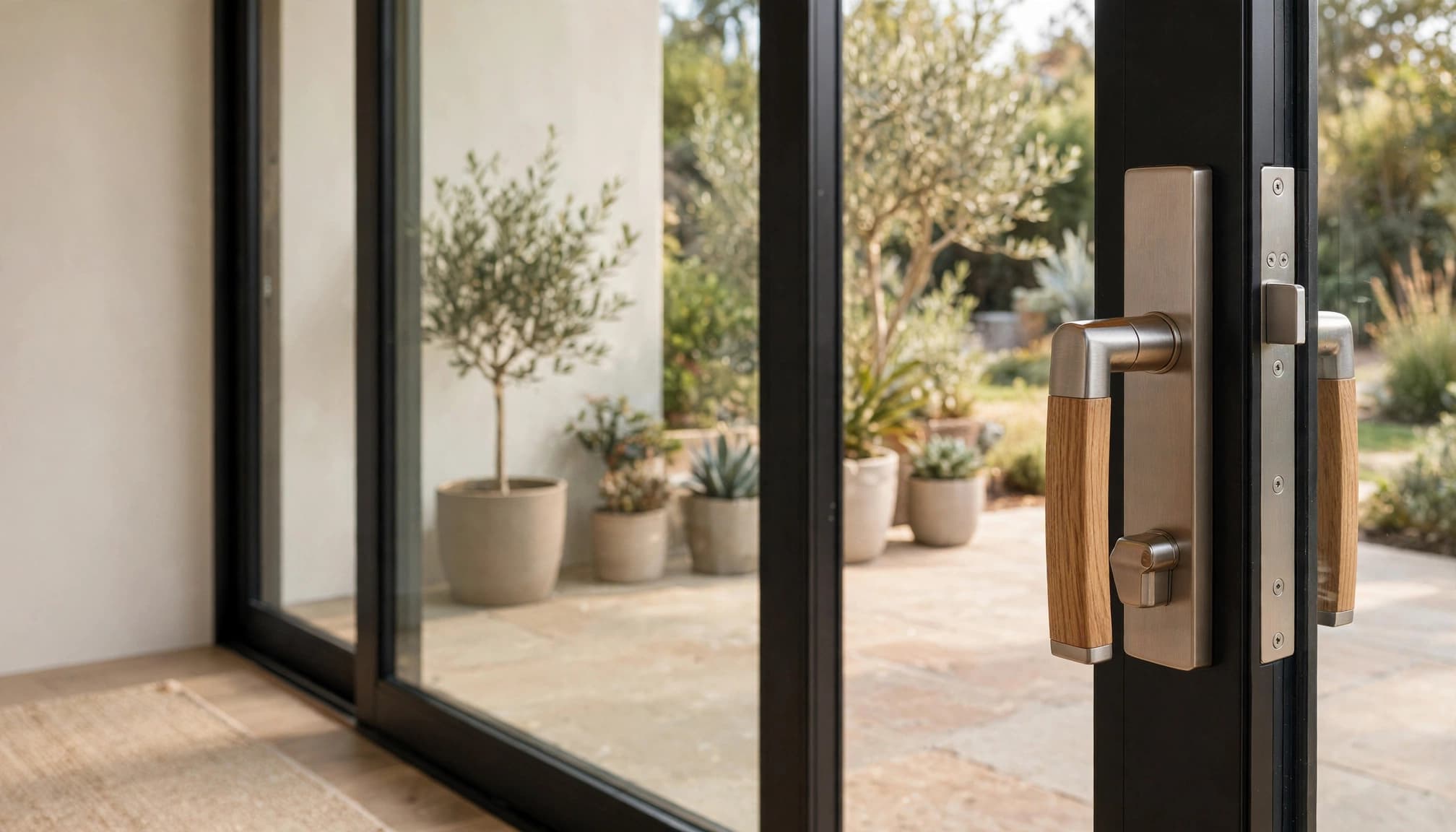
Follow the installation order
Installation takes about 30 seconds on a compatible door plate. First, loosen the interior screws enough to position the new handle. Then slide the handle over the existing plate, seat its top cap, and tighten the screws.
Don't overtighten fasteners, since the door hardware should stay aligned and the lock must still work freely. The full retrofit handle installation guide shows the same order with written steps and video support.
Final Thoughts
The safest way to identify a sliding door is to describe the moving panel, its travel direction, and your viewing position. Those details remove the guesswork behind left-hand and right-hand labels.
Once the plate size and handle offset match, a sliding door handing check helps you choose a replacement that fits your door and your daily routine.