

A sliding glass door can feel broken when the real problem is a low roller, dirty track, or poorly aligned sliding door meeting stile. Before buying new hardware, check how the panel moves, where the vertical edges meet, and whether the latch reaches its keeper without force.
A comfortable grip can improve a door that already rolls and locks correctly. However, a replacement handle won't straighten a bent frame or repair worn rollers. Use this guide to separate alignment problems from handle problems, then choose a retrofit that fits your existing door.
Key Takeaways
- The meeting stile is the vertical edge where two sliding panels come together.
- Clean the track before adjusting rollers or judging the handle.
- Make roller changes in small, balanced increments, then test the latch.
- A retrofit handle improves grip, but it doesn't repair a damaged track, roller, stile, or lock.
- Luuv Handle fits compatible 7.25-inch by 1-inch door plates and installs over existing hardware.
- The product is made in the USA, patented until 2037, and requires no alteration to the door and no drilling.
How the Sliding Door Meeting Stile Affects Alignment
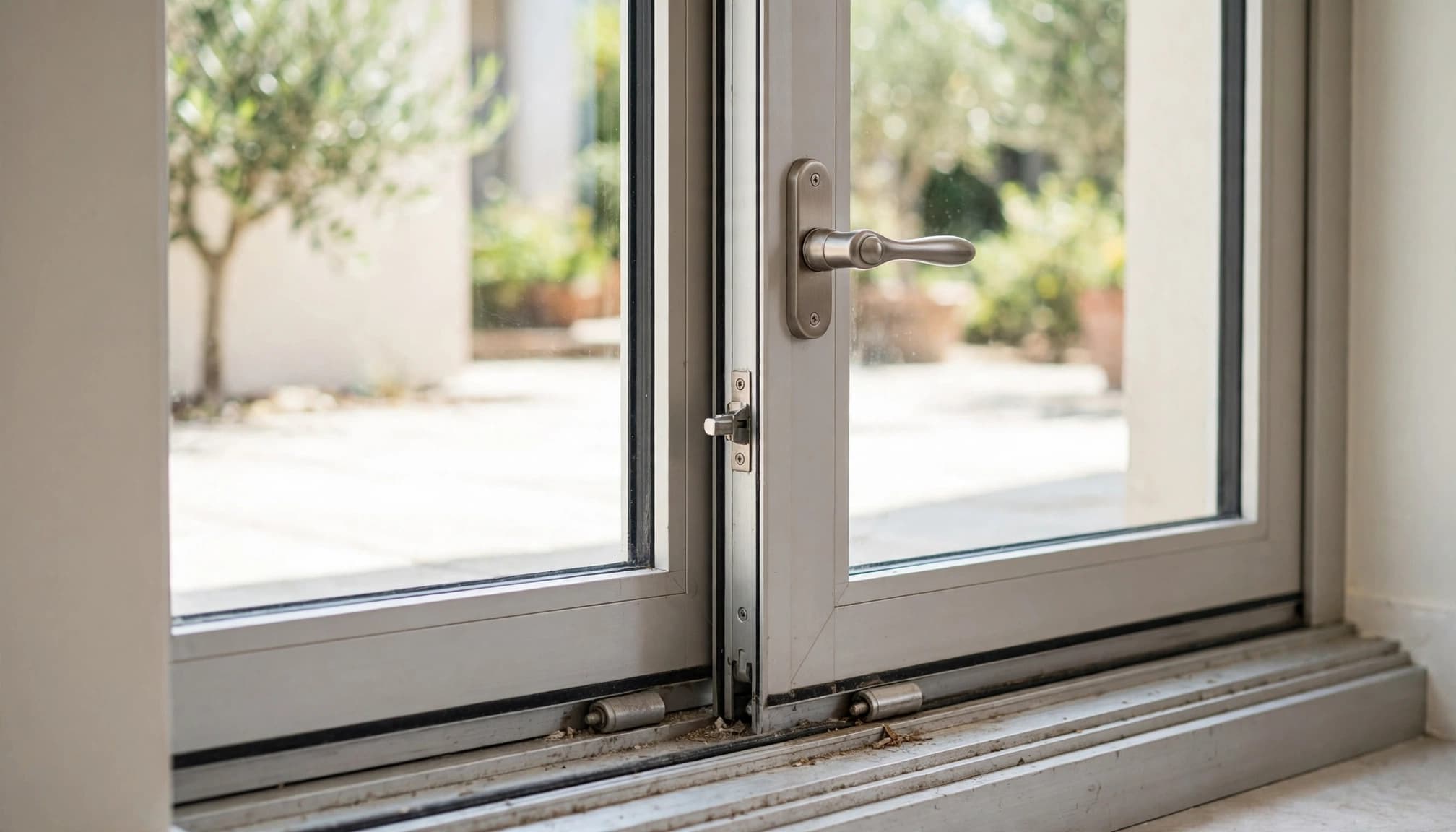
The meeting stile is the vertical edge of the moving panel that meets the fixed panel or another sliding panel. It contains or supports important sealing and latching areas, so its position affects both security and weather resistance.
When the moving panel drops, the meeting stile may sit too low or lean toward the frame. That can leave an uneven gap, prevent the latch from reaching the strike plate, or force you to lift the door before locking it.
Find the meeting-stile area
Close the door slowly and look at the vertical edges where the panels meet. Check the gap from the top of the frame to the bottom. A narrow, even reveal usually indicates better alignment than a gap that widens noticeably.
Also inspect the latch side. The latch should meet its keeper cleanly when the panel closes. If the door needs pushing, lifting, or slamming, address panel alignment before changing the lock hardware.
Check the surrounding parts
The stile doesn't work alone. The lower rollers control the panel height, while the track controls how smoothly the panel travels. The latch and keeper depend on the panel reaching the correct position.
Look for rubbing at the sill, contact near the top guide, loose screws, damaged weatherstripping, or a panel that shakes while moving. These clues help identify whether the problem starts at the handle or elsewhere.
Diagnose Alignment Before Replacing the Handle
A handle can be difficult to use because it is too shallow, loose, or poorly positioned. It can also feel difficult because the door itself takes too much force to move. Test the door mechanics first so you don't mistake a roller problem for a handle problem.
Clean the track before adjusting anything
Vacuum the entire lower channel, including both corners and the area near the jamb. Sand, hair, leaves, and pet debris can increase friction and make one roller carry more load than the other.
Use a soft brush for packed grit, then wipe the track with a damp cloth and let it dry. Avoid thick household oils. They attract more dirt and can create sticky buildup around the wheels.
If the door manufacturer permits lubrication, use a small amount of a product made for sliding door tracks or rollers. Keep it away from the glass, latch, weatherstripping, and drainage openings. Cleaning comes first because lubricant won't repair a crushed track or worn roller.
Adjust the rollers in small increments
Many sliding doors have adjustment screws near the lower corners of the moving panel. A plastic plug may cover each screw. The screws change roller height, which changes the position of the panel in the opening.
Make about a quarter-turn at a time, then slide the door several times. Adjust both sides in reasonably equal increments so the panel remains square. The direction varies by door model, although clockwise often raises the roller.
Stop if the panel rubs at the top, the glass shifts, the frame twists, or the screw resists. The door should move with steady pressure, remain parallel to the jamb, and meet the keeper without lifting or pushing.
Small roller adjustments can improve latch alignment, but they cannot repair a bent track, seized roller, or damaged frame.
Know When the Handle Is the Actual Problem
Once the door rolls smoothly and closes in the correct position, test the existing handle. If the recessed pull is too small, shallow, loose, or hard to reach, a larger retrofit grip may make everyday use easier.
A handle upgrade is suitable when the door's operating parts work correctly. It is not a substitute for repairing severe grinding, a loose panel, a cracked pane, or a meeting stile that is visibly bent.
Confirm the door plate size
Luuv Handle products are designed for sliding doors with a 7.25-inch by 1-inch door plate. Measure the existing plate before ordering. Don't assume that a similar-looking handle has the same dimensions.
The original handle stays in place. The retrofit handle fits over compatible existing hardware, while the original lock and latch remain available. Check clearance around the handle, nearby trim, and any sliding screen before installation.
For more fit questions, review this sliding door handle compatibility guide. It explains the plate requirement and confirms that the retrofit design requires no drilling, cutting, or door alteration.
Separate grip comfort from door security
A comfortable handle helps you control the panel, but the lock still provides the security function. After alignment, confirm that the latch extends into the keeper and holds the door closed.
If the latch still misses after roller adjustment, inspect the lock and strike relationship. A loose handle screw may also allow the thumbturn or lever to sit crooked. Tighten accessible screws by hand without forcing them, since aluminum stiles can strip.
Install a Retrofit Replacement Handle
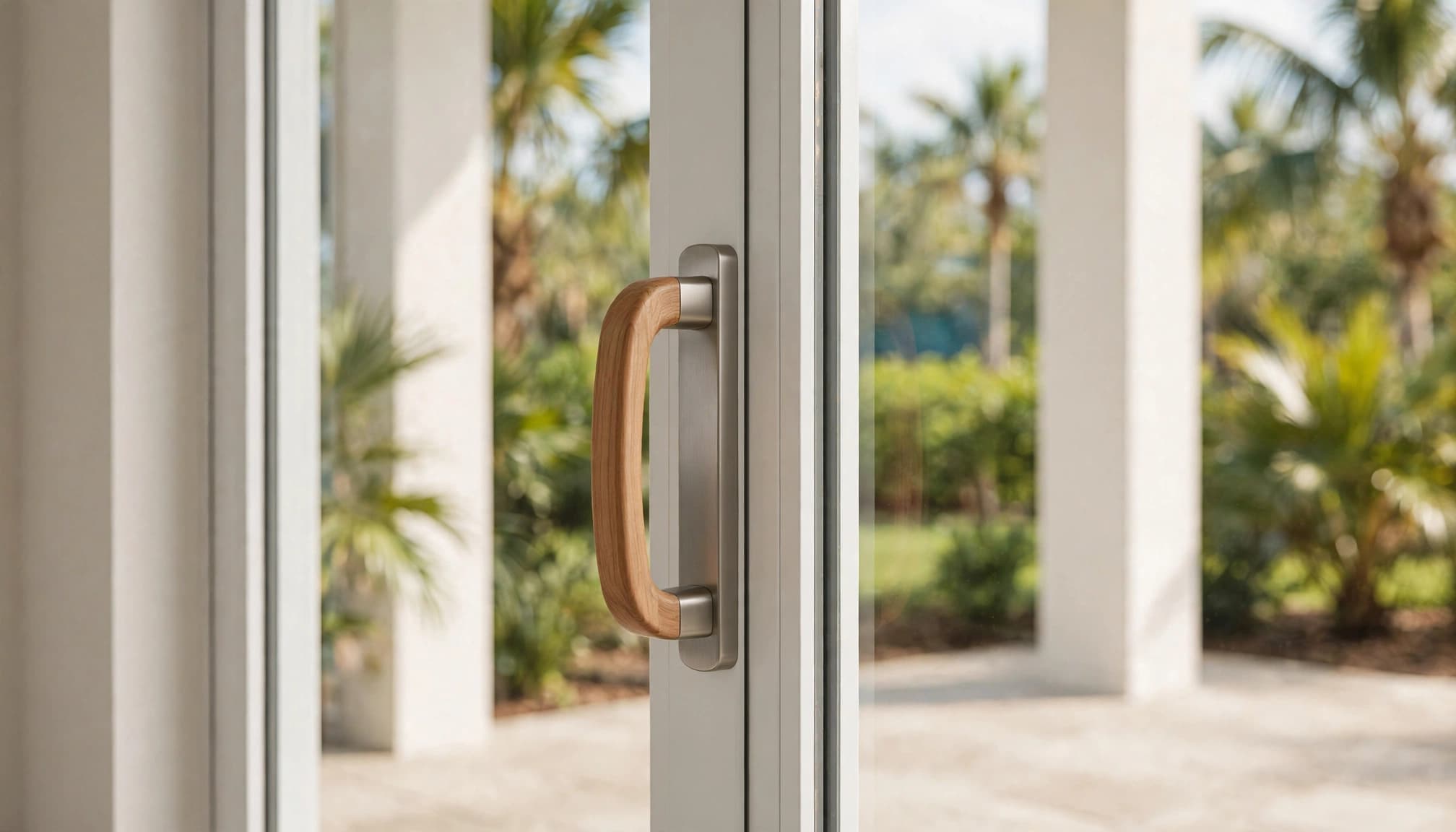
For a compatible door, Luuv Handle offers a straightforward way to add a larger handhold without removing the original hardware. The product uses steel with a water-resistant oak grip and comes in white and bronze finishes.
Luuv Handle is made in the USA and is a patented product protected until 2037. It requires no alteration to the door and no drilling, which helps preserve the existing frame, lock, and latch.
Follow the installation sequence
The written instructions use this order:
- Loosen the screws from the inside of the door.
- Move outside and slide the bottom of the handle up over the existing plate.
- Set the top cap over the top of the plate.
- Pull the handle down until the cap seats.
- Return inside and tighten the screws.
The sliding glass door handle installation guide provides the mounting sequence and additional instructions. The interior bronze product listing describes installation as taking about 30 seconds, although the actual time depends on access, fit, and how easily the screws loosen.
Check the fit after tightening
Close and open the panel several times. The handle should feel secure without shifting, rocking, or pressing against the frame. Test the lock from the normal operating position.
Keep the original latch functional. If the retrofit handle interferes with the lock, screen, weatherstripping, or frame, stop and recheck the plate size and orientation. Don't force the handle into position or modify the door.
Choose the Right Finish and Configuration
White and bronze finishes cover common patio-door hardware styles. A white exterior handle can blend with a light frame, while bronze can coordinate with darker trim and other hardware.
The white retrofit door handle and bronze sliding glass door handle listings describe products for existing sliding-door hardware. Both listings show a regular price of $30.00, but they also show sold-out status, so check the live product page before relying on price or availability.
Interior, exterior, or both sides
Choose an interior handle when the main problem is opening the door from inside. The interior replacement handle for glass doors is designed to fit over the existing interior hardware.
If both sides need a better grip, an inside-and-outside set may be more practical. The white inside-and-outside sliding door handle set is listed as a paired option. Confirm the opening direction and finish before ordering.
When Alignment Needs More Than an Adjustment
A clean track and balanced roller adjustment won't correct metal that is crushed, deeply worn, or warped. Worn rollers may have flat spots, damaged bearings, or seized housings. Replacing them often requires removing the heavy glass panel.
Call a qualified sliding-door technician if the glass is cracked, the aluminum stile is bent, the jamb is damaged, or the panel grinds severely. Professional help is also appropriate when the door repeatedly comes off the track or cannot move without lifting.
Don't pry against the glass, remove a heavy panel without proper support, or force an adjustment screw. A replacement handle is a good final upgrade after the door moves, closes, and locks correctly. It isn't a repair for structural damage.
Frequently Asked Questions
Can a replacement handle fix a misaligned meeting stile?
No. A retrofit handle can improve grip and control, but it doesn't straighten the stile or reposition the panel. Clean the track, inspect the rollers, and check latch alignment first.
What measurement matters before ordering?
Measure the existing door plate. Luuv Handle products are intended for compatible sliders with a 7.25-inch by 1-inch plate. The existing handle and lock should remain in usable condition.
Does installation require drilling?
No. Luuv Handle requires no drilling, cutting, or alteration to the door. It fits over compatible existing hardware, so the original lock and latch stay in place.
Is the handle made in the USA?
Yes. Luuv Handle is made in the USA, using steel and water-resistant oak construction. Its patented design is protected until 2037.
When should I stop adjusting the rollers?
Stop when the door moves smoothly, the gaps look even, and the latch meets the keeper without force. Stop sooner if the glass shifts, the frame twists, the top rail binds, or the door still grinds after cleaning.
Conclusion
The meeting stile is only one part of sliding-door alignment. A clean track, properly adjusted rollers, sound hardware, and a working latch must come together before a replacement handle can deliver its full benefit.
Once the door operates correctly, a Sliding Glass Door Replacement Handle can provide a stronger, more comfortable grip without changing the door. For a compatible 7.25-inch by 1-inch plate, Luuv Handle adds that improvement with a USA-made, patented design that requires no alteration and no drilling.