

A sliding glass door shouldn't demand a shoulder check every time you head outside. If you have a sliding door off track, forcing it shut can bend the rail, damage rollers, and turn a small repair into a bigger one.
Most derailments start with dirt, worn roller wheels, or an adjustment that no longer supports the panel's weight. Once you identify the cause, you can decide whether a careful cleanup, roller adjustment, or professional repair is the right move.
What Causes a Sliding Door Off Track?
Most patio doors ride on small rollers at the bottom, while the upper channel keeps the panel upright. When either part loses proper alignment, the door can scrape, wobble, or jump its track.
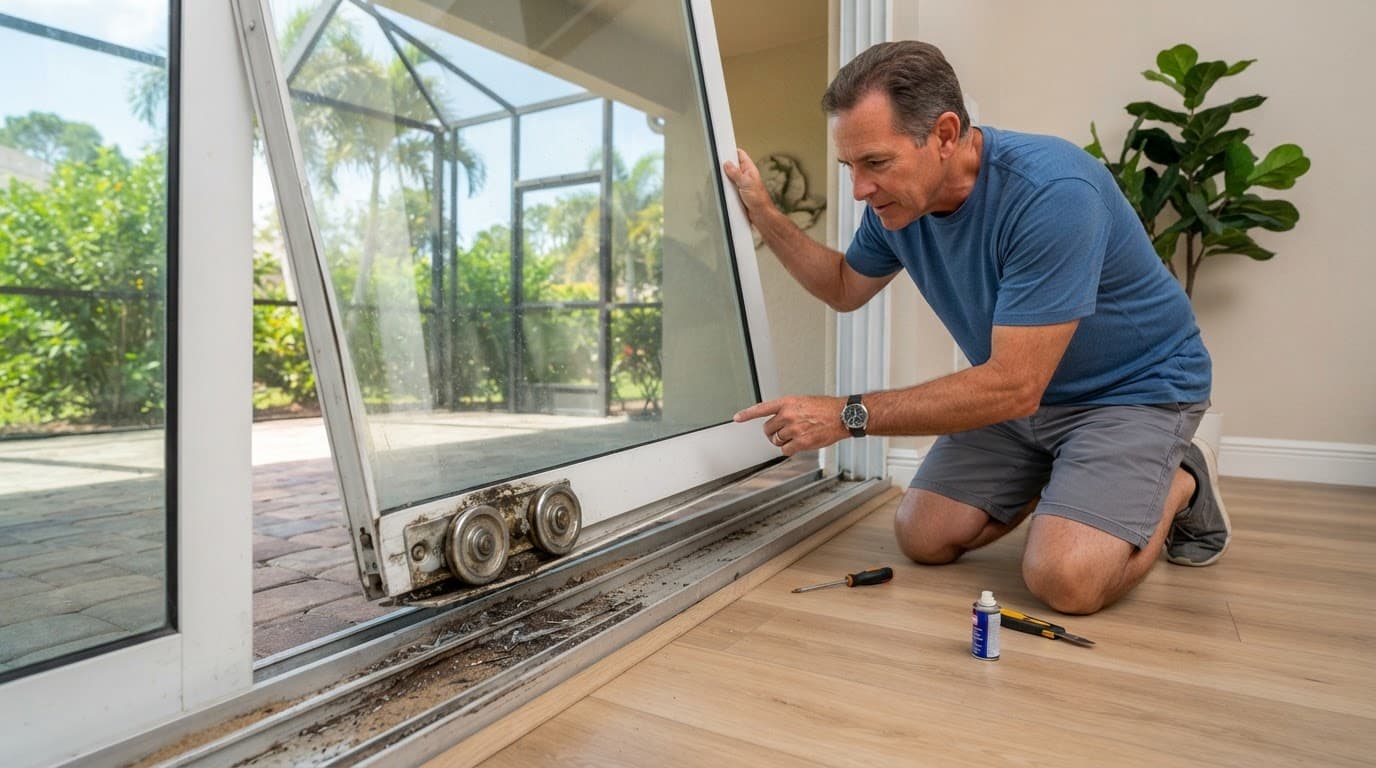
Worn rollers can't carry the panel evenly
Rollers take the full weight of the glass panel every time the door moves. Over time, their wheels can flatten, crack, corrode, or stop turning freely. A stuck roller drags instead of rolling, so the bottom rail catches the edge of the track.
The door may feel heavy near one end but move more freely in the middle. You might also hear grinding, see black wheel dust, or notice one bottom corner dipping lower than the other. These are common signs that the rollers need adjustment or replacement.
Salt air speeds up corrosion, especially in coastal areas. Florida homeowners often find that a door's rollers fail long before the glass or frame shows obvious age.
Dirt and track damage push wheels out of place
Sand, pet hair, leaves, dried mud, and tiny stones collect in the lower channel. That debris creates high spots beneath the wheels. As a result, the rollers can climb over the buildup and slip past the track lip.
A raised screw, dented rail, or loose piece of weatherstripping can cause the same problem. Even a clean-looking track may hide packed grit in its corners.
A door that derails near the same spot every time often points to a damaged section of track, not a simple roller adjustment.
Check the Door Safely Before You Try a Fix
Sliding glass panels are heavy, awkward, and easy to damage at the corners. Stop using the door if it leans, rattles in the frame, or has dropped far enough that the lock no longer lines up.
Start with a close visual inspection
Open the door only as far as it will move without force. Then inspect the bottom channel with a flashlight. Look for debris, bent metal, damaged wheel tracks, and anything that blocks the rollers.
Next, check the gap around the panel. A consistent gap usually means the frame and panel remain square. However, a larger gap at the top or bottom on one side can mean the rollers have lost adjustment.
Also inspect the upper channel. The top rail should guide the panel without scraping hard against it. If the door has jumped out at the bottom, don't assume the top track is fine. A bent top guide can let the panel tilt enough to derail again.
Know when to stop and call for help
Don't try to lift a large glass panel back into place alone. Avoid prying against the glass, and keep fingers away from the track while the panel is moving.
Call a sliding-door technician or glazier when you see cracked glass, a bent frame, severely corroded hardware, or a track pulled loose from the threshold. You should also get help if the panel repeatedly falls out after you clean and adjust it.
A repair professional can remove the panel safely, match replacement rollers to the door model, and check whether the opening has shifted. That inspection matters when a sliding door off track problem keeps returning.
Clean the Track Before Adjusting the Rollers
Cleaning comes before adjustment because grit can make a properly adjusted door feel broken. It also lets you see whether the metal rail itself has worn down.
Remove buildup without coating the track in grease
Start by vacuuming the entire lower channel, including both ends. A narrow crevice attachment works well for packed sand and hair. Then wipe the track with a damp cloth and mild household cleaner, followed by a dry cloth.
Avoid thick oils and greasy sprays. They may make the door move briefly, but they attract dust and grit. If your door manufacturer permits it, use a small amount of silicone-based dry lubricant made for sliding-door tracks.
Pay attention to the drainage holes in the sill. If water can't drain, moisture and debris sit under the roller path and speed up corrosion.
Adjust both rollers in small, equal changes
Most sliding patio doors have roller adjustment screws near the lower corners of the moving panel. The exact screw location and turning direction vary by manufacturer, so check the door's manual before making changes.
Use this careful process:
- Clean the track and test the door's movement before touching the screws.
- Adjust each lower roller in small, equal increments.
- Test the panel after each change, watching for a level gap around the frame.
- Stop when the panel rolls smoothly and the lock meets its keeper without lifting or pushing.
Raising the rollers too far can make the top rail bind. Leaving them too low allows the bottom frame to rub and makes another derailment more likely. Small adjustments beat a dramatic turn of the screwdriver.
When Bent Tracks or Failed Parts Need Repair
A clean track and adjusted rollers won't fix metal that has been crushed, warped, or badly worn. If the door catches at one exact point, run a finger carefully along the empty track to feel for a dent or raised edge.
Watch for damage beyond the roller wheels
A flattened rail can prevent even new rollers from staying seated. Likewise, a loose threshold or separated track section creates a gap that wheels can't cross cleanly. These repairs often require replacement parts rather than a hammer and guesswork.
Look for corrosion around roller housings and screw openings. Rust expands as it forms, which can distort the metal pocket holding the roller. On older aluminum doors, that damage may be hidden until the panel is removed.
If the frame has shifted, the door may also look out of square. A changing gap around the panel, a latch that misses its strike plate, or a vertical frame that pulls away from the wall points to a larger issue. A contractor should check the opening before new rollers go in.
Replacing roller assemblies is often worthwhile when the glass and frame are otherwise sound. Match the wheel diameter, housing shape, and mounting pattern to the original part. A near match can still ride at the wrong height.
A Better Handle Reduces Sideways Pulling
A damaged track causes the main problem, but a shallow factory finger pull can make it worse. When the door is hard to move, people tend to yank it sideways or pull from one corner. That uneven force can encourage an already misaligned panel to bind.
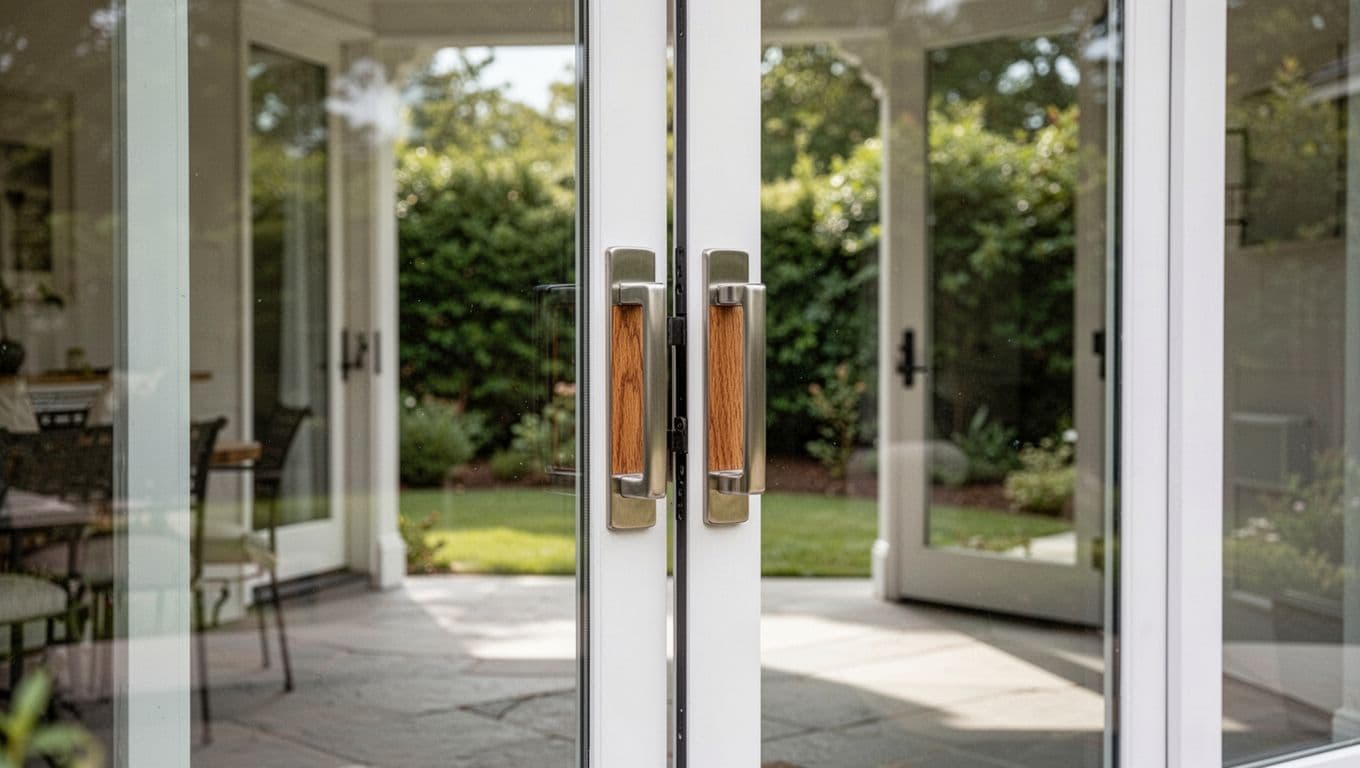
Choose a retrofit handle after the track is repaired
A sliding glass door replacement handle won't repair worn rollers or straighten a bent rail. However, it gives you a secure, full-hand grip once the door moves correctly again. That makes everyday opening and closing more controlled.
Before buying a retrofit option, measure the existing door plate. Luuv Handle models fit sliders with 7.25-inch by 1-inch door plates, so check the sliding glass door handle fit guide before ordering.
Luuv Handle is made in the USA from steel and water-resistant oak. It is a patented product through 2037, and it installs over compatible existing hardware in about 30 seconds. The handle requires no alteration to the door and no drilling, while the original lock and latch stay in place.
For doors used from both the patio and inside the home, a white inside-and-outside handle kit adds a matching grip on each side. The wider handle helps you pull straight along the track instead of twisting the panel.
Keep Your Sliding Door Rolling Smoothly
Regular care prevents most track problems before the door starts dragging. In sandy or windy areas, inspect the lower channel every month. In cleaner homes, checking it every few months is usually enough.
Keep these habits in place:
- Vacuum the lower track before dirt becomes packed under the wheels.
- Wipe moisture from the sill after heavy rain or a patio washdown.
- Open and close the panel with a centered grip, rather than pulling from its edge.
- Check roller adjustment when the door begins to scrape, not after it derails.
- Keep toys, planters, and patio furniture away from the moving panel's path.
A smooth door should glide with steady pressure. Grinding, scraping, or a need to lift the panel as you slide it means something needs attention.
Final Thoughts
A sliding glass door usually comes off its track because the rollers, rail, or adjustment no longer work together. Cleaning the channel and correcting a minor roller-height issue can solve many cases before damage spreads.
Still, don't force a heavy panel that leans or catches hard. A properly aligned door, sound rollers, and a comfortable replacement handle keep your patio entrance easy to use and easier to protect.