

A discontinued sliding glass door doesn't automatically need a full replacement. In many cases, the right sliding door replacement parts can restore smooth operation, secure locking, or a more comfortable grip for far less disruption.
The challenge is that older doors often lack clear paperwork, and parts that look alike may have different measurements. Start with the door you have, identify the failed component, and match dimensions before ordering anything.
Key Takeaways
- Find any brand label, etched glass code, stamped hardware number, or model tag before searching for a part.
- Measure the old part instead of ordering by appearance. Roller housings, latch bodies, handles, and screw patterns vary widely.
- Repair the part that has failed. A dragging panel needs track or roller attention, while a shallow pull may only need a better handle.
- Keep working locks and latches in place when a compatible retrofit handle can improve your grip.
- Luuv Handle retrofit models fit sliding doors with 7.25-inch by 1-inch door plates, so verify that size before ordering.
Identify Your Sliding Door Before Ordering
The fastest route to a compatible part starts with good evidence. Door manufacturers changed hardware across product lines and production years, so a photo alone may not identify what you need.
Search for labels, stamps, and etched codes
Look along the edge of the sliding panel, the frame head, bottom rail, and latch area. A manufacturer label may include the brand, series, production date, or a number that helps a parts supplier narrow the search.
Also inspect the lower corner of the glass for a faint etched code. That mark usually identifies the glass unit rather than the entire door, but it can still help confirm the manufacturer or approximate age.
If you find a name such as Marvin, search that manufacturer's parts documents by product family. For doors with no visible branding, a sliding-door parts specialist can often identify the assembly from detailed photos and measurements.
Photograph and measure the existing hardware
Take clear photos of both sides of the door before loosening screws. Include the handle, lock edge, strike plate, roller opening, track, and full panel profile.
Then record these details:
- Door-panel thickness and visible handle-plate dimensions.
- Screw-hole spacing, measured center to center.
- Whether the handle is offset left or right.
- The lock style, latch shape, and direction the door slides.
- Clearance between the glass door, screen door, trim, and blinds.
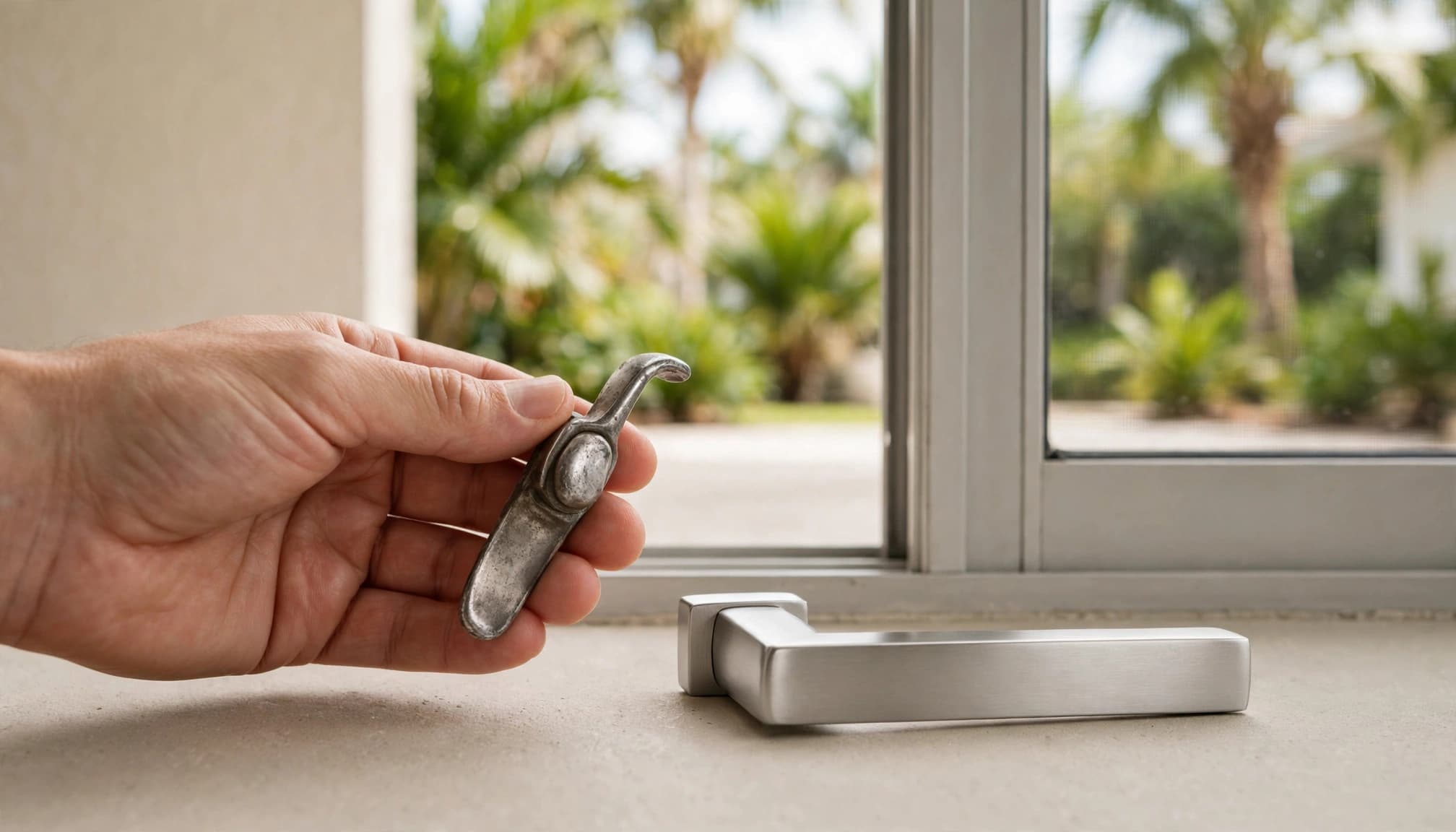
Keep the old part until the replacement is installed and tested. Even a broken handle or worn roller is a useful physical reference.
Diagnose the Failed Part First
A patio door can be hard to use for several reasons at once. Don't assume a loose pull means the entire handle set has failed, especially when the panel also scrapes or the latch misses its keeper.
Separate grip problems from movement problems
Clean the lower track with a vacuum and a stiff brush. Remove grit, pet hair, and small debris, then test the panel with steady pressure near the existing handle.
If the door chatters, binds, drops at one end, or needs a hard shove, inspect the rollers and track. A bent rail, worn wheel, or poor adjustment will not improve with a new handle.
However, a door can slide and lock properly while still feeling awkward to open. Older sliders often have shallow recessed pulls that offer little room for your fingers. In that case, a larger handle may solve the daily-use problem without disturbing the roller or lock system.
Match the symptom to the likely part
Use the door's behavior to narrow the search before buying sliding door replacement parts.
| Symptom | Likely area to inspect | Information to record |
|---|---|---|
| Panel drags or shudders | Rollers and lower track | Wheel diameter, housing size, adjustment screw style |
| Door rubs at the frame | Roller adjustment or track | Panel gaps and visible track damage |
| Lock will not catch | Latch, keeper, or alignment | Latch shape, keeper profile, screw spacing |
| Handle feels loose | Handle screws or mounting plate | Plate length, width, and screw centers |
| Pull is too shallow to grip | Existing handle design | Plate size and screen-door clearance |
A new grip can improve control, but it cannot repair a damaged wheel, bent track, or failed mortise lock.
For roller replacement, measure the wheel's diameter and width, the housing length and height, mounting holes, and adjustment location. SWISCO's replacement guidance also recommends looking for any number stamped on the assembly. A near match can set the panel at the wrong height.
Where to Find Sliding Door Replacement Parts
Once you know the brand, part type, and dimensions, search with those details together. "Sliding door roller" is too broad. A search that includes housing height, wheel size, and a stamped number is far more useful.
Start with the original manufacturer
Check the manufacturer's website, customer support line, and archived product literature. Some companies keep replacement hardware available after a door line ends, while others can point you to an approved distributor.
Have your measurements and photos ready before contacting support. Ask whether the part is still available, whether a current equivalent replaces it, and whether installation requires removing the panel.
If the manufacturer cannot identify the door, send the same information to a dedicated door-hardware supplier. Their catalogs often organize rollers, locks, handles, and weatherstripping by profile and dimensions rather than brand alone.
Use specialty suppliers and salvage carefully
Door-parts suppliers are usually a safer source than a general marketplace listing because they can compare dimensions and explain compatibility. Architectural salvage yards may also have discontinued handles or trim, particularly for older aluminum doors.
Used parts deserve extra scrutiny. Check for corrosion, cracked die-cast metal, flattened roller wheels, stripped threads, and damaged springs. A used latch may look intact but fail to hold securely.
Avoid buying a replacement because its finish or overall shape looks familiar. Measure first, compare every mounting point, and confirm the return policy before opening the package.
When a Retrofit Handle Makes More Sense
Full handle replacement is appropriate when the mounting plate is damaged, the lock assembly has failed, or the handle has snapped. Yet many homeowners only need a more secure handhold on a door that already slides, closes, and locks.
Check compatibility before choosing a retrofit
A Sliding Glass Door Replacement Handle can improve daily use without becoming a major hardware project. Luuv Handle retrofit products fit over compatible existing hardware and are made for sliders with a 7.25-inch by 1-inch door plate.
Measure the plate's outside dimensions, then check the handle's orientation and any screen-door clearance. The retrofit clamps over the current hardware, so the original lock and latch remain in place.
Review the sliding glass door handle fit FAQs if you need help confirming the required plate size. This is a grip upgrade for compatible hardware, not a replacement for a broken internal lock.

Choose a finish and configuration that fits the door
Luuv Handle offers white and bronze retrofit styles, including interior, exterior, and paired options. A white sliding glass door replacement handle can suit light frames and trim, while bronze works well with darker hardware.
Luuv Handle is made in the USA by a veteran-owned Southwest Florida business. The company uses steel and water-resistant oak, and says its patented product is protected until 2037.
The retrofit requires no alteration to the door and no drilling. That makes it useful for renters, condo owners, and homeowners who want to preserve an existing frame, lock, and mounting pattern.
Install a Compatible Retrofit Handle Safely
A retrofit handle should go on only after the track, rollers, and latch pass a basic operating test. This prevents you from mistaking a movement problem for a grip problem.
Follow the short installation sequence
Luuv Handle says installation takes about 30 seconds on a compatible door. Start from inside by loosening the existing screws. Go outside, slide the bottom of the retrofit handle upward over the plate, set the top cap over the plate, and pull the handle down until it sits in place.
Return inside and tighten the screws. The handle uses the existing hardware, so there is no need to remove the original lock or drill new holes.
Follow the sliding door handle installation instructions for the full sequence and placement details.
Test the door before calling the job complete
Open and close the panel several times with a centered pull. The handle should remain firm, the panel should travel without side pressure, and the latch should still engage its keeper.
Don't overtighten the screws. Excess force can strip threads or distort older hardware. If the latch suddenly misses after installation, inspect the panel alignment and roller adjustment instead of forcing the lock.
Never remove a heavy sliding glass panel alone. Some panels weigh hundreds of pounds, and roller assemblies may be hidden inside the bottom rail.
Frequently Asked Questions
Can I replace a discontinued sliding door handle?
Yes, if you can identify the plate size, screw spacing, handle orientation, and lock arrangement. A traditional replacement must match the existing hardware closely.
When the door still locks and the plate matches 7.25 inches by 1 inch, a retrofit option may offer a simpler solution. It improves the grip while leaving the working lock and latch in place.
How do I know whether I need rollers or a handle?
Test the panel after cleaning the track. If it drags, rocks, scrapes, or drops at one end, inspect the rollers and track first.
Choose a handle upgrade when the door moves smoothly but the recessed pull is too small, uncomfortable, loose, or difficult to grasp. A handle won't correct a bent rail or worn wheel.
Can I drill new holes to make a replacement fit?
Only drill when the replacement hardware instructions call for it and you know the door's frame construction. New holes can weaken thin aluminum, expose unfinished metal, or leave you with a misaligned latch.
A compatible Luuv Handle avoids that issue because it requires no alteration to the door and no drilling. Confirm fit before ordering rather than modifying the door to suit an uncertain part.
Conclusion
A discontinued patio door is easier to repair when you identify the failed component before shopping. Good photos, exact measurements, and a close look at the rollers, latch, and track prevent most costly ordering mistakes.
When the door works but the original pull is difficult to use, a properly fitted retrofit handle offers a practical upgrade. Measure the plate first, protect the hardware that still works, and choose sliding door replacement parts that address the real problem.