

A sliding glass door should move with steady pressure, not scraping, grinding, or fighting you at every opening. Proper sliding door roller lubrication can reduce friction, but it only works after you remove the grit trapped beneath the panel.
Sand, pet hair, salt residue, and small stones often cause the same symptoms as worn rollers. Start with a careful inspection, then lubricate only the parts that can benefit from it.
Find the Cause Before You Lubricate
A dirty track can make a healthy door feel heavy. On the other hand, a damaged roller or bent rail won't become smooth because of a spray lubricant.
Open the panel halfway and look along the lower channel with a flashlight. Check the track, bottom corners, and the gap around the moving panel.
Signs that cleaning may solve the problem
Loose debris often sits at both ends of the track, where the moving panel pushes it over time. If the door improves after a few passes, dirt is likely the main issue.
Look for:
- Fine sand, hair, crumbs, paint chips, or small stones in the channel.
- A gray or black line of packed dust along the roller path.
- Rough movement that improves after you vacuum and wipe the track.
- A door that rolls evenly and doesn't lean or drop at one corner.
Coastal homes need more frequent attention because salt and windblown sand settle in the lower channel. Keep the exterior drain holes clear as well, since standing water encourages corrosion.
Signs the rollers or track need more than care
Repeated grinding, a low corner, or a panel that stops at the same spot points to a larger problem. Flat-spotted wheels, seized bearings, and cracked roller housings can all make a door drag.
A deeply grooved or bent track can also ruin new rollers quickly. Run a finger carefully along the empty track. Raised edges, sharp dents, or sections that catch a fingernail deserve a closer inspection before you buy parts.
A clean track reduces friction, but it cannot repair a wheel that no longer turns or a rail that has been crushed.
Sliding Door Roller Lubrication: The Correct Method
Good sliding door roller lubrication starts with a dry, clean surface. Spraying lubricant into a gritty track creates a paste that holds even more debris.
Gather a vacuum with a crevice attachment, a soft nylon brush, microfiber cloths, mild dish soap, warm water, and a silicone-based lubricant approved for your door's roller assembly.
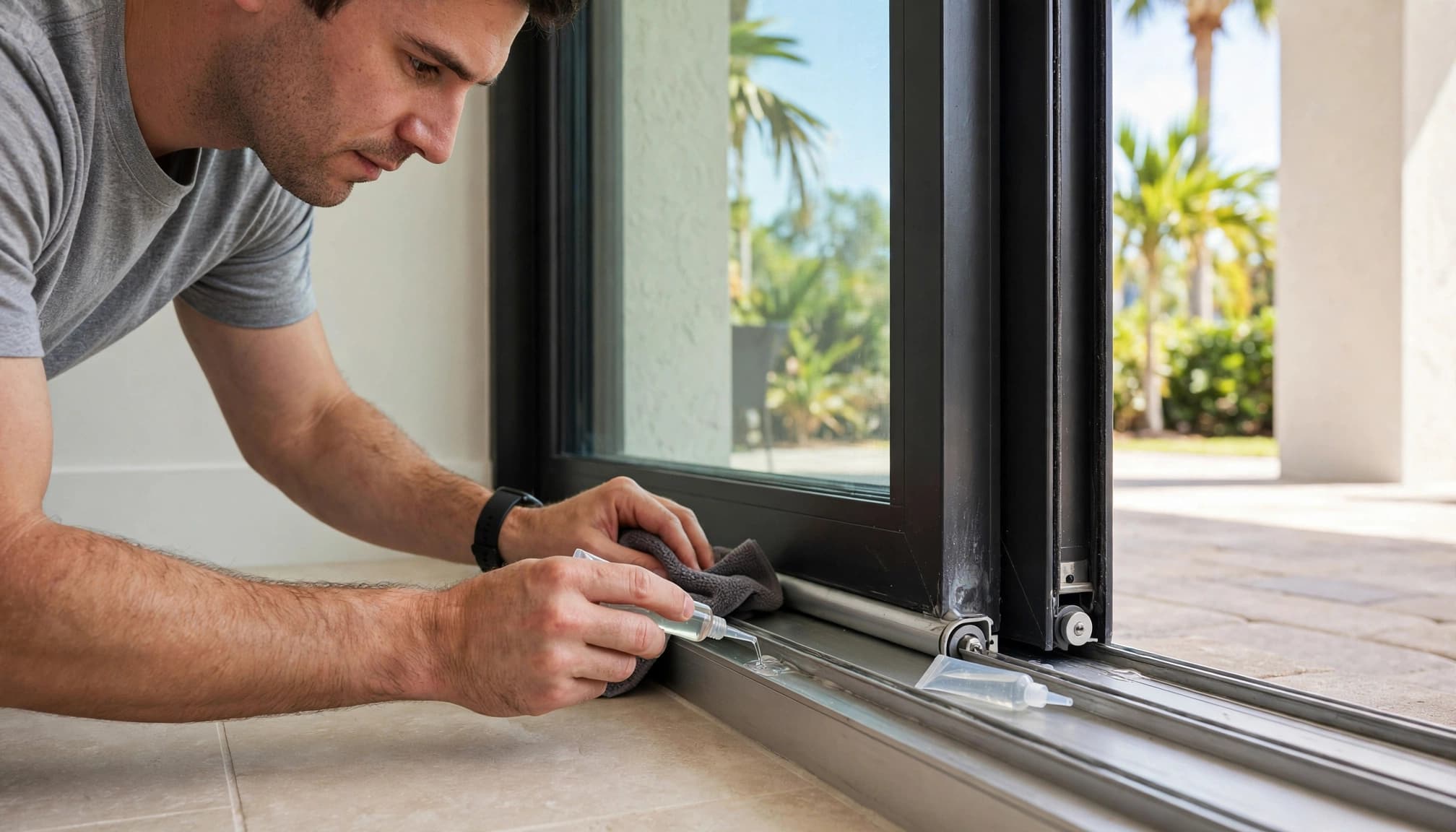
Clean the lower track completely
First, move the door far enough to expose the bottom track. Vacuum both channels, especially the corners. Then use a soft brush or old toothbrush to loosen packed material around the rail.
Wipe the metal with a damp cloth and a small amount of dish soap. A plastic scraper or old gift card can lift stubborn residue without scratching aluminum. Finally, dry the entire channel, including the corners and drainage openings.
Don't pour water into the track. Excess moisture can remain in hidden areas and cause problems later.
Apply lubricant to the roller surfaces, not the rail
Check the door manufacturer's guidance before applying anything. When silicone-based lubricant is approved, use a small amount on exposed roller bearings or wheel surfaces you can safely reach.
Avoid soaking the track. Thick grease, multipurpose oil, and excess spray collect dust, sand, and hair. The lower rail should remain clean and dry enough for the wheels to roll without carrying grit.
After applying the product, slide the panel slowly several times. This distributes the lubricant across the moving roller parts. Wipe away any excess that appears on the track.
Check Roller Height and Door Alignment
Lubrication can reveal another issue: a panel that is out of alignment. If one side drags, the latch misses its strike plate, or the top frame rubs, the rollers may need a minor adjustment.
Most sliding doors have adjustment screws near the lower corners of the moving panel. However, screw location and turning direction vary by manufacturer.
Make small, balanced adjustments
Clean the track before touching the screws. Then turn each adjustment screw about a quarter turn and test the door. Work in small, equal changes so the panel stays level.
The door should clear the bottom rail, glide without binding at the top, and latch without lifting or pushing. Stop if the screw resists, the glass shifts, or the panel becomes unstable.
Don't remove adjustment screws completely. Reinstalling one while supporting a heavy glass panel is difficult and unsafe.
Know when to call a repair professional
Roller replacement often requires removing the sliding panel. Large glass doors are heavy, and narrow access areas or upper-floor locations make the job harder.
Call a qualified technician if you find cracked glass, a distorted frame, severe corrosion, a loose track, or rollers that remain stuck after cleaning and adjustment. A worn roller may be a modest part, but panel removal and track repair can add significant labor.
When Lubrication Does Not Fix the Door
A door can roll smoothly and still feel unpleasant to use. Small recessed pulls give your fingers little room, while old handles may crack, loosen, or become uncomfortable.
That is a grip problem, not a roller problem. Once movement is smooth, inspect the handle and lock separately.
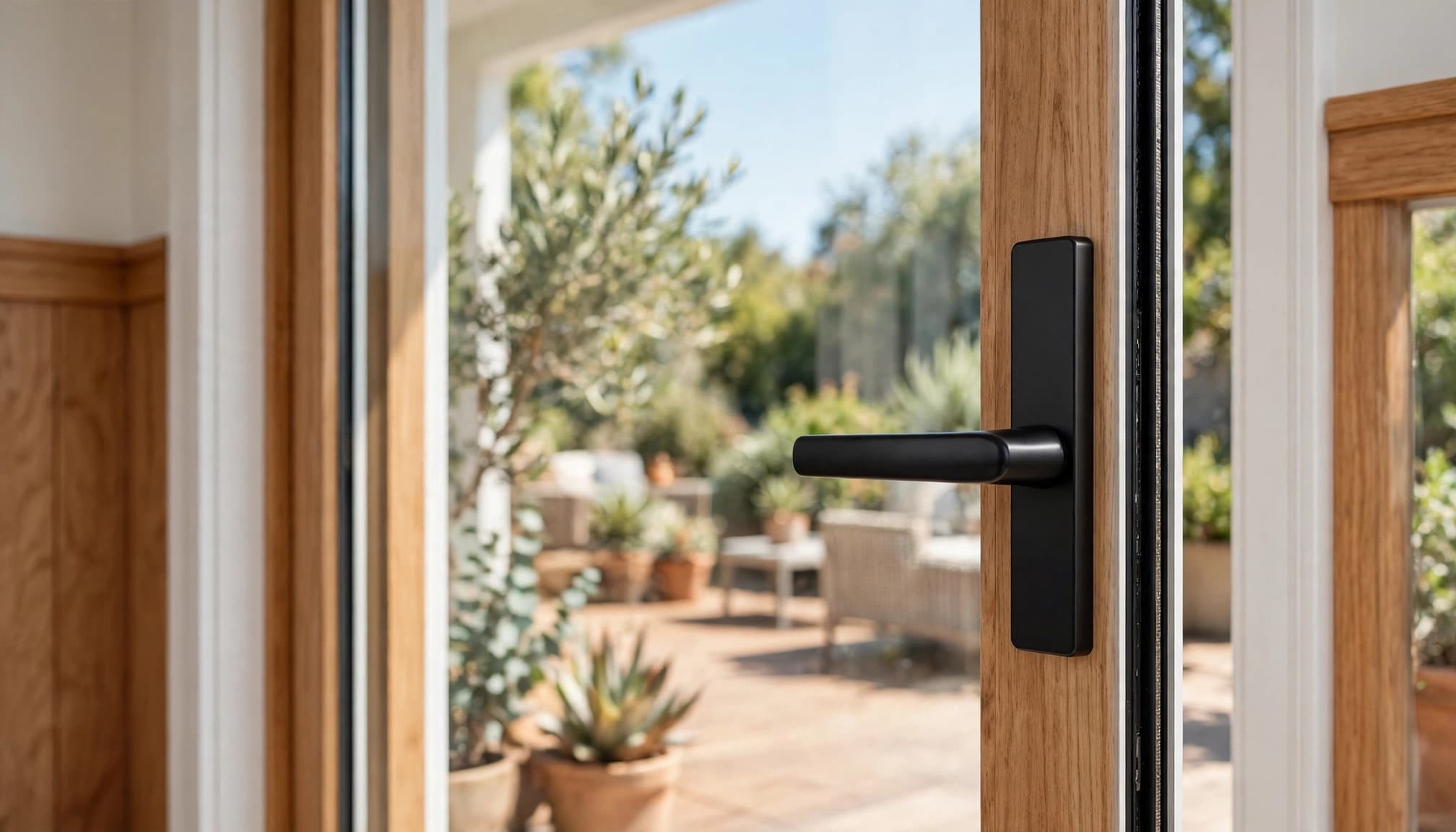
Choose a handle upgrade for a sound sliding door
A white sliding glass door replacement handle can make a working patio door easier to open without disturbing its rollers, track, lock, or glass.
Luuv Handle is made in the USA, patented until 2037, and installs over compatible existing hardware in about 30 seconds. It requires no alteration to the door and no drilling. For compatible doors with a 7.25-inch by 1-inch plate, review the handle fit and installation questions before ordering.
The retrofit design keeps the original lock and latch in place. That makes it practical for homeowners, renters, and property managers who want a more secure grip without changing the door itself.
Final Thoughts on Smooth-Running Patio Doors
Clean the track before trying sliding door roller lubrication, then use only a light, compatible product on accessible roller components. Test the panel after every maintenance step, because grinding, leaning, and repeated binding often point to worn parts or track damage.
A clean track and correctly aligned rollers make the door move well. A comfortable retrofit handle makes that smooth door easier to use every day.