

When a sliding glass door becomes hard to move, the problem often starts below the panel. Worn sliding door rollers can make the door stick, scrape, wobble, or demand far more force than it should.
However, a difficult door doesn't always need new rollers. Dirt, a damaged track, loose adjustment screws, or a poor grip on the existing handle can create similar symptoms. A few simple checks can help you identify the real problem before buying parts.
How Sliding Door Rollers Affect Door Operation
Most sliding glass doors ride on small roller assemblies mounted near the bottom of the moving panel. These rollers carry the panel's weight and let it travel along the track.
When they work properly, the door should move with steady pressure. It may feel heavy because glass panels are substantial, but it shouldn't jerk, grind, or drop against the track.
What healthy rollers feel like
A door with working rollers starts moving without a sudden tug. Once it opens, the panel should continue along the track smoothly instead of stopping every few inches.
The door should also remain fairly level. The gap between the panel and the frame should look consistent from top to bottom. If one corner sits lower than the other, a roller may need adjustment or replacement.
What worn rollers feel like
Damaged rollers often produce a rough, uneven motion. You might notice a grinding sound, repeated sticking, or a panel that feels as if it is dragging across the floor.
Some rollers develop flat spots after years of use. Others crack, seize, or collect corrosion. In each case, the door loses its smooth travel because the wheel no longer turns correctly.
Signs Your Sliding Door Rollers Need Replacement
A few symptoms point strongly toward a roller problem. Look for more than one sign before removing the door, since glass panels are heavy and difficult to handle alone.
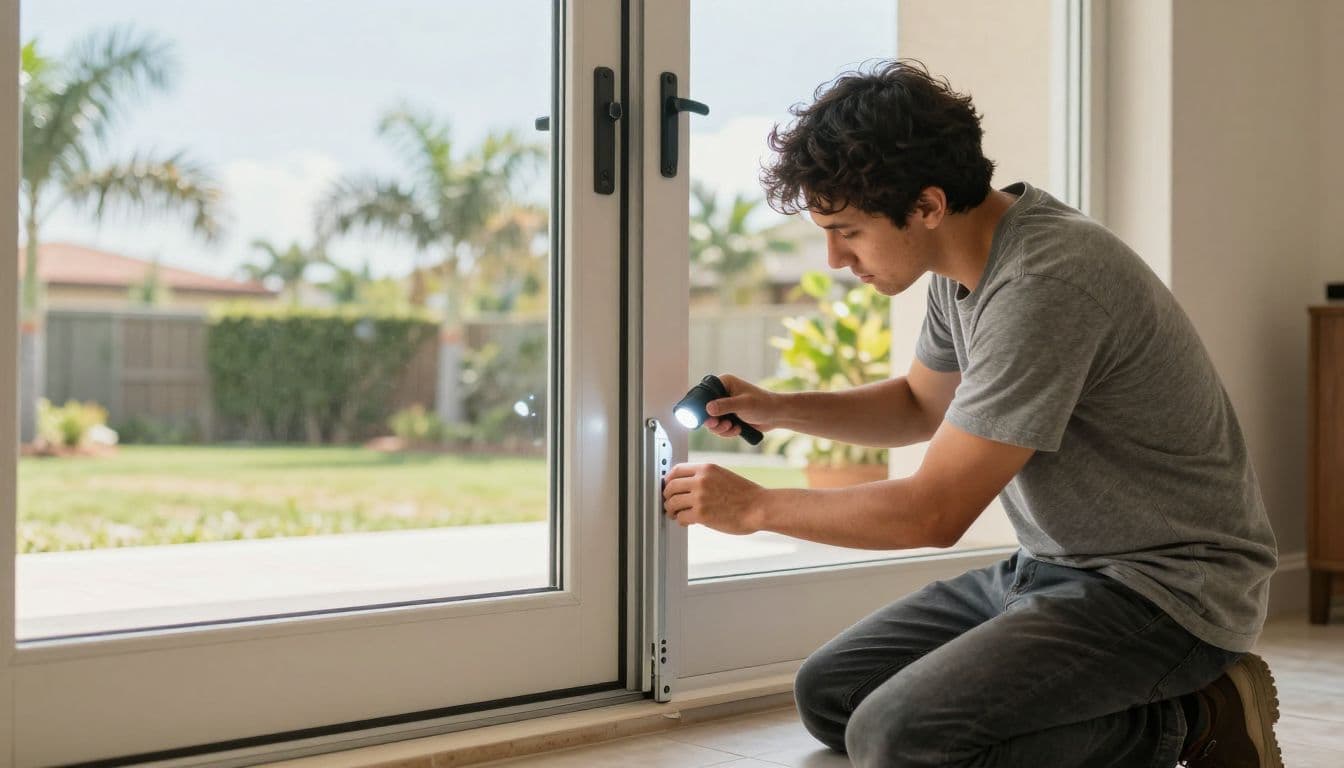
The door sticks, jumps, or drags
A door that repeatedly catches in the same spot may have a damaged wheel or a dented section of track. If cleaning the track doesn't change the movement, inspect the roller adjustment and wheel condition.
You may also see the panel shift slightly as you pull it. That movement can indicate that one roller carries more weight than the other. The door might still open, but the uneven load will increase wear.
You hear grinding or scraping
Healthy sliding door rollers shouldn't make a harsh grinding noise. A light track sound can happen with older hardware, but loud scraping usually deserves attention.
Check whether the noise comes from the bottom of the panel or from the track itself. A worn wheel can grind against its housing, while a damaged metal track can scrape even when the roller remains usable.
The panel sits low or leans
A sagging panel can rub against the frame, lock, or stationary glass. The handle side may appear lower than the opposite side, and the latch may stop lining up with the strike plate.
Adjustment screws can correct a minor height problem. If the screw turns without changing the panel position, or if the wheel looks cracked after removal, replace the roller assembly.
A handle can improve your grip, but it cannot correct a panel that drags because its rollers are damaged.
Check the Track Before Replacing the Rollers
Dirt and small debris can mimic a failing roller. Vacuum the track first, then wipe it with a damp cloth. Remove hair, sand, pet debris, and grit from both channels.
Look for dents, deep grooves, rust, or flattened sections. A new roller may not solve the problem if the track has serious damage. Small surface marks can sometimes be smoothed carefully, but major track damage may require professional repair or panel replacement.
Next, inspect the adjustment screws near the lower edges of the sliding panel. Turn them in small increments, testing the door after each adjustment. Raising the panel slightly can reduce rubbing and restore alignment.
Don't spray heavy oil into the track. Oil attracts dirt and can create a thicker paste around the wheels. If the manufacturer recommends a lubricant, use a product intended for sliding door roller assemblies.
Use the lift test carefully
With the door closed, hold both sides of the panel and gently lift upward. Excessive movement can indicate worn rollers, loose hardware, or a panel that needs adjustment.
Don't force the glass or try to remove a large panel by yourself. A sliding door can weigh hundreds of pounds, and the bottom rollers may be hidden inside the frame. If the panel must come out, get help from someone who has handled sliding door repairs before.
When a Sliding Glass Door Replacement Handle Makes Sense
Sometimes the door moves well, but opening it still feels awkward. Older patio doors often have a shallow recessed pull that gives your fingers little room. If the door opens smoothly after cleaning and adjustment, the handle may be the real issue.
A better grip can reduce strain without disturbing the roller system, lock, or latch. This is especially useful for homeowners, renters, and property managers who want a practical upgrade without changing the door frame.
A retrofit handle can fit over the existing hardware instead of requiring a full handle replacement. Before ordering, measure the existing door plate and confirm compatibility. Luuv Handle products are made for 7.25-inch by 1-inch door plates, according to the company's compatibility information in its sliding glass door handle FAQs.
A simple retrofit avoids door alterations
Luuv Handle's interior and exterior models slide over the existing handle and tighten into place. The installation takes about 30 seconds, requires no alteration to the door, and involves no drilling.
The original lock and latch stay in place. That distinction matters because a new grip shouldn't leave you with a handle that looks better but no longer secures the door correctly.
Luuv Handle is made in the USA using durable steel and water-resistant oak. It is a patented product through 2037, with white and bronze options available for different door styles. You can review the sliding glass door handle installation instructions before choosing an inside handle, outside handle, or bundle.
Should You Replace the Rollers or the Handle?
Use the door's movement as your first guide. New rollers are the appropriate fix when the panel grinds, drags, leans, or jumps after you clean and inspect the track.
Choose a replacement handle when the panel rolls normally but the existing pull is hard to grip. You may need both repairs if the door is difficult to move and the handle is damaged.
A quick comparison can help:
| Symptom | Likely issue | First step |
|---|---|---|
| Grinding from the bottom | Worn roller or damaged track | Clean and inspect the track |
| Door sits unevenly | Roller adjustment or failure | Test the adjustment screws |
| Smooth movement, poor grip | Handle design or damage | Check retrofit handle fit |
| Lock no longer lines up | Sagging panel or roller issue | Adjust panel height |
| Door catches after cleaning | Damaged roller or track | Arrange a closer inspection |
Conclusion
A sliding glass door usually gives clear warning before its rollers fail. Pay attention to grinding, uneven movement, a low panel, and repeated dragging. Clean the track and try careful adjustment before deciding that the roller assembly must come out.
If the door moves properly but feels difficult to open, a retrofit handle may solve the daily frustration without drilling or altering the door. The right repair starts with identifying whether the trouble comes from the wheels beneath the panel or the grip in your hand.