

A dirty track can make a sliding glass door feel broken when the real problem is sand, hair, and compacted grime. Proper sliding door track cleaning can help a stubborn patio door move with less effort and reduce strain on its rollers.
The process takes about 15 minutes with ordinary household tools. However, cleaning won't fix a worn roller, bent track, or uncomfortable latch. Start with the track, then inspect the door hardware if the problem continues.
Why Sliding Glass Door Tracks Get Dirty
Sliding door tracks sit close to the floor, so they collect debris every time the door opens. Coastal homes face an extra challenge because fine sand and salt residue can enter through open doors and settle in the lower channel.
Sand and hair create friction
Small particles work their way beneath the rollers. As the door moves, the rollers press that grit into the track. The result is a rough, grinding motion that gets worse with repeated use.
Hair, pet fur, and crumbs can also wrap around the roller housing. Moisture makes the buildup stick, especially near the corners and drainage openings. A quick wipe across the visible surface won't remove debris hiding inside the channel.
When cleaning isn't enough
If the door still drags after cleaning, check whether the track has dents or raised sections. Look at the rollers as well. A door that sits lower on one side, shakes while moving, or requires lifting may need roller adjustment or replacement.
The handle can create a separate problem. If the door rolls smoothly but the grip is too small or difficult to reach, cleaning the track won't improve the opening experience. In that case, inspect the existing handle and its mounting plate.
Sliding Door Track Cleaning: A Safe Step-by-Step Method
Gather a vacuum with a crevice attachment, a soft-bristled brush, microfiber cloths, mild dish soap, warm water, and a plastic scraper. Avoid abrasive pads, harsh bleach, and metal tools that can scratch aluminum or damage the finish.
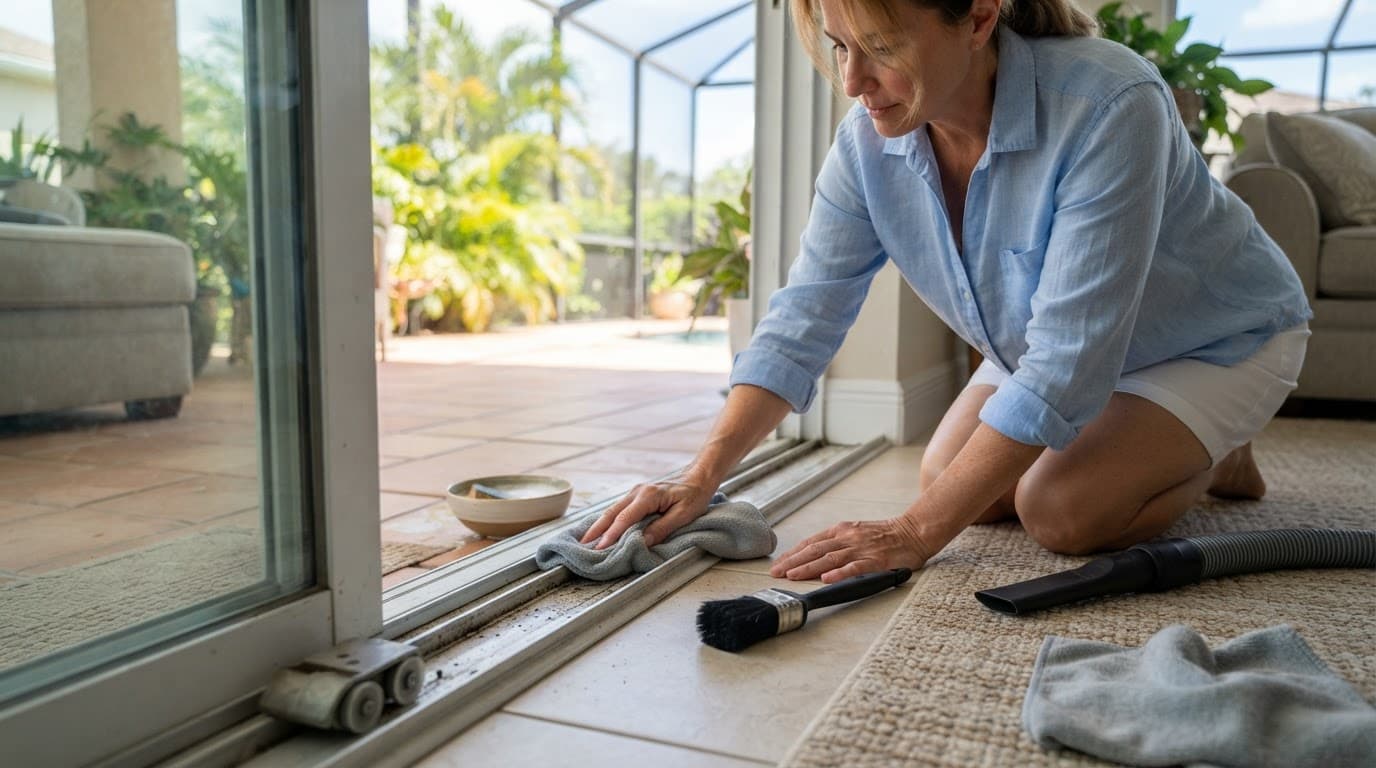
- Open the sliding panel carefully. Move it far enough to expose the lower track. Keep your fingers away from the roller area while the door is moving.
- Vacuum loose debris first. Run the crevice tool along both channels, paying close attention to the ends. Vacuuming before adding water keeps dry sand from turning into sticky mud.
- Loosen compacted dirt. Use a dry toothbrush or soft nylon brush to work through corners and around the rollers. Brush debris toward an open area, then vacuum again.
- Wash the track. Mix a small amount of dish soap with warm water. Dampen a microfiber cloth, wring it out well, and wipe the full length of the track. The cloth should be damp, not dripping.
- Lift stubborn deposits. Use a plastic putty knife or an old gift card to loosen stuck residue. Keep the edge low and work gently so you don't bend the track or scrape its surface.
- Clean the drainage openings. Dirt can block the small weep holes near the outside edge. Clear them with a plastic pick or soft brush, never a sharp metal object.
- Dry everything completely. Use a clean cloth to remove moisture from the channels and corners. Leave the panel open for a short time so trapped dampness can evaporate.
A clean track helps the door move, but it cannot correct a damaged roller or a bent frame.
Don't pour a bucket of water into the track. Excess water can reach the roller assemblies, flooring, or interior wall. Controlled moisture gives you better results with less risk.
Keep the Track Clean Longer
Regular maintenance works better than waiting for the door to grind. In a dry, sandy area, inspect the track every few weeks. Homes with pets, children, or frequent patio traffic may need more frequent vacuuming.
Vacuum loose debris before it becomes compacted. Wipe the track with a damp cloth when you see dark residue, then dry it fully. Pay extra attention after storms, landscaping work, or a period when the door stayed open.
Lubricate the right part
Many sliding doors don't need lubricant on the track. Oil and greasy sprays can trap sand, creating a rough paste that increases friction. If the manufacturer recommends lubrication, apply the correct product to the roller assembly, not across the walking surface of the track.
After cleaning, move the door several times. Listen for grinding, clicking, or scraping. These sounds can point to a roller problem that needs adjustment.
Check the rollers and latch
A clean track is also a good time to inspect the door's alignment. The panel should sit evenly and move without force. Test the lock and latch after cleaning, particularly if the door has shifted or the handle feels loose.
If the door operates well but remains hard to grip, a new handle may deliver a bigger improvement than further track cleaning.
Pair a Clean Track With a Better Door Handle
A Sliding Glass Door Replacement Handle can improve control when the original recessed grip is uncomfortable, too small, or difficult to reach. Luuv Handle retrofit models fit over existing standard hardware, so you keep the original lock and latch in place.
The handle requires no alteration to the door and no drilling. It slides over the existing handle and tightens with the included fasteners. Most installations take about 30 seconds. Review the Luuv Handle installation instructions before ordering or fitting the handle.
Luuv Handle products are made in the USA and use durable steel with water-resistant oak construction. The product is a patented product until 2037. White and bronze options help the new grip fit the door's existing appearance, while inside-and-outside bundles add an easier grip on both sides.
Before purchasing, measure the existing door plate. Luuv Handle models fit standard plates measuring 7.25 inches by 1 inch. The Luuv Handle compatibility guide explains fit requirements and answers common questions about installation.
Clean the track before installing a retrofit handle. That order makes sense because it separates two issues: the track affects movement, while the handle affects grip and control. Replacing the handle won't solve a door that drags because of sand or worn rollers.
Conclusion
A proper sliding door track cleaning removes the grit that makes patio doors drag, scrape, and resist opening. Vacuum first, use limited moisture, loosen buildup with plastic tools, and dry the track before testing the panel.
If the door still feels rough, inspect the rollers. If it glides but remains difficult to grip, a Made-in-the-USA Luuv Handle offers a no-drilling, no-alteration upgrade that fits over existing hardware. A clean track and a comfortable handle address two different problems, so check both before replacing the entire door.