

A sliding glass door that sticks may need sliding door track repair, but the fix often starts with a vacuum, not a replacement part. Grit, pet hair, and moisture can collect in the lower channel until the rollers drag.
Before removing the door, find the source of the resistance. A clean track can restore smooth movement, while a hard-to-grip handle needs a different repair. A quick inspection helps you spend money only where the door actually needs it.
When Cleaning Is Enough for Sliding Door Track Repair
Cleaning is enough when the door improves after debris leaves the channel. Open the panel halfway and look along the lower track. Dust usually gathers near the corners, where the moving panel pushes it forward. If the metal is straight and the rollers don't wobble, start with cleaning.
Vacuum loose grit with a narrow attachment. Then wipe the channel with a damp cloth and mild soap. Dry the full length before closing the door. If the manufacturer permits lubrication, apply a small amount of silicone lubricant to the roller bearings. Avoid thick grease, household oil, and excess spray because they trap more dust.
Use a flashlight to inspect the bottom channel, especially beneath the fixed panel edge. A small stone or hardened residue can hide in the deepest groove. Remove what you can reach without forcing a tool against the glass or frame.
Signs the track only needs routine care
A door that feels rough at first, then moves better after several passes, usually has a dirty track. You may also see a gray line of dust, sand, or small stones in the channel. These contaminants increase friction, but they don't necessarily mean the track or rollers have failed.
Repeat the cleaning after storms or home projects that create sawdust. In coastal areas, inspect for salt residue and dry the channel often. Good maintenance keeps a simple sliding door track repair from becoming a larger hardware job.
Test the door before ordering parts
Move the panel slowly after cleaning. It should travel without grinding, scraping, or stopping at one spot. Check both directions, then close it and confirm that the latch still meets the strike plate.
If the door rolls smoothly but your hand slips from the recessed pull, the track probably isn't the problem. Shift your attention to the handle.
When Cleaning Won't Fix the Track
A clean channel cannot repair metal that has been gouged or bent. It also can't restore a roller with a flat spot, cracked housing, or seized bearing. These faults often create a repeatable catch, even after careful cleaning.
Look for damage that repeats
Watch the bottom edge as you move the door. A sharp scrape in the same location points to a dent or raised section. A panel that rocks side to side may have worn rollers or a door that needs adjustment. Rust, deep grooves, and exposed roller parts also call for more than routine care.
Pay attention to the door's height above the track. If one corner sits low or the panel rubs the frame, roller adjustment may be needed. A clean track with a crooked panel points to alignment, not dirt.
Don't force a heavy glass panel across a damaged area. Pressure can strain the roller assembly and make the door harder to lift safely. Photograph the track and roller area before buying parts, so you can compare the repair to the actual damage.
Know when adjustment is safer
Roller adjustment may correct a sagging panel, but access varies by door design. Some doors have adjustment screws near the bottom corners. Others require panel removal, which can take two people and protective support.
Call a qualified repair professional when the glass is cracked, the frame is distorted, or the panel won't lift safely. Track replacement can involve removing the glass door, so it deserves more care than a quick cleaning. If the channel is sound, however, replacing the handle may solve the usability problem without disturbing the panel.
A clean track fixes friction. It doesn't fix a handle that gives your fingers nowhere to grip.
When a Sliding Glass Door Replacement Handle Fits the Problem
A door can roll perfectly and still be frustrating to use. Small factory pulls leave little room for your fingers, while an older handle may loosen, crack, or feel uncomfortable. In that case, sliding door track repair won't address the part you touch every time you open the door.
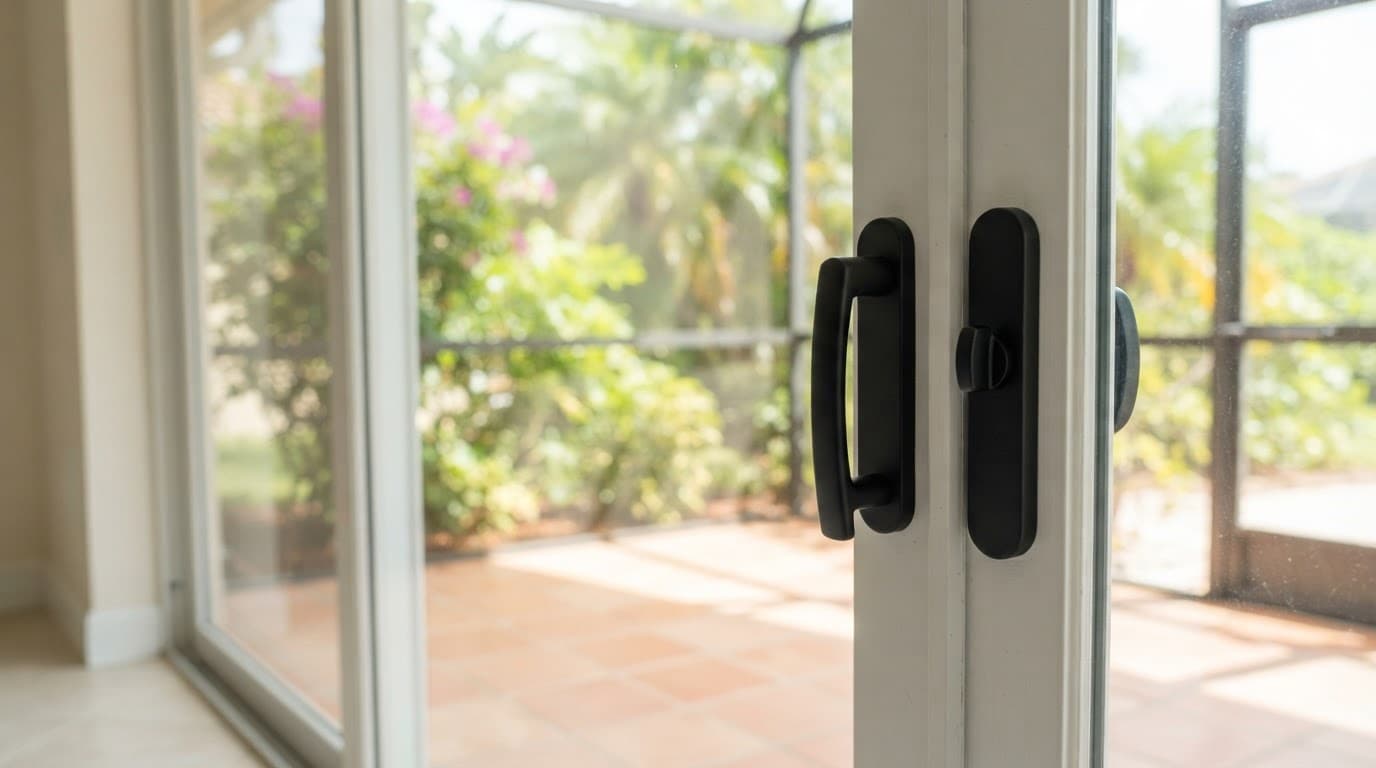
Match the symptom to the hardware
Test the door with the existing handle while watching its movement. If the panel glides but your grip fails, choose a larger retrofit handle. If the panel grinds or sticks, repair the rollers or track first. A new handle improves control, but it can't make a damaged wheel roll.
For renters, property managers, and homeowners who want a low-risk upgrade, an overlay design has a practical advantage. It fits over existing hardware, so you don't need to remove the original lock or latch. The door keeps its current operating parts.
Choose a no-drill retrofit
Luuv Handle makes interior and exterior handles in white and bronze, with real oak and water-resistant construction supported by durable steel. The brand is a veteran-owned business in Southwest Florida, and each handle is made in the USA.
The retrofit handle is designed for sliding doors with 7.25 x 1-inch plates. Check that measurement before ordering. The sliding glass door handle retrofit FAQs also cover fit, locks, and installation limits.
This is where a replacement handle can be simpler than track work. It requires no alteration to the door and no drilling. It is a patented product protected until 2037, and the original hardware remains in place.
How to Install and Check the New Handle
Once the track passes its movement test, install the handle before considering a larger repair. A careful fit keeps the latch usable and prevents pressure on the door frame.
Follow the short installation process
Luuv Handle installation takes about 30 seconds when the existing plate matches the required size. The basic sequence is:
- Loosen the screws from the inside of the door.
- Slide the handle onto the existing plate from the outside.
- Set the top cap over the plate, then pull the handle down until it seats.
- Return inside and tighten the screws.
The Luuv Handle installation instructions show the placement and fastening steps. Don't overtighten the screws, because excess force can damage the hardware or affect the handle's fit.
Test the finished repair
Open and close the panel several times. Hold the new handle without pulling at an angle, then check that the lock and latch still work. The handle should feel rigid, and the door should move on the same clean track.
If you need access from both sides, an inside-and-outside set keeps the grip consistent on the patio and room sides. A single interior handle makes sense when the exterior side already works well. Either option addresses grip and access without turning a sound track into a replacement project.
Conclusion
Sliding door track repair starts with a clear diagnosis. Vacuum and wash the channel when dirt causes the drag, but adjust or replace rollers when damage remains after cleaning.
When the door rolls well yet feels hard to grip, the handle is the better repair. A Luuv retrofit handle is made in the USA, patented until 2037, and installs over existing hardware with no door alteration and no drilling. Check the 7.25 x 1-inch plate size, then give the door a clean track and a handle you can use comfortably.