

Water that stays trapped in a patio door frame can cause stains, corrosion, and wet flooring near the sill. Sliding door weep holes give rainwater a controlled path out, so keeping them open protects more than the track.
Blocked sliding glass door weep holes often collect sand, pet hair, leaves, and windblown debris. A careful cleaning takes only a few minutes and can prevent a small drainage issue from becoming a frustrating door repair.
Find the Drainage Openings Before You Clean
Weep holes are small openings in the lower door frame that drain water from the sill and track channels. Most are on the exterior face of the frame, near the bottom rail. Some doors have narrow slots, while others use round holes hidden behind a small cover.
Open the sliding panel and look along the bottom track. Then move outside and inspect the exterior sill directly below that area. Dirt can hide the openings, so use a flashlight if needed.
Locate sliding door weep holes without poking the wrong opening
A true drainage opening leads through the frame and toward the exterior. It should sit low on the sill, where water naturally collects. Screw holes, roller-adjustment openings, and latch hardware are different parts of the door, so leave them alone.
If you see standing water inside the bottom channel after rain, the weep path likely has a blockage. Water may also spill into the room when the door track fills faster than it can drain.
Use gentle tools that won't damage the frame
Start with simple tools that fit the opening without scraping metal or widening it:
- A vacuum with a narrow crevice attachment removes loose dirt from the track.
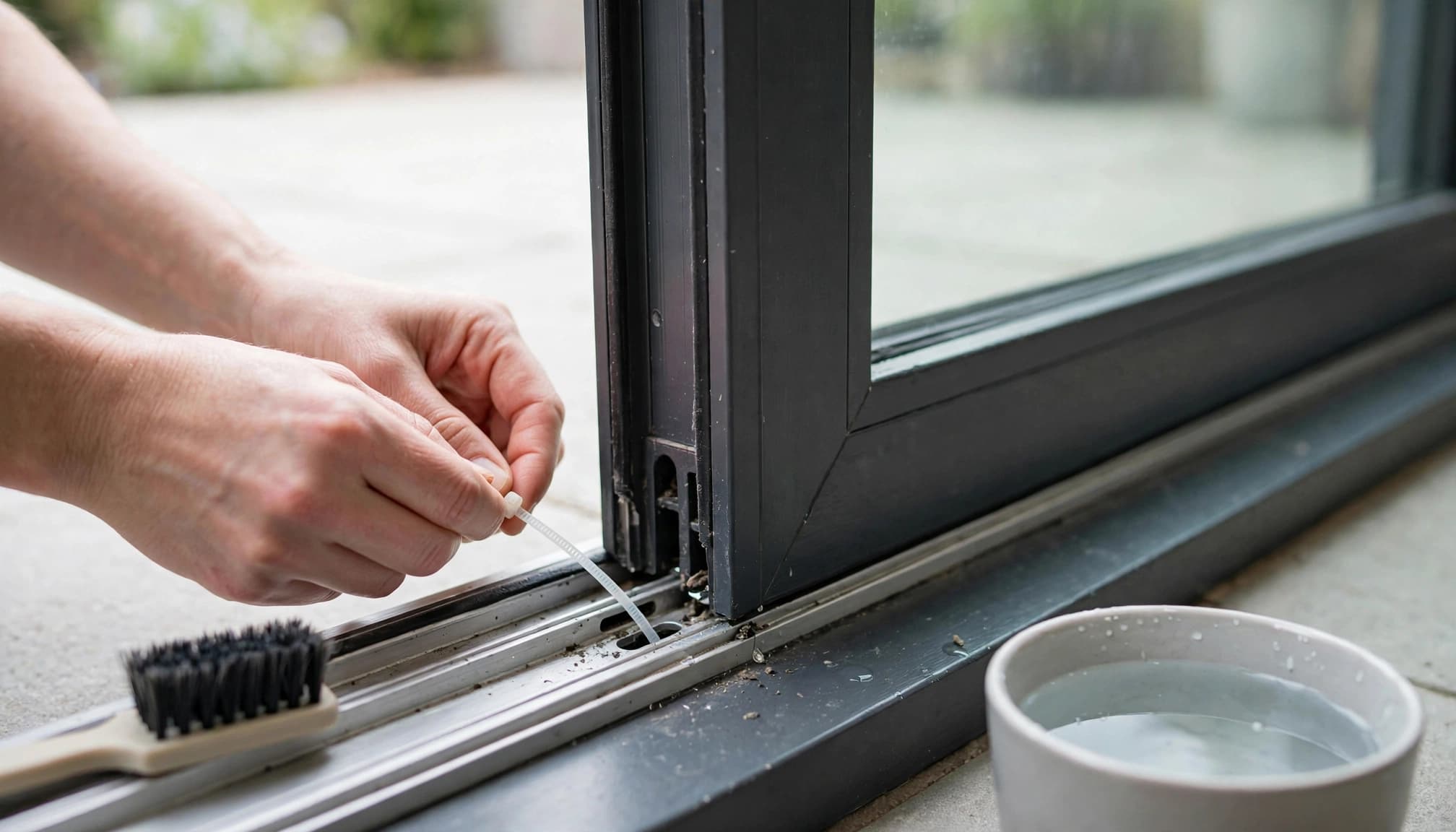
- A soft toothbrush or small nylon brush loosens packed debris near the sill.
- A plastic zip tie or flexible pipe cleaner can clear a shallow blockage.
- A cup of clean water helps confirm that drainage has returned.
Avoid nails, drill bits, screwdrivers, and stiff wire. These can damage the drainage channel, scratch the frame, or lodge debris farther inside.
How to Clear Blocked Sliding Glass Door Weep Holes
Cleaning works best when you remove loose debris first. Don't flush water into a track full of grit, because muddy buildup can settle deeper into the frame.
Clean the track and drainage channel in order
First, vacuum the exposed bottom track, corners, and sill. Brush away sand, hair, small stones, and dried leaves. A damp microfiber cloth can lift the fine residue that remains, but dry the channel afterward.
Next, insert a plastic zip tie into each exterior opening. Move it gently in and out rather than forcing it around bends. If debris appears at the tip, wipe it away and repeat until the tie moves freely.
Keep the sliding panel closed while you work outside. That gives you a clear view of the sill and reduces the chance of dropping tools into the moving track.
Heavy oil does not clear a blocked drain. It can trap more grit in the channel and turn routine cleaning into sticky buildup.
Test the weep holes with a small amount of water
Pour a small amount of clean water into the interior sill channel, not directly onto the glass or lock. Watch the exterior openings. Water should drain out at a steady pace.
If water still pools, repeat the brush and zip-tie process. Some door frames have separate paths for each side of the track, so test more than one opening.
Do not use high-pressure air or a pressure washer. Strong force can push debris into hidden cavities or drive water past seals. If a blockage won't clear and water continues entering the home, call a qualified door technician.
Keep Weep Holes Clear Through Every Season
A clean track helps the door roll better, but it also keeps debris out of the drainage system. Sweep or vacuum the sill after storms, landscaping, sanding projects, or heavy pollen season.
In coastal areas, rinse salt residue from the exterior frame with clean water and dry the track. Salt and trapped moisture can encourage corrosion around aluminum components.
Watch for warning signs beyond a simple clog
Recurring pooling may point to a bent sill, damaged weatherstripping, or a frame that has shifted out of alignment. Check for deep grooves, raised ridges, or corrosion in the running track.
A door that drags after cleaning may have worn rollers instead. Don't add lubricant to a dirty track. Clean it first, then use only a product approved for your door's roller system.
If the panel grinds, leans, or needs lifting to move, stop forcing it. Heavy glass panels are awkward to remove, and roller repairs can require professional support.
When the Handle, Not the Weep Holes, Is the Problem
Clear drainage protects the frame, yet it won't make a recessed, loose, or uncomfortable pull easier to use. When the door slides smoothly but remains hard to grip, a Sliding Glass Door Replacement Handle addresses a separate problem.
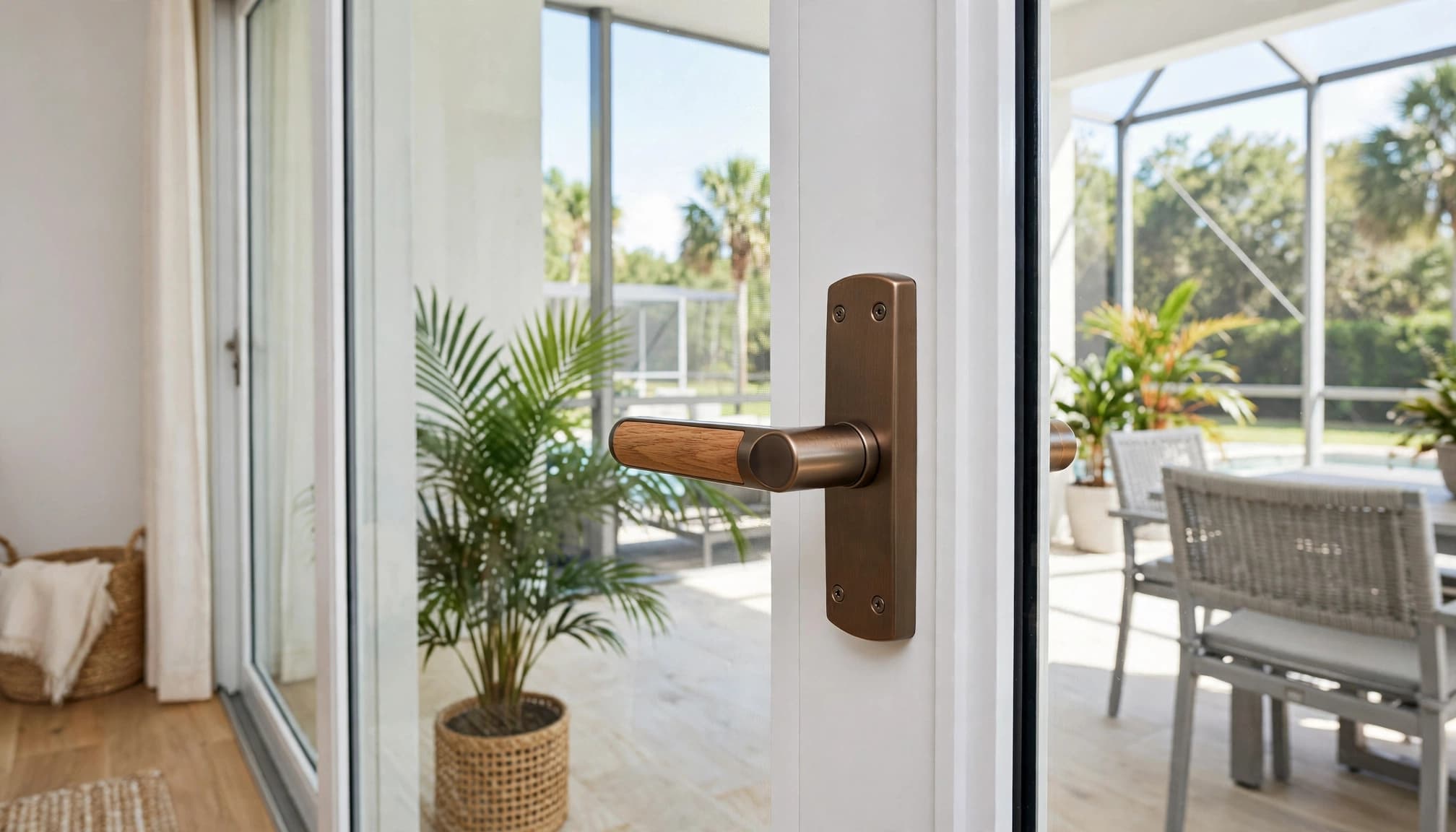
Luuv Handle fits over compatible existing hardware, so the original lock and latch stay in place. It is made in the USA, is a patented product until 2037, requires no alteration to the door, and requires no drilling. Check the retrofit handle fit and installation questions before ordering, especially the 7.25-inch by 1-inch door plate measurement.
A comfortable grip helps you control a properly working slider. It should never be used to force a panel that binds, scrapes, or sits out of square.
A Clear Drain Keeps Water Where It Belongs
Blocked sliding door weep holes are easy to overlook because they are small and often hidden by track debris. Regular vacuuming, gentle clearing, and a quick water test keep the sill draining as designed.
Clean drainage, sound rollers, and a usable handle each solve a different part of patio door care. Address the problem you can see, and your sliding door will stay easier to operate and better protected from trapped water.