

A loose handle can make a heavy patio door feel unreliable every time you step outside. The good news is that a loose sliding glass door handle often needs only a careful adjustment, not a new door or costly service call.
Start with the screws and hardware you already have. Then decide whether tightening the handle solves the problem or whether a more comfortable grip is the better long-term answer.
Find What Made the Handle Loose
Sliding door handles loosen through everyday pulling, temperature changes, and repeated door movement. Before reaching for a screwdriver, check where the movement comes from.
Check the mounting screws first
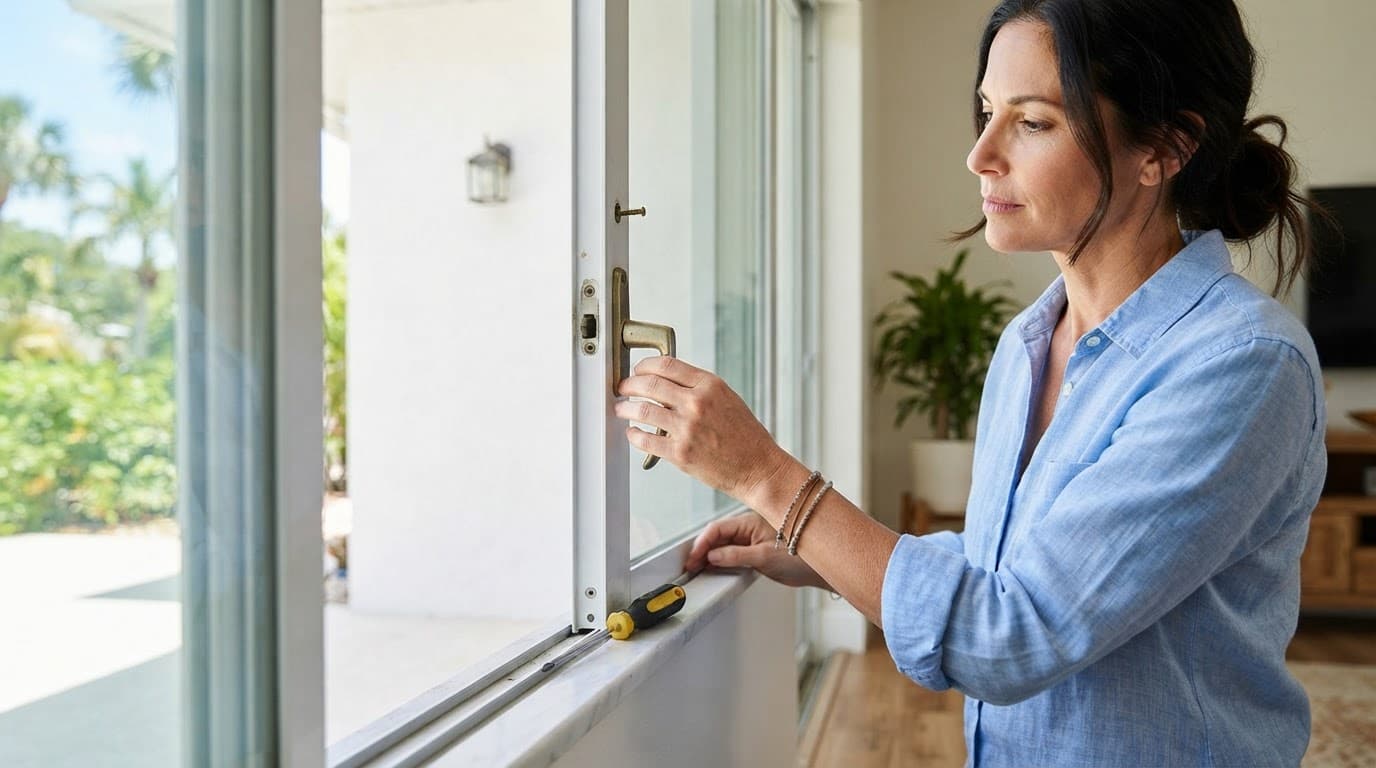
Open the door a few inches and hold the handle firmly. Wiggle it gently while watching the screw covers and handle plate. If the plate shifts against the door frame, loose mounting screws are likely the issue.
Many sliding glass door handles hide their screws beneath small plastic caps. Use a flat screwdriver or fingernail to lift the cap carefully. Avoid prying against the glass or bending the cover.
Separate a loose handle from a door problem
A tight handle won't fix a door that drags, sticks, or won't latch. If the handle feels solid but the door is hard to move, inspect the bottom track for grit, pet hair, or small debris.
Also look at the latch. A latch that misses the strike plate can make you pull harder on the handle, which eventually loosens the hardware again. Clean the track first, then address roller or alignment problems if the door still resists.
Over-tightening stripped screws can turn a quick repair into a hardware replacement job. Stop when the handle plate no longer moves.
How to Tighten a Loose Sliding Glass Door Handle
You usually need a Phillips-head screwdriver, a clean cloth, and a few minutes. Keep the door partly open so you can reach both sides without putting pressure on the glass.
Tighten both sides evenly
Follow these steps for a typical two-piece handle set:
- Remove the screw covers on the interior handle, if your model has them.
- Turn each mounting screw clockwise a little at a time.
- Alternate between the upper and lower screw so the plate sits flat.
- Hold the exterior pull in place if it shifts while you tighten.
- Replace the caps, then test the door several times.
Don't force a screw that spins without tightening. Its threads may be worn, the screw may be too short, or the internal hardware may have failed. In that case, remove the handle and compare the screw condition before buying replacements.
Test the grip and latch
Close the door slowly after tightening. Pull it open with normal pressure, then test the latch several times. The handle should stay firm, and the lock should still line up correctly.
If the door slides smoothly but the recessed pull remains awkward, tightening alone won't make it easier to use. This is common on older sliders with shallow factory handles. A larger retrofit grip can solve that daily frustration while the original latch remains in place.
When a Tightened Handle Still Isn't Enough
Some handles are secure but uncomfortable, cracked, corroded, or too small for a confident hold. That is when a Sliding Glass Door Replacement Handle deserves a closer look.
Choose a retrofit option when the original hardware works
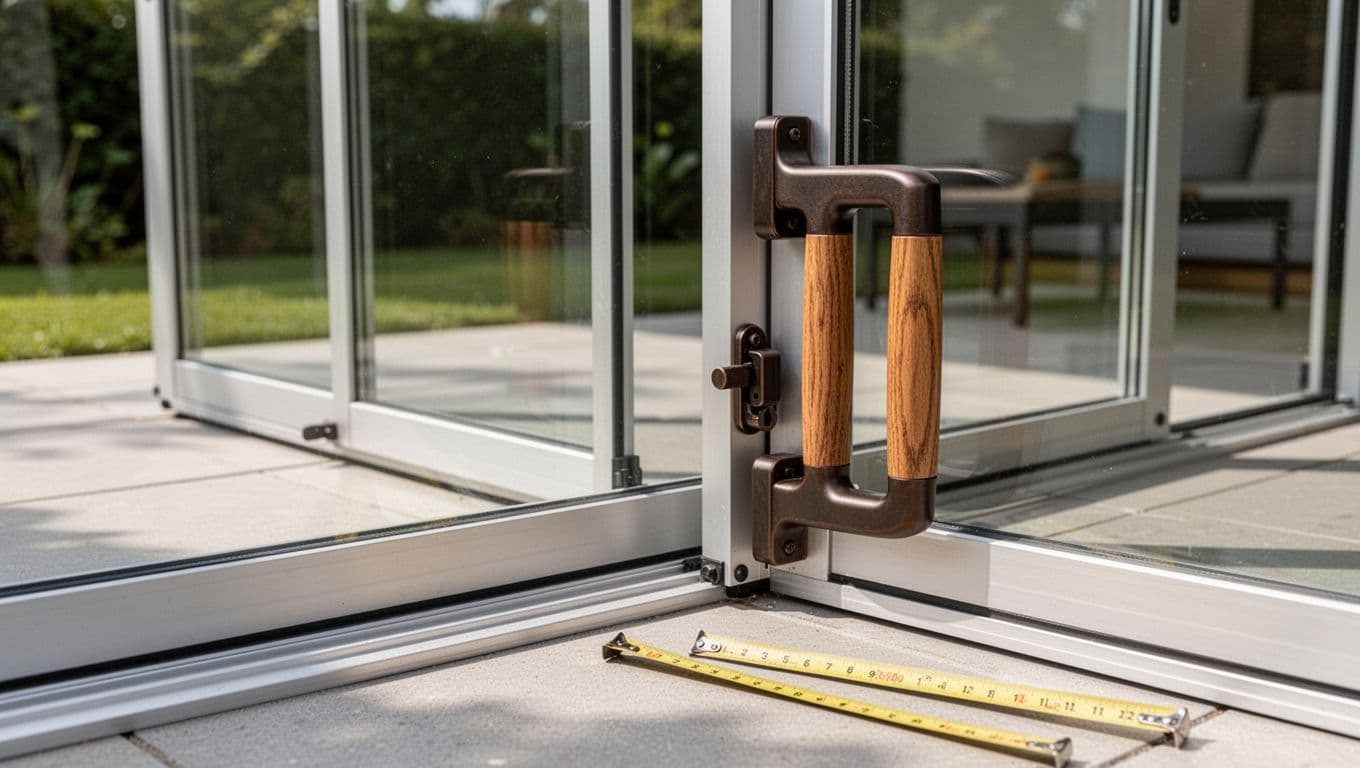
A retrofit handle installs over existing hardware rather than requiring you to remove the lock assembly. This approach makes sense when the latch still works, but the factory pull is difficult to grip.
Before ordering, measure your door plate. Luuv Handle retrofit products fit sliders with 7.25-inch by 1-inch door plates. Check the retrofit handle compatibility guide if you need help confirming your door's fit.
Replace broken hardware when the latch has failed
A true hardware replacement is necessary if the handle has snapped, the locking mechanism no longer engages, or the mounting points are damaged. Match the screw-hole spacing, handle orientation, and lock style before removing anything.
Take photos of both sides of the door first. This makes it easier to compare parts and reinstall the lock correctly. If the door's glass, frame, or latch housing is damaged, call a qualified sliding door technician.
A No-Drill Upgrade for Better Daily Use
A loose sliding glass door handle may be fixed with a screwdriver, yet a narrow pull can remain difficult for children, older adults, or anyone carrying groceries. An add-on grip gives your hand more surface area without changing the original door hardware.
Luuv Handle is made in the USA by a veteran-owned Southwest Florida business. Its steel-and-oak retrofit handles are water-resistant and available in white or bronze for interior and exterior use.
The patented product is protected until 2037. It requires no alteration to the door and no drilling, so renters and homeowners can avoid permanent changes to the frame or glass. Installation takes about 30 seconds: loosen the existing interior screws, slide the handle over the plate, set it into position, and tighten the screws again. Follow the Luuv Handle installation instructions for the complete sequence.
Final Thoughts
Most loose handles respond well to even, careful screw tightening. However, a handle that is secure but hard to grip calls for a more practical upgrade.
Measure the door plate, protect the working latch, and avoid drilling into a door that doesn't need modification. A solid loose sliding glass door handle repair should make the door feel dependable every time you use it.