

A sliding glass door can feel broken when the real problem is sand, hair, or a loose handle. A practical sliding glass door maintenance routine helps you identify the source before you order parts or remove a heavy glass panel.
Clean the track first, then inspect the rollers, latch, mounting plate, and handle. If the door rolls smoothly but the grip is uncomfortable, track cleaning won't solve the problem. Use this checklist to separate a track issue from a hardware issue and choose the safest next step.
Key Takeaways
- Vacuum and wipe the lower track before adjusting rollers or buying replacement parts.
- Keep water controlled, dry the channel fully, and avoid greasy sprays that collect sand.
- A door that sits low, shakes, grinds, or needs lifting may have roller or alignment problems.
- A smooth-moving door with a poor grip needs handle attention instead.
- Check the door plate before ordering a retrofit handle. Luuv Handles fit compatible sliders with 7.25-inch by 1-inch plates.
- The Luuv Handle is made in the USA, patented until 2037, and requires no alteration to the door and no drilling.
- Stop DIY work when the glass is cracked, the frame is bent, or the panel cannot move safely.
A Sliding Glass Door Maintenance Checklist
Start with a visual inspection before touching adjustment screws or trying to lift the panel. Sliding glass doors are heavy, and a small change in alignment can affect the lock, rollers, and frame.
Inspect the Track and Rollers
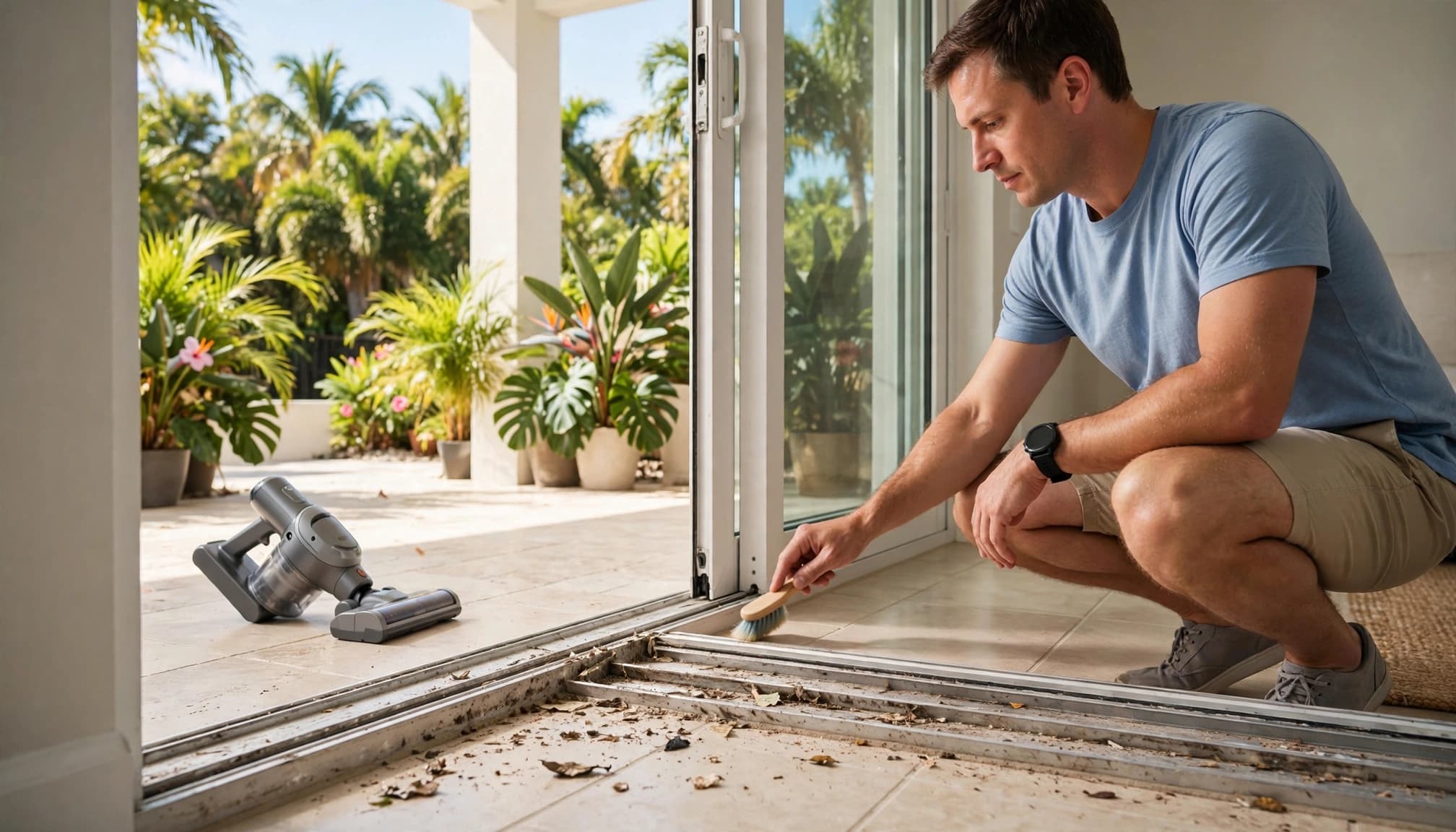
Open the moving panel only as far as it travels without force. Use a flashlight to look along the lower channel and check both ends, where sand and compacted debris often collect.
Look for hair, leaves, small stones, dried mud, salt residue, deep grooves, rust, dents, and raised metal. A door that catches in the same place each time may have a damaged rail rather than a dirty one.
Observe the panel while it moves. A low corner, side-to-side wobble, grinding sound, or need to lift the door can point to worn rollers or an alignment problem.
Check the Handle, Lock, and Door Plate
Test the handle without forcing the panel. It should give you enough room to pull the door straight along the track. A recessed pull that pinches your fingers or feels too small is a separate usability problem.
Check whether the handle moves, rattles, or pulls away from the mounting plate. Confirm that the latch still meets the strike plate when the door closes. If the lock works but the grip is poor, focus on the handle instead of adjusting the rollers.
Keep children and pets away from a door that leans, rattles heavily, or has damaged glass. Don't continue operating a panel that catches hard or appears unstable.
Clean the Track Before Adjusting Anything
Cleaning comes before roller adjustment because grit can make a properly aligned door feel defective. It also reveals whether the rail has physical damage.
Vacuum Loose Debris First
Gather a vacuum with a crevice attachment, a soft nylon brush, microfiber cloths, mild dish soap, warm water, and a plastic scraper. Avoid abrasive pads, bleach, and metal tools that can scratch aluminum or bend the channel.
Vacuum the full length of the lower track, including corners and the area beneath the fixed panel edge. Remove sand, pet hair, insects, sawdust, and loose grit before adding moisture. Dry debris is easier to remove before it becomes a paste.
Use the soft brush around tight corners and near the roller path. Brush debris into an open section, then vacuum again.
Wipe, Dry, and Check Drainage
Mix a small amount of mild dish soap with warm water. Dampen a microfiber cloth, wring it out well, and wipe the channel. The cloth should be damp, not dripping. Too much water can reach the rollers, flooring, or nearby wall.
A plastic scraper or old gift card can loosen hardened residue. Keep the edge low and work gently. Clear the small drainage openings with a soft brush or plastic pick, never a sharp metal object.
Dry the entire track with a clean cloth. Leave the panel open briefly so moisture can evaporate. Avoid household oil and thick grease because they trap more grit under the rollers. If the manufacturer permits lubrication, use a small amount of product intended for sliding-door rollers or tracks.
Know When Rollers Need Adjustment or Repair
Slide the door several times after cleaning. It should travel in both directions without grinding, scraping, or stopping at one spot. A repeating bump usually points to a damaged rail or roller.
Most sliding doors have adjustment screws near the lower corners of the moving panel, but their location and turning direction vary by model. If the door manual allows adjustment, make small, equal changes on both sides. Test the panel after every change.
Raising the rollers slightly can lift a sagging panel and help the latch meet its keeper. Raising them too far can make the top rail bind. Leaving them too low can cause the bottom frame to rub or increase the risk of derailment.
Stop if the glass appears loose, the panel feels unstable, or the door rubs at the top. Roller replacement may require removing the glass panel, which can take two people and proper support. A qualified technician can match replacement rollers, inspect the frame, and check whether the opening has shifted.
A clean track won't repair a flat-spotted roller, seized bearing, bent rail, or warped frame. If the door continues to drag after cleaning, arrange a professional inspection instead of forcing it.
Choose the Right Sliding Glass Door Replacement Handle
A door can roll perfectly and still be frustrating to open. Small factory pulls often provide little room for your fingers, while older handles may loosen, crack, or become uncomfortable.
Confirm the Door Plate Size
Before ordering a replacement, measure the existing door plate. Luuv Handles are made for sliders with a 7.25-inch by 1-inch door plate. They fit over most standard sliding glass door handles while leaving the original lock and latch in place.
The retrofit design avoids removing or modifying the original handle. You can review the sliding glass door handle FAQs for compatibility details before purchasing.
Measure carefully if the door has unusual hardware, a double-slider arrangement, or a bent mounting plate. A new grip can't correct a damaged plate or distorted frame.
Compare Finish and Handle Placement
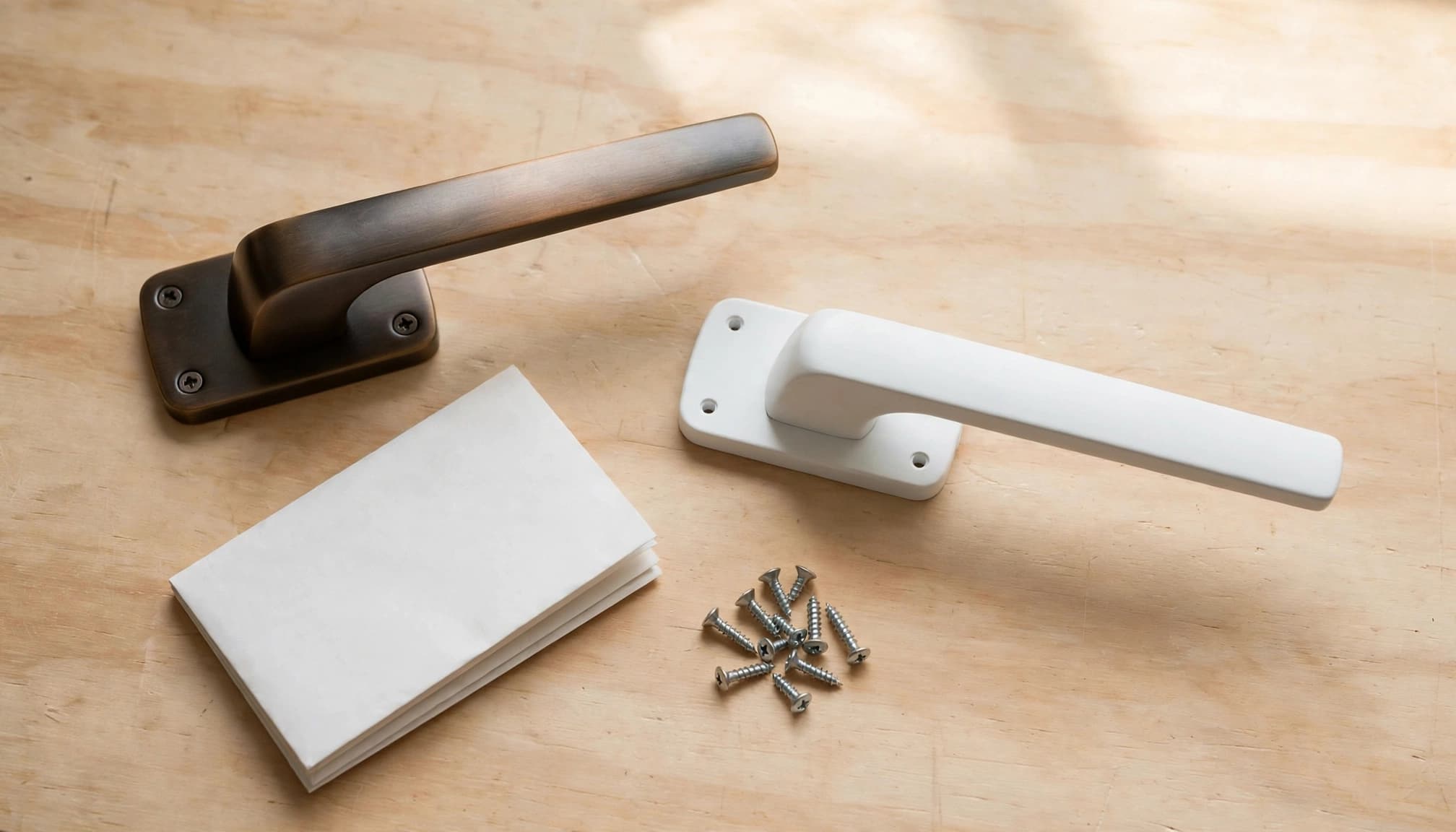
Luuv Handle options include white and bronze finishes, with interior and exterior configurations available. A white option may blend with light trim, while bronze can coordinate with darker patio hardware.
The handle uses durable steel and a water-resistant oak grip. For a matching grip on both sides of a frequently used opening, consider the bronze sliding glass door handle bundle.
The Luuv Handle is made in the USA and is a patented product until 2037. It requires no alteration to the door and no drilling, so the retrofit doesn't require cutting into the frame or glass.
Install the Retrofit Handle Without Drilling
A compatible retrofit handle can improve the grip without disturbing the glass panel. Work with the door closed or positioned securely, and keep the screws controlled so they don't fall into the track.
Loosen, Slide, Seat, and Tighten
The basic installation sequence is straightforward:
- Loosen the existing screws from the inside of the door.
- Move outside and slide the bottom of the retrofit handle up over the existing plate.
- Set the upper cap over the top of the plate, then pull the handle down until it seats.
- Return inside and tighten the screws securely.
The sliding glass door handle installation guide includes written instructions and an installation video. No drilling, cutting, special tools, or carpentry skills are required for this retrofit design.
Don't overtighten the fasteners or bend the plate while fitting the handle. The product information warns that a plate can break if it becomes brittle or is bent too much or too often.
Allow Time for a Careful Fit
Product pages describe installation in about 30 seconds. A customer review describes a five-minute installation, which is a useful reminder that fit, access, and existing hardware can affect the actual time.
Take a few extra minutes to confirm that the handle sits flat and feels secure. The original lock and latch should remain in place. If the handle does not align with the plate, stop and recheck the door dimensions instead of forcing it.
You can also compare Luuv Handle customer reviews for homeowner feedback about fit and installation on different doors.
Test the Door After Maintenance
A repair is complete only after the panel, handle, and lock work together. Open and close the door slowly several times. The panel should move with steady pressure and should not grind, scrape, or catch at one point.
Check the handle from the position where you normally use it. Your hand should stay relaxed, and the grip should let you pull the door straight instead of twisting it from the edge.
Close the panel gently and confirm that the latch reaches the strike plate without lifting, pushing, or slamming. Test the lock from inside and outside if the door has access hardware on both sides.
Keep toys, furniture, and patio items away from the moving path. In sandy or coastal areas, inspect the lower channel every few weeks. Other homes may need checks every few months. Inspect more often after storms, landscaping work, patio washing, or a period when the door stayed open.

Sliding Glass Door Maintenance FAQ
How often should I clean a sliding glass door track?
Inspect the track every few weeks in a dry, sandy, or coastal area. Homes with pets, children, or frequent patio traffic may need more frequent vacuuming. In a cleaner environment, checking the channel every few months may be enough.
Clean sooner when you see sand, hair, dark residue, or small stones. Wipe moisture after heavy rain and keep the drainage openings clear.
Should I use oil on the sliding door track?
Avoid thick grease and household oil. They can make the door feel smoother briefly, then collect sand and hair beneath the rollers.
If your door manufacturer permits lubrication, use a small amount of a product designed for sliding-door tracks or roller assemblies. Apply it only after cleaning, and keep it off the glass, latch, and weatherstripping.
Can I replace the handle without removing the glass door?
A compatible Luuv retrofit handle installs over the existing hardware. You loosen the interior screws, slide the new handle over the plate, seat the cap, and tighten the screws again. The process requires no drilling and no door alteration.
Confirm the 7.25-inch by 1-inch plate size before ordering. A bent or damaged plate may require a different repair.
When should I call a professional?
Call a qualified door technician when the glass is cracked, the frame is bent, the panel leans heavily, or the door cannot move without severe grinding. Professional help also makes sense when roller replacement requires removing a large or difficult-to-control glass panel.
Keep the Door Easy to Use
A clean track solves many sliding problems, but it cannot fix every failure. Inspect the rail, rollers, latch, and handle separately so you address the actual source of the trouble.
When the panel rolls smoothly but the grip is awkward, a properly fitted retrofit handle can improve daily use without drilling or changing the door. Regular cleaning, careful testing, and a compatible Sliding Glass Door Replacement Handle can keep a reliable patio entrance comfortable for years.