

Wind can turn a loose patio door into an all-night tapping sound. Sliding glass door rattling usually comes from movement at the panel, latch, rollers, track, or weatherstripping.
Start with the simplest checks before buying parts or turning adjustment screws. A clean, level door that closes firmly has fewer places to vibrate when gusts hit the glass.
Key Takeaways
- Clean grit from the lower track before adjusting rollers.
- Check whether the panel latches tightly and sits evenly in the frame.
- Adjust both lower rollers in small, equal increments when the door has sagged.
- Replace worn weatherstripping or call a technician for bent tracks, failed rollers, or a shifting frame.
- Upgrade the handle only after confirming the door's movement and latch are sound.
Find the Source of the Sliding Glass Door Rattling
A rattle can sound like loose glass, even when the issue is a panel that doesn't meet the frame evenly. Close and latch the door, then gently press near the handle side, top rail, and bottom rail. Movement at one point narrows the inspection.
Check the panel, latch, and frame gaps
Look at the space around the moving panel. An uneven gap at the top or bottom can mean the door sits too low on one side. Also check that the latch meets its keeper without lifting, pushing, or forcing the handle.
If the door moves when latched, inspect the latch hardware and strike area for loose screws or visible wear. Don't force a door that leans or has dropped noticeably.
Listen while the door moves
Open the panel slowly and listen for grinding, clicking, or a catch at the same location. A repeated scrape often points to packed debris, a damaged rail, or worn rollers. In contrast, a door that slides smoothly but chatters only in wind may need closer attention at the latch, frame contact points, and weatherstripping.
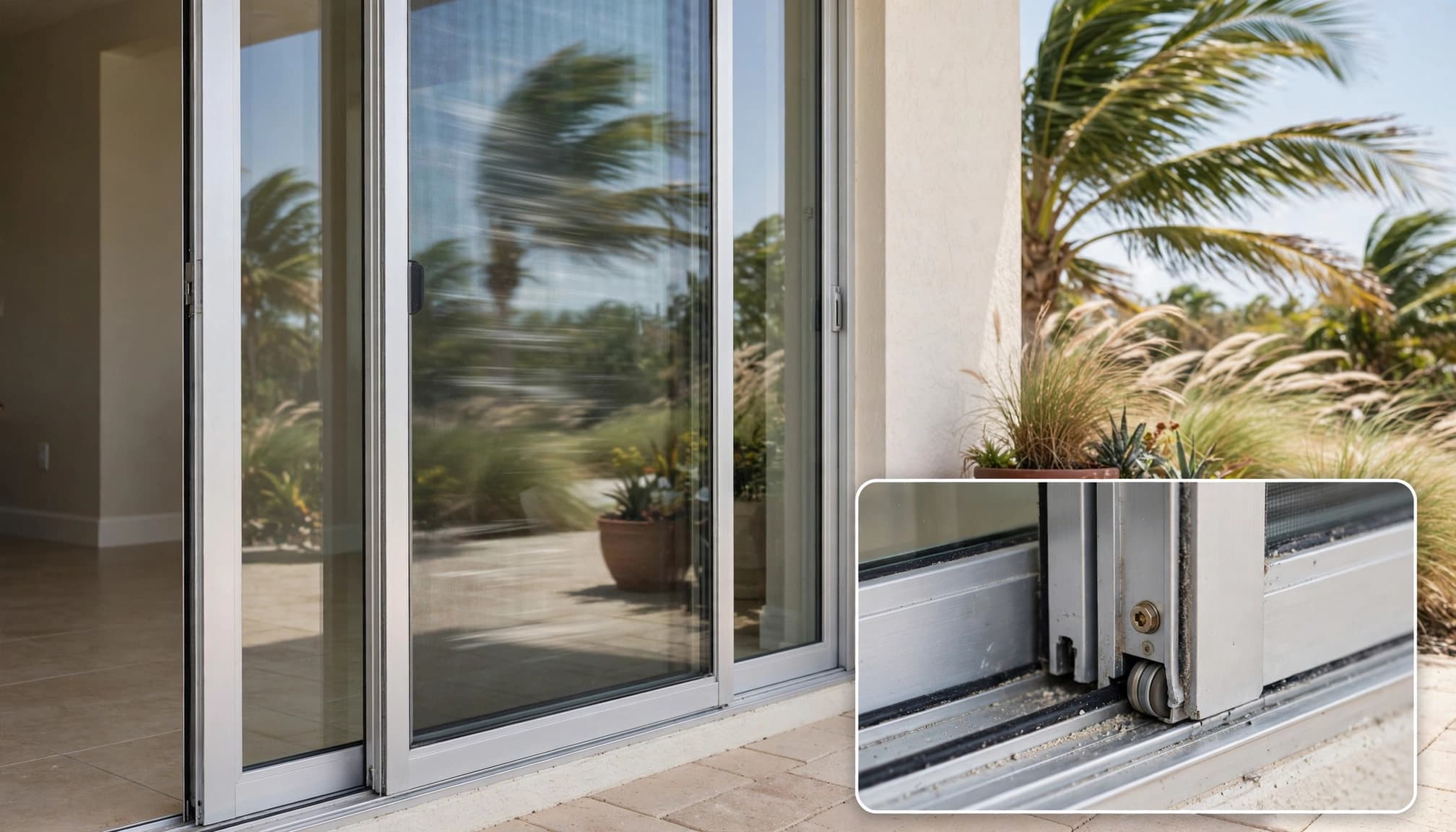
Clean the Track Before Adjusting Anything
Sand, pet hair, leaves, and small stones collect where the rollers travel. That debris can make a properly aligned door drag, shake, or settle unevenly against the frame.
Remove grit from both channels
Open the door far enough to expose the lower track. Vacuum the full channel with a crevice tool, including both ends. Next, use a soft brush or old toothbrush in the corners, then wipe the track with a damp cloth and mild household cleaner.
Dry the channel completely. Check the sill's drainage holes too, because standing moisture can leave residue and contribute to corrosion.
Skip heavy oil and grease
Greasy sprays may make the panel move better for a day. However, they attract more dirt and can create a sticky paste under the rollers. If your door manufacturer permits lubrication, use a small amount of dry silicone or PTFE product made for sliding-door rollers or tracks.
Cleaning changes the way the door feels, so it gives you a more reliable test before you adjust hardware.
Adjust the Rollers in Small, Even Steps
Many sliding doors have adjustment screws near the lower corners of the movable panel. Those screws change roller height, which changes how the panel sits in the opening.
Test alignment before turning a screw
With the door closed, inspect the reveal around all four edges. A low corner, a gap that widens at one end, or a latch that misses its keeper can point to roller-height trouble.
Check the door manufacturer's instructions for screw location and turning direction. Some models hide the screw behind a small plastic plug.
Make quarter-turn adjustments
Turn each lower adjustment screw about one-quarter turn, then slide the door several times and check the latch again. Keep changes balanced between both sides whenever possible.
Stop if the door rubs at the top, the glass appears loose, the frame twists, or a screw resists. Raising the panel too far can make the top rail bind. A sliding glass door rattling in wind may continue if the track is bent or a roller has failed.
Inspect Weatherstripping and the Handle Area
Weatherstripping cushions the panel where it meets the frame. When it becomes flattened, torn, or detached, wind can enter the gap and make the panel vibrate.
Look for compressed or missing seals
Run your hand along the weatherstripping at the jamb, head, and meeting edge. Replace material that has pulled away or no longer makes consistent contact. Keep the replacement profile compatible with your door system.
Also inspect for loose screws around the handle and latch plate. Tighten accessible hardware carefully, but don't remove screws that support the glass panel or frame.
Improve grip without altering the door
A handle won't repair damaged rollers or a bent track. Still, a Sliding Glass Door Replacement Handle can make a smooth-running door easier to close firmly when the factory pull is too shallow or hard to grip.
Luuv Handle fits over compatible existing hardware with a 7.25-inch by 1-inch door plate, leaving the original lock and latch in place. Review the sliding glass door handle FAQs before ordering to confirm fit.
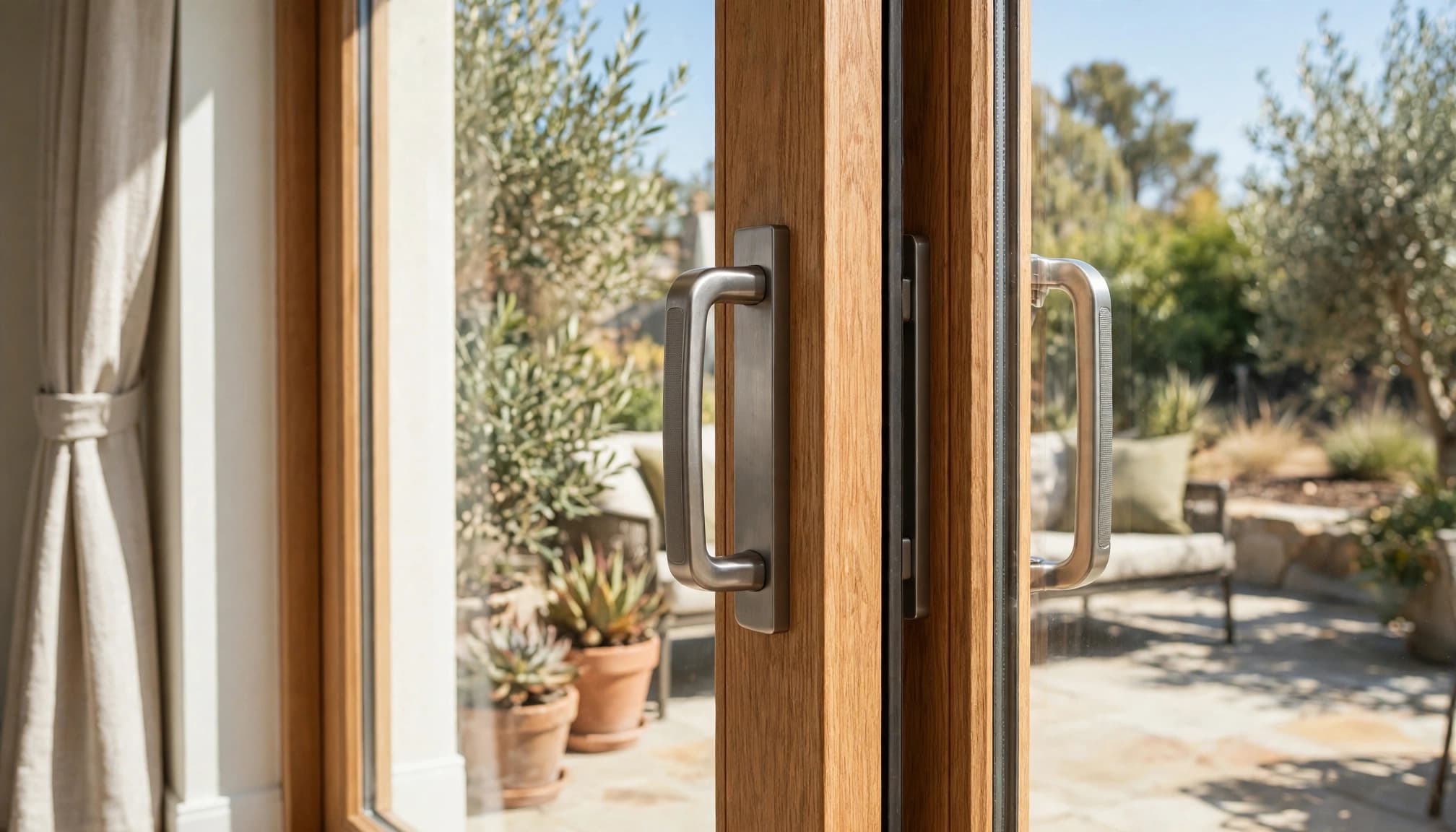
Choose a Retrofit Handle for a Better Closing Grip
Once the panel rolls evenly, a larger pull can give you more control at the latch side. That matters when wind pressure makes a recessed factory handle awkward to use.
Check size and installation details
Luuv Handle's retrofit design requires no alteration to the door and no drilling. It is made in the USA, and it is a patented product until 2037. The handle uses steel and water-resistant oak, with powder-coated steel and polyurethane-protected wood.
Product instructions list a simple process: loosen the interior screws, position the handle over the existing plate, seat it, and retighten the screws. The brand says installation takes about 30 seconds. Follow the sliding door handle installation guide for the full sequence.
Match the finish to your door
A bronze sliding glass door replacement handle suits darker frames and warm wood finishes. White options blend well with many white vinyl or painted aluminum doors.
The right handle improves comfort and closing control. It should complement, not replace, repairs to the rollers, track, latch, or weatherstripping.
FAQ
Can a loose handle cause wind rattling?
A loose handle or latch plate can allow movement near the meeting edge. Tighten accessible hardware and confirm the latch closes fully. If the panel still moves, inspect alignment and weatherstripping.
When should I call a door repair professional?
Call a professional when the door leans, comes off track, grinds after cleaning, has cracked glass, or shows a bent rail. A technician can safely remove the panel, match replacement rollers, and check whether the opening has shifted.
Final Thoughts
Most wind noise improves when the panel sits level, the track is clean, and the latch closes without force. Start with inspection and cleaning, then make careful roller adjustments only when the door's alignment points to that repair.
A firm latch, sound seals, and a comfortable grip help keep sliding glass door rattling from becoming a bigger door problem.