

A patio door should glide without scraping, shuddering, or requiring a hard pull. When the sliding glass door track is bent, pitted, or loose, every trip outside can feel like a fight with the door.
Replacing a sliding glass door track is a practical repair when the running rail is a separate, removable piece. However, worn rollers and packed debris can cause the same frustrating symptoms, so a careful inspection comes before ordering parts.
Confirm That the Track Is the Problem
Start by vacuuming the bottom rail and wiping it with a damp cloth. Sand, pet hair, dried leaves, and old lubricant can build into a gritty layer that makes a healthy door drag.
Then slide the door slowly and listen. A repeating bump at one spot often points to damage in the rail. A rough sound along the full opening can point to rollers or debris.
Look for physical damage on the rail
Use a flashlight to inspect the top of the rail where the door rollers make contact. Deep grooves, flattened sections, cracks, sharp raised edges, or corrosion pits are signs that the track has reached the end of its useful life.
Run a finger lightly along the rail, but watch for sharp aluminum edges. If the metal feels uneven or catches a cloth, the rollers will catch it too.
Rule out worn or misadjusted rollers
A worn roller can damage a track, but it can also mimic a damaged track. Check the adjustment screws near the lower edge of the sliding panel. If the panel has sagged, it may rub the frame or drag across the rail.
Rollers that wobble, seize, or have flat spots need replacement. Inspect both roller assemblies once the panel is out. Also check the upper guide, because a door that leans can put uneven pressure on the bottom track.
If the rail is straight and the rollers are worn, new rollers may solve the problem without replacing the track.
Plan the Repair Before Removing the Door
Sliding door systems vary more than they appear to. Some have a raised track cap that screws into the threshold. Others use a snap-in rail, while some older doors have a track formed into the entire sill.
A replacement part must match the door's original design. A rail that is close in size can still sit too high, too low, or too wide for the rollers.
Find out whether the track is removable
Look for a seam beside the track and check for screw heads at either end. A removable rail often has visible fasteners or a distinct edge where it meets the threshold.
If the track is integral to the sill, the repair becomes more involved. You may need a manufacturer-specific track cap, a threshold repair system, or professional service. Replacing the full sill can require removing trim, glass panels, and parts of the frame.
A rail with the wrong height can create more trouble than the damaged one. The rollers must ride squarely on the replacement surface.
Gather the right tools and safety gear
Most removable-track repairs need basic tools, but the door panel itself requires care.
- Use a vacuum, stiff nylon brush, rags, and a plastic putty knife to clean the threshold.
- Keep a tape measure, combination square, marker, screwdriver set, and drill-ready driver nearby if the door manufacturer calls for fasteners.
- Wear safety glasses and cut-resistant gloves when handling damaged aluminum.
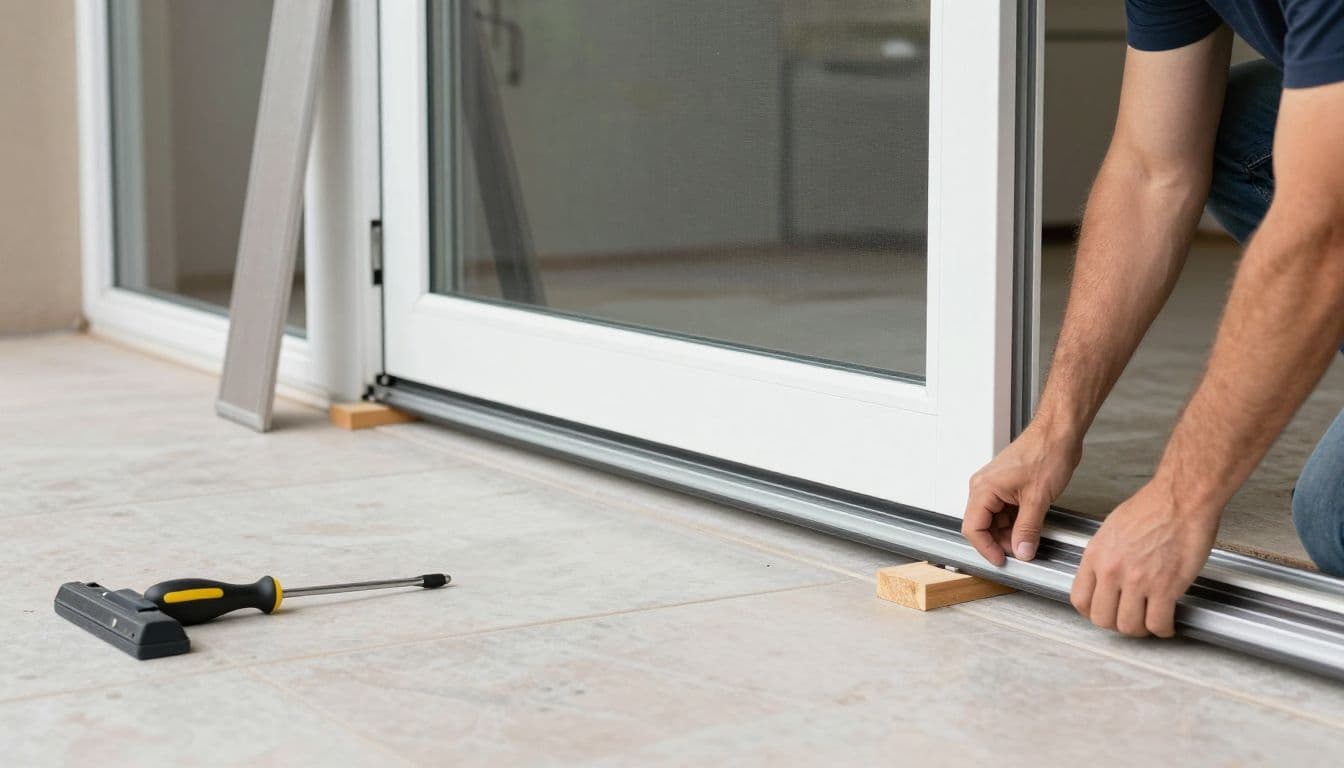
- Set out wood blocks, moving blankets, or thick cardboard before lifting the door panel.
- Ask another adult to help remove and reinstall the glass panel.
Avoid starting the repair until the replacement rail is on hand. Leaving an open threshold exposed can invite dirt and rain into the track channel.
Remove the Sliding Panel Without Damaging It
Glass patio door panels are heavy and awkward. Clear a path, remove nearby furniture, and keep children and pets away from the work area.
Take photos of the track, roller screws, anti-lift blocks, and stops before removing anything. Those pictures make reassembly much easier.
Retract the rollers and remove stops
First, slide the screen door out of the way if your opening has one. Next, locate the roller adjustment screws near the bottom corners of the sliding panel.
Turn the screws according to your door's instructions to retract the rollers. This creates more clearance between the panel and the track. Remove any anti-lift blocks, head stops, or snap-in guides that prevent the panel from lifting out.
Keep every screw in a labeled cup or small container. A missing stop can allow a door to lift off its rail later.
Lift the panel out with a helper
With one person on each side, lift the panel straight up into the top channel. Then pull the bottom edge toward you and lower the panel carefully onto padded blocks.
Store the panel upright, never on its glass edge. Protect the corners with cardboard or a folded moving blanket. Avoid laying it flat, because uneven support can place stress on the glass.
Once the panel is out, inspect the roller housings. Replace damaged rollers before installing the new rail, or they may scar the replacement track immediately.
Measure the Replacement Track Precisely
Measure the old rail after removing it, if possible. A rough measurement of the threshold opening is rarely enough for a reliable match.
Use a tape measure for length and a combination square or caliper for the rail profile. Record the measurements before shopping for a replacement.
| What to measure | Why it matters |
|---|---|
| Overall rail length | The replacement must fit between the track ends. |
| Base width | It must sit properly in the existing channel. |
| Rail height | The roller needs the correct contact height. |
| Top shape and width | Rounded, flat, and peaked rails wear differently. |
| Screw-hole locations | Existing holes should align with the new part. |
| Drainage-channel position | The track cannot block the sill's water path. |
The most reliable source is the door manufacturer or a local glass-door supplier with the old track in hand. Bring clear photos of the threshold, both rail ends, and the roller assembly.
Do not order by length alone
Two tracks can share the same length but have completely different shapes. A taller rail may prevent the panel from locking. A narrower rail may let the rollers wander or sit off-center.
Check the door label for a manufacturer name, series number, or production code. Labels may appear along the edge of the sliding panel, inside the frame, or between the glass panes.
If you cannot identify the door, remove the old track first and take it to a supplier for comparison. That small extra step can prevent a wasted order.
How to Replace a Damaged Sliding Glass Door Track
Once you have an exact replacement, clean the opening and work slowly. The goal is a level rail that supports the rollers without interfering with the threshold's drainage system.
Remove the old rail and clean the channel
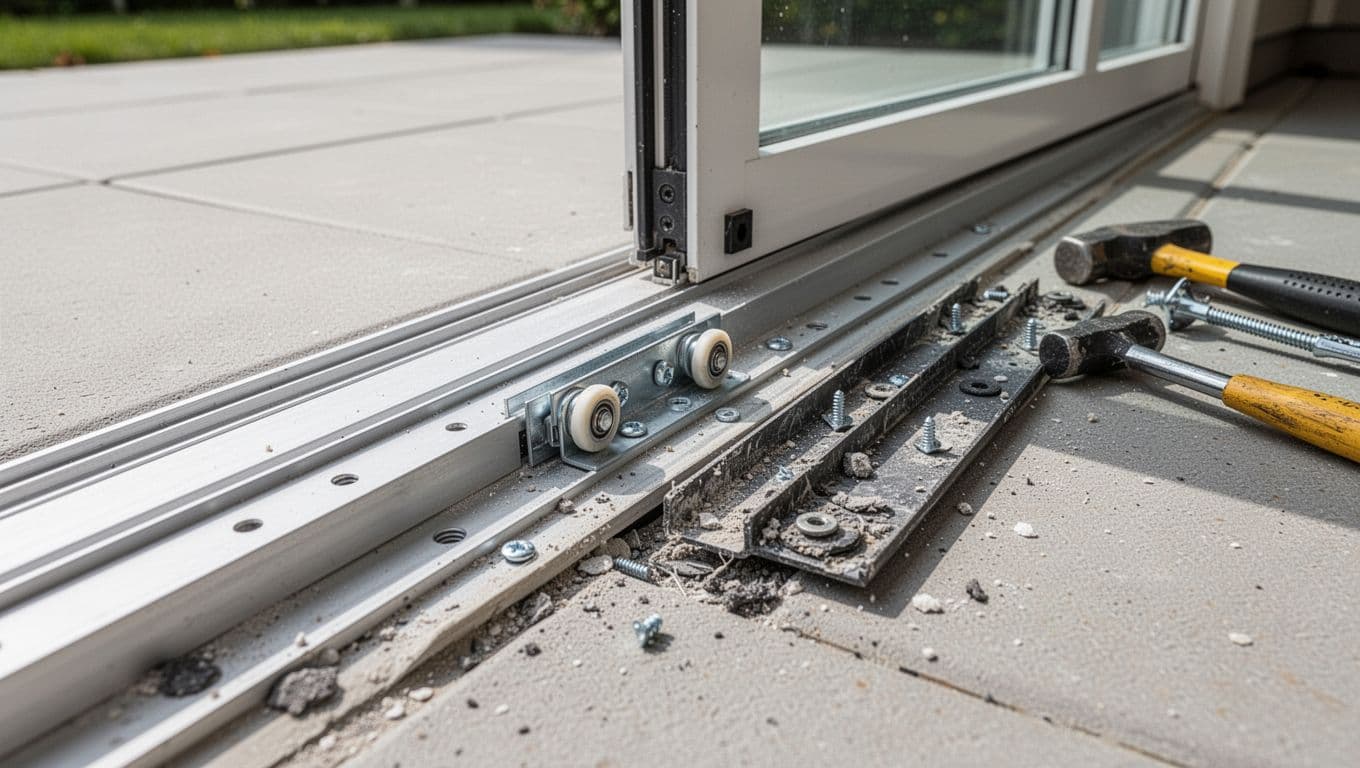
Remove the screws holding the existing track in place. If old caulk holds an edge, cut only the sealant around the rail with a utility knife. Keep the blade away from the sill finish and glass.
Lift the track with a plastic putty knife rather than a metal pry bar. Aluminum thresholds dent easily. Then vacuum the channel and scrape away loose debris, hardened sealant, and corrosion flakes.
Inspect the mounting surface before proceeding. Severe corrosion, rotted subflooring, or a loose threshold calls for a door technician. A new rail cannot fix a failing sill.
Dry-fit and fasten the new track
Set the new rail in place without screws first. Check both ends, verify that the screw holes line up, and confirm that the track sits flat across the threshold.
Fasten it only as the door manufacturer directs. If the original holes are stripped or the replacement requires new hole locations, stop and confirm the correct repair method. Forcing larger screws into an aluminum threshold can split the material or disrupt drainage.
Apply sealant only where the track manufacturer calls for it. Keep weep holes and drainage channels open. Water needs a clear route out of the threshold, especially during wind-driven rain.
Reinstall the Panel and Tune the Rollers
A new rail will not feel smooth until the rollers sit correctly. Clean roller wheels and housings before putting the panel back in place.
Set the panel back onto the rail
Retract the rollers again before lifting the panel. With a helper, raise the panel into the top channel, swing the bottom inward, and lower it onto the replacement track.
Reinstall the anti-lift blocks and stops. Then adjust the rollers in small, equal turns until the panel sits level and the gap along the frame looks even.
Slide the door several times before tightening everything. The panel should move freely without rubbing the jamb, lifting off the rail, or rocking side to side.
Check the lock and the threshold drainage
Close and lock the door after each adjustment. A properly aligned panel meets the latch cleanly and stays closed without pushing or lifting the handle.
Next, pour a small amount of water into the exterior track area. Water should move toward the weep holes and drain away. If it pools inside the threshold, clear the channels before using the door.
Vacuum the rail regularly, especially after storms or landscaping work. Use a dry silicone lubricant only if the door manufacturer permits it. Petroleum grease attracts grit and can turn into an abrasive paste.
Improve the Grip After the Track Repair
A smooth-running door can still be difficult to operate when the original recessed pull is too small. After correcting the track and roller issues, a larger retrofit handle gives you a more comfortable grip without pulling on the door frame.
Add a retrofit handle without new holes
A white sliding glass door replacement handle can fit over compatible existing hardware, giving the door a more substantial handhold. Luuv Handle products are made in the USA and use locally sourced steel and water-resistant oak.
The Luuv Handle is a patented product until 2037. It requires no alteration to the door and no drilling, so the original handle, lock, and latch remain in place.
Before ordering, confirm that your door has the required 7.25-inch by 1-inch handle plate and check clearance with any sliding screen. White and bronze options make it easier to match existing trim and hardware.
A replacement handle won't repair a bent rail, but it can make a properly repaired patio door far easier to open every day.
A Smooth Door Starts With a Correct Match
A damaged track deserves more than a quick patch. Match the rail profile, protect the threshold drainage, and adjust the rollers after reinstalling the panel.
Careful measurement prevents the most common repair mistake, which is fitting a rail that looks right but does not support the door correctly. With a level track, healthy rollers, and a comfortable grip, your patio door can return to the easy glide it was built to provide.