

A sliding patio door can work perfectly and still be frustrating when its recessed handle is too shallow, loose, or difficult to grip. Understanding the main sliding patio door parts helps you identify the real problem before ordering a replacement.
For many first-time DIY repairs, the best starting point is a fit check, not a full door replacement. A compatible retrofit handle can improve control while keeping the original lock and latch in place. Start by examining the existing hardware, then match the handle to the door plate and the way you use the door.
Key Takeaways
- A comfortable handle won't fix a door that drags, grinds, or fails to latch.
- Measure the existing plate before buying any replacement handle.
- Luuv Handle products fit sliders with a 7.25-inch by 1-inch door plate.
- The retrofit design fits over compatible existing hardware.
- Installation requires no alteration to the door and no drilling.
- Luuv Handle is made in the USA and is a patented product protected until 2037.
- Interior, exterior, and inside-and-outside options are available in white and bronze.
Check the door's movement and lock first. Once those parts work properly, a better grip can make everyday use much easier.
Identify the Handle Problem Before You Repair
A handle problem often feels similar to a roller or latch problem. Pulling harder can make the door seem worse, especially if the panel is misaligned. Test the whole door before choosing replacement hardware.
Check movement, alignment, and the latch
Open and close the panel with steady pressure near the existing handle. It should glide without scraping, jumping, or requiring you to lift the glass. Clean visible dirt from the lower track before assuming the rollers have failed.
Next, close and lock the door. Confirm that the latch reaches its keeper without lifting or pushing the panel. If the latch misses, adjust the underlying alignment before changing the handle. A replacement grip won't correct worn rollers, a bent track, or a lock that no longer engages.
If the panel moves smoothly and locks correctly, the handle may be the only part causing trouble. A shallow recessed pull can be especially awkward with wet hands or limited grip strength.
Photograph and measure the existing hardware
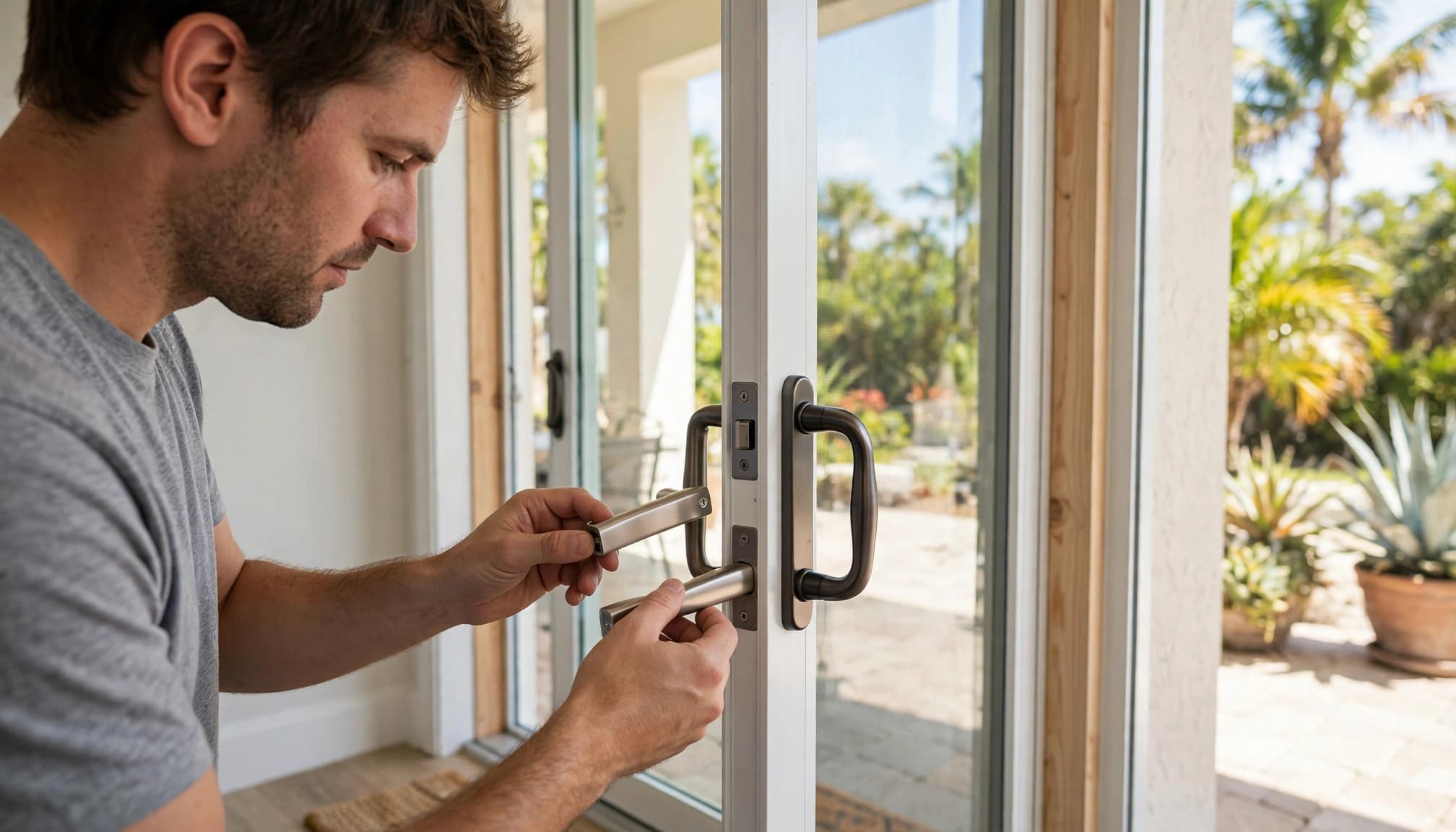
Keep the original handle in place while you inspect it. Take a straight-on photo of both sides of the door. The images can help you confirm the handle position, screw locations, lock direction, and finish later.
Measure the plate rather than guessing from the appearance of the glass door. Luuv Handle's compatible plate size is 7.25 inches by 1 inch. Also note the handle's profile, the space around it, and any sliding screen that could interfere with a larger grip.
The Sliding Patio Door Parts You Need to Know
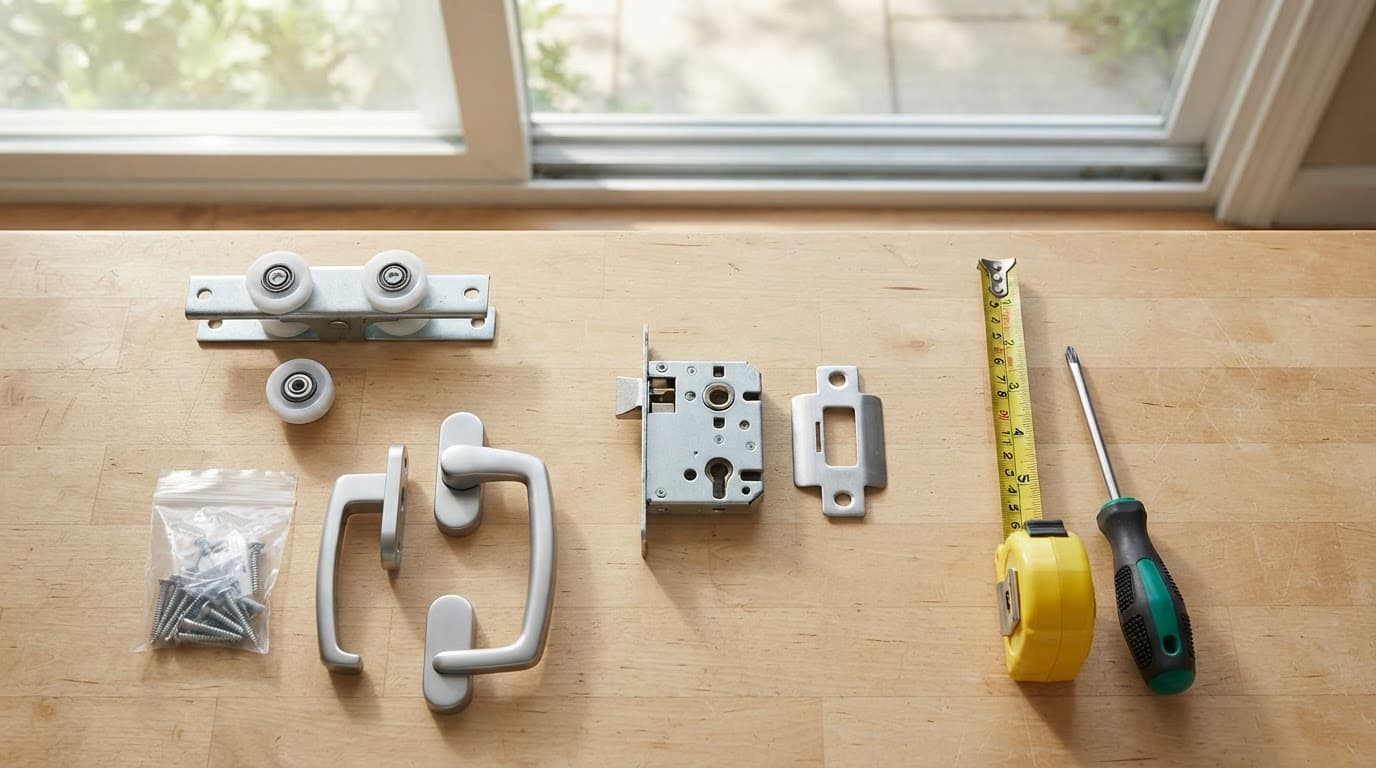
A sliding door has several separate components, and each one affects a different part of the repair. Identifying them prevents you from buying a handle when the real issue is below the panel.
Handle, plate, and fasteners
The handle is the part your hand pulls. On many older patio doors, it sits on a narrow vertical plate and may include a shallow recessed grip. The plate supports the handle and provides the mounting area for screws or fasteners.
The original mounting hardware matters because a retrofit handle is designed around the existing plate. Luuv Handle products fit over compatible standard hardware instead of requiring removal of the original handle assembly.
Keep the fasteners organized if you loosen them. Start them by hand during installation, then tighten evenly. Uneven pressure can leave the replacement handle crooked or loose.
Lock, latch, keeper, rollers, and track
The lock and latch control security. The keeper is the receiving piece mounted on the frame. These parts must line up when the door closes, but they are separate from the hand grip.
Rollers sit beneath the moving panel and allow it to travel along the track. The track guides that movement, while the sill supports the lower edge. Sand, pet hair, and small stones can increase friction and make the door harder to operate.
Don't force a heavy glass panel or remove it without appropriate help. Roller work may require lifting the panel from the frame, and a sliding door can be difficult to support safely. A professional is the safer choice when the frame is bent, the glass is cracked, or the door grinds severely.
Choosing a Sliding Glass Door Replacement Handle
Once the panel glides and latches properly, choose the handle based on fit, location, and grip. A larger exterior pull can make a busy patio entrance easier to use, while an interior handle may be enough for daily access from inside.
Interior, exterior, or both sides
An interior handle works well when the existing inside pull is difficult to grip. An exterior handle can help when you regularly open the door from a patio, lanai, or pool area. If both sides need improvement, an inside-and-outside bundle keeps the finish and style consistent.
For example, the bronze sliding glass door replacement handle is designed for installation over compatible existing hardware. The product page describes a 30-second installation and a 30-day guarantee. Those claims apply to the product information provided by the manufacturer, and compatibility still depends on the existing door plate.
Before ordering, confirm the plate measurement and check the handle's clearance from the frame. Also make sure a screen door, curtain, or nearby furniture won't block the new grip.
Finish, materials, and handle direction
Luuv Handle products are available in white and bronze finishes. The product information describes durable steel hardware and water-resistant oak construction. That combination suits an exterior-facing slider that encounters humidity or occasional rain.
Some options include real oak handles and offset-right or offset-left configurations. Choose the direction that matches the way your hand approaches the door. A handle that sits too close to the frame can be difficult to pull, even when its plate fits.
The white interior and exterior sliding door handles are available as a matching bundle. Review the listed dimensions before purchase rather than assuming similar-looking patio doors use the same hardware.
Install a Retrofit Handle Without Drilling
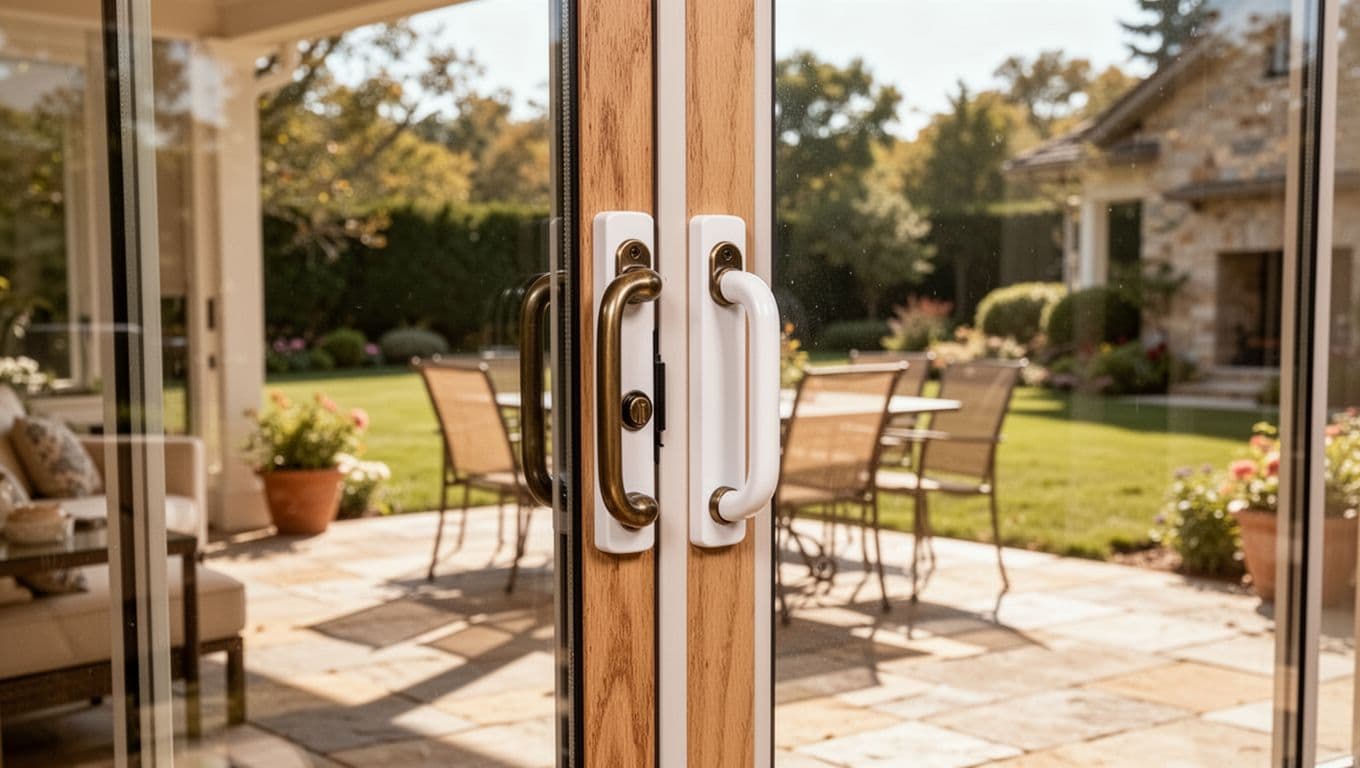
A retrofit handle is different from a full replacement of the original lock assembly. It fits over compatible existing hardware, which means the original door remains in place.
Luuv Handle is made in the USA and is a patented product protected until 2037. Its retrofit design requires no alteration to the door and no drilling. The original lock and latch stay in place.
Follow the basic installation sequence
The door should be stable before you begin. Have a screwdriver ready and keep the panel from moving while you loosen the existing fasteners.
The manufacturer's sliding glass door handle installation sequence is:
- Loosen the screws from the inside of the door.
- Move to the outside and slide the bottom of the replacement handle up onto the existing plate.
- Set the top cap over the upper part of the plate.
- Pull the handle down until the cap seats.
- Return inside and tighten the screws.
The fit should feel secure without crushing the door plate. Avoid overtightening, which can distort the mounting area or make the handle sit unevenly.
Test the handle and lock
Test the new grip with the door open first. Pull the panel gently and check that the handle feels solid. Then operate the lock and latch without forcing them.
Close the door and confirm that the latch reaches the keeper. Open it again and check that the handle doesn't shift, rock, or rub against the frame. The retrofit sliding glass door handle FAQs explain the plate-size requirement, the no-drill design, and the fact that the original lock and latch remain in place.
Installation may take about 30 seconds on a compatible door, according to the product information. The actual time depends on access, existing fasteners, and how closely the hardware matches the required dimensions.
Know When the Handle Isn't the Real Problem
A new grip improves how your hand meets the door, but it cannot repair every patio door fault. Separating handle issues from movement and security problems keeps a simple upgrade from becoming a frustrating repair.
A dragging panel needs mechanical attention
Grinding, scraping, or a panel that drops as it moves points toward the rollers, track, or alignment. Clean the track with a vacuum and soft brush. Avoid heavy oil because it can collect grit and create a rough paste.
If the door still binds after cleaning, the rollers may have worn bearings, flat spots, or damaged housings. A damaged track can also prevent new rollers from working correctly. These repairs may require panel removal, so get professional help when the glass is large or difficult to support.
A failed lock needs a different solution
If the latch misses the keeper, first inspect the panel's alignment. If the lock never engages or the door opens after you lock it, don't use a larger handle to compensate. The latch, keeper, or lock assembly may need adjustment or replacement.
Until the door latches reliably, keep the opening secured when unattended. A qualified sliding-door technician or locksmith is appropriate when the frame is bent, the latch housing is damaged, or the door cannot close safely.
Frequently Asked Questions
Will a retrofit handle fit every sliding patio door?
No. Luuv Handle products are designed for sliders with a 7.25-inch by 1-inch door plate. Measure the existing plate and compare the hardware before ordering. Similar-looking doors can use different handle patterns and dimensions.
Does the original handle need to come off?
No. The retrofit handle is designed to fit over compatible existing hardware. The original lock and latch remain in place, and the door doesn't require cutting, drilling, or structural alteration.
Is the Sliding Glass Door Replacement Handle a repair for rollers?
No. A replacement handle changes the grip, not the roller system. If the door drags, grinds, jumps, or needs lifting, clean and inspect the track and have the rollers checked before installing new handle hardware.
Can I install the handle myself?
A compatible retrofit handle is intended for a basic DIY installation. The process uses the existing fasteners and requires no special carpentry skills. Follow the installation sequence, tighten the fasteners evenly, and test the lock with the door open before closing it.
What finishes are available?
Luuv Handle options include white and bronze finishes. Product information also describes durable steel hardware, water-resistant oak construction, and interior, exterior, and inside-and-outside configurations.
Conclusion
The most useful sliding patio door parts to understand are the handle and plate, fasteners, lock, keeper, rollers, and track. Test the panel's movement and latch before ordering, then measure the existing plate carefully.
For a compatible door, Luuv Handle provides a made-in-the-USA retrofit option that is patented until 2037, requires no alteration to the door, and requires no drilling. Once the door glides and locks correctly, a comfortable handle can turn an awkward daily task into a simple pull.