

A torn screen doesn't always mean you need a new door. In many cases, sliding screen door repair takes replacement mesh, fresh spline, and a few basic tools. A bent frame, however, usually calls for a replacement panel.
Before ordering anything, inspect the mesh, spline, frame, rollers, and track. This prevents you from replacing a panel when a worn roller is causing the trouble. It also keeps a screen repair separate from a hard-to-grip sliding glass door handle.
Start with the condition of the panel, then match the repair to the damage.
A close inspection makes sliding screen door repair easier
The right repair depends on what failed. Remove the screen panel carefully, place it on a flat surface, and examine each part before buying supplies.
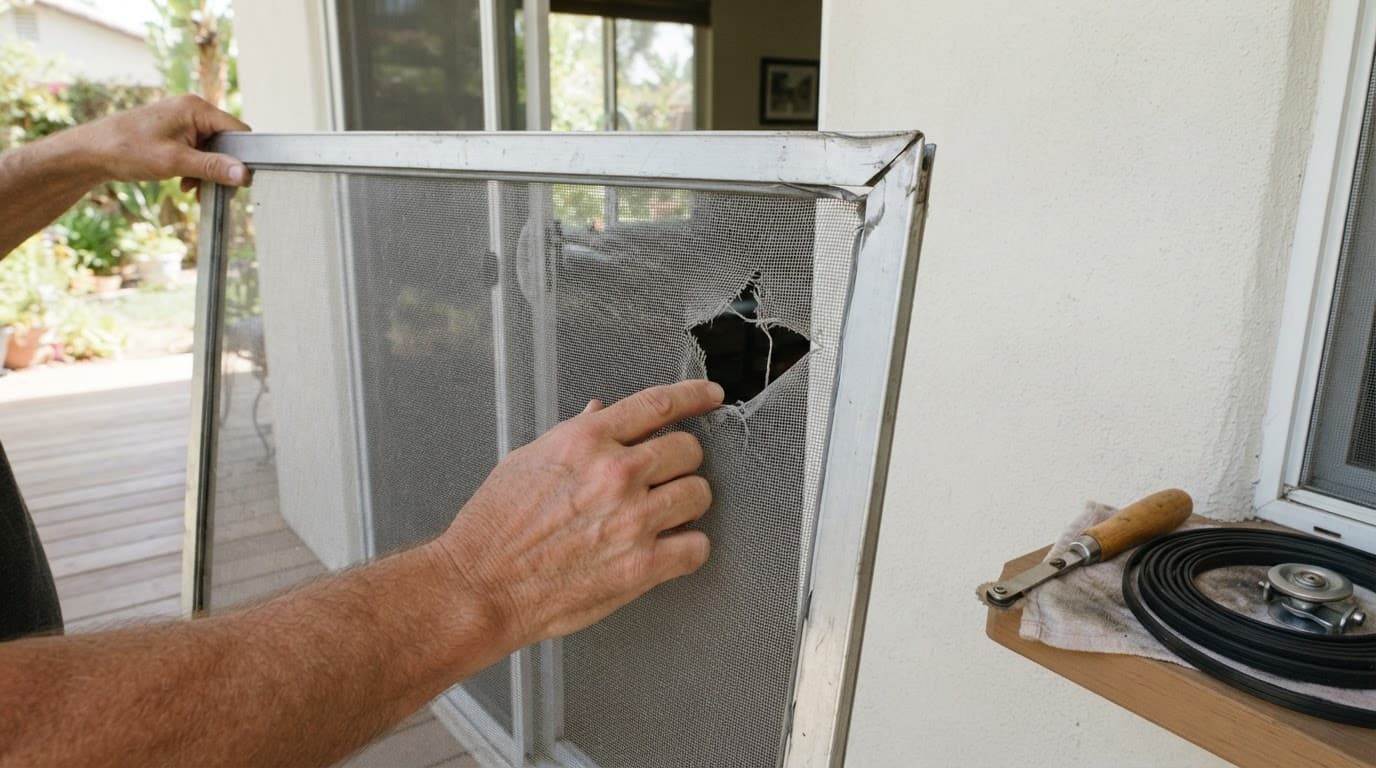
Check the mesh, spline, and frame
Look across the screen in bright light. Small punctures, loose edges, and sun-damaged mesh usually point to a re-screening job. The spline, which is the flexible cord pressed into the frame channel, may also have dried out or pulled loose.
Next, inspect the aluminum frame. Set a straightedge along each side if you have one. A frame that stays straight and square can usually hold new mesh. Loose corners, crushed channels, deep bends, or a twisted shape are stronger signs that the whole panel needs replacement.
Check the corner joints as well. If they separate when you apply light pressure, new mesh won't solve the problem. It may pull the frame farther out of shape.
Test the rollers and track
A screen door that drags, jumps, or refuses to close may have worn rollers rather than damaged mesh. Vacuum dirt from the track, then wipe it with a damp cloth. Look for dents, packed debris, and areas where the roller cannot sit evenly.
Lift the panel slightly while sliding it. Excessive wobble can indicate worn or loose rollers. If the frame looks sound, try adjusting the roller screws before replacing the panel. Don't force the door across a damaged track, because that can bend the frame and turn a small repair into a larger one.
Replace the mesh when the frame is straight
New mesh is the sensible choice when the frame, corners, and roller mounts remain in good condition. This repair costs less than a complete panel and lets you choose a material that suits the home.
Choose mesh for the way you use the door
Fiberglass mesh works well for ordinary patio use and is easy to cut and install. Pet-resistant mesh has a heavier weave for homes where claws or repeated contact could cause damage. Solar screen can reduce glare and light, although its heavier material may feel different when the panel moves.
Match the mesh color to the existing screen when appearance matters. Charcoal mesh is common because it offers a clear view through the opening. Before purchasing, confirm that the roll is wide enough to overlap all four frame channels.
A new screen cannot straighten a twisted frame. It will follow the frame's shape and may leave wrinkles or gaps.
Follow a careful re-screening process
You don't need to remove the door's glass panel. Work only with the removable screen panel, and wear gloves when handling cut mesh or damaged aluminum.
- Lift the screen panel from the track and place it face up on a clean, flat surface.
- Pry out the old spline with a small screwdriver or spline-removal tool. Pull the damaged mesh away from the frame.
- Lay the replacement mesh over the opening, leaving roughly 1 to 2 inches beyond each channel.
- Press the spline into the channel over the mesh. Work around the frame and keep light, even tension on the material.
- Trim the excess mesh with a sharp utility knife after the spline holds it securely.
Avoid pulling the mesh too tightly. Excess tension can bow the frame inward, especially on a lightweight aluminum panel. If wrinkles remain, remove the spline from that area and reset it instead of forcing the mesh flat.
Replace the entire screen panel when the frame is damaged
A complete screen panel makes more sense when the frame cannot hold its shape or its hardware mounts have failed. A new panel also saves time when the old frame has severe corrosion or several damaged corners.
Look for damage that mesh cannot fix
Replace the panel when one side is visibly bent, the frame twists while resting on a flat surface, or the corner keys no longer hold the sections together. A crushed spline channel is another reason to choose a new panel because the mesh has no solid edge to grip.
A panel with worn rollers does not always need replacement. Many designs allow the roller assemblies to come out separately. If the frame is square and the track is sound, replacing the rollers may restore smooth movement without buying a complete screen.
The handle can also break while the rest of the panel stays usable. Check whether the handle screws have loosened before discarding the door. A replacement screen handle may solve that isolated problem.
Measure before ordering
Measure the existing panel's height and width at the top, center, and bottom. Record the frame color, rail shape, roller location, and handle position. Differences between measurements can reveal a bent frame or a distorted opening.
Take photos of the roller assemblies and corner connections. These details help a local window and door supplier match the replacement. If the new panel is too tall, too wide, or built for a different roller position, it may not sit correctly in the existing track.
Don't assume a replacement screen panel matches the dimensions of the sliding glass door. The screen and glass panels use separate frames, tracks, and hardware.
Test the door before replacing its handle
After replacing mesh or the full screen panel, slide the door several times. It should move without scraping, binding, or lifting out of the lower track. Close it from both sides and check whether the meeting edge lines up with the frame.
A handle upgrade can improve the glass door, but it won't correct a screen panel that drags. Repair the movement problem first, then decide whether the glass handle needs attention.
Fix movement before changing the grip
Clean the lower track again after installation. Small pieces of spline, trimmed mesh, and dust can collect beneath the rollers. Adjust the roller screws in small increments, testing the door after each change.
If the panel still sticks, inspect the track for dents. A damaged track may need repair or replacement. Avoid applying heavy oil, which can collect grit and create a rough paste inside the track.
Once the screen moves correctly, test the glass panel separately. A recessed or loose glass-door handle is a different issue. It may be difficult to grip even when the rollers and lock work properly.
Choosing a Sliding Glass Door Replacement Handle
A retrofit handle can improve grip without removing the original glass-door hardware. Luuv Handle products slide over existing hardware, so the original lock and latch remain in place.
Luuv Handle is made in the USA, is a patented product until 2037, requires no alteration to the door, and requires no drilling. The handles use durable steel with water-resistant oak construction and are available in white and bronze, along with inside-and-outside bundles.
Check the door plate before ordering. Luuv Handle products fit sliders with 7.25-inch by 1-inch door plates. The sliding door handle retrofit FAQs explain the fit requirements and show how the handle sits over the existing hardware.
Install a retrofit handle after the screen repair
Handle installation works best after the screen panel operates properly. That way, you can test the complete patio-door setup without confusing a stiff screen with a poor glass-door grip.
Keep the installation simple
The Luuv Handle installation uses the existing screws and hardware. Loosen the screws from inside the door, slide the handle over the outside plate, set the top cap, and tighten the screws from inside. The installation takes about 30 seconds when the handle matches the door plate.
No drilling, cutting, carpentry, or door alteration is required. The retrofit design also avoids removing the original handle, which helps renters and homeowners who want a reversible upgrade. Use the manufacturer's retrofit handle installation instructions for the exact sequence.
After tightening the fasteners, open and close the glass panel several times. Check that the new grip gives your fingers enough clearance and that the lock still operates normally.
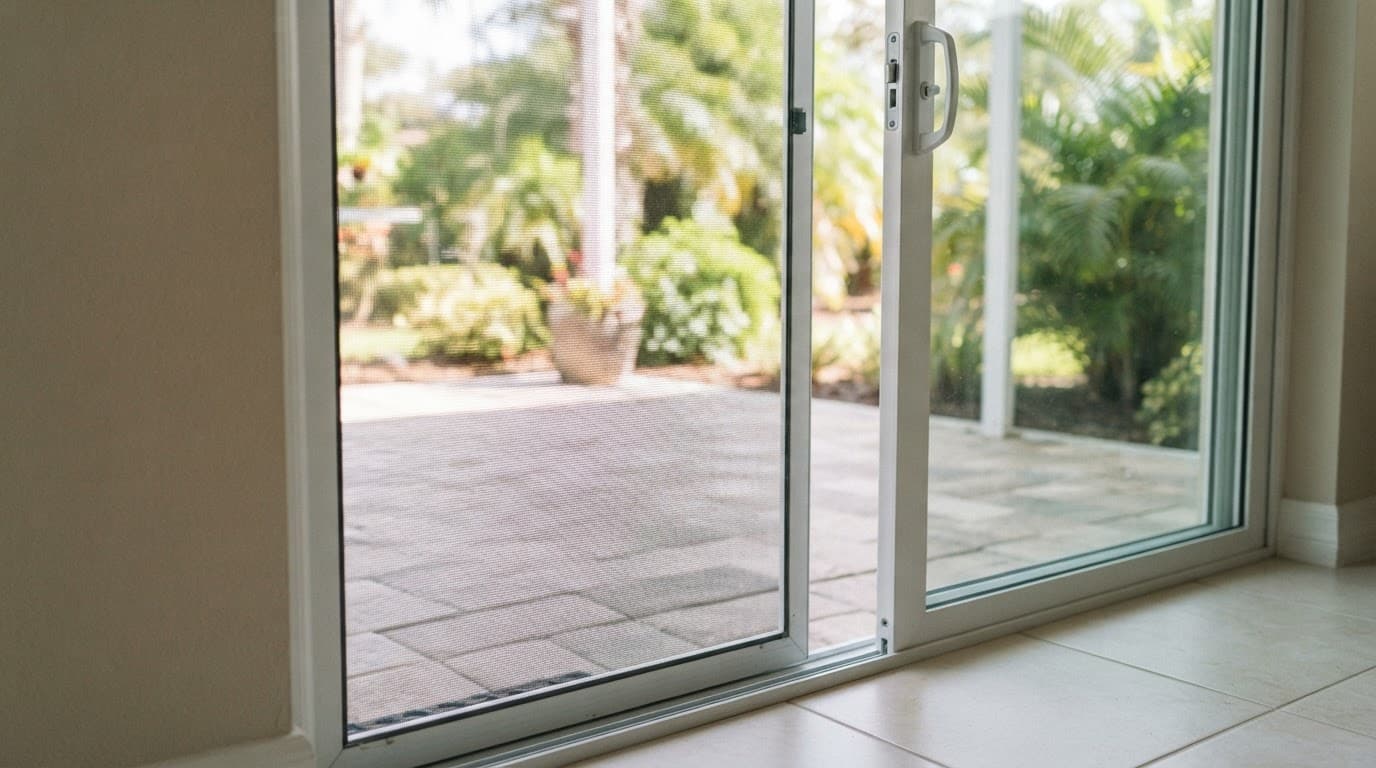
Match the finish and location
Choose white when you want the handle to blend with a light-colored frame. Bronze creates more contrast and can coordinate with darker patio hardware. An interior-and-exterior bundle makes sense when both sides of the glass door are hard to grip.
Measure before choosing an interior or exterior model. Luuv Handle offers offset right and offset left options, so the direction and available space near the frame matter. A handle that sits too close to the jamb can make locking or opening uncomfortable.
The white sliding glass door replacement handle is one option for a lighter finish. Bronze interior handles and matching bundles are available for darker hardware.
Mesh, panel, or handle? Use the damage as your guide
This quick comparison can help you choose the repair without replacing parts unnecessarily.
| Door condition | Best repair | Reason |
|---|---|---|
| One tear, straight frame, secure corners | Replace the mesh | The panel structure remains usable |
| Loose spline or sun-damaged screen | Replace mesh and spline | The edge seal has failed, but the frame may be sound |
| Bent rail, crushed channel, or separated corners | Replace the screen panel | New mesh cannot correct structural damage |
| Door drags with an intact frame | Clean or adjust rollers | The movement problem may be limited to track hardware |
| Glass door grip is recessed or difficult to hold | Add a retrofit handle | The screen repair and glass handle are separate jobs |
Material cost depends on the mesh type and panel size. Labor adds to the price when a supplier installs the panel or repairs the track. A careful inspection helps you compare those costs with the value of repairing only the failed part.
Conclusion
Choose replacement mesh when the screen frame is straight, square, and firmly connected. Choose a new panel when the frame, corners, or spline channel are damaged. If the screen moves well but the glass door is hard to grip, a retrofit handle addresses that separate problem.
Luuv Handle offers a Made-in-the-USA, patented product until 2037 that installs over existing hardware with no door alteration and no drilling. Repair the panel that needs attention, then improve the glass door grip without turning a small project into a full door replacement.