

A sliding door that closes but won't lock can leave you wondering whether the whole door needs repair. Sometimes the sliding glass door strike plate is worn or damaged. Often, the latch misses because the panel has dropped or the track is dirty.
Check where the latch lands before buying a part. Once you've ruled out a moving-panel problem, you can match the old strike and replace it without disturbing the glass.
Confirm the strike plate is the problem
The strike plate, often called a keeper, is the metal fitting on the frame that receives the latch. Depending on the door, it may have an opening or a raised piece for a hook to catch. Its shape must match the lock on the moving panel.
Test the latch with the door open
Open the door and operate the lock control several times. Watch whether the hook or bolt extends and retracts consistently. If it sticks, won't extend, or moves freely without engaging, investigate the lock or handle hardware first.
Next, close the door slowly without forcing the lock. Watch where the latch meets the keeper. A working latch that strikes above, below, or beside its target points to an alignment issue. A bent, loose, or heavily worn keeper may need replacement.
Check the panel before moving the keeper
Look for scrape marks near the strike and uneven gaps between the panel and frame. Then slide the door along its track. Grinding, dragging, or a panel you must lift to latch can point to debris or roller trouble.
If the latch catches only when you lift the panel, check its height before changing the strike position.
Clean visible debris from the lower track and retest. Changing the strike to suit a sagging door may give you a temporary catch, but it won't repair the cause.
Find a replacement that matches your door
Patio-door keepers aren't interchangeable simply because they look alike. Some receive a hook, while others suit a different latch design. Even similar plates may position the catch differently.
Identify the existing hardware
Look for a manufacturer name or model information on the door and lock hardware. Take clear photos of the old strike from the front and side, plus a photo showing how the latch meets it. If the door is older, those photos can help a hardware supplier compare parts.
Measure the old plate and note its screw-hole locations, opening shape, and how far the catch projects. Also check whether it sits directly on the jamb or on a separate mounting piece. Don't use Luuv Handle's 7.25-inch by 1-inch handle-plate measurement to select a strike plate. That dimension describes handle compatibility.
Compare the new part before taking the old one off
Match the replacement to the lock style and door model, not its finish alone. Confirm that the new part can use the intended mounting points under the door maker's instructions.
If the original keeper is adjustable, check the manufacturer's adjustment directions before replacing it. An intact plate that has shifted may only need repositioning. A cracked catch, distorted opening, or damaged mounting area calls for a closer repair assessment.
Prepare the door for the repair
Keep the panel open and stable while you work. Set the lock to its unlocked position, and don't press against the glass for support. Before removing anything, photograph the strike in place and note which way its catch faces.
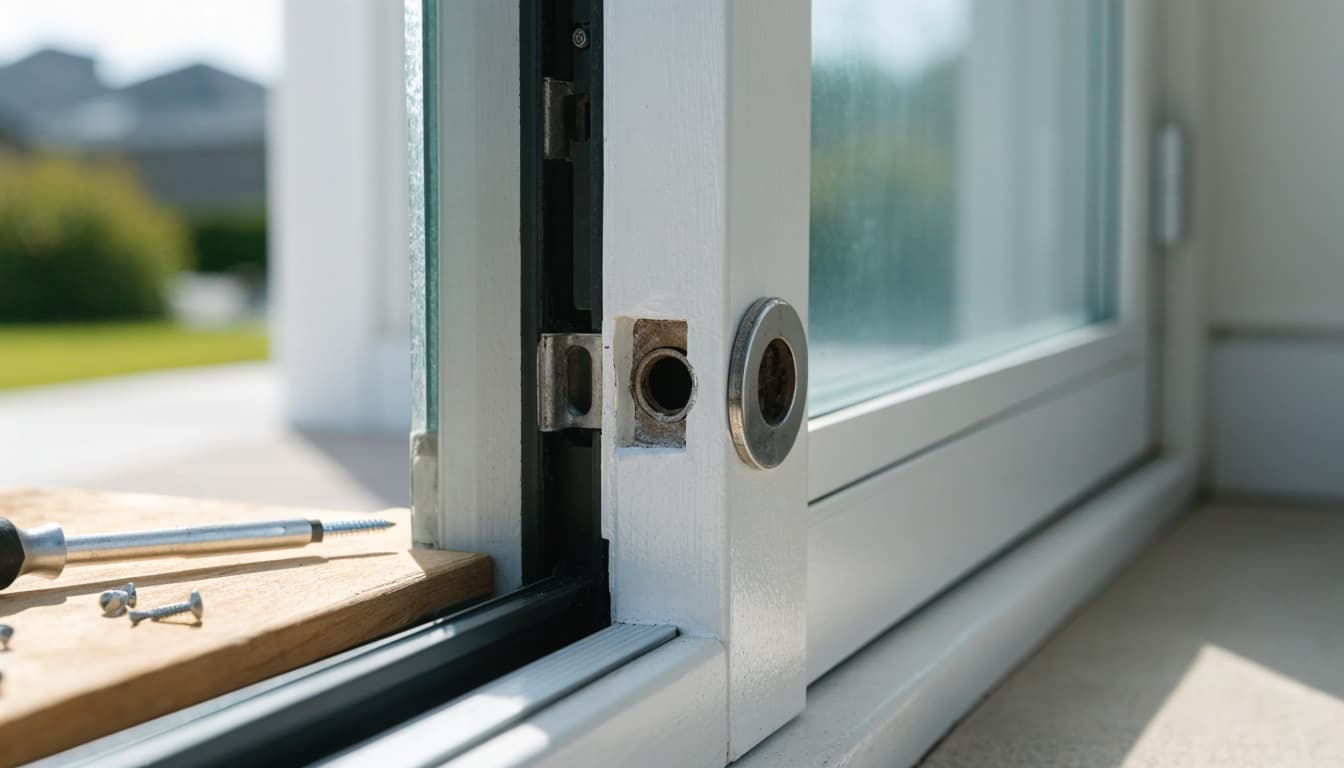
Have the matched replacement and the door maker's instructions at hand. Use a driver that fits the existing fasteners; a poorly fitting tip can damage them. Keep a small container nearby for any screws or separate pieces you remove.
Check the jamb, too. A replacement plate needs a sound mounting surface. If the frame is cracked, badly corroded, or loose, fastening a new keeper over that damage won't make the lock secure.
How to replace a sliding glass door strike plate
These steps apply to a conventional, accessible, screw-mounted keeper. Door designs vary, so follow your manufacturer's directions wherever they differ. Stop if the part is hidden, integrated into a larger assembly, or cannot be identified confidently.
Remove the old strike carefully
With the door open, support the plate as you loosen its visible mounting screws. Remove it without prying against the frame, then keep the old part and fasteners together. Some assemblies include a backing piece or adjustable component, so pay attention to anything that moves as the plate comes free.
Look at the exposed mounting area before proceeding. Dirt can obscure the contact surface; damaged holes or a shifting jamb can prevent the replacement from staying put. Don't drive larger screws or make new holes unless the door manufacturer's repair instructions call for that work.
Position and secure the replacement
Hold the new keeper against the jamb in the orientation shown by the old installation and the replacement instructions. Check that it sits flat and that its latch opening faces the correct direction. If it doesn't match the mounting points, stop rather than forcing it into place.
Install the specified fasteners and tighten them evenly by hand. The plate should stay firm without bending. Leave any permitted adjustment until you've checked where the latch lands. Don't assume a newly fitted strike will correct a panel that sits too high or low.
Keep the old keeper until the door has passed its final lock test. It gives you a direct reference if the replacement doesn't behave as expected.
Align the latch without forcing the door
A strike replacement is complete only when the latch reaches and holds its target under normal closing pressure. Make small changes based on what you can see, rather than repeatedly slamming the panel.
Read the contact point
Close the door gently and watch the hook approach the new keeper. Fresh rub marks can help locate contact, but a mark alone doesn't tell you which part has moved. Compare it with the panel's gaps and how smoothly the door rolls.
If the latch meets the wrong height, check the rollers using your door's adjustment instructions. Roller designs differ, and turning an adjustment screw the wrong way can worsen the fit. Test movement and latch position after each small change.
Use only the adjustment your keeper allows
Some keepers have a manufacturer-approved adjustment range; others mount in a fixed position. If yours adjusts, follow its instructions and keep the fasteners secure afterward. Don't file away the catch or enlarge mounting holes to make a mismatched part work.
When the hook still misses despite a level, smooth-moving panel, revisit the part match. The wrong opening or catch position can make a new sliding glass door strike plate behave like a worn one.
Check the finished lock and recognize a bigger repair
Test the latch first with the door open, then close the panel gently and lock it several times. It should engage without lifting the door, pulling hard on the handle, or pushing against the frame. Gently try to slide the locked door to confirm the keeper holds.
Separate a keeper issue from lock failure
If the hook doesn't move reliably while the door is open, replacing the strike won't solve that mechanical fault. A loose handle, disconnected spindle, or worn mortise lock may need attention. Likewise, a plate that loosens immediately may indicate damaged mounting points beneath it.
Never rely on a latch that only brushes the keeper. Until the door locks reliably, take appropriate steps to secure the opening when unattended. Any temporary security measure must preserve a required emergency exit.
Know when to call a professional
Get help if the glass is cracked, the frame has shifted, or the panel binds severely. A sliding-door technician or locksmith can also help identify an unfamiliar lock and keeper combination. Removing a heavy glass panel to chase an alignment problem adds risk that a simple strike-plate job doesn't require.
When a replacement handle is the better upgrade
Once the latch works, the door may still be unpleasant to open. A shallow factory pull can be hard to grip, especially when your hands are wet. That calls for a handle solution, separate from the keeper repair.
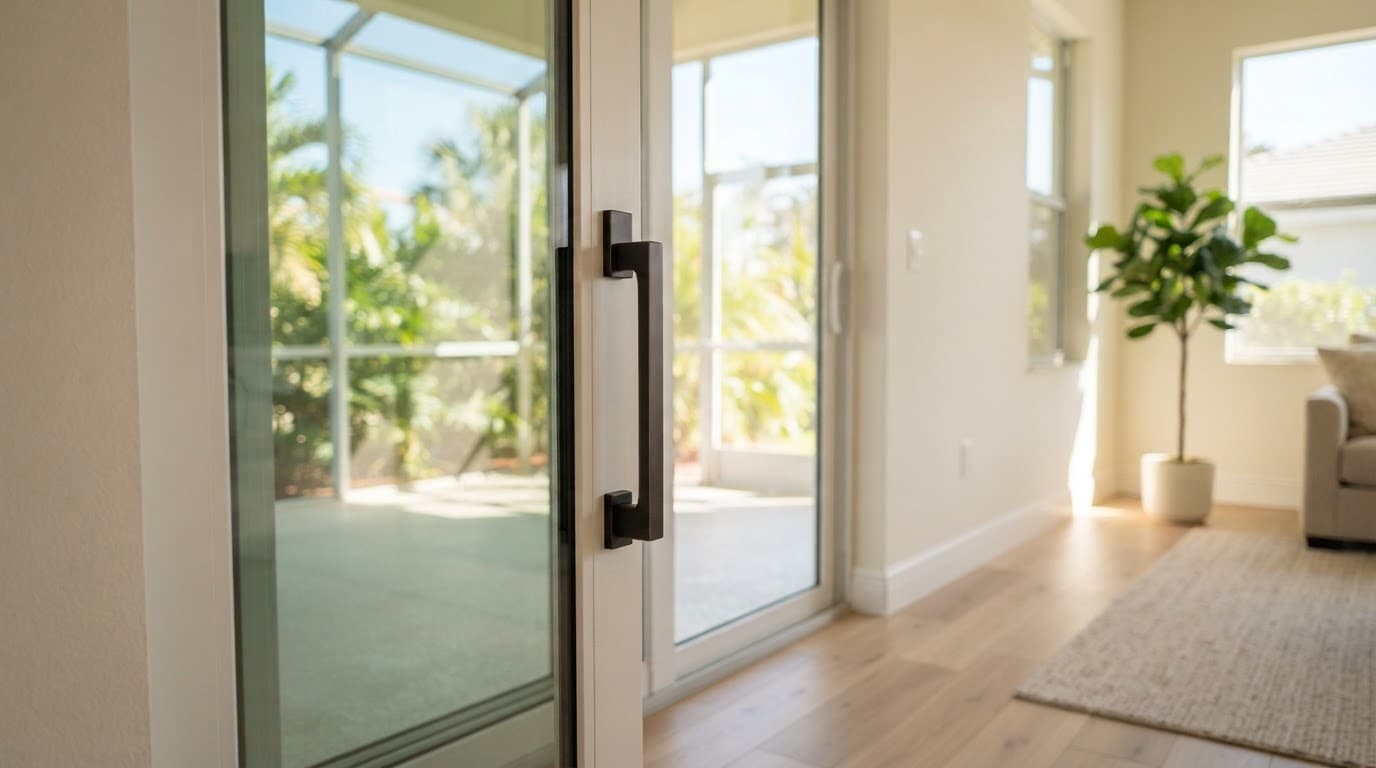
Check the fit before choosing a retrofit
A sliding glass door replacement handle that fits over the existing hardware can provide a larger handhold while leaving the working lock in place. Luuv Handle's retrofit fits doors with a 7.25-inch by 1-inch handle plate. Measure your plate and check Luuv Handle's fit and compatibility FAQs before ordering.
The white exterior retrofit handle is one option for a compatible door; bronze and interior versions are also available. Finish the latch and roller repairs first, since a better grip won't straighten a sagging panel.
Keep handle installation separate from strike repair
Luuv Handle is made in the USA and is a patented product until 2037. Its retrofit requires no alteration to the door and no drilling because it fits over compatible existing hardware. Those claims describe the handle, not a strike-plate replacement.
For a compatible door, installation involves loosening the inside screws, seating the handle over the existing plate, and tightening the screws again. Follow the Luuv Handle installation instructions, then confirm the grip is firm and the original latch still operates freely.
Key Takeaways
- Test the latch with the door open before blaming the strike plate.
- Match a replacement keeper to the lock and door, including its mounting points and catch shape.
- Correct track or roller trouble before adjusting the strike to meet a sagging panel.
- After installation, confirm the door locks securely under normal closing pressure.
Frequently asked questions
Can I replace the strike plate without replacing the lock?
Yes, if the lock operates properly and you can find a compatible keeper. Test the latch while the panel is open. If it won't extend or retract consistently, the lock needs attention as well. A new strike cannot repair a failed mechanism inside the door.
Will a new strike plate fix a door that only locks when lifted?
Usually, that symptom calls for a panel-height check first. Clean the track, observe how the door rolls, and consult its roller-adjustment instructions. Replace the strike if it is also damaged or worn, but don't use it to mask a door that has dropped.
Does replacing a strike plate require drilling?
That depends on the door, replacement part, and condition of the existing mounting points. A matched keeper may use the existing fasteners, but don't assume every replacement is a no-drill job. Luuv Handle's no-drilling claim applies to its compatible retrofit handle, not to keeper repairs.
Conclusion
A door that looks closed still needs its latch to seat fully. Check the lock and panel alignment first, then replace the strike plate when the part itself is damaged or no longer holds securely.
A matched keeper should let the door lock without force. Once it does, you can address a hard-to-grip handle as a separate upgrade.