

A sliding door should stay where you leave it. When a patio door slides open on its own, the problem is usually mechanical, and it can affect comfort, energy use, and home security.
The good news is that many causes are easy to spot. Start with cleaning and observation before adjusting parts or replacing hardware.
Why Your Patio Door Slides Open by Itself
A door panel moves because its rollers follow the path created by the track, frame, and gravity. Even a door that feels heavy can drift if one side of the opening sits slightly lower.
The direction of the movement gives you a helpful clue. If it always glides toward the same spot, look first at the track slope, roller adjustment, and whether the panel is sitting squarely in its frame.
Gravity pulls the panel toward the low side
Sliding glass doors are designed to roll with little effort. That is convenient when the door is aligned well, but it also means a slight slope can make the panel creep open.
Settlement, a shifted patio slab, or movement in the door frame can change how the door sits. You may not see the slope with your eye. Still, the door often reveals it every time it rolls toward the same end of the track.
Close the door halfway, then let go. If it continues moving without a push, gravity is likely part of the issue. A level placed on the sill can offer more information, although a level sill alone does not confirm that the rollers and panel are aligned correctly.
Dirty tracks and worn rollers change the way it moves
Grit does not usually make a door glide open by itself. However, dirt can hide a damaged track or make one roller work harder than the other. That uneven movement can leave the panel out of position when you think it is fully closed.
Worn rollers may also drop under the panel's weight. As a result, the door can tilt slightly, rub at the frame, and pull away from the latch side. The door might slide freely one day and drag the next.
A door that drifts while unlatched needs an alignment check. A door that opens after latching needs immediate attention to the lock and latch.
Start With the Track Before Adjusting Hardware
Cleaning is the least invasive place to begin. It also makes later testing much more accurate because you can feel how the door moves without sand, pet hair, or leaves under the rollers.
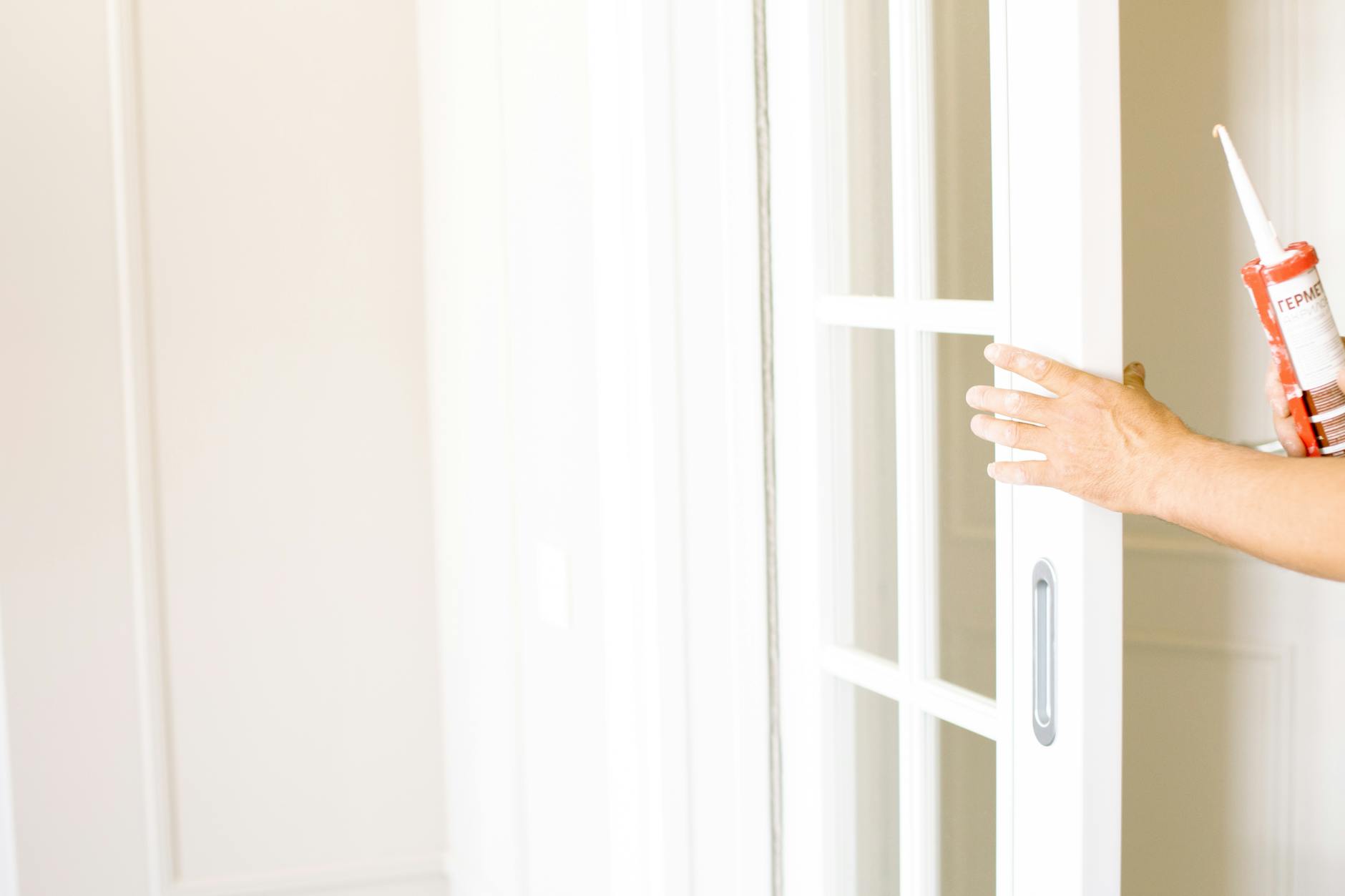
Photo by La Miko
Clear debris from the bottom channel
Open the door and vacuum the full length of the lower track. Use a narrow vacuum attachment, then loosen packed debris with a soft nylon brush. Wipe the channel with a damp cloth and dry it fully.
Check the vertical jamb and the meeting edge of the panel, too. A pebble in the bottom track can create an annoying bump. A buildup near the closing end can stop the door short of the latch.
Work through this simple order:
- Vacuum loose grit, insects, hair, and leaves from the track.
- Brush the track corners and wipe away remaining dust.
- Inspect for dents, cracks, rough spots, or bent metal.
- Slide the panel slowly and listen for scraping, clicking, or grinding.
A clean track does not correct a crooked frame, but it removes the easiest cause of rough movement.
Skip oily lubricants that collect more dirt
Oil-based sprays can make a track feel better for a short time. Then they hold dust and grit, which creates a sticky paste under the rollers. That buildup can make the door harder to control.
If the door manufacturer permits lubrication, use a product intended for sliding door tracks or rollers. Apply it sparingly and keep it off the glass, latch, and weatherstripping. Cleaning comes first because lubricant cannot solve a damaged roller or a track that has gone out of shape.
Adjust the Rollers to Square Up the Door
Most sliding glass doors have roller adjustment screws near the lower edges of the movable panel. Raising or lowering the rollers changes the panel's position in the opening.
This work calls for patience. Small adjustments matter, and the correct screw direction varies by door model.
Test the panel before you turn a screw
Close the door slowly and look at the gap around its edges. A larger gap at the top or bottom can point to an uneven panel. Also watch whether the latch meets its strike plate cleanly.
Use the adjustment screws in small increments. After each change, slide the door open and closed several times. Then test whether it remains still at several points along the track.
If raising one side improves latch alignment but creates rubbing at the top, back off and recheck the opposite side. The goal is a panel that rolls evenly, clears the frame, and meets the latch without forcing it.
Avoid removing adjustment screws completely. They can be hard to reinstall while supporting a heavy glass panel.
Know when rollers need replacement
A roller adjustment has limits. If the door grinds, drops suddenly, or resists movement after cleaning, the roller assembly may be worn or broken. Flat spots, corrosion, and cracked wheels can all cause trouble.
Replacing rollers usually requires lifting the movable panel out of the frame. Because patio door glass is heavy, this job often needs two capable adults. A door repair professional is the safer choice if the panel binds, the frame looks damaged, or you cannot identify the roller system.
A patio door slides open less often once it sits level on sound rollers. Yet the lock still needs to hold it securely at the closed position.
Check the Latch, Strike Plate, and Lock
A properly engaged latch should keep the panel closed. If you can pull the door open without operating the handle, the latch may be misaligned, worn, or not reaching the strike plate.
Do not treat a drifting or unreliable latch as a cosmetic issue. It affects security, especially on doors that lead to a patio, pool area, or ground-level entry.
Look for evidence of latch misalignment
Close the panel gently and watch the latch as it meets the frame. If it hits above, below, or beside the strike opening, the door is not aligned with the latch. Roller adjustment may solve that problem.
Paint marks, fresh scratches, or metal shavings around the strike plate also point to contact in the wrong place. Check that mounting screws are snug, but do not overtighten them and strip the frame.
If the latch reaches the strike but will not catch, inspect it for dirt, rust, or a broken internal spring. Some mortise locks can be replaced. Match the replacement part to the existing door hardware rather than guessing by appearance.
Use a temporary security measure with care
Until the door latches reliably, keep the opening secured when it is unattended. A compatible security bar or auxiliary lock can add protection, provided it does not block a required emergency exit.
Do not force the handle to compensate for a failed latch. Excessive pulling can bend hardware, damage the strike area, or make the underlying alignment problem worse. Repair the reason the latch misses before relying on the door again.
Choosing a Sliding Glass Door Replacement Handle That Fits
A new handle will not level the track or repair worn rollers. It can, however, give you a stronger grip, which helps you pull the panel fully shut and feel when the latch has engaged.
Many older sliders have shallow finger pulls that are difficult to use, especially with wet hands or limited grip strength. A properly fitted Sliding Glass Door Replacement Handle makes daily operation more comfortable without turning a simple upgrade into a major door project.
Retrofit handles avoid unnecessary door work
Before buying a replacement handle, measure the existing door plate and confirm compatibility. Luuv Handle retrofit products fit sliders with 7.25-inch by 1-inch door plates and install over existing hardware.
The Luuv Handle is made in the USA and is a patented product until 2037. It requires no alteration to the door and no drilling, which is useful for homeowners who want to preserve the original frame and hardware.
Review the sliding door handle compatibility guide before ordering. The original lock and latch stay in place, so the new grip complements a working door rather than replacing its security hardware.
A better grip encourages a complete close
A handle should feel solid in your hand and match where you use the door. For example, an interior-only upgrade can improve daily access from the living area. An inside-and-outside setup gives you a useful pull from either side.
The bronze sliding glass door replacement handle combines steel with water-resistant oak and fits over compatible existing hardware. It is installed by loosening the interior screws, placing the handle over the plate, then tightening the screws again.
This retrofit process takes about 30 seconds on a compatible door. Still, finish roller and latch repairs first, because easy gripping does not fix a door that is physically out of alignment.
Decide Whether to Repair or Call a Door Professional
A few clues can help you choose the right next step. Cleaning and minor roller adjustments suit many homeowners. Damaged glass, severe binding, or frame movement call for professional evaluation.
Use the door's behavior to narrow the problem.
| What you notice | Likely next step |
|---|---|
| The track is dirty but the door rolls smoothly after cleaning | Continue routine track cleaning |
| The panel drifts but the latch lines up | Check roller adjustment and sill slope |
| The latch misses the strike plate | Adjust panel alignment, then inspect the latch |
| The door grinds, drops, or will not move smoothly | Inspect or replace rollers |
| The frame is loose, bent, or leaking | Contact a sliding door repair professional |
A door that drifts only when unlocked may need a basic adjustment. A patio door that slides open after you lock it needs prompt repair, since the latch, strike plate, or lock is not holding as intended.
Keep Your Patio Door Closed and Easy to Use
When a patio door slides open by itself, start with the track, rollers, and alignment. Those parts determine whether the panel stays put and reaches the latch correctly.
Clean debris before making adjustments, then test the latch every time you change the panel position. Once the door closes securely, a comfortable replacement handle can make each open and close easier without changing the door itself.