

A patio slider can look shut while its latch only brushes the jamb. When a sliding glass door lock won't catch, the cause is usually misalignment, packed debris, or worn rollers rather than a mystery inside the frame.
Start with a few checks before you order parts. The right fix may be a small keeper adjustment, a roller tune-up, or a replacement lock, and it can restore a secure close without replacing the door. Begin by watching where the latch meets the frame.
Why a sliding glass door lock stops catching
Keep the door unlocked and open while you inspect it. Then look at the latch, the metal keeper in the frame, the handle screws, and the lower track.
Separate alignment trouble from a bad lock
With the door open, work the thumbturn or latch lever several times. A hook or bolt that moves smoothly when open but misses after closing points to the door position or keeper.
If the control turns freely yet the latch does not move, or if the latch will not stay extended, the mortise lock may have failed. A lock that works only when you lift the door is usually fine mechanically, but the panel has sagged.
If the latch moves correctly while the door is open yet misses after closing, start with panel height and keeper position. A new lock will not correct a misaligned door.
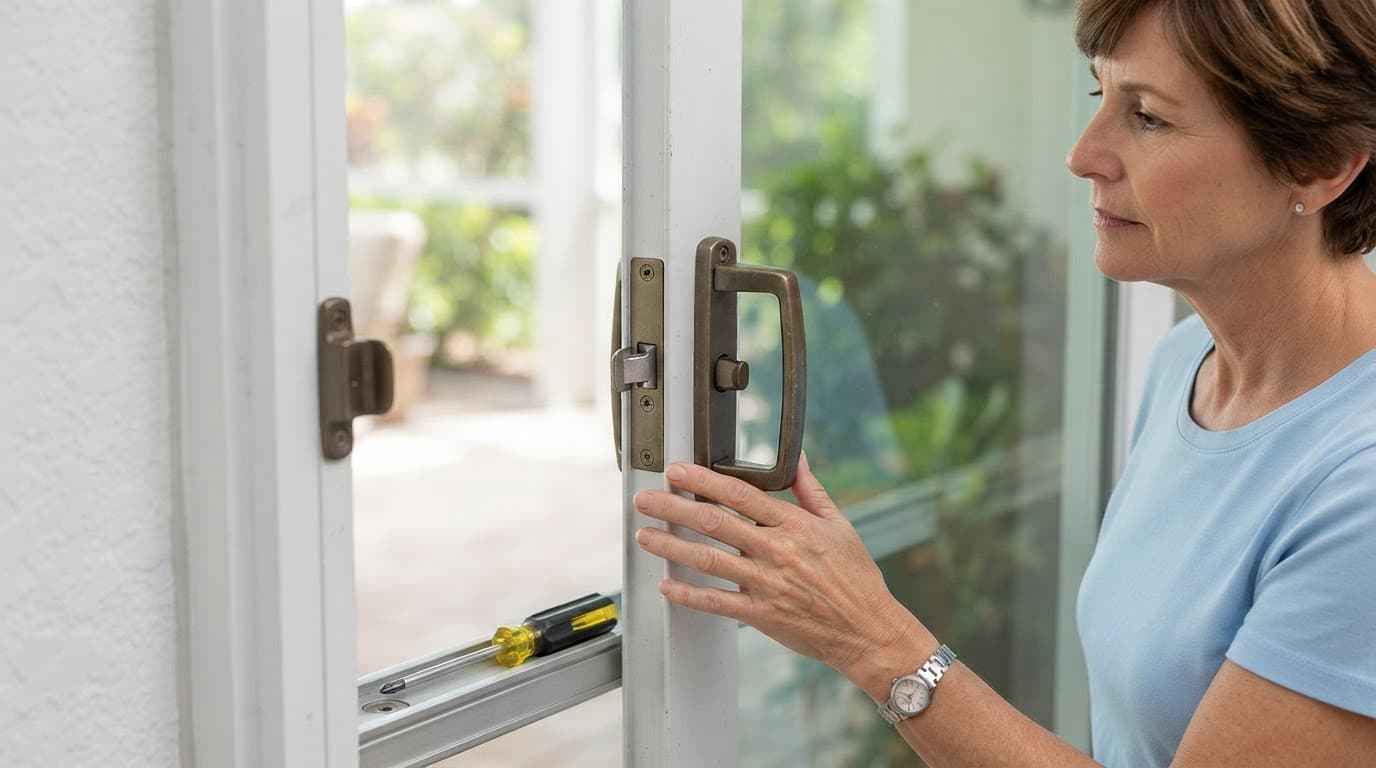
Test the closing path before taking anything apart
A quick test can reveal the problem without removing hardware.
- Wipe the latch and keeper with a dry cloth so dirt does not hide contact marks.
- Close the panel slowly, then watch whether the latch sits too high, too low, or too far from the keeper opening.
- Lift the operating edge of the panel slightly and try the lock again. If it catches, low rollers are the likely cause.
- Run the lock through several open-and-close cycles, because a latch that catches once may still be unreliable.
Write down what changes when you lift, push, or pull the panel. That small detail helps you avoid buying the wrong part.
Adjust the keeper so the latch meets center
The keeper is the metal receiver mounted on the door frame. Its opening must line up with the latch at the right height and depth. Even a few millimeters of movement can decide whether the door locks.
Find the point of contact
Close the panel gently and compare the latch with the keeper opening. Fresh scrape marks on either piece show where metal is rubbing.
You can also place a small dry-erase mark on the latch, close the door, and attempt to lock it. The transferred mark on the keeper reveals whether the latch hits above, below, or beside the opening.
The latch should enter near the middle of the keeper without a hard shove. If you need to pull the door tightly with one hand while turning the lock with the other, alignment still needs work.
Reposition the keeper in small moves
Mark the keeper's original position with low-tack painter's tape. Next, loosen its screws only enough to allow a slight shift.
Move it one or two millimeters at a time, then tighten the screws and test the lock. Repeat until the latch enters cleanly. Many keepers have slotted mounting holes for this purpose, although some fixed models need a matching replacement keeper instead.
Avoid widening screw holes or forcing a larger fastener into an aluminum frame. If the keeper screws spin without tightening, the frame material may need repair before the door can lock reliably.
Clean the track and set the rollers evenly
A sliding door can fall out of alignment because the rollers drag through sand, pet hair, leaves, or old lubricant. As the panel rides lower, the latch drops below the keeper.
Remove friction from the lower track
Vacuum the full track, including the corners near the jamb. Follow with a nylon brush and a damp cloth, then let the channel dry fully.
Skip heavy grease and wet oil. Those products collect grit and can turn a clean track into a dark, sticky strip. A dry silicone or PTFE lubricant works better after cleaning, provided the door manufacturer allows it.
Also check the track for dents, raised screws, and hardened debris. A roller cannot glide smoothly over an obstacle, even if the lock itself is in perfect condition.
Raise a sagging panel with roller adjustments
Most sliders have roller adjustment screws near the bottom edge of the operating panel. Turn each screw in quarter-turn increments, alternating between sides to keep the panel level.
On many doors, turning clockwise raises the panel. However, roller designs differ, so test the movement after every adjustment rather than forcing the screw.
Stop when the door slides freely and the latch lines up with the keeper. Raising the panel too far can make it scrape at the top or bind against weatherstripping. If the door still drops, grinds, or resists movement, worn rollers may need replacement.
Repair the lock hardware when alignment is correct
Once the panel meets the keeper squarely, test the sliding glass door lock again. A latch that still will not extend or hold has a mechanical problem inside the handle or mortise case.
Tighten the handle and check the spindle
Loose handle screws can allow the thumbturn or lever to sit crooked. First, take a photo of the hardware, then tighten accessible screws with a hand screwdriver.
Do not overtighten them. Aluminum door stiles can strip if screws are forced.
If the thumbturn spins with little resistance, the spindle may have slipped out of place or worn down. A cracked handle, loose interior trim, or a disconnected spindle can prevent the latch from moving even though the door is aligned.
Match a replacement mortise lock carefully
A mortise lock fits inside the narrow edge of the sliding panel. Remove the old lock only with the door open, then compare its faceplate length, screw locations, backset, and latch or hook direction before ordering a replacement.
Bring the old part to a locksmith or hardware supplier when possible. Similar-looking patio-door locks often have different screw spacing or hook shapes.
Test the latch with the door open before reassembling every trim piece. Then close the panel and lock it several times. A smooth latch movement means little if it does not grab the keeper under normal closing pressure.
When a sliding glass door replacement handle is the right fix
Sometimes the lock works, but the shallow factory pull makes it hard to draw the door tight enough for the latch to engage. This is common with recessed handles, especially when the door is heavy or your hands have limited grip strength.
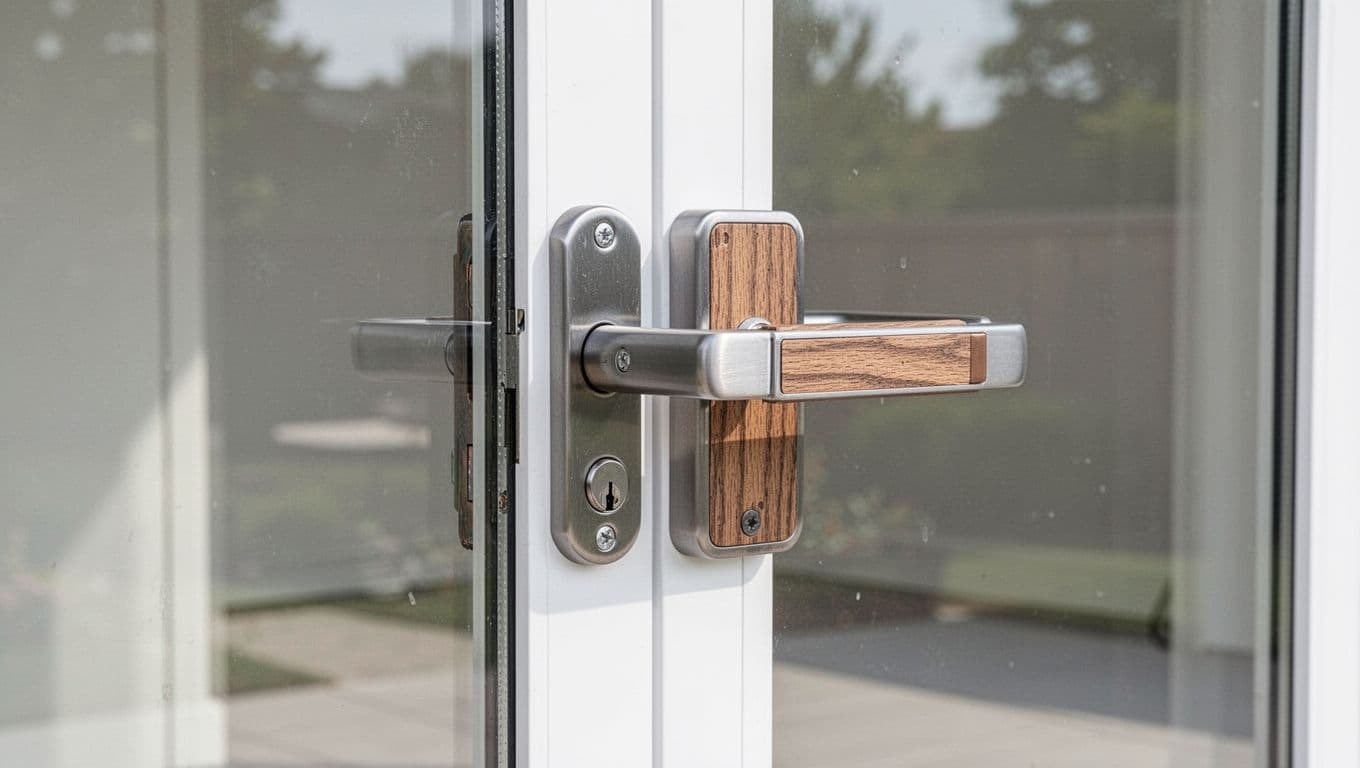
Add grip after the latch is working
A sliding glass door replacement handle improves how you pull and close the panel. It does not repair a broken mortise lock, worn rollers, or a damaged keeper.
However, a larger grip can make it easier to bring a properly adjusted door fully into the jamb. That extra control matters when a small recessed pocket pull leaves little room for your fingers.
Before choosing an exterior handle, measure the gap between the slider and any screen door. Screen clearance can affect which handle style fits your opening.
Choose a retrofit option that leaves the door intact
A retrofit handle fits over compatible existing hardware, so the original lock and latch remain in place. Luuv Handle fits standard 7.25-inch by 1-inch door plates, so measure your current plate before ordering.
The Luuv Handle is made in the USA, is a patented product until 2037, and requires no alteration to the door and no drilling. Its steel construction and water-resistant oak grip are available in white and bronze finishes.
For a compatible door, installation involves loosening the interior screws, sliding the handle over the existing plate, and retightening the screws. Follow the sliding door handle installation guide for the correct fit and mounting sequence.
Know when to call a door professional
Some failures need more than an adjustment. Call a qualified sliding-door technician or locksmith if the glass is cracked, the aluminum stile is bent, the jamb is damaged, or the panel cannot move without severe grinding.
Stop before the repair creates more damage
A heavy patio door can be difficult to remove safely. Roller replacement may require lifting the panel out of its track, which risks glass damage and injury without proper support.
Professional help also makes sense for keyed exterior locks, badly corroded hardware, stripped frame holes, or doors with unusual multi-point locking systems. A technician can identify the part and set the panel height correctly.
Secure the door while you arrange a repair
If the door will not lock tonight, place a snug wood dowel in the inside track to prevent the panel from sliding open. Use it as a temporary measure only.
Make sure everyone in the home knows the dowel is there and can remove it quickly. Do not block a door that someone may need for emergency exit.
Keep the lock working after the repair
A few minutes of maintenance can prevent the same problem from returning. Dirt under the rollers slowly pulls the panel out of position, while loose screws allow the keeper and handle to shift.
Check the track, latch, and screws regularly
Vacuum the track after yard work, renovations, or periods of wind-driven rain. Then inspect the latch for corrosion and check whether keeper screws remain tight.
Run the lock through several cycles once a month. If it begins catching only after you lift the door, adjust the rollers before the latch wears against the keeper.
Avoid slamming the panel shut. A firm, controlled close protects the hook, keeper, rollers, and handle hardware.
A secure close should not take a fight
An apparently closed patio door is only secure when its latch seats fully in the keeper. Start with the contact point, clean the track, and correct roller height before replacing parts.
Replace the mortise mechanism when it has failed, and add a retrofit handle when the lock works but the original pull is too hard to use. A working sliding glass door lock should engage without force, shoulder pressure, or repeated attempts.