

Yes, a new handle can leave your patio door mortise lock in place. The key is choosing a compatible retrofit handle that fits over the existing hardware rather than replacing the lock mechanism.
If your lock works but the grip is uncomfortable, a sliding glass door replacement handle can make the door easier to use without a major repair. Here's how to decide if that approach fits your door.
Key Takeaways
- A retrofit handle can add a new grip while the original lock and latch stay in place.
- Our Luuv Handle requires no drilling or alteration to the door.
- A new grip won't fix a broken mortise lock or a latch that doesn't engage.
How a Patio Door Mortise Lock Works With a Handle
The handle and the lock have different jobs, even though they sit close together on the door.
The handle moves the door
The pull handle gives you a place to grip the panel. The lock lever, often called a thumb turn, operates the mortise mechanism inside the door's edge. When you close and lock the door, the latch engages a metal fitting on the frame called the keeper.
A worn or awkward pull can make the door uncomfortable to use even when the lock works as intended. In that case, you can improve the grip without changing the mechanism inside the door.
A retrofit handle fits over existing hardware
Our retrofit handle fits over the existing plate on a compatible door. The original handle hardware stays in place, along with the lock and latch. Our Luuv Handle is made in the USA and patented through 2037. It requires no drilling and no alteration to the door.
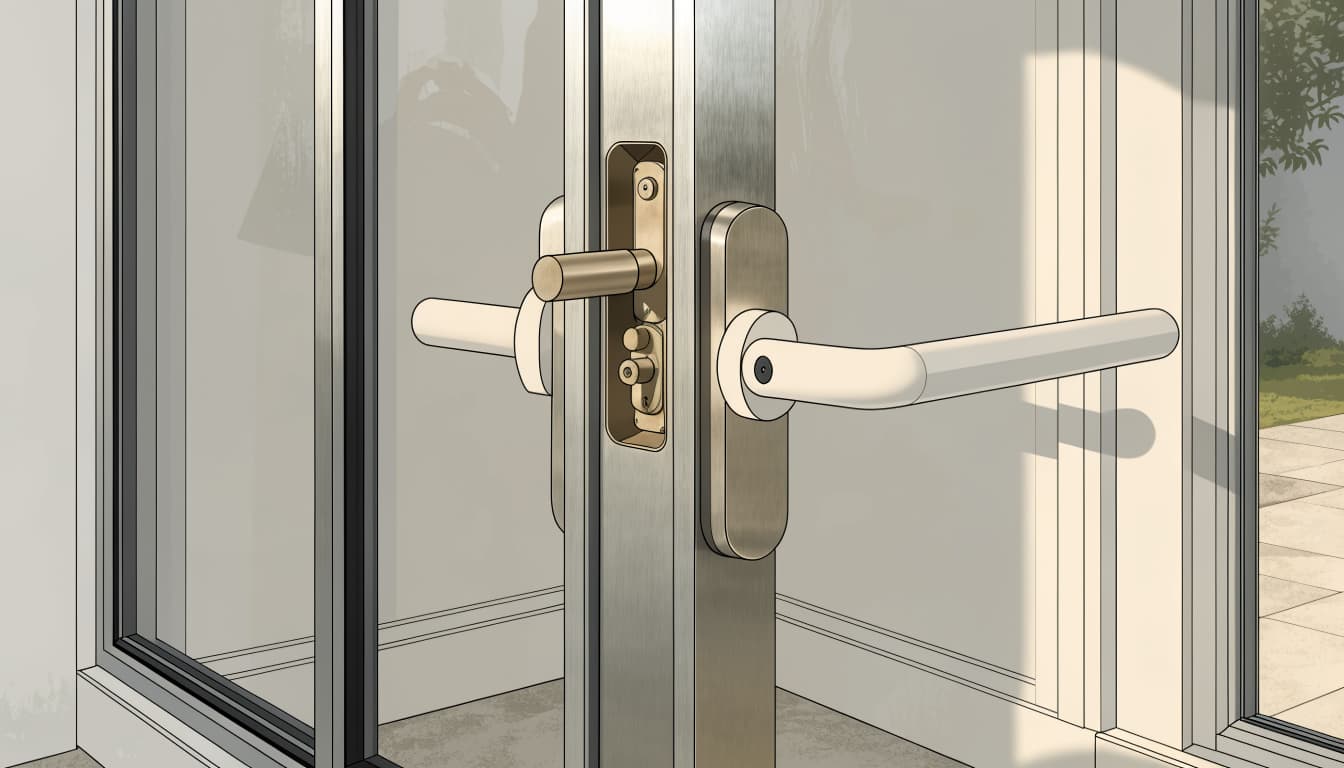
A conventional replacement handle set works differently. It may require you to remove the existing handle and match the new set to the door's mounting holes and lock connection. Keeping the original lock is possible with that approach too, but the parts must be compatible.
What to Look for Before Choosing a Handle
A retrofit works best when the existing hardware is sound and the new grip fits around it.
Look at the existing handle plate
The size and shape of the plate matter because the retrofit sits over it. Also look at the position of the lock lever and any nearby trim. You'll need enough room to operate the lever and slide the door without the new grip rubbing against the frame.
Our glass door handle fit guide covers the details to consider. If the hardware doesn't match the handle's fit requirements, don't force the pieces together.
Decide whether the lock needs attention
Open the door and operate the thumb turn. If the mechanism allows, watch how the latch moves at the door's edge. The lever should move without excessive force.
Next, close the door and test whether the latch engages the keeper. If it doesn't catch, the problem may involve alignment or the lock itself. A new handle won't correct either issue on its own.
How to Install a Retrofit Handle
On a compatible door, installing our handle can take about 30 seconds. Keep the door open while you work, and support the exterior hardware as you loosen the interior screws.
- Loosen the screws on the existing interior handle plate.
- Slip the retrofit handle over the plate and position it.
- Retighten the screws so the handle sits firmly.
- Move the door slowly and operate the lock lever before closing it.
You don't need to remove the original handle or drill into the panel. After installation, close the door and test the latch again. The grip should stay steady, the lever should move freely, and the latch should engage without forcing the door.
If anything rubs, rocks, or blocks the lock lever, stop using the handle until you've corrected the fit.
When the Mortise Lock Needs Repair
A new grip helps when the issue is how you hold or pull the door. Lock trouble calls for a closer look at the hardware that keeps the panel closed.
When the latch misses the keeper
If the latch moves but misses the keeper, the door or keeper may be out of alignment. Dirt in the track or a door that sits unevenly can affect how the parts meet. Don't force the thumb turn or slam the panel to make it catch.
Our sliding door lock troubleshooting guide covers these common problems and the parts to inspect.
When the mechanism has failed
A lever that won't operate properly, or a latch that stays stuck after alignment issues are addressed, can point to a failed mortise mechanism. In that situation, repair or replace the lock before relying on the door for security.
A retrofit handle can still be an option after the lock works again. It adds a more comfortable grip, but it doesn't provide a new locking mechanism or make a failed one secure.
Frequently Asked Questions
Can renters use a retrofit handle?
The no-drill design can be useful for renters because it doesn't alter the door. The existing handle and lock remain in place, so the retrofit can be removed without leaving new holes.
Does the original key or thumb turn still work?
The original lock remains in place, so its existing controls continue to operate it. The retrofit handle should leave those controls accessible.
Can I replace both sides of the handle?
Our collection includes interior and exterior options as well as inside-and-outside bundles. You can browse our sliding door retrofit handles to choose the setup that suits your door.
Keep the Lock, Improve the Grip
A working mortise lock doesn't need to go just because the handle is hard to use. With a compatible retrofit, you can add a more comfortable grip and leave the original latch and lock in place.
If the door won't latch reliably, address that problem first. Once the lock works and the handle fits, you can enjoy the upgrade without drilling into the door.