

For a sliding door, the choice between hurricane shutters and impact glass comes down to how you want to protect the opening. Impact glass is built into a tested door assembly and stays in place year-round. Shutters cover the glass before a storm, so you need a suitable system and a plan to deploy it.
The right choice between impact glass and shutters depends on your home, the door's location, local building requirements, and how you'll manage storm preparation. A separate concern is whether the door's handle is comfortable to use. Storm protection and handle comfort are different upgrades, and one can't replace the other.
Key Takeaways
- Impact glass is part of a tested door assembly. Shutters are a separate covering that must be closed or installed before a storm.
- Both options can meet code when the product and installation have the required approval for the opening.
- Neither option has a universal cost or insurance advantage based on the available information.
- A replacement handle can make a working slider easier to grip, but it doesn't protect the glass or repair the lock, rollers, or track.
Impact glass vs shutters: what changes for your door?
Impact glass stays in place
An impact-resistant sliding door uses laminated glazing in a tested assembly. The glass may crack under impact, while the bonded interlayer helps hold fragments together and resist an opening forming. Because the door remains in place, you don't have to install a separate covering each time a storm approaches.
However, "impact glass" alone doesn't describe the whole system. The frame, hardware, anchorage, and installation all matter. A product's performance depends on the tested assembly and the conditions covered by its approval.
Shutters cover the opening
Shutters add a protective layer over the door. Some systems, such as roll-down or accordion shutters, stay attached to the building and can be deployed before a storm. Removable panels need to be stored, handled, and installed when needed.
The practical difference is preparation. Impact glazing is already in position; a shutter system needs to be closed or fitted properly. Either way, the product must be approved for the opening and installed as specified.
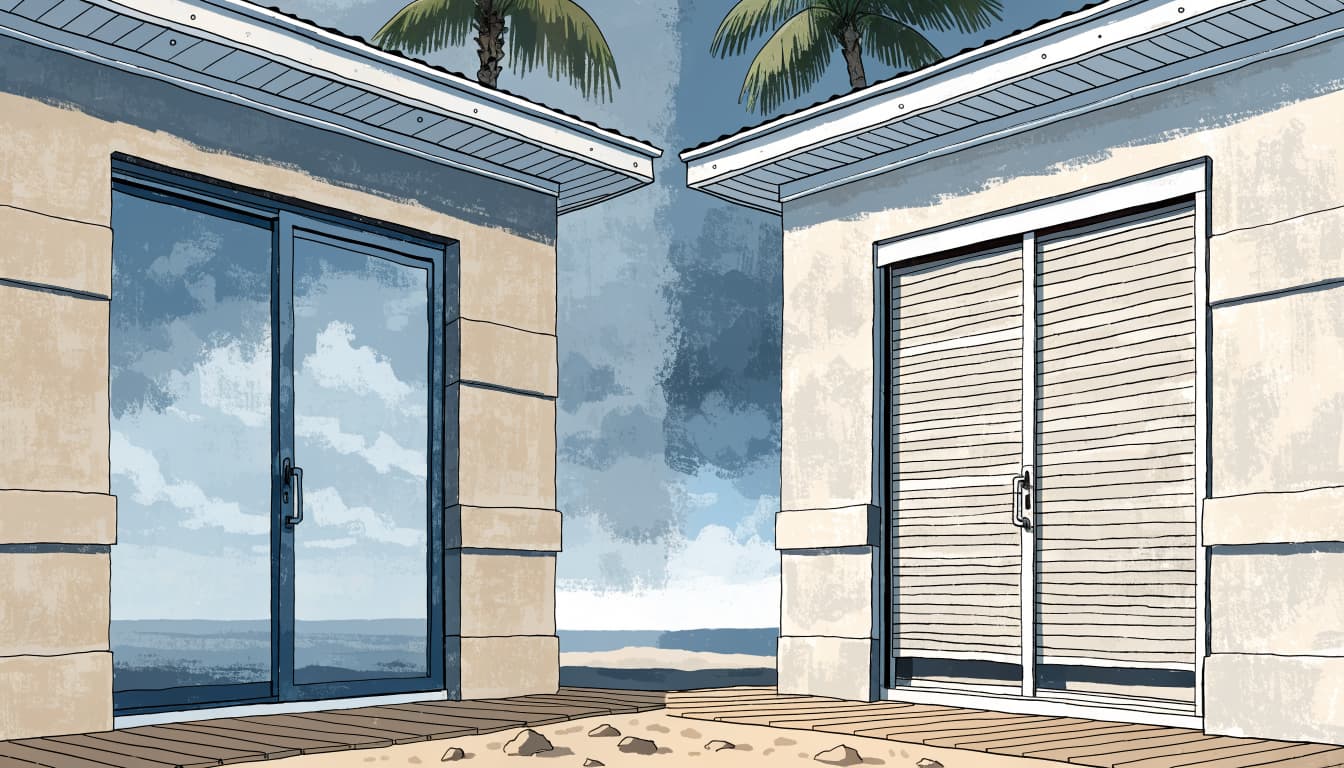
What an impact-rated sliding door includes
The glass is only one part of the assembly
Impact-resistant doors commonly use laminated glass, which bonds glass layers to a polymer interlayer. That construction can help keep broken glass in the frame after an impact. The frame and its anchorage also need to resist the forces covered by the product's testing.
Therefore, replacing only the glass or choosing a door based on a label doesn't establish that the opening is protected. The approval must apply to the complete assembly and its installation.
Testing covers impact and pressure
ASTM E1996 sets performance requirements for windborne-debris protection, while ASTM E1886 tests how an assembly responds to missile impact and repeated pressure changes. Guardian Glass describes large-missile testing with a 2-by-4 and small-missile testing with 2-gram steel balls moving at 130 feet per second, followed by cyclic pressure loading.
Those examples illustrate why test details matter. The exact criteria depend on the standard, code requirements, location, and product approval. The Guardian Glass overview of hurricane impact resistance explains the glazing and testing concepts.
Shutter systems differ in how you prepare them
Permanent systems and removable panels
Roll-down shutters and accordion shutters generally remain attached to the home, so you deploy them when a storm threatens. Removable panels can protect an opening too, but they require storage and hands-on installation.
Convenience depends on more than the shutter type. Consider who will operate it, whether it can be deployed safely, and how much time the system takes to cover every required opening. A permanently installed system still needs to be closed before the storm.
Plywood has specific limits
Plywood isn't a blanket substitute for an approved shutter. A Florida Building Code education document describes a plywood option using panels at least 7/16 inch thick, precut to fit, with appropriate anchorage already in place. That option also sets limits related to fastener spacing, building height, and wind speed.
Those conditions apply to the described option, not to any plywood sheet attached in any way. The Florida Building Code education material outlines why product details and installation conditions are part of the protection.
Florida requirements depend on the opening and location
HVHZ rules are not the only factor
Miami-Dade and Broward counties are in Florida's High-Velocity Hurricane Zone, or HVHZ. Products used there must meet the applicable Miami-Dade and TAS requirements. Outside the HVHZ, other approved testing routes, including ASTM standards or applicable TAS testing, may apply.
The relevant criteria can also depend on wind speed, exposure, building height, design pressure, and the opening's location. As a result, a door that works for one home may not satisfy requirements for another.
Missile testing can vary by height
Florida Building Code education material describes large-missile testing for certain glazed openings within 30 feet of grade and small-missile testing above that height. It also describes a conditional exception for some taller buildings and roof conditions.
These are code criteria with specific conditions, not a simple rule that applies to every door. For a comparison, use the applicable approval for the actual opening rather than relying on a general "hurricane-rated" claim. The PGT code-options brochure also sets out product and plywood conditions.
Cost and insurance don't have one universal winner
Compare the full installed system
A meaningful price comparison needs to account for the door, frame, hardware, installation, and any shutter components or anchorage. The available sources don't provide a reliable apples-to-apples installed-price comparison, so a single claim that shutters or impact glass always cost less wouldn't be useful.
The ongoing effort also differs. A removable system requires storage and storm preparation, while impact glass stays installed. Those practical details may matter as much as the initial price for your household.
Discounts depend on the policy and classification
The Florida Office of Insurance Regulation says wind-mitigation discounts apply to the hurricane-wind portion of a policy. Its materials identify opening protection as a mitigation measure, but they don't establish one discount amount or show that impact glass always saves more than shutters.
Citizens Property Insurance's mitigation form lists categories such as impact-resistant coverings, impact-resistant doors, and impact-resistant glazing. Those classifications don't replace building-code approval. The Florida insurance mitigation guidance provides context for how mitigation relates to insurance.
A more comfortable handle is a separate upgrade
If the door slides and locks properly but the factory pull feels shallow or awkward, a replacement handle addresses daily use, not storm protection. Luuv Handle's retrofit fits compatible existing hardware with a 7.25-by-1-inch door plate. It's made in the USA from locally sourced steel and water-resistant oak, and it's a patented product through 2037. It requires no alteration to the door and no drilling.
The retrofit leaves the original lock and latch in place. Luuv Handle offers white or bronze exterior handles for $30, interior handles for $22, and inside-and-outside bundles for $50. It's a grip upgrade, not a way to strengthen glass or fix a damaged locking mechanism.
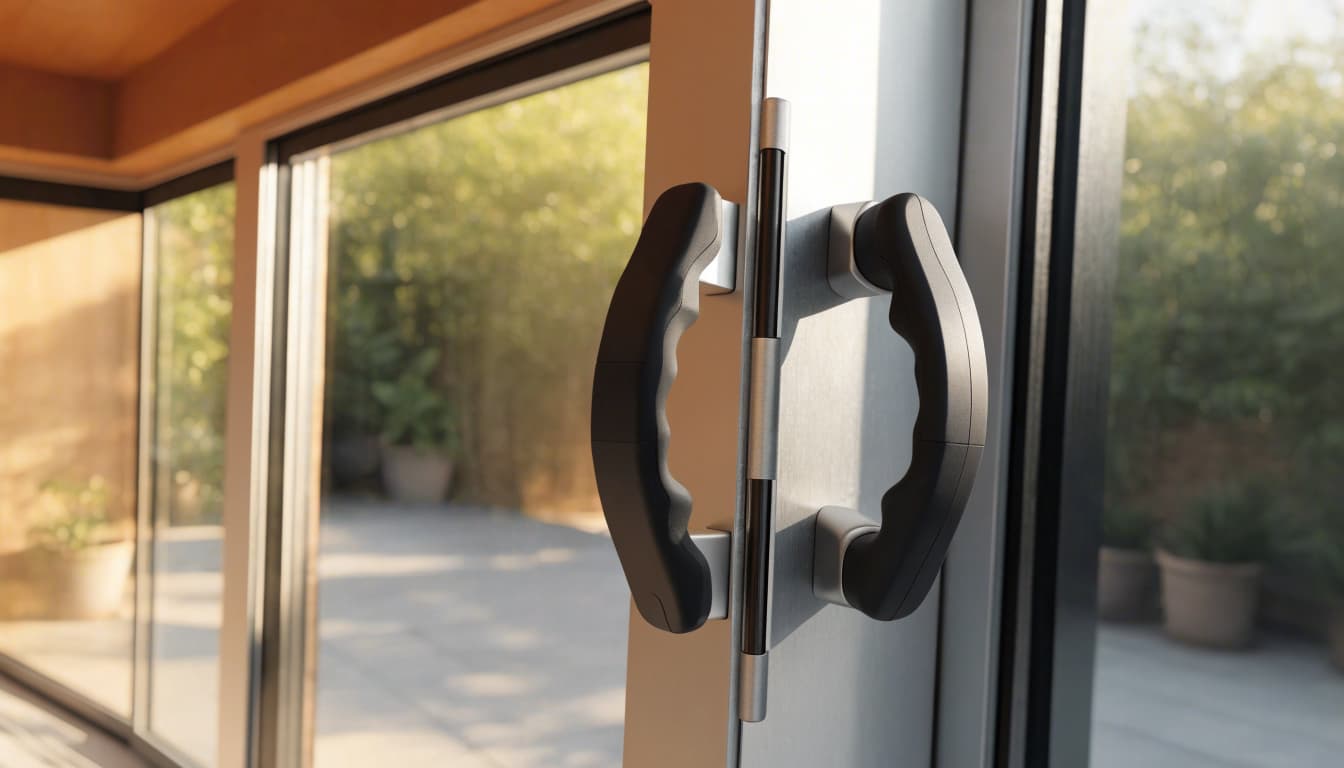
Before ordering, measure the existing plate and check the fit. A handle can improve control on a sound door, but it won't correct dragging, a failed roller, or a latch that won't engage. See our guide to finding compatible sliding door replacement parts if you're sorting out whether the problem is the handle or another part of the door.
Frequently asked questions
Are shutters or impact glass better for a sliding door?
Neither is automatically better. Impact glass stays in place, while shutters need to be deployed. Choose based on the opening's requirements, approved products, installation, and how you'll prepare for storms.
Does laminated glass automatically make a sliding door hurricane-rated?
No. Laminated glass is one component. The complete door assembly and installation must meet the applicable requirements for the location and opening.
Can a replacement handle protect the door during a hurricane?
No. A handle improves grip and control; it doesn't protect the glass or frame from debris. Choose an approved impact door or covering for storm protection.
Can I improve the handle without replacing the door?
Yes, when the existing hardware and plate are compatible with a retrofit. A no-drill replacement handle can leave the original lock and latch in place. For broader repair questions, see our guide to repairing a patio door or replacing it.
Choose protection for the opening, then address comfort
Impact glass and shutters can both protect a sliding door when the product and installation meet the relevant requirements. The key differences are whether protection stays in place or requires storm preparation, and whether the complete system has approval for your location.
Once the opening is protected, deal with handle comfort as its own issue. A better grip makes everyday use easier, but storm protection starts with the right rated door or covering.