

A sliding patio door design pressure rating describes how much pressure a door assembly is rated to resist when forces push or pull on it. It helps you understand the door's structural performance, but it doesn't tell you everything about glass protection or everyday operation.
If you're shopping for a replacement handle, the distinction matters: a better grip can make a working door easier to use, while design pressure concerns the door assembly itself. Start with how that pressure acts on the door.
What a Design Pressure Rating Measures
Design pressure describes a load spread across the door's surface. The rating applies to a particular door assembly, including its frame, glass, panels, and components, rather than to the handle alone.
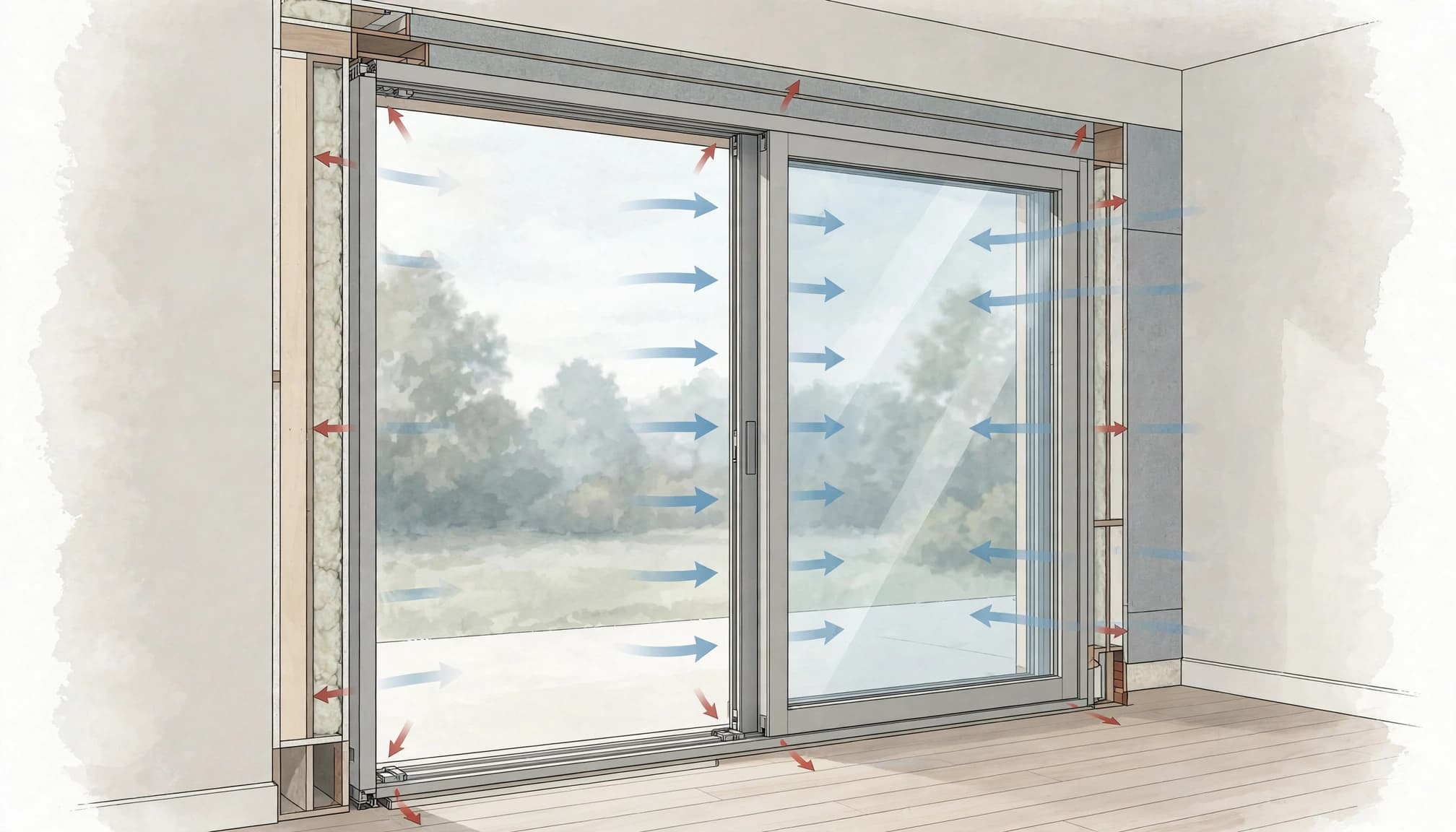
Wind can apply pressure in either direction, so both sides of the load matter when comparing doors.
Pressure pushing toward the room
Positive pressure pushes against the outside of the door and toward the interior. The glass transfers that load through the surrounding assembly, including the frame.
A door's design pressure rating gives you a way to understand its rated resistance to that kind of force. A higher rating generally indicates greater rated resistance, but it has to be considered alongside the door's other specifications.
Pressure pulling away from the room
Negative pressure pulls the door outward, away from the interior. A door may have different ratings for positive and negative pressure, so one figure doesn't necessarily describe both directions.
This distinction is useful when comparing product information. Two doors that look alike may have different ratings or different rated dimensions.
Design Pressure and Other Door Features
A design pressure rating is one part of a door's performance information. It doesn't describe every condition your patio door may face.
Impact protection is a separate consideration
Pressure resistance and impact resistance describe different things. Design pressure concerns a load acting across the assembly. Impact protection concerns how a product responds to an object striking it.
A pressure rating alone doesn't establish that a door is impact-rated. Our comparison of impact glass and hurricane shutters covers two different approaches to protecting patio openings.
Air and water performance are different, too
A door can have separate information for air leakage and water resistance. Those details are useful if drafts or rain intrusion are among your concerns.
Design pressure doesn't tell you how comfortable the handle feels, whether the rollers glide smoothly, or how easily the lock operates. Those are separate parts of choosing and maintaining a door.
Where to Find Your Door's Rating
Start with the door's product label or the paperwork that came with it. Labels may be on the frame or another part of the assembly. Product documents may also identify the model and its performance information.
The model matters because a manufacturer's doors can differ in size, glass, and construction. A rating for one model shouldn't be assumed to apply to every sliding door from the same brand.
If you can't identify the door and need to make a structural decision, a qualified door professional can help assess the assembly. A replacement handle listing won't supply the rating for the entire door.
How to Compare Sliding Patio Door Ratings
Compare doors as complete products rather than looking at a single number in isolation. The rated size and configuration matter, as do the positive and negative pressure information associated with each assembly.
Your opening matters, too. A door exposed to open surroundings may face different conditions than one sheltered by nearby structures. The door's position in the building can affect the forces acting on it as well.
Installation is another part of the picture. Even a door with an appropriate rating needs a sound frame and suitable installation. If you're replacing a door because of damage or storm concerns, a qualified installer can assess the opening and recommend an appropriate assembly.
What Your Existing Door's Condition Can Tell You
A product rating describes the rated assembly. It doesn't tell you whether an older door has damaged glass, a bent frame, or worn hardware.
Pay attention to how your slider works day to day. A panel that drags, a latch that won't engage, or a frame that appears distorted needs attention separate from the handle. Our guide to sliding patio door parts and repairs can help you identify the component causing trouble.
For cracked glass or significant frame damage, stop forcing the door and seek professional help. A more comfortable pull won't repair those problems.
Choosing a Replacement Handle for a Sound Door
If your door slides and locks properly but the pull is hard to grip, a sliding glass door replacement handle can make everyday use more comfortable. The handle is a usability upgrade, not a way to increase the door's design pressure rating.
Fit the handle to the existing plate
Our Luuv Handle retrofit fits over compatible existing hardware on sliders with a 7.25-inch by 1-inch door plate. The original handle, lock, and latch stay in place.
We offer white and bronze finishes, with interior and exterior options. Interior handles cost $22, exterior handles cost $30, and an inside-and-outside bundle costs $50.
Add grip without drilling
Luuv Handle is made in the USA with steel and water-resistant oak. It's a patented product until 2037 and requires no alteration to the door and no drilling.
Installation on a compatible door takes about 30 seconds. The retrofit uses the existing hardware, so you can add a larger grip without replacing a working door assembly.
Keep the Rating and the Handle in Perspective
A design pressure rating helps describe how a sliding patio door assembly resists pressure. It doesn't replace information about impact protection, water performance, or the condition of an older door.
For a door that works properly, a compatible retrofit handle can improve your grip. If the glass, frame, or moving parts are damaged, address those issues separately.