

A stationary patio door panel shouldn't shift when you use the neighboring sliding door. If you've noticed a loose fixed patio door panel, identify where the movement occurs before touching screws or shopping for hardware.
The problem may involve the panel, its surrounding frame, or the glass within it, and each needs a different response. Start with a visual inspection, keeping heavy glass and unfamiliar fasteners undisturbed.
Key Takeaways
- Locate the movement: glass within the panel, the panel within the door frame, or the whole frame against the wall.
- Stop using the door if you see cracked glass, a leaning panel, distorted framing, or a track separating from the sill.
- Keep handle upgrades separate from structural repairs. A better grip helps a sound sliding door, but it won't secure a loose stationary panel.
The goal is to gather useful observations without turning an inspection into an unsafe removal or adjustment.
Identify the Fixed Panel Before Troubleshooting
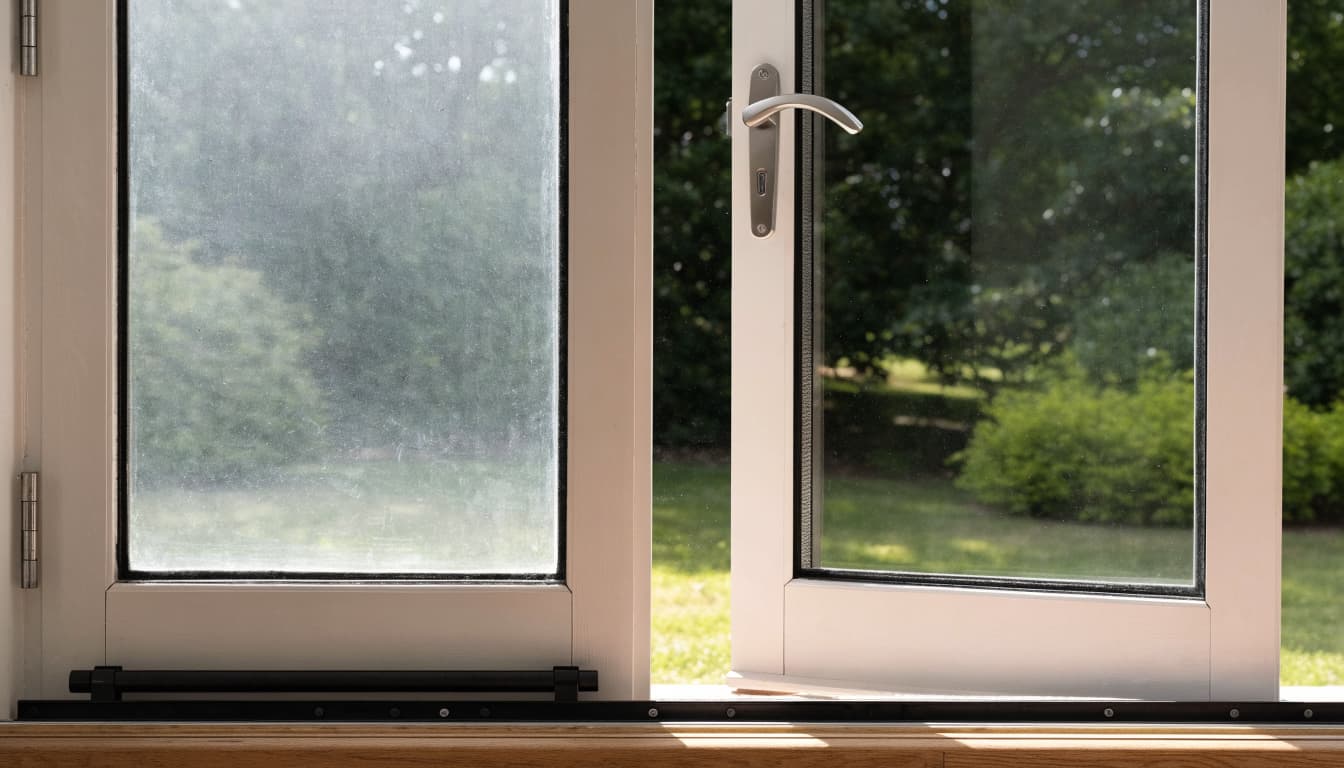
Separate the Stationary Panel From the Sliding Panel
On a typical two-panel sliding patio door, one glass panel travels along the track. The other stays in place during everyday use.
Check which panel moved when you first noticed the problem. Don't recreate a wobble by shaking either panel.
Also identify the screen door, if present. It uses separate tracks and hardware, so a rattling screen doesn't establish that the glass panel is loose. Watch the individual frame edges rather than relying on where the sound seems loudest.
Distinguish Panel Movement From Handle Movement
A handle can wobble while the sliding panel and stationary panel remain secure. Conversely, a stable handle doesn't prove that the surrounding door assembly is sound.
Grinding, dragging, or needing to lift the moving panel points toward a different inspection. These signs of worn sliding door rollers help distinguish operating-panel trouble from stationary-panel concerns.
Roller adjustments change the moving panel's position. They don't secure the fixed panel or straighten a distorted outer frame.
Prepare for a Safe, Noninvasive Inspection
Inspect in daylight, with a flashlight available for shaded corners. Clear rugs, furniture, and planters from both sides of the doorway so you can see the lower frame without reaching around obstacles.
Wear closed-toe shoes and eye protection. Gloves help around rough metal, but they don't make damaged glass safe to handle.
Keep children and pets away. If the panel visibly leans, the glass is cracked, or the frame has separated from the wall, stop before operating the door.
For an intact, stable-looking assembly, gather a flashlight, phone camera, soft brush, and vacuum with a crevice attachment. Use them only on accessible areas. Don't remove covers or trim to reach concealed hardware.
Identify the manufacturer from an accessible label, etched marking, or existing paperwork. Retention details vary by door model, so another door's screw locations aren't a reliable guide.
A screw near the panel may retain hardware, join frame components, or anchor the assembly. Its location alone doesn't tell you it's safe to loosen.
Inspect a Loose Fixed Patio Door Panel Without Disassembly
Look at the entire stationary panel, then concentrate on its perimeter. Compare the top, bottom, and vertical edges without pressing against the glass.
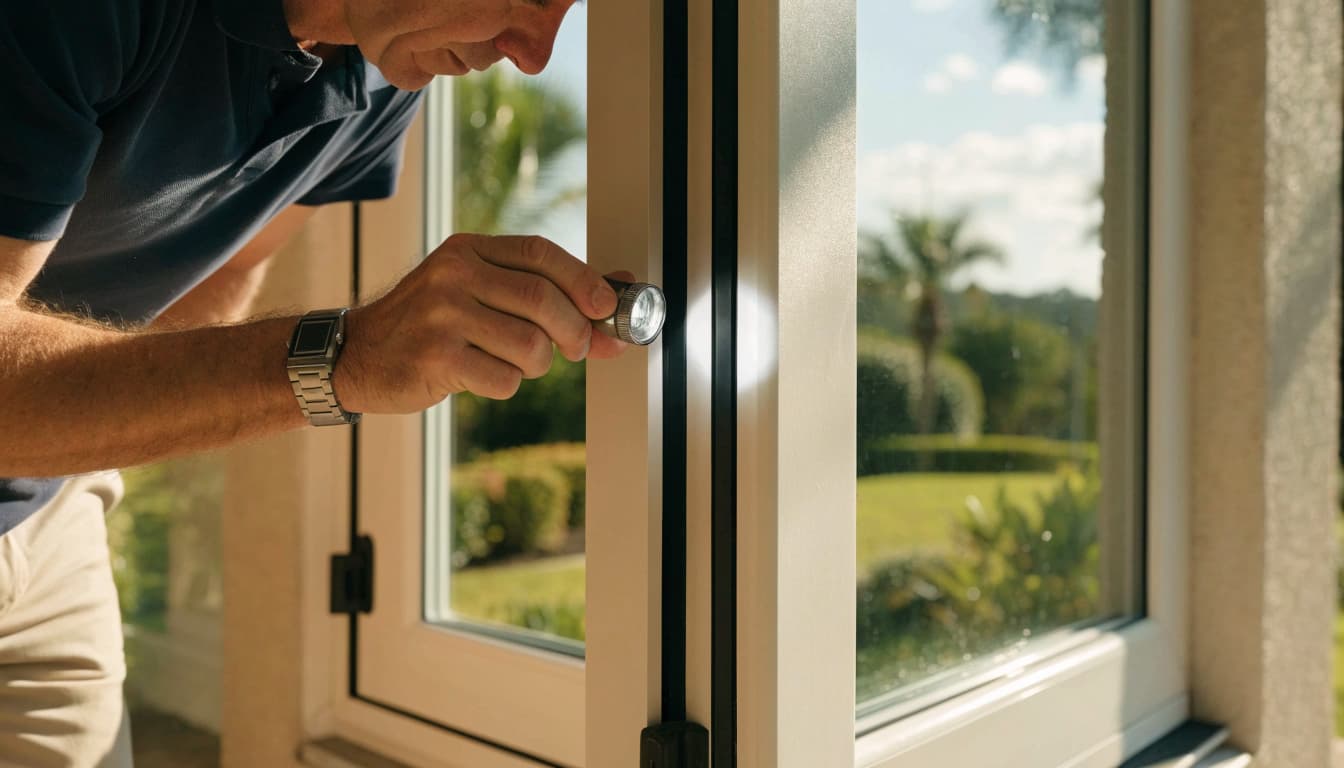
Examine the Panel-to-Frame Connections
Depending on the design, the fixed panel may use retaining brackets, clips, screws, or other model-specific components. Inspect only what you can see without dismantling anything.
Look for visibly missing fasteners, raised screw heads, damaged brackets, or gaps around accessible retainers. Photograph them before cleaning nearby debris.
Then examine the stationary panel's vertical edge beside the sliding panel. This meeting area should remain aligned with the rest of the assembly. Record visible separation or distorted metal, but don't pry the edge into place.
A visible gap is an observation, not a diagnosis. The correct repair depends on the original retention system and the condition of the surrounding frame.
Check the Outer Frame Against the Opening
Next, follow the outer frame where it meets the wall and interior trim. Look for separated joints, stained trim, displaced sealant, or a gap that has changed since you last noticed it.
Observe the header across the top and both vertical jambs. A bowed header or twisted jamb deserves professional assessment.
Don't tighten accessible frame screws simply because the assembly appears loose. Fasteners, supports, and installation details work together. An inspection should document their condition without changing it.
Check the Glass, Seals, and Lower Sill
The glass, panel frame, and sill are separate parts of the assembly. Inspect each rather than assuming every rattle has the same cause.
Look for Glass and Glazing Problems
Examine the pane from a safe distance. Cracks, chipped edges, bulging glass, or loose fragments require prompt professional attention. Never press on a damaged area to judge its strength.
Also inspect visible glazing stops or beads, the strips that retain the glass in its panel frame. Record any displacement or separation without pulling them away.
Fog or moisture trapped between panes suggests a failed seal in an insulated glass unit. That differs from a loose panel. Fogging alone doesn't show that the panel's anchors have failed, although a glazier should assess the glass unit.
Inspect the Sill and Drainage Openings
Follow the sill along its full length, including corners beneath the stationary panel. Look for cracks, deep corrosion, loose sections, staining, or separation from adjacent flooring.
Vacuum accessible grit, then use a soft brush and damp cloth where the manufacturer's care instructions permit. Dry the area afterward. Avoid packing grease into the channels because it holds dirt.
Keep existing drainage openings clear without enlarging them or drilling new holes. Persistent water, soft flooring, or a separating sill needs further investigation. These patio door threshold warning signs help identify conditions that deserve attention beyond routine cleaning.
Document the Findings and Choose the Right Help
Clear photographs make a service call more useful. They also reduce the chance of ordering hardware for the wrong part of the door.
Record What Moved and What You Saw
Take an overall picture of the doorway, followed by close-ups of suspicious joints, visible retainers, the sill, and any glass damage. Photograph an accessible manufacturer label without moving the panel.
Describe the original symptom precisely. Record whether it happened during opening, closing, wind, or ordinary contact with the handle. Note whether the glass moved inside its panel frame or the whole panel appeared to shift.
Don't repeat the movement for a video if doing so requires pushing, shaking, or forcing the assembly. Existing observations are enough to begin a conversation with a technician.
Know When Inspection Must End
Call a qualified sliding-door technician or glazier for cracked glass, a leaning panel, damaged retainers, severe corrosion, or a frame pulling away from the wall.
A soft sill, surrounding rot, or suspected damage to the rough opening may also require a contractor. These conditions involve the door's support, not just its operating hardware.
If repair requires removing a glass panel, leave that work to someone equipped to handle it. Large panels are heavy and awkward, and twisting can damage their corners. Review these patio door panel handling precautions to understand the risks before discussing removal.
Consider a Replacement Handle After Repairs
Once the fixed panel, frame, and glass are secure, evaluate everyday use. The sliding panel should travel without grinding, scraping, or needing a hard pull.
Then check the handle separately. A cracked pull, loose mounting hardware, or shallow grip can make an otherwise sound door uncomfortable to operate. Confirm that the latch meets its strike plate without lifting or forcing the panel.
A sliding glass door replacement handle makes sense when grip is the remaining problem. It won't repair stationary-panel retention, worn rollers, damaged glass, or a failing sill.
Luuv Handle advertises its retrofit handle as made in the USA, requiring no alteration to the door and no drilling. The brand states that it is a patented product until 2037; confirm current patent status and compatibility in manufacturer documentation before ordering.
Also check the existing hardware dimensions and review the Luuv Handle installation instructions. The retrofit fits over compatible existing hardware, so verify fit rather than assuming every sliding door accepts the same handle. A comfortable grip belongs on a door that is already secure and operating correctly.
Frequently Asked Questions
Should I Tighten the Fixed Panel's Screws Myself?
Don't tighten unidentified screws based only on appearance. First locate the door's model-specific instructions and establish what each fastener does. Some screws retain parts that shouldn't move during an inspection.
If a retainer is damaged, missing, or no longer holding the panel securely, stop using the door and arrange professional repair. Avoid substituting generic screws without confirming the correct specification.
Will Cleaning the Track Stop a Fixed Panel From Moving?
Cleaning removes debris and helps reveal damage, but it doesn't restore failed retention hardware or structural support. It may improve the sliding panel's travel, which is a separate issue.
If the stationary panel still appears displaced, don't keep opening the moving panel to test it. Have the fixed-panel connections, sill, and outer frame assessed before returning the door to normal use.
Keep the Panel Secure Before Improving the Grip
A useful inspection identifies where movement occurs without disturbing the parts that hold heavy glass in place. Document visible damage and leave uncertain fasteners alone.
Once the stationary panel and surrounding structure are secure, address sliding resistance and handle comfort separately. The right grip improves daily use after the door's safety and movement problems are resolved.