

Loose patio door anchors can affect how securely the frame sits, but the fasteners may be hidden and the frame design varies. You can look for visible warning signs without removing trim or putting pressure on the glass.
The key is to separate a possible frame problem from a sticking panel or uncomfortable handle. Start with what you can see, then get professional help if the frame appears to move, shift, or leak.
What patio door anchors do
Patio door anchors fasten the stationary door frame to the surrounding structure. They help keep the frame in position as the glass panel slides and as the door is opened and closed. The anchor points may not be visible, since some are concealed behind trim or other parts of the assembly.
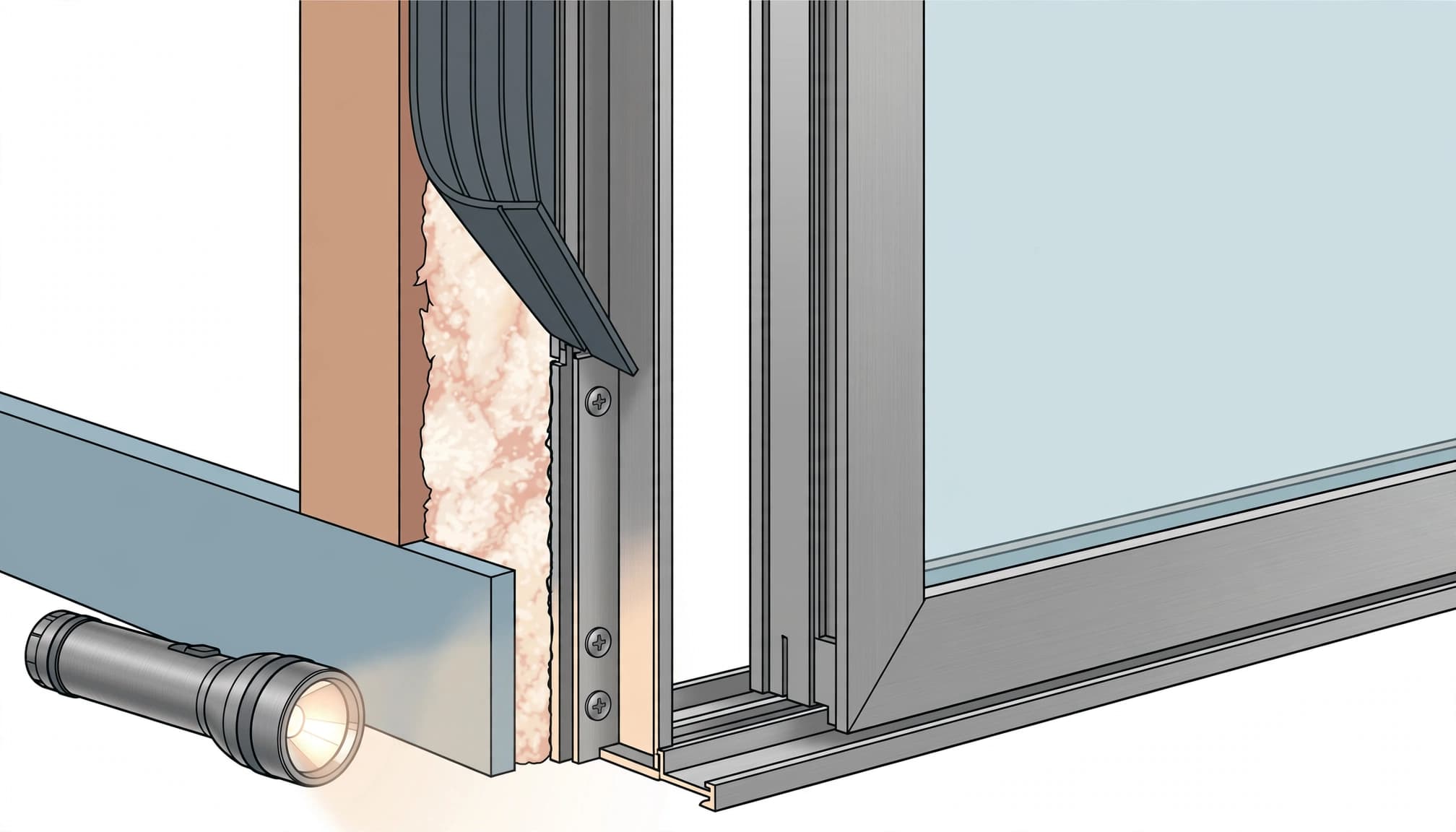
A loose handle screw is a different issue from a loose frame anchor. Handle hardware attaches to the door panel, while frame anchors secure the stationary frame. Confusing the two can send you toward the wrong repair.
A visual check can flag a concern, but it can't confirm whether a concealed fastener is loose. If you can't see an anchor, don't remove trim or weatherstripping to find one.
Start with a safe visual check
Keep the inspection limited to areas you can see without taking apart the door. If the glass panel looks unstable or the frame seems to shift, stop and contact a door repair professional.
Look for changes around the frame
Scan the visible frame and the surrounding wall for new gaps, separated joints, cracked caulk, or signs that the frame has shifted. A small cosmetic flaw alone doesn't prove an anchor is loose. A change that keeps widening, or appears alongside movement or water intrusion, deserves more attention.
Also look for fastener heads that appear raised or no longer sit as they did before. Don't assume every visible screw belongs to the frame. Some may secure trim or other hardware.
Avoid testing the frame with force
Don't push, pull, or shake the frame to see whether it moves. That can put unnecessary stress on the glass and won't reliably identify a loose fastener.
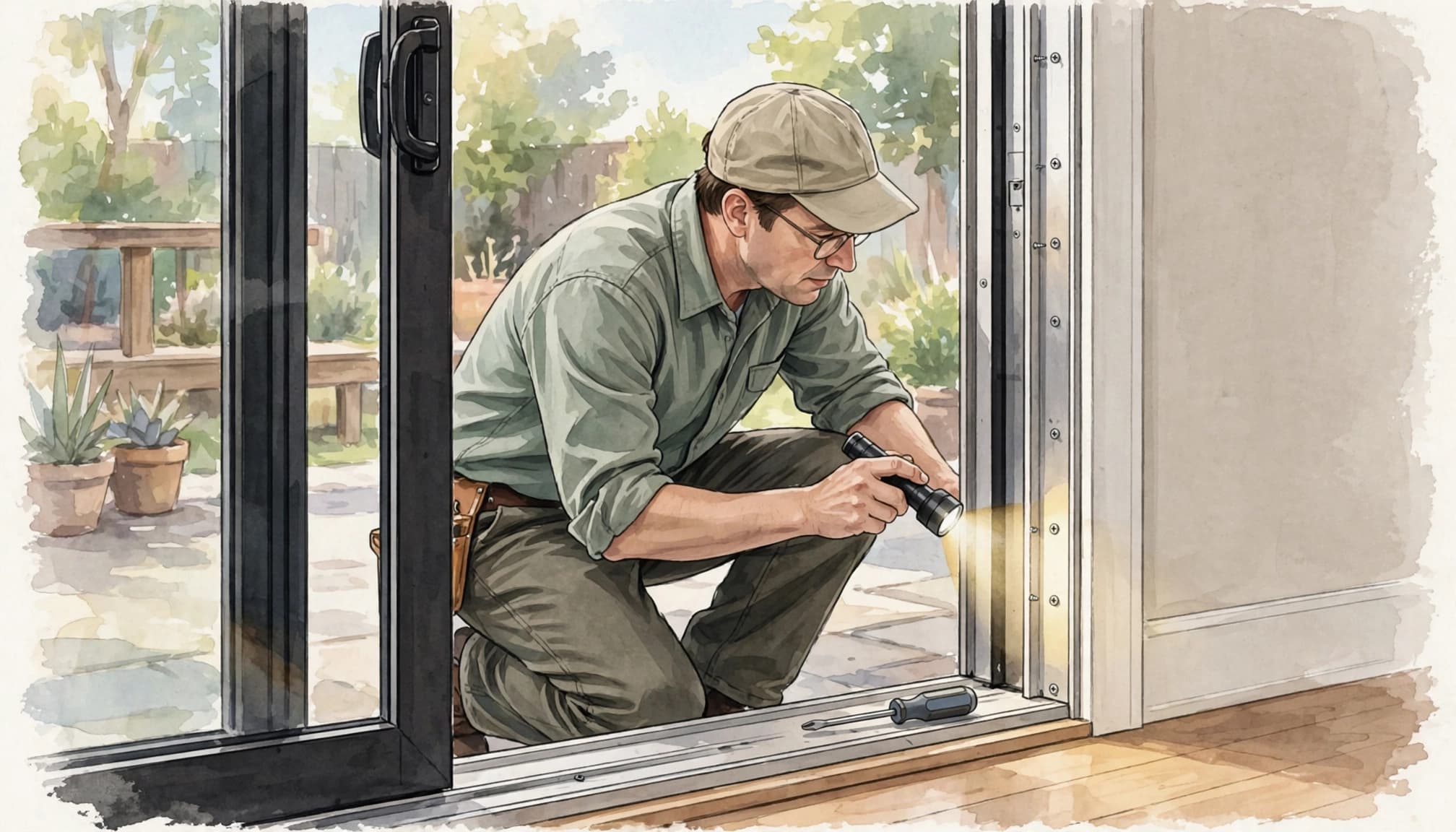
A flashlight can help you see visible surfaces more clearly. It won't reveal hidden anchors, and you don't need to loosen or remove anything to make a basic visual assessment.
Signs that may point to a frame problem
One symptom rarely identifies the cause on its own. Look at the overall pattern, especially when a visible change appears alongside trouble using the door.
A frame that seems to have shifted, a growing gap between the frame and wall, or recurring water around the frame can suggest a problem that needs professional assessment. So can a frame that looks bent or appears to move during ordinary use. Don't try to correct these conditions by tightening an unidentified fastener.
Water can also enter through failed caulk or other joints, and a door that resists movement may have a separate panel or track issue. That's why it helps to note what you can observe without forcing the door. A loose, bent, or leaking patio door frame should be assessed as a frame concern, not treated as a handle upgrade.
Separate frame symptoms from handle or panel problems
A patio door has several parts that can produce similar complaints. Identifying what's happening helps avoid changing one component when another needs attention.
Notice how the panel moves
If the panel drags, catches, or needs extra force, that doesn't confirm loose frame anchors. The track, rollers, panel alignment, or latch may be involved. Don't use more force to make the door move, and don't assume an easier-grip handle will fix resistance.
If the panel no longer closes in its usual position, note the change. A repair professional can assess whether the frame or another part is responsible. Our guide to common patio door repairs covers how frame concerns differ from handle and movement issues.
Compare the frame with the handle
A handle that feels loose, uncomfortable, or difficult to grip points to hardware on the moving panel, not automatically to the anchors securing the fixed frame. The handle screws and frame fasteners serve different purposes.
Avoid using the handle as a lever to test the frame. If the handle itself is loose, treat that as a separate hardware issue. Our article on tightening or replacing a sliding door handle explains the difference between a grip problem and a structural concern.
Don't tighten an unidentified fastener
A screw that looks loose may secure trim, handle hardware, or another component. Tightening the wrong fastener can damage its mounting point, distort a part, or leave the actual concern unresolved. The appearance of a screw head alone isn't enough to establish what it supports.
Avoid removing trim, drilling new holes, or applying force to a fastener when you don't know its purpose. Don't attempt to compensate for a shifting frame by tightening visible screws at random. The right repair depends on the door's construction and the condition of the frame.
If a fastener is clearly accessible but you aren't certain what it secures, leave it in place. A repair professional can identify the part and assess whether the frame needs attention.
When to call a door repair professional
Get help if the frame appears to move, has shifted, looks bent, or has a growing gap at the wall. Water that repeatedly appears around the frame also calls for an assessment, since the source may involve the frame or its joints.
Stop using the door if it seems unstable
If the glass panel looks out of position or the frame changes when the door operates normally, don't keep opening and closing it to test the condition. Avoid leaning on the door or trying to lift the panel. A professional can inspect the frame and determine the next step without relying on guesswork.
Describe what you observed
When arranging repair, explain what changed and when you noticed it. Mention visible gaps, water, a shifted appearance, or changes in how the door closes. Those observations help distinguish a frame concern from a track, roller, latch, or handle issue.
A loose, bent, or leaking frame merits professional attention. Don't treat a new handle as a fix for a structural or water problem.
When the handle is the real issue
If the frame looks stable and the panel operates normally, but the pull is awkward or hard to grip, a replacement handle may address the problem. A Sliding Glass Door Replacement Handle can improve the handhold without repairing or changing the frame anchors.
Luuv Handle's retrofit product fits compatible sliders with a 7.25-inch by 1-inch door plate. It fits over existing hardware, leaving the original lock and latch in place. The product is made in the USA, patented through 2037, and requires no alteration to the door and no drilling. That makes it a handle option, not a substitute for frame repair.
Measure the existing plate before choosing a retrofit. Compatibility matters, and the product isn't a universal fit. If you've found signs of a loose or damaged frame, address that concern separately before focusing on grip.
Key Takeaways
- Patio door anchors secure the stationary frame, while handle screws attach to the moving panel.
- Look for visible changes such as gaps, shifting, or recurring water, but don't force the frame to test it.
- A sticking panel or loose handle doesn't prove the frame anchors are loose.
- Leave unidentified fasteners in place and call a professional when the frame appears unstable, bent, or leaky.
- Consider a retrofit handle only when the frame is sound and the problem is grip.
Frequently Asked Questions
Can I tell whether a hidden patio door anchor is loose?
A visual check can reveal warning signs, but it can't confirm the condition of an anchor concealed behind trim or within the frame. A professional inspection is needed to assess hidden fasteners.
Should I tighten a visible screw on the door frame?
Not unless you know what the screw secures and have the right repair instructions. A visible screw may attach trim or hardware rather than anchor the frame. Don't tighten unidentified fasteners.
Does a difficult-to-slide door mean its frame anchors are loose?
No. Resistance can come from the track, rollers, alignment, or latch. A difficult slide by itself doesn't identify a frame-anchor problem.
Will a retrofit handle fix a loose frame?
No. A retrofit handle improves grip on compatible existing hardware. It doesn't secure the frame, correct movement problems, or repair a leak.
Check the Frame Before Choosing a Fix
Patio door anchors aren't always visible, so a careful visual check can identify warning signs but may not confirm their cause. Look for changes without forcing the frame or removing parts.
When the frame appears shifted, unstable, bent, or leaky, get professional help. When the door works well and only the grip feels wrong, choose a compatible handle solution for that separate problem.