

A wet hand can turn a familiar patio door into an awkward one, especially when the handle is a small, shallow recess. A patio door handle with more depth gives your fingers room to wrap around it, so you can guide a properly working door without pinching a narrow edge.
If the door slides smoothly but feels uncomfortable to open after swimming, yard work, or washing up, the handle may be the issue. Here's how to tell whether a different grip could help and what to look for in a replacement.
Why wet hands make a patio door handle harder to use
Water can make a smooth, shallow pull feel less secure in your hand. Many factory-installed pulls sit almost flush with the door, leaving little space for your fingers. You may have to hook your fingertips into a narrow recess or press your thumb against a thin edge.
That grip can be uncomfortable even when your hands are dry. When they're damp, you may find yourself pinching harder or reaching for the door more than once. A larger handle provides more surface to hold, so you can move the panel with a steadier hand.
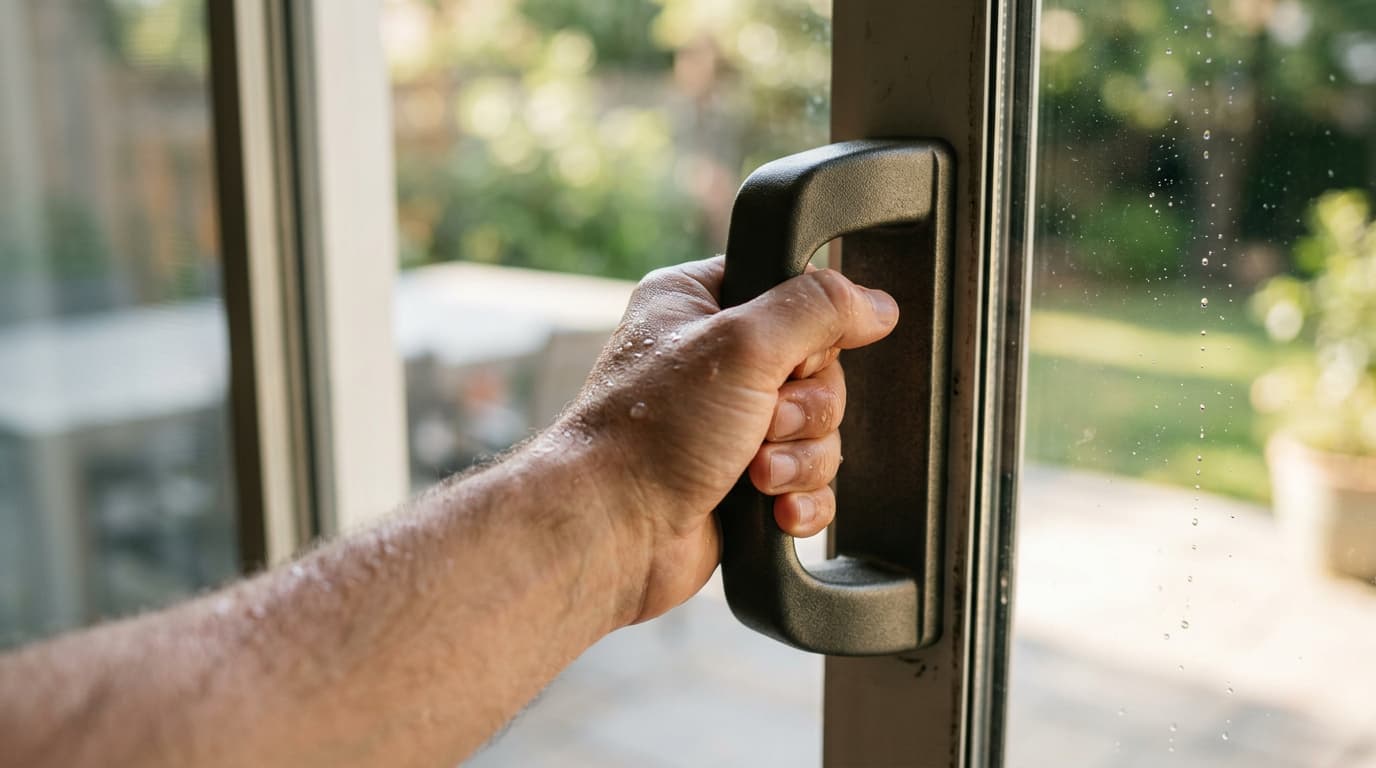
Shallow pulls leave little room to grasp
A recessed finger pull is designed to fit close to the door, but that compact shape can be hard to hold comfortably. If your fingertips barely fit inside, you may end up pulling with the tips rather than using a relaxed, fuller grip.
That difference matters when you open the door often or have limited hand strength. A deeper handle lets you hold it without squeezing a slim lip. Our article on making sliding doors easier to open covers how handle shape affects everyday use.
Wet hands aren't the only factor
The same handle may feel easy to use in the morning and awkward after time outside. Damp skin, a narrow pull, and a heavy-feeling door can combine to make the grip less comfortable.
Still, don't assume the handle is the problem if the panel drags or catches. A handle upgrade can improve how you hold the door, but it can't correct a track or roller problem.
What makes a handle easier to hold
Look for a handle that gives your fingers room to curl around it instead of relying on a small indentation. A full-palm grasp can feel more secure than pinching a narrow metal lip, especially when your hands are damp or your fingers are sore.
The goal is a comfortable hold that lets you control the door without clenching. A broad, rounded grip is often easier to manage than a thin, sharp-edged pull.
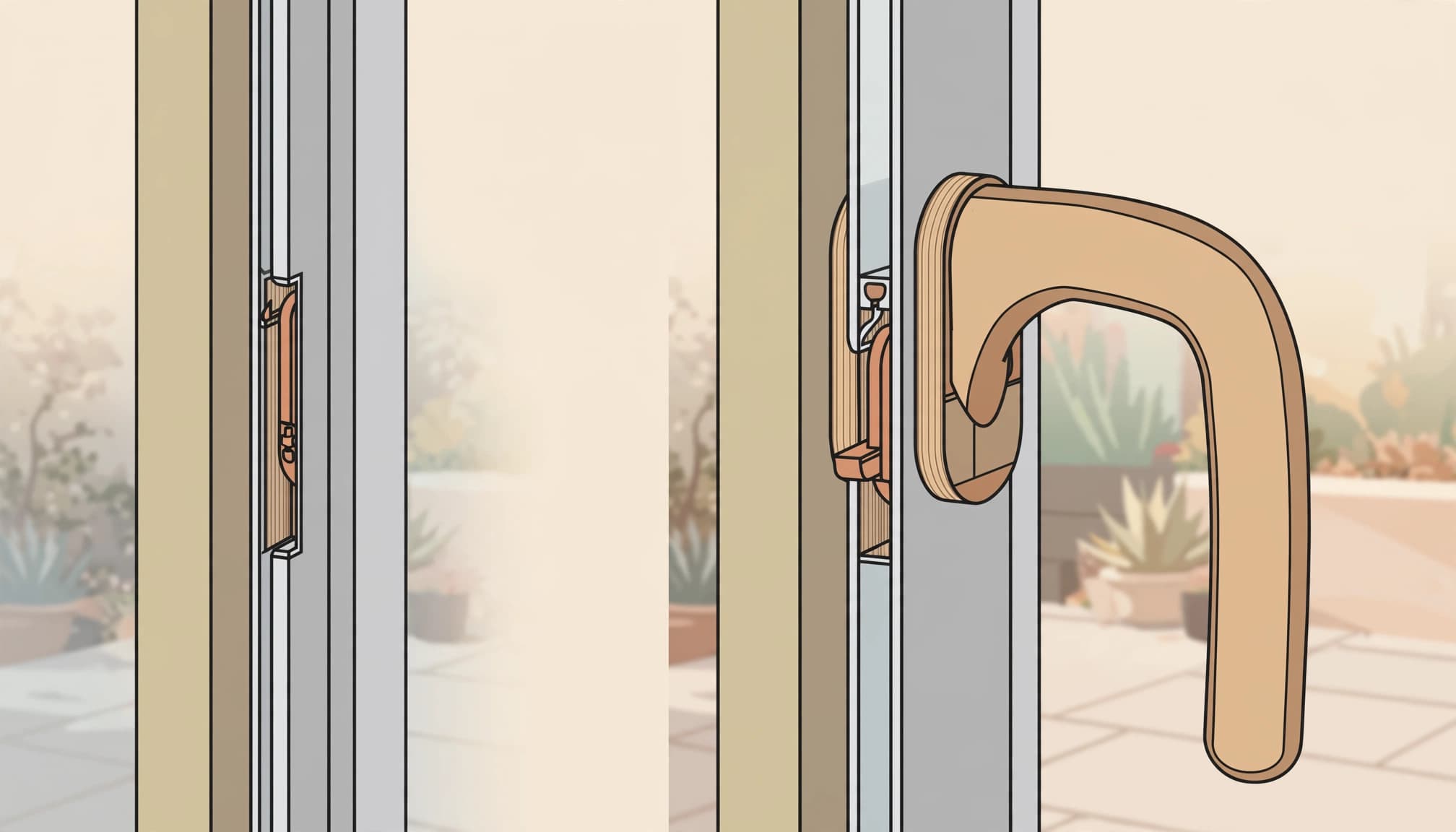
Choose depth and a natural hand position
A useful handle has enough clearance for your fingers and a shape that feels natural to hold. If you can wrap your hand around the grip without squeezing tightly, you're less dependent on fingertip strength.
Also consider who uses the door. A fuller grip may be more comfortable for older adults, children, or anyone with sore joints or limited hand strength. If more than one person uses the slider, choose a shape that works for different hand sizes and doesn't require a precise finger position.
Consider both sides of the door
If you regularly open the door from the patio, an easier interior grip won't solve the outside pull. Think about where you notice the problem most and whether both sides need a more substantial handhold.
An inside-and-outside set can make sense when the door is used in both directions throughout the day. Finish matters for appearance, but grip and fit should come first. Our guide to larger retrofit handles for sliding glass doors discusses choosing a handle around how the door feels in use.
First separate a grip problem from a door problem
Before replacing a handle, open and close the door slowly. Notice whether the panel moves evenly or whether it sticks, scrapes, or needs lifting. If it rolls smoothly but feels awkward in your hand, the pull may be the part worth changing.
A stiff door can make any handle feel harder to use. Sand, debris, or worn rollers may affect how the panel moves, and a replacement grip won't repair those parts.
Signs the handle may be the issue
The door moves smoothly, closes in the frame, and locks as expected, but the pull is shallow, loose, cracked, or uncomfortable. Those details point toward a usability issue with the handle rather than a problem with the panel's movement.
If the handle itself feels loose, be careful not to force or twist the plate. A bent or weakened mounting plate can complicate a retrofit. The handle should sit securely on sound, compatible hardware.
Signs the door needs a different repair
Grinding, dragging, scraping, or a panel that jumps in the track suggests a mechanical issue. If you need to lift the panel or slam it to close, a larger grip won't make the door operate correctly.
Address the movement problem separately. A comfortable handle helps you control a working slider, but it doesn't replace track, roller, lock, or latch repairs.
Check the existing plate before choosing a replacement
Handle appearance alone won't tell you whether a retrofit will fit. Measure the existing mounting plate and compare it with the replacement's requirements before ordering.
Our Luuv Handle retrofit is made for sliding doors with a 7.25-inch by 1-inch plate. The measurement refers to the plate, not the entire recessed pull or the opening around it. You can check compatibility with your existing door plate before choosing a handle.
Make sure the existing hardware is sound
A retrofit handle fits over compatible hardware, so the existing plate needs to be in usable condition. If it's bent or damaged, don't force a new handle into place. The replacement should sit securely rather than rock or leave an uneven gap.
Check the space around the handle, too. A screen door, nearby trim, or other hardware may affect how comfortably you can grasp it. Matching the plate and allowing for clearance help you choose a handle that fits the actual door.
Know what the retrofit changes
A Sliding Glass Door Replacement Handle can improve the grip without replacing the door's lock and latch. Our retrofit fits over compatible existing hardware, leaving those parts in place.
The Luuv Handle is made in the USA from steel and oak, and it's a patented product through 2037. It requires no alteration to the door and no drilling. That makes it an option when the door works properly but its original pull is hard to hold.
How a no-drill retrofit handle fits
On a compatible door, the retrofit uses the existing plate and fasteners rather than new holes. You don't need to cut into the frame or remove the glass panel. Installation takes about 30 seconds on a compatible door, though access and the condition of the existing hardware can affect the time.
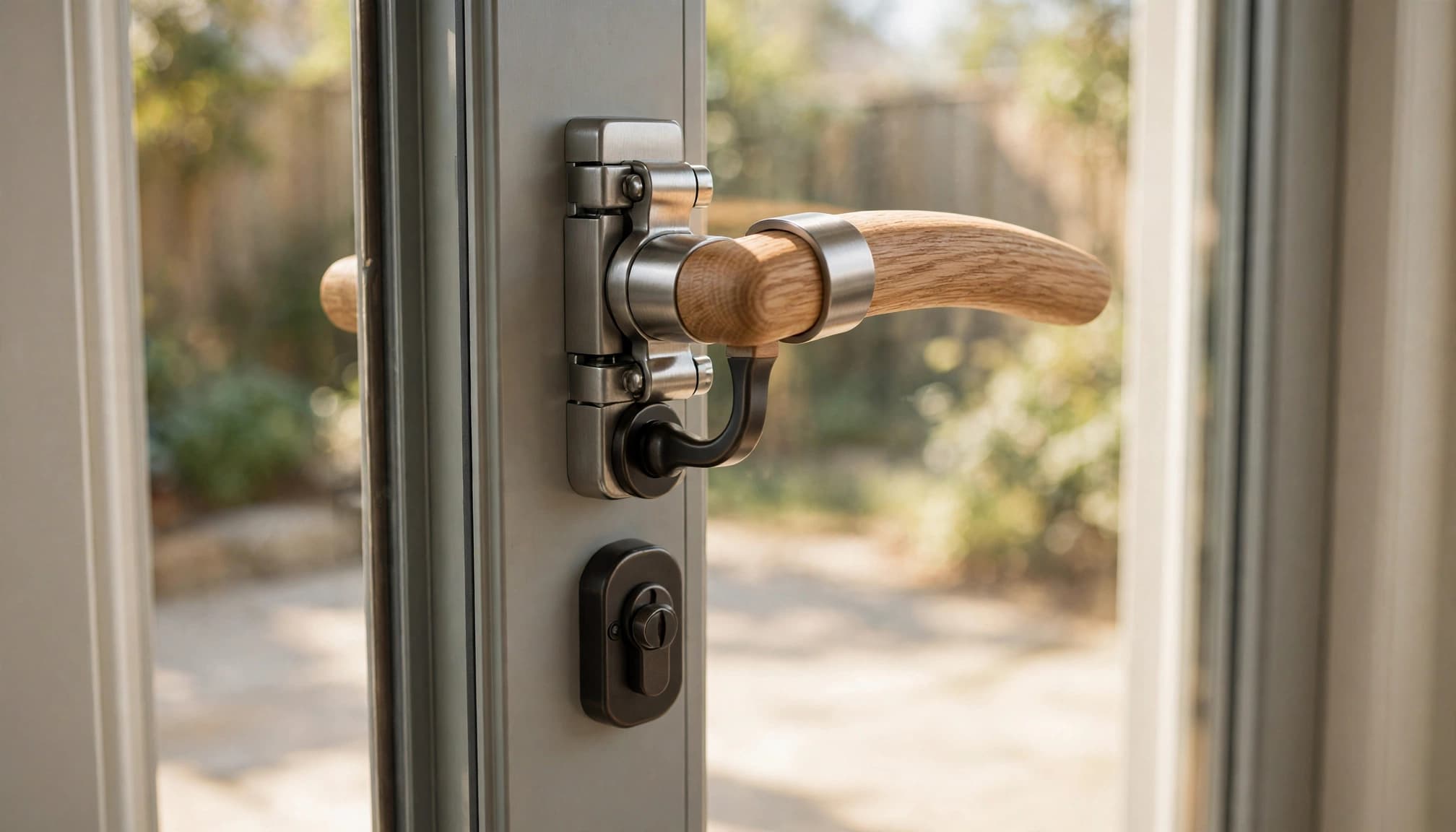
Follow the fit sequence carefully
The basic installation starts from inside the door. Loosen the existing screws, move outside, and position the retrofit handle over the existing plate. Seat the handle in place, then return inside and tighten the screws.
Use a careful touch. Don't bend the plate or overtighten the fasteners. The handle should sit firmly and feel secure, without shifting when you hold it. Our instructions for installing a retrofit sliding door handle explain the fitting sequence.
Test the handle and door afterward
With the door open, hold the new grip and make sure it feels secure. Then slide the panel slowly and check that the handle doesn't interfere with the frame or latch.
Close the door gently and confirm the lock and latch still work as expected. If the door binds or the handle rocks, stop and reassess the fit rather than forcing it. You can also check the fit of a retrofit door handle if it doesn't sit flat.
Choose a handle that suits your door and household
Once you've confirmed the plate size and condition, choose the handle and coverage that fit how you use the slider. Luuv Handle offers white and bronze exterior handles for $30 each, interior handles for $22, and inside-and-outside bundles for $50. The site advertises 10% off orders of five or more.
An interior handle may be enough if that's where the awkward pull is. If you use the patio entrance from both sides, a set gives you a larger grip indoors and out. White and bronze finishes let you coordinate with the existing door and trim.
Think about material and feel
Our retrofit handles use steel and oak. The oak provides a substantial surface to hold, while steel forms the handle's structure. The product is made in the USA and includes a 30-day guarantee.
A handle should feel comfortable in your hand, not simply look different on the door. If possible, consider the grip depth and how your fingers will rest before choosing the finish. A better hold is the point of the change.
Key takeaways
- Damp hands can make a shallow, recessed pull harder to hold comfortably.
- A deeper grip that allows a relaxed, fuller handhold may improve control.
- If the door drags, grinds, or needs lifting, address its movement separately.
- Luuv Handle fits compatible doors with a 7.25-inch by 1-inch plate.
- The retrofit is made in the USA, patented through 2037, and requires no alteration to the door and no drilling.
Frequently asked questions
Can a replacement handle fix a patio door that sticks?
No. A replacement handle can make a working door easier to grip, but it won't repair a dirty track, worn roller, damaged lock, or misaligned panel. If the door sticks or scrapes, address that issue separately before expecting a new handle to solve the problem.
Will a Luuv Handle fit every sliding glass door?
No. It's designed for compatible doors with a 7.25-inch by 1-inch existing plate. Measure the plate and make sure the surrounding hardware is sound before choosing a retrofit.
Does installation require drilling or changing the lock?
No. Our retrofit fits over compatible existing hardware and requires no drilling or alteration to the door. The original lock and latch stay in place.
Is a more substantial handle useful if my hands are only sometimes wet?
It can be. A handle with more depth may also feel easier to hold when your hands are dry, especially if the factory pull is shallow or uncomfortable. Choose based on the grip you need during everyday use.
A better grip starts with the right diagnosis
If the panel moves smoothly but the shallow pull becomes awkward with damp hands, a larger, easier-to-hold handle may address the problem. First make sure the existing plate is compatible and in sound condition.
A no-drill retrofit can give you more room to grasp the door while keeping its original lock and latch. That's a practical upgrade for a slider that works well but doesn't feel good in your hand.