

A two-panel patio door suits a simple sliding arrangement, while a three-panel design offers another way to divide the glass and moving panels. The right choice depends on your available opening and how you want to use it.
The number of patio door panels doesn't tell you how much space you'll have to walk through. The sliding configuration matters too, as does the placement of the handle and screen. Start by looking at how each design works.
How Two-Panel and Three-Panel Patio Doors Differ
Sliding patio doors have glass panels held within a frame. Some panels stay in place, while others move along a track. The arrangement depends on the door design.
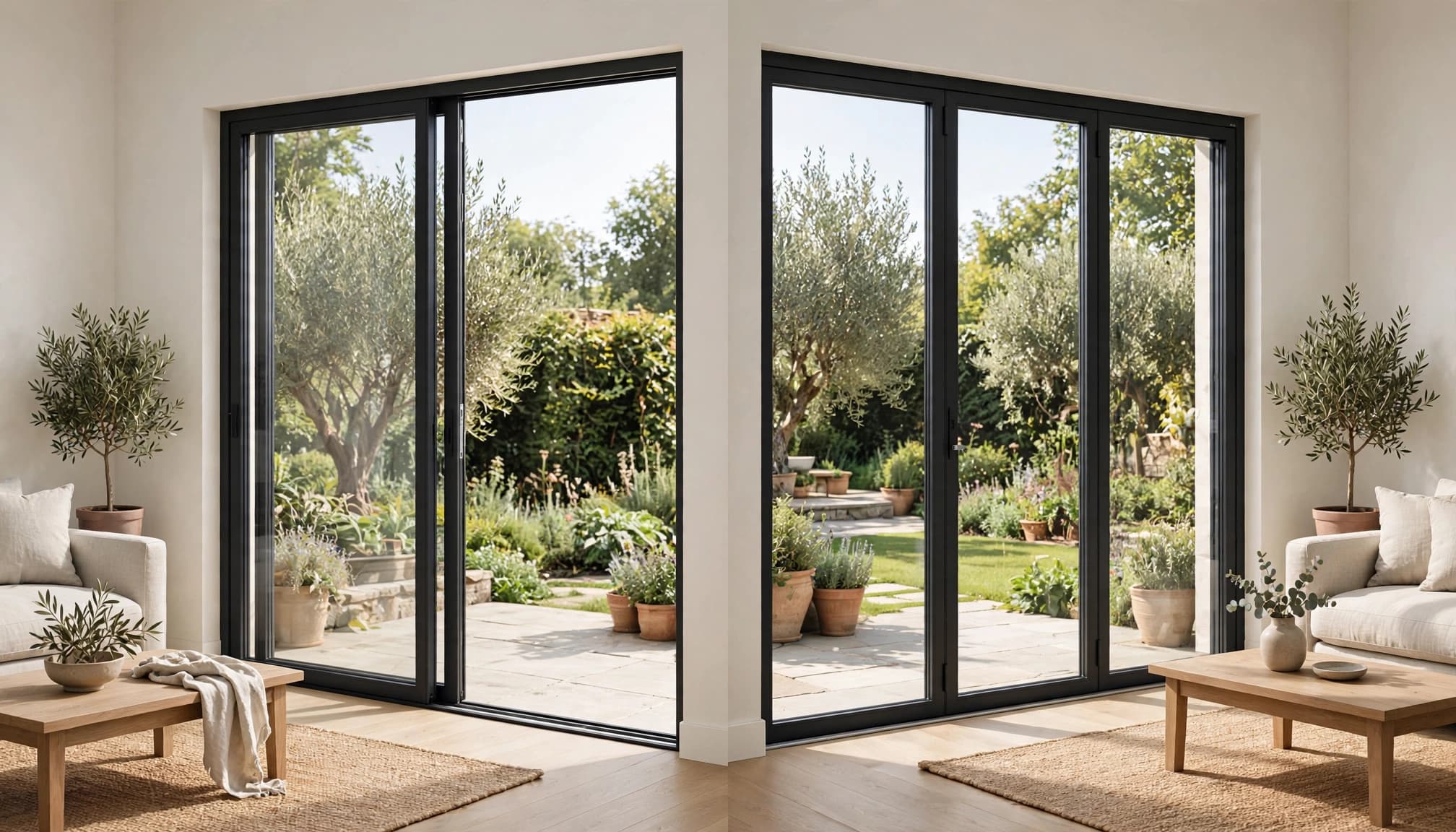
Two-Panel Doors
A common two-panel slider has one stationary panel and one that slides past it. The moving panel carries the handle and latch, so you'll enter and exit on that side.
Some designs allow a different operating arrangement. The useful detail is the location of the moving panel: it determines where you reach for the handle and where traffic passes through.
A two-panel layout is a practical starting point when one sliding panel provides the access you need. It also gives you fewer vertical divisions across the glass than a three-panel design of the same overall width.
Three-Panel Doors
A three-panel door divides the frame into three sections. Depending on the design, one panel may move while the others remain fixed, or more than one panel may slide.
That distinction matters because three panels don't automatically give you three usable doorways. Some of the glass may stay in place, and moving panels may overlap other panels when open. Look at the operation of the specific layout, not the panel count alone.
Measure the Opening and the Walking Space
The overall frame size and the space you can walk through are different measurements. The first describes the door assembly. The second describes the clear passage when the door is open.
Frame Size Comes First
For an existing door, measure the visible frame's width and height in more than one place. Keep those measurements separate from the dimensions of the surrounding wall or trim.
The existing frame measurement gives you a useful starting point for comparing designs. It also helps you describe the project accurately if you're getting a replacement. Avoid assuming that the visible frame and the space behind the trim are identical.
If your plans involve changing the size of the wall opening, work with a qualified installer. That is a separate project from adding a handle to an existing door.
Clear Passage Is a Separate Detail
Think about what regularly passes through the door. A person carrying a tray may need less room than someone using a walker or moving a patio chair.
The placement of fixed panels, overlapping glass, handles, and the screen can all affect usable passage. A drawing of the door in its open position makes the arrangement easier to understand than a closed-door photo alone.
Choose Where You Want to Enter and Exit
The moving panel determines the path between your room and patio. That path should feel natural on both sides of the glass, not only when you stand inside.
Follow Your Everyday Route
Start with the place people approach the door most often. If the kitchen is on one side of the opening, a moving panel near that route may be convenient. On the patio, consider where the same exit leads: a clear walkway is easier to use than a route blocked by a table or planter.
Also consider the direction of travel. A panel that slides comfortably from inside should still leave you with an accessible grip when you're returning outdoors.
Keep Furniture Clear of the Handle
A sliding door doesn't need the same floor space as a swinging door, but you still need room to reach it. A sofa arm close to the handle can make an otherwise convenient layout awkward.
Leave enough space to stand beside the moving panel and operate the latch. Outside, account for chairs, railings, and other objects near the doorway. The best position is the one you can use without twisting around furniture every time you go outside.
Consider the View When the Door Is Closed
Patio doors spend plenty of time closed, so their appearance matters as much as their open position. The panel layout determines where vertical frame sections cross your view.
A two-panel door has a central division between its glass sections in a typical arrangement. A three-panel door adds another division. The proportions and frame design affect how noticeable those lines are.
If you have a favorite view of the yard or lanai, consider where those divisions fall when you're seated as well as when you're standing. A frame member that lines up with a garden post may be less distracting than one that crosses the part of the view you use most.
Window coverings deserve a place in the plan too. Curtains or blinds need enough room to move without blocking the handle or latch. If you use a retrofit grip, allow space around it so the covering can hang and operate normally.
Account for the Screen and Threshold
The glass door is only part of the route outside. A sliding screen and the threshold also affect how the opening feels in daily use.
Screen Placement
A screen can make an open patio door more useful, but its position depends on the door system. Consider where it travels and which side of the doorway it covers when closed.
If you're adding a larger handle to an existing slider, leave enough clearance for the screen to pass. A grip that feels comfortable but rubs against the screen can make both parts harder to use.
Threshold Condition
Look at the surface you'll step over as you move between rooms. Dirt, damage, or an uneven threshold can make a passage less comfortable, regardless of how many glass panels the door has.
On an existing door, a worn threshold deserves its own assessment. Our guide to patio door threshold damage covers signs to look for and repair options. A handle upgrade won't repair a damaged sill or threshold.
Decide Whether You Need a New Door
A two-panel versus three-panel comparison is useful when you're choosing a door. If you already have a slider, though, start by identifying what you want to change.
A Layout Problem
A new configuration may be worth considering if the moving panel is in an inconvenient position or the existing arrangement doesn't suit how you use the room. Changing the handle won't move the doorway to the other side of the frame.
Likewise, adding a grip won't turn a fixed panel into a sliding one. Those decisions belong to the door design itself.
A Grip or Movement Problem
If the layout works but the handle feels shallow or awkward, you may only need a better handhold. Test the existing door through its normal travel and operate the latch. A smooth-moving door with a sound lock gives you a good starting point for a grip upgrade.
A panel that drags, grinds, jumps, or needs lifting may have a separate track or roller problem. Our sliding door roller guide explains how cleaning and lubrication fit into that assessment. Avoid forcing a heavy panel or attempting to remove glass without proper support.
Choose a Handle for the Moving Panel
Your door may have two panels or three, but the handle must fit the hardware on the panel you use. Panel count alone doesn't establish handle compatibility.
Match the Existing Plate
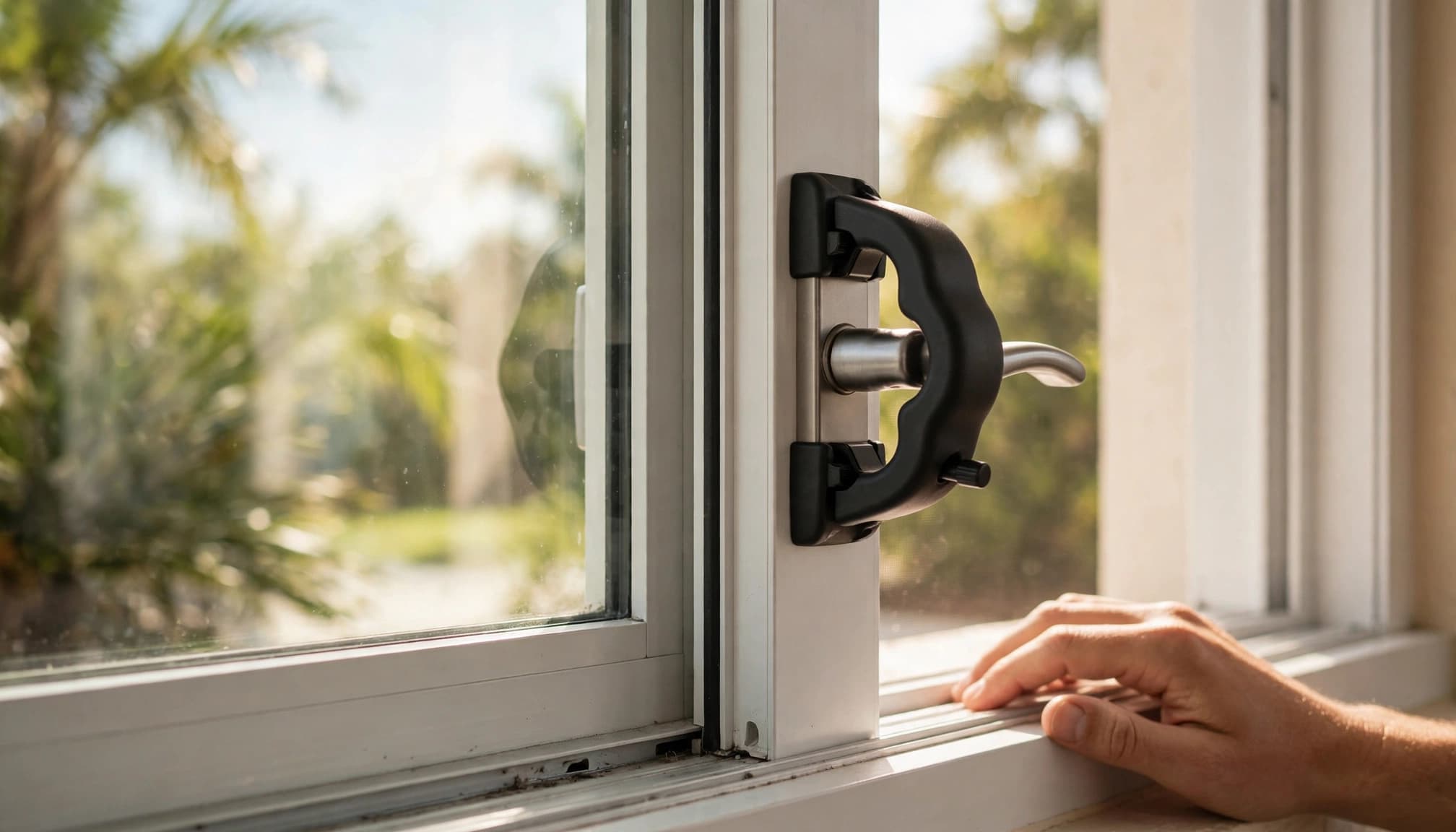
Our sliding glass door replacement handle is a retrofit grip designed for compatible sliders with a 7.25-inch by 1-inch door plate. Measure the outside dimensions of your plate and consider the handle's orientation and screen clearance.
Luuv Handle fits over compatible existing hardware. The original handle, lock, and latch remain in place. Our guide to sliding patio door parts explains how the handle relates to the rest of the assembly.
A larger grip can make a working panel easier to control. It won't replace a failed lock or correct a damaged track, so those issues need a separate repair.
Pick the Side and Finish
We offer interior and exterior handles in white and bronze. An interior grip can help when the pull is uncomfortable as you leave the room. An exterior grip helps when you're returning from the patio.
If both sides need a better handhold, an inside-and-outside set gives you matching grips. For help choosing between the finishes, see our guide to white and bronze patio hardware.
Install a Compatible Retrofit Without Drilling
A handle upgrade doesn't require a new panel. On a compatible door, Luuv Handle installs over the existing hardware with no alteration to the door and no drilling.
Position the Grip
Loosen the existing screws from inside the door. Then, from outside, slide the bottom of the retrofit handle over the plate and set the top cap in place. Pull the handle down until it seats, then return inside and tighten the screws.
Installation takes about 30 seconds on a compatible door. Take the time you need to seat the grip properly, and avoid overtightening the screws or bending a brittle plate.
Test the Door and Latch
Start with the door open and move the panel gently using the new grip. The handle should feel secure rather than rocking or shifting.
Then close the door slowly and operate the original latch. The handle should clear the frame and screen without rubbing, and the latch should engage without forcing the panel. If the door still drags or stops short, the track or rollers may need attention.
Choose the Layout That Works for You
The right patio door panels give you a comfortable route outside and a view you enjoy when the glass is closed. Compare the moving-panel arrangement with your room layout before settling on a design.
If your existing door already moves and locks well, focus on the part that feels awkward. A compatible grip can make everyday use more comfortable without changing the door.