

Sliding door childproofing works best when you pair a working latch with a child-resistant safety measure that adults can operate quickly. The goal is to limit a child's access to the patio without making the door difficult to use or blocking an emergency exit.
A comfortable handle can help adults control the door, but it doesn't replace a lock. Start by looking at how your household uses the door and where a child might reach it.
Start With Your Family's Access Needs
A patio slider may be the route to a backyard, a pool area, or a balcony. It may also be an important exit during a fire. That makes adult access part of the safety plan.
Choose a setup that adults can operate without hunting for a key or moving heavy furniture. Consider anyone who uses a wheelchair, has limited hand strength, or may struggle to reach an additional latch. A device that one adult can release easily may be difficult for someone else.
Children's abilities change, too. A toddler who can't reach the door handle today may use a nearby chair to reach it later. Keep furniture and other climbable objects away from the door, and revisit your setup as your child grows.
No lock or alarm replaces supervision. This matters especially when the patio leads to a pool, stairs, or another hazard.
Make Sure the Existing Door Lock Works
Before adding a child-safety device, make sure the door closes and latches properly. A second lock is less useful when the original panel doesn't sit securely in its frame.
Test the latch, not just the lever
Close the slider fully and engage its lock. Then try to move the panel without forcing it. The latch should catch the keeper in the frame and hold the door closed.
A thumbturn that moves doesn't necessarily mean the latch has engaged. The panel may appear closed even when the latch is missing the keeper. Our sliding door lock repair guide covers common reasons a lock won't catch.
Address a door that drags or sticks
If you have to lift, twist, or slam the panel to close it, look for debris in the track and signs of roller trouble. A door that doesn't line up properly may leave the latch out of position.
Clean accessible track surfaces and avoid forcing the panel. For damaged tracks, difficult roller adjustments, or a failed lock, a door repair professional can address the underlying problem. A new grip or child lock won't repair those parts.
Choose a Child-Resistant Secondary Lock
A secondary lock can add protection when a child learns to operate the door's original latch. The right choice depends on the door design, your child's reach, and the adults who need to use the opening.
Pick a lock adults can release
Look for a device designed for sliding patio doors that limits panel movement when engaged. Some designs use a separate latch or a mechanism positioned away from the main handle. Choose one your child can't readily operate and that adults can release without special tools.
Practice using the lock with everyone who needs access. It should be manageable in low light and easy enough to operate under stress. If an adult can't reach or use it comfortably, choose a different arrangement.
Consider installation and rental rules
Some secondary locks require fasteners, while others attach without drilling. Their suitability depends on the door and the device. Follow the lock maker's mounting directions, and don't drill into glass or an unfamiliar part of the frame.
Renters should also consider whether a device requires changes to the property. Our guide to sliding patio door locks and security bars compares common security options.
Use a Track Bar With an Emergency Plan
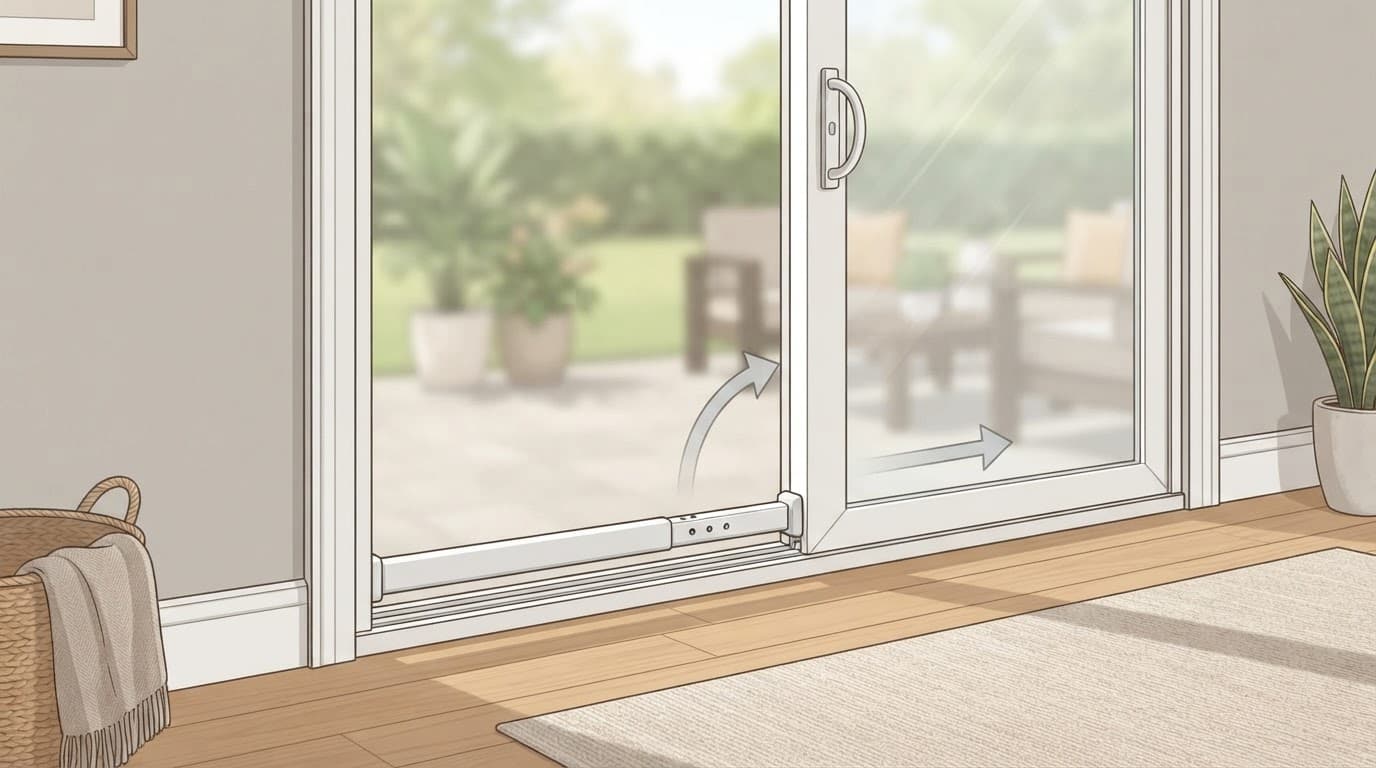
A removable bar or snug wood dowel in the inside track can prevent the sliding panel from moving. A dowel is a temporary measure, so make sure it fits the track and stays in position when the door is closed.
The tradeoff is access: an adult has to remove the restraint before opening the door. That may be awkward for someone who has difficulty bending or reaching the track. A child may also learn to lift a loose bar out of place.
Don't block a doorway someone may need for emergency escape. If the patio door is part of your household's escape plan, choose a safety device that permits the required exit access instead. Everyone responsible for the household should know how the door is secured and how to open it.
When the restraint is removed, place it somewhere adults can find it but children can't use it as a toy. Keep the surrounding floor clear, too, so the bar doesn't become a tripping hazard.
Make the Door Easier for Adults to Use
A door can have a working lock and still be uncomfortable to open or close. A shallow pull may be hard to grip, especially when you're carrying something or have limited hand strength.
Add grip without changing the latch
Our Luuv Handle is a retrofit option for compatible sliding doors. It fits over existing hardware and gives you a larger handhold while leaving the original lock and latch in place.
It's made in the USA and is a patented product through 2037. The retrofit requires no alteration to the door and no drilling. That makes it useful for people who want a more comfortable grip without changing the door itself.
A better grip can help you control a working panel as you close it. It doesn't make the door childproof or repair a failed latch. A larger handle may also be easier for a child to grab, so keep the safety lock and supervision plan separate.
Measure the plate before choosing a handle
Our retrofit is designed for compatible doors with a plate measuring 7.25 inches by 1 inch. Measure the existing plate rather than the overall pull. Also consider handle orientation and clearance beside a screen door.
Our sliding door handle fit guide explains the compatibility details. Interior handles are $22, exterior handles are $30, and inside-and-outside bundles are $50.
After installation, make sure the grip feels secure and the original lock operates freely. If the panel drags or the latch misses its keeper, address that problem separately.
Add an Alert for Doors Children May Reach
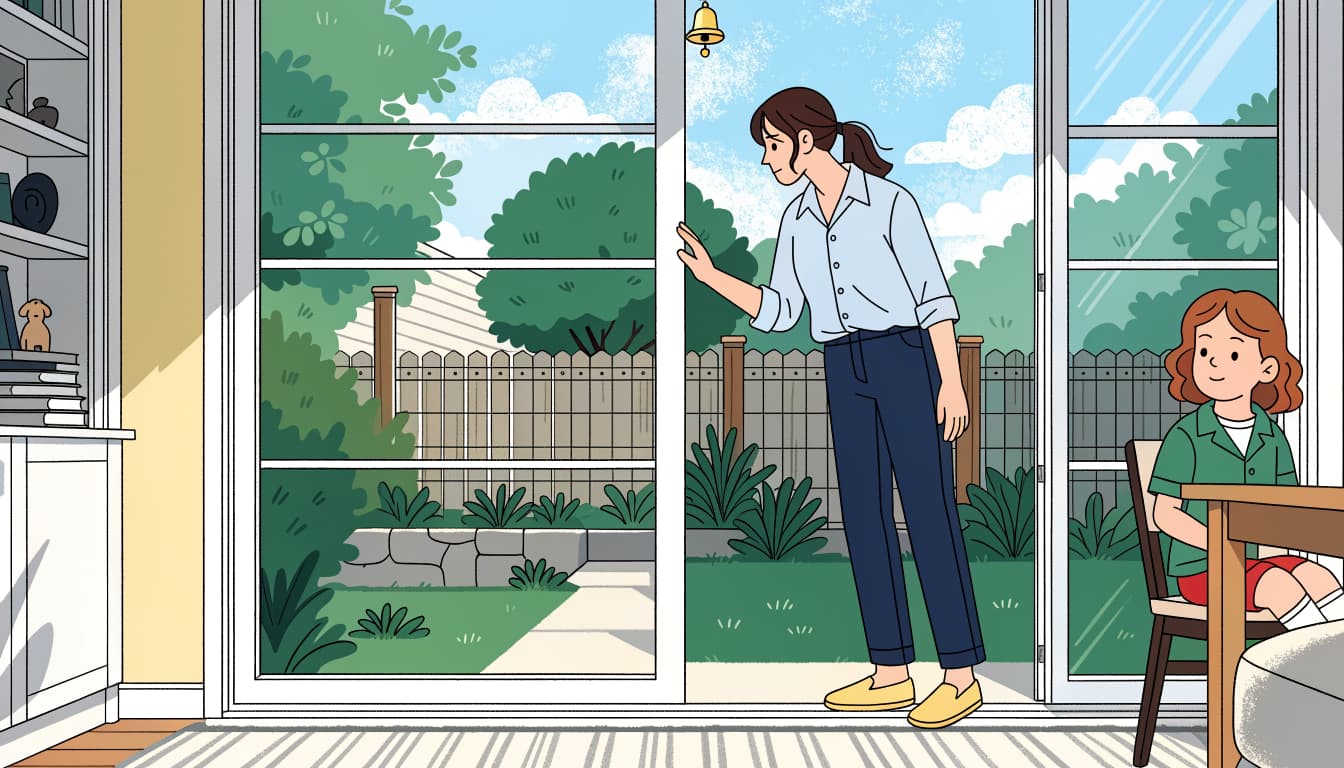
A door-opening alarm or chime can alert an adult when a patio door opens. It doesn't hold the panel closed, so use it alongside a physical safety measure rather than as the only protection.
Place the alert where adults can hear it during normal household activity. Follow the product's instructions for placement and testing, and maintain its batteries or power supply as directed.
Adults also need a practical way to use the door without ignoring the alert. Make sure caregivers know what the sound means and who is responsible for responding.
For a door leading to a pool, use appropriate pool barriers in addition to the door safety measures. An alarm is an added warning, not a substitute for supervision or a barrier.
Build a Routine That Works Every Day
The best device depends on someone using it consistently. Decide when the door should be secured, particularly after trips outside or when visitors leave.
Show babysitters, relatives, and other caregivers how the original latch and any secondary device work. Have them practice opening and closing the door, rather than relying on a quick verbal explanation. They should also know the household's emergency exit plan.
Keep the track clear so adults don't have to work around shoes, toys, or planters. If you use a removable restraint where appropriate, agree on where it belongs when the door is open.
Revisit the arrangement when your child's reach or problem-solving skills change. A lock that worked when your child was smaller may need a different position or a different device later.
Key Takeaways for Sliding Door Safety
The original latch should close securely before you add another safety measure. Choose a secondary lock that limits child access while remaining usable for the adults in your home.
Track restraints can stop a panel from sliding, but they also affect access. Never use one to block a door someone may need for emergency escape.
A retrofit handle addresses grip. A lock, barrier, and attentive supervision address child access.
Frequently Asked Questions
Can I childproof a sliding door without drilling?
Some child-safety devices attach without drilling, though their suitability depends on the door and the device. Our retrofit handle also requires no drilling, but it provides a better grip rather than a child-safety lock.
Is the door's original latch enough?
The original latch should work, but a child may eventually learn to operate it. A compatible secondary lock can add a separate obstacle while keeping the door usable for adults.
Will a track bar keep a child from opening the door?
A properly positioned bar or snug dowel can prevent the panel from sliding. However, a child may learn to remove a loose restraint. Adults must also be able to use required emergency exits without a bar blocking the door.
Does a replacement handle change the lock?
Our retrofit handle fits over compatible existing hardware, so the original lock and latch stay in place. It improves the handhold but doesn't fix a broken lock or replace a child-resistant safety device.
A Safer Door Can Still Be Easy to Use
Sliding door childproofing starts with a latch that works and a safety device your household can operate. Keep the route usable for adults, including during an emergency, and adjust the setup as your child grows.
If the door closes and locks properly but the grip feels awkward, a compatible retrofit handle can make daily use more comfortable. Treat that as a separate upgrade from your child-safety plan.