

When glass in a sliding door shatters, keep everyone away from the doorway and leave the panel where it is. Even a crack in tempered safety glass can weaken the pane, and moving the door may make the damage worse.
Your first priority is distance, not cleanup or repair. Once the area is secure, a glass or door professional can assess whether the pane, moving panel, or other parts need attention.
Key Takeaways
- Keep children, pets, and other people away from the damaged door and nearby floor.
- Don't slide, slam, or force the panel. Vibration can extend a crack without warning.
- Treat cracks that reach an edge, cross the pane, or sit near the handle or latch as especially concerning.
- Arrange a professional assessment before trying to clean up or operate the door.
- A replacement handle may improve everyday grip later, but it doesn't repair shattered glass.
What to Do in the First Few Minutes
Move people and pets away
Guide everyone away from the doorway, including anyone who might step close to look at the damage. Keep children and pets in another room or behind a closed door. Glass can be difficult to see, especially near the threshold or on a patio.
If someone has been cut, prioritize medical care. Don't let anyone walk through the affected area to retrieve belongings. Use another entrance if one is available.
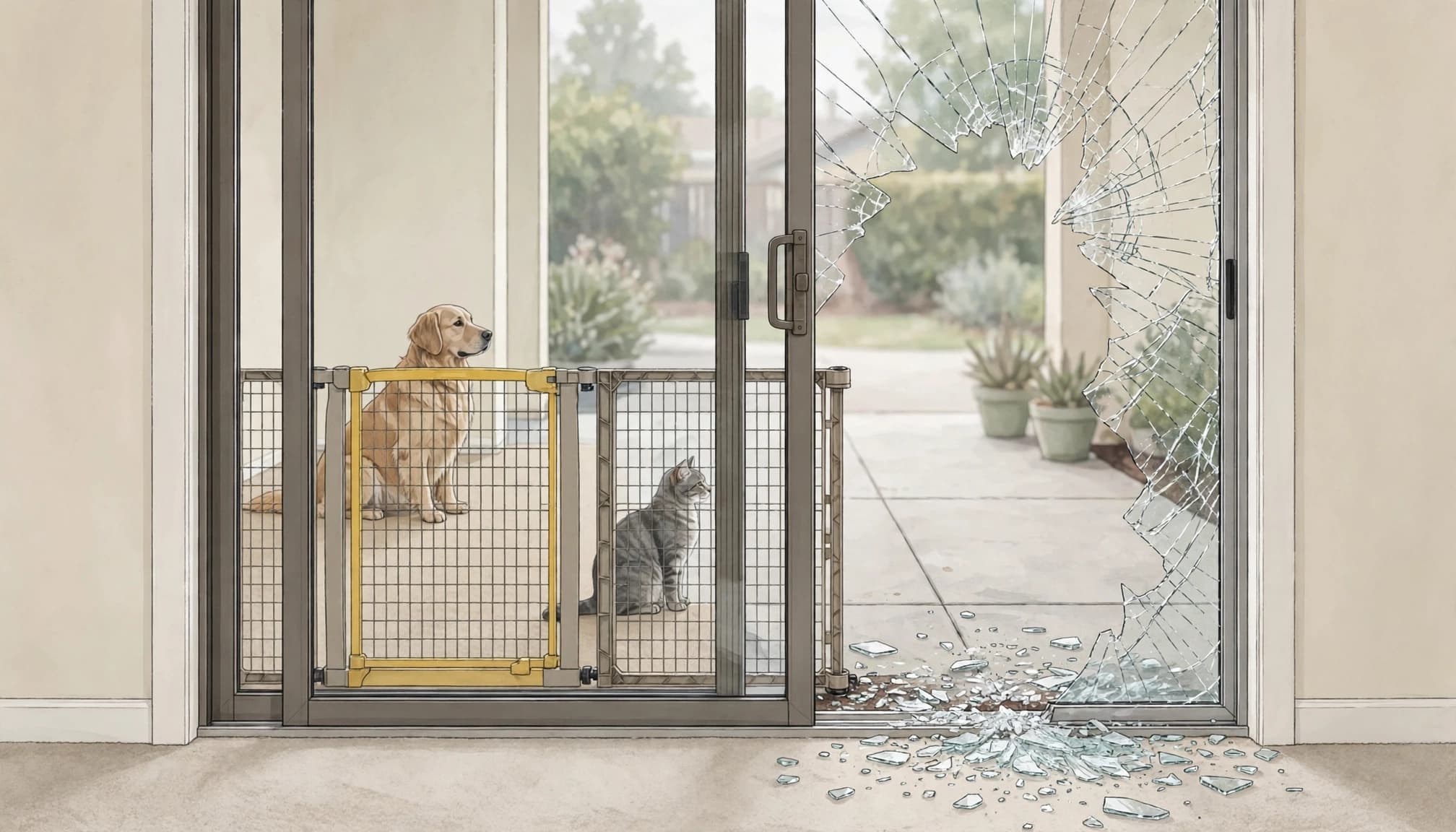
Leave the sliding panel alone
Don't open or close the damaged door, even if the panel still moves. Avoid slamming it, testing the lock repeatedly, or pushing on the frame. Movement can add vibration or pressure to the pane.
If the door is already open, don't try to slide it back into place. Keep the opening clear and contact a qualified glass or door professional for guidance on securing it safely.
Keep the Doorway Clear Until Help Arrives
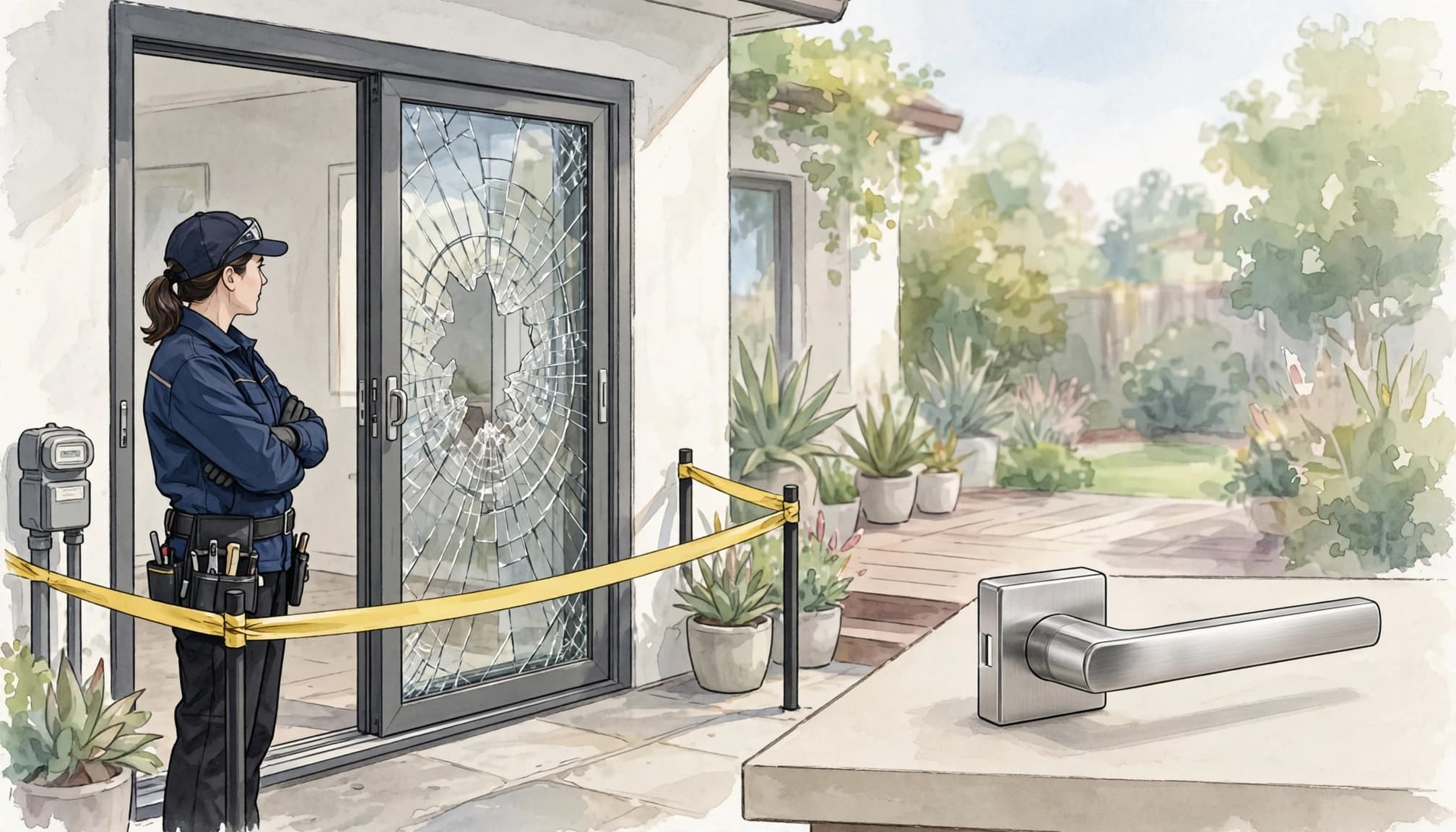
Block access to the affected room or patio entrance without going near the broken pane. A closed interior door can help limit foot traffic. If you use a barrier, place it well away from the glass and make sure it doesn't obstruct another safe exit.
Don't try to pick up pieces, sweep, vacuum, or remove glass from the frame. A damaged pane can shift, and fragments may be difficult to spot on the floor. Leave the glass and any loose pieces undisturbed for the professional who assesses the door.
Painter's tape may help contain loose pieces in some situations, but it doesn't repair the glass. Don't approach or touch an unstable pane to apply tape. Keep people clear instead, and ask the professional how to manage the doorway until they arrive.
Assess the Damage Without Touching It
Notice where the crack is
From a safe distance, note whether the crack reaches the edge of the pane, crosses it, or sits near the handle or latch. These locations can indicate a greater risk of failure. Don't press on the glass to see whether it feels stable.
If the pane has shattered, there's no need to inspect it closely or take photos from beside it. A brief description of what you can see from a safe position is enough to explain the situation when you call for help.
Describe what you can see
A scratch, cloudy patch, and hairline fracture can look similar at first. If the pane is still intact, daylight and a view from both sides may help distinguish them, but don't move a damaged panel to get a better look.
When you contact a professional, describe where the damage is and whether the door was struck or suddenly shattered. For more on identifying damage and deciding what needs attention, read our guide to how to assess damaged patio door glass.
Arrange the Right Glass Repair
A qualified glass or door professional can assess the pane and the surrounding door parts. Share whether the door was open or closed when the glass broke, and mention any impact you saw. Avoid removing the panel or attempting a repair yourself.
The repair may involve replacing the glass alone or addressing the entire moving panel. A sound frame may need only new glass. Worn rollers or a bent sash may mean the panel needs broader repair or replacement. The right choice depends on the condition of the door, not only the appearance of the broken pane.
For more detail on sliding door glass replacement options, consider how the pane, frame, and panel work together. A new pane won't fix a damaged sash or a door that no longer moves correctly.
Don't Confuse Handle Problems With Glass Damage
A hard-to-grip pull can make a working sliding door frustrating, but changing the handle won't make a shattered pane safe. Wait until the glass work is complete and the door has been assessed before considering a handle upgrade.
If the panel operates properly after repair but the original pull feels shallow or uncomfortable, a retrofit handle may improve your grip. It won't repair the glass, rollers, track, lock, or latch. Those parts need their own assessment if they're damaged or not working correctly.
Choose a Replacement Handle After the Door Is Safe
Match the handle to the existing plate
Our Sliding Glass Door Replacement Handle fits compatible sliding doors with a 7.25-inch by 1-inch door plate. Measure the existing plate before choosing a handle. A retrofit grip is meant to fit over compatible hardware, not to replace glass or fix a door that drags.
Luuv Handle is made in the USA and is patented until 2037. The retrofit requires no alteration to the door and no drilling. It uses the existing hardware, which can help preserve the original lock and latch.
Pick the option that fits your door
Luuv Handle offers white or bronze exterior handles for $30, interior handles for $22, and an inside-and-outside bundle for $50. Choose a setup based on where you need a more comfortable grip, after the glass work is finished and the door functions properly.
For additional information about sliding door handle replacement options, keep the distinction clear: the handle improves the way you hold the door, while glass and mechanical repairs address the damaged parts.
FAQ About a Shattered Sliding Door Pane
Can I still use the door if the glass is cracked?
Don't operate it until the glass has been assessed. A crack can weaken the pane, and moving the panel may add vibration or pressure. Keep people away and arrange professional help.
Should I tape over the broken glass?
Tape doesn't repair the pane. Applying it may require getting close to loose or unstable glass, so don't approach the door to tape it. Keep the area clear and ask a professional about safe temporary precautions.
Can I replace only the glass?
Sometimes. If the frame and moving panel are sound, a glass-only repair may be enough. If the sash is bent or the rollers are worn, the repair may need to address more than the pane.
Will a new handle fix a door that sticks?
No. A retrofit handle can improve grip, but it won't correct a damaged track, worn rollers, or a bent panel. Handle work should come after the glass and door operation have been addressed.
Make Safety the First Step
When sliding door glass shatters, resist the urge to test the panel or clean up right away. Keep the doorway clear, avoid moving the door, and let a qualified professional assess the damage.
Once the glass is secure and the door works properly, consider whether the existing handle gives you a comfortable grip. A handle upgrade can help with daily use, but the broken pane comes first.