

Steel adds strength, while water-resistant oak provides the grip in our sliding door replacement handles. These materials work together in one design, giving you a more substantial handhold over compatible existing hardware.
If your patio door moves smoothly but its small factory pull feels awkward, changing the grip can improve daily use. The important distinction is between a better handhold and a repair to the door's moving or locking parts.
Start with what each material contributes, then consider fit, finish, and installation.
Key Takeaways
- Our handle combines steel for strength with a water-resistant oak grip, rather than offering two separate material choices.
- The retrofit fits compatible hardware with a 7.25-inch by 1-inch door plate, while keeping the original lock and latch.
- A larger handhold addresses grip comfort and control. Dragging rollers, damaged mounting hardware, and a failing lock need separate attention.
Material matters, but it works alongside the mounting arrangement and the condition of the existing door.
What Steel and Oak Contribute to the Handle
A patio door handle has two practical jobs: provide a secure structure and give your hand somewhere comfortable to pull. Our steel-and-oak construction brings those functions together without replacing the door's original operating hardware.
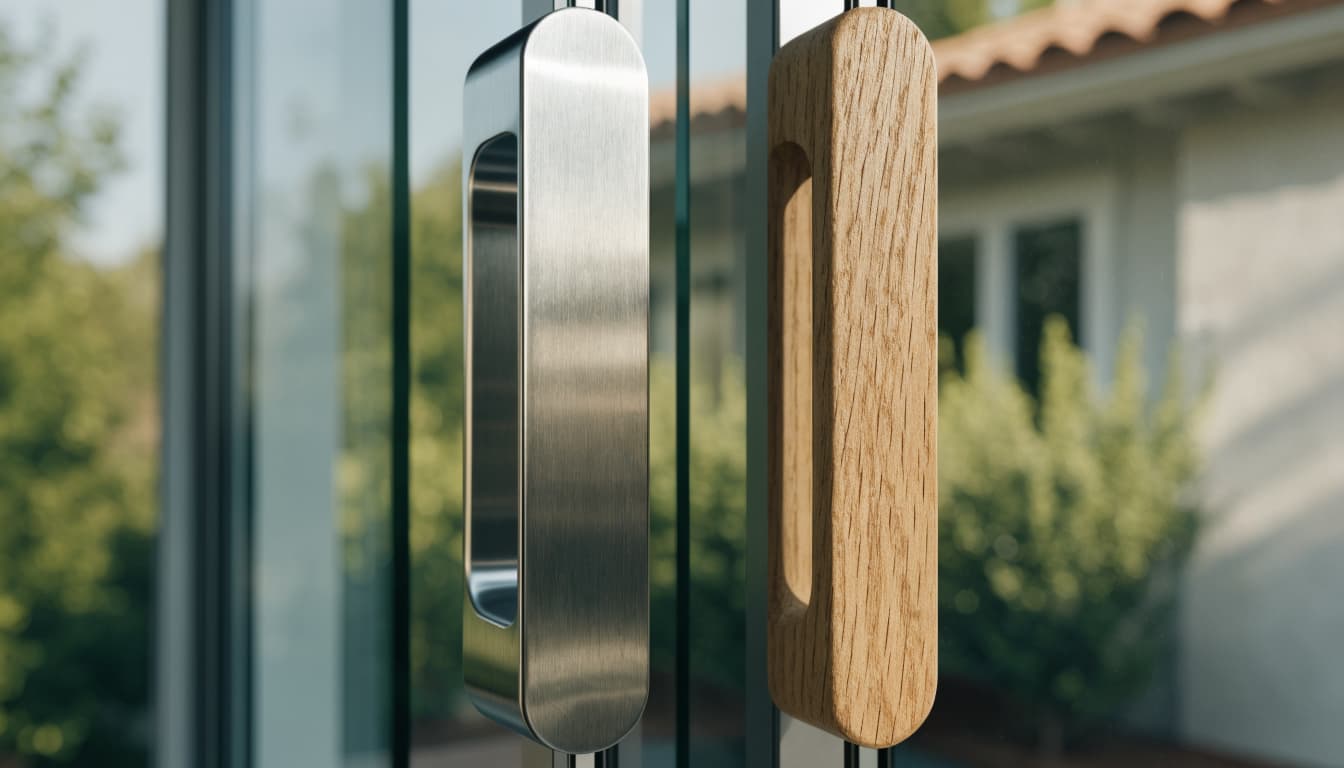
Material illustration: our handle combines steel and oak within one design.
Steel supplies the strength
Steel contributes strength to the handle assembly. That matters because the grip transfers your pulling force to the existing hardware whenever you move the panel.
However, strong handle material can't compensate for an unsound mounting plate. The plate, fasteners, and surrounding door hardware still need to hold the retrofit securely. A bent or brittle plate needs attention before you add another handhold.
Our guide to patio door repair options explains how a grip upgrade fits into the broader repair decision.
Water-resistant oak forms the grip
Oak provides the wood handhold, while its water-resistant finish suits the conditions around a patio opening. That is useful where the handle encounters humidity or occasional rain exposure.
The oak grip also gives the handle a different appearance from an all-metal pull. However, appearance alone shouldn't decide the purchase. You also need the right mounting fit and enough room to use the grip through the door's full travel.
The steel supports the assembly, and the oak provides the hand-contact surface. Neither material replaces the original latch or lock.
Decide Whether You Need a Better Grip or a Repair
Before choosing a sliding glass door replacement handle, separate an uncomfortable pull from resistance elsewhere in the door. Those problems can feel similar when you're trying to open a heavy panel, but they call for different work.
A working door can still have an awkward pull
A shallow recessed pull can leave little room for your fingers. Even when the panel rolls normally, the handhold may feel inconvenient each time you enter or leave the patio.
A retrofit makes sense when the door opens, closes, and locks properly, but you want a more substantial grip. It adds a handhold over compatible existing hardware without requiring you to remove a functioning lock assembly.
Also consider which side causes the problem. An uncomfortable inside pull doesn't automatically mean you need new handles on both sides.
Movement and locking faults need their own solution
Grinding, scraping, jumping, or needing to lift the panel points beyond grip comfort. Likewise, a latch that misses its keeper needs attention to the door's alignment or locking hardware.
A larger grip can make force easier to apply, so address dragging before it becomes a habit to pull harder.
Clean debris from the track and assess how the panel moves. If the glass is cracked, the frame is bent, or severe grinding continues, leave the repair to a qualified sliding-door technician.
Match the Retrofit to Your Existing Hardware
Material quality only helps when the handle fits the mounting arrangement. Similar-looking patio doors can have different plates and clearances, so the size of the glass opening doesn't tell you whether the retrofit will fit.
Measure the door plate, not the whole opening
Our retrofit is designed for compatible sliders with a 7.25-inch by 1-inch door plate. Measure the existing plate itself, rather than the door panel, frame, or rough opening.
The plate also needs to be sound. Don't force the handle onto bent, brittle, or badly corroded hardware. Repeated bending during installation can damage a weakened plate.
Our sliding patio door parts guide explains the compatibility requirement and distinguishes the handle from other parts of the door. Getting that distinction right helps you choose an upgrade that addresses the problem you have.
Allow room for the complete door setup
A handle needs clearance while the panel moves, not only while the door sits closed. Look at nearby trim and any sliding screen that shares the opening.
Also consider access to the original lock control. The retrofit leaves the existing lock and latch in place, so you should still be able to operate them normally.
This matters on both sides of the opening. An exterior grip must work with the patio-side space, while an interior grip must suit the room-side arrangement. Choose coverage around how you use the door.
Install Without Drilling or Altering the Door
Our handle is made in the USA and is a patented product until 2037. On compatible hardware, it requires no alteration to the door and no drilling.
The installation uses the existing mounting arrangement, preserving the original lock and latch.
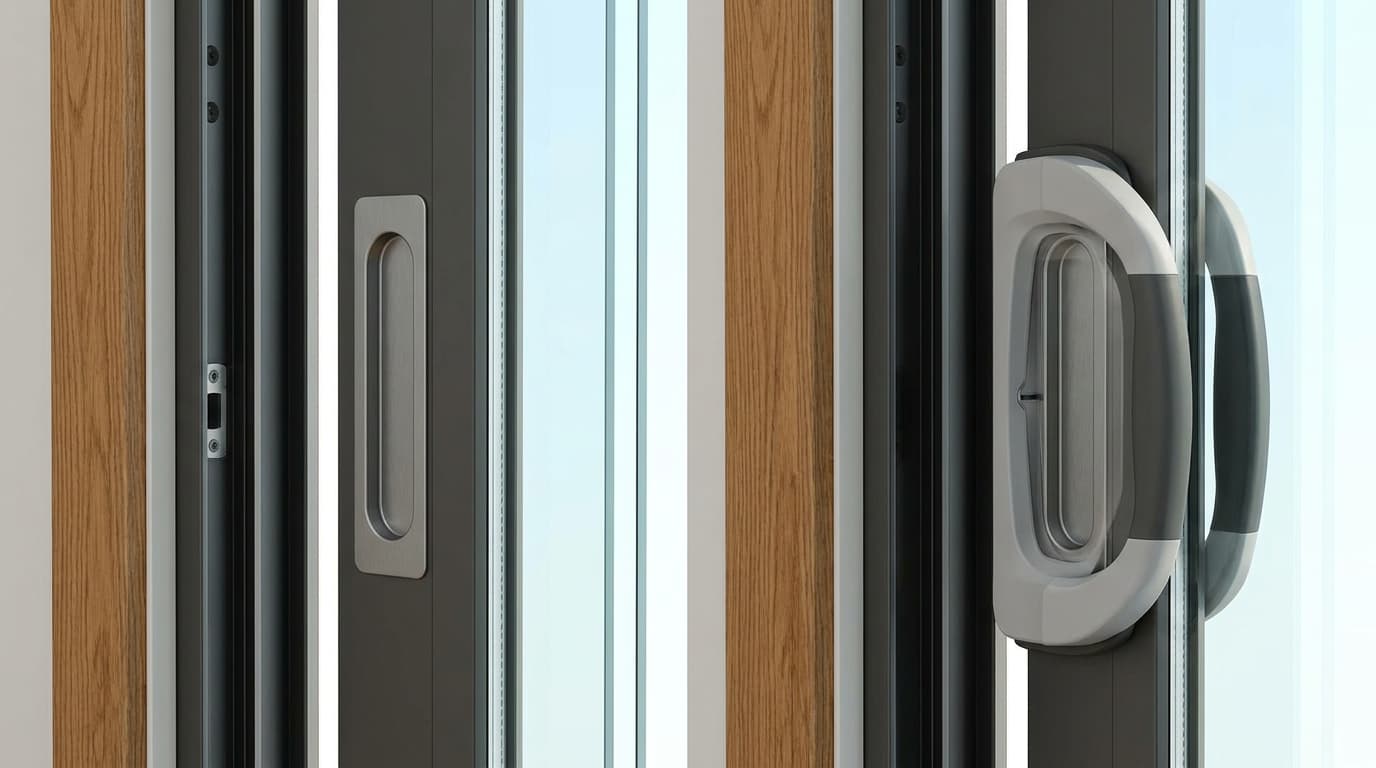
Conceptual illustration of a retrofit grip added over existing hardware.
Use the existing plate and fasteners
For the exterior fitting sequence, loosen the screws from inside the door. From outside, slide the lower part of the retrofit upward over the existing plate. Place the upper cap over the plate's top edge, then draw the handle downward until it seats.
Return inside and tighten the screws securely. Avoid overtightening or bending the plate to make the handle fit.
Our retrofit handle installation guidance covers the mounting sequence and final operation test. The process doesn't require cutting, special tools, or carpentry skills.
Give the final fit enough time
We describe installation as taking about 30 seconds on compatible hardware. Access, existing fasteners, and fit can affect the time, so allow room for careful positioning.
Test the grip with the door open first. It should feel secure without rocking or shifting. Then move the panel slowly and operate the latch.
The handle shouldn't rub against the frame or interfere with the lock. If the door needs lifting, slamming, or sideways pressure to close, address that separate fault rather than tightening the retrofit harder.
Choose the Finish and Coverage You Need
Once the mounting arrangement is right, choosing the appearance is straightforward. We offer white and bronze finishes, with interior, exterior, and inside-and-outside options.
These choices address different needs:
| Choice | Where it helps |
|---|---|
| Interior handle | Adds a handhold on the room side |
| Exterior handle | Adds a handhold on the patio side |
| Inside-and-outside bundle | Addresses grip needs on both sides |
Choose the coverage based on where the existing pull feels awkward. A single handle may be enough when the other side already works comfortably.
For appearance, white can coordinate with lighter frames and trim. Bronze offers a darker option, such as our bronze interior sliding door handle.
Finish names describe the available appearance. A bronze finish doesn't mean the handle is made entirely from bronze; our design uses steel and water-resistant oak.
Think about the surrounding hardware as well as the frame color. The handle will sit beside the original lock and latch, so the overall combination matters more than matching one isolated detail.
Frequently Asked Questions
Are steel and oak separate handle options?
Our handle uses both materials together. Steel contributes strength to the assembly, and water-resistant oak forms the grip.
You choose the finish and whether you need an interior handle, an exterior handle, or coverage on both sides. You don't need to choose between steel construction and an oak handhold within our design.
Does water-resistant oak mean waterproof?
Water-resistant and waterproof aren't interchangeable descriptions. We describe our oak grip as water-resistant, which suits the humidity and rain exposure associated with patio conditions.
That description applies to the grip material. It doesn't mean the handle repairs a leaking door, seals the opening, or changes the performance of the surrounding frame and weather seals.
Does the original handle or glass panel come out?
The retrofit fits over compatible existing hardware, so the original handle doesn't need removal. The lock and latch remain in place, and fitting the grip doesn't require removing the glass panel.
This keeps the work focused on the handhold. If the mounting points are damaged or the lock has failed, those parts need repair rather than coverage with an added grip.
Will a new grip make a heavy slider roll more easily?
A more substantial handhold can improve control, but it doesn't repair rollers or remove track resistance. A door that drags still needs attention to the parts that support and guide the panel.
Address movement problems first. Once the door rolls and latches normally, you can judge the grip separately and decide which side needs improvement.
Choose the Materials Around a Sound, Compatible Door
Steel and water-resistant oak offer complementary qualities in our handle: structural strength and a wood grip. Their usefulness depends on correct fit and a door that already moves and locks properly.
Measure the existing plate, choose the side that needs a better handhold, and keep mechanical repairs separate from the upgrade.
Explore our steel-and-oak replacement handle options to choose the finish and coverage for your compatible door.