

A damaged patio door can leave you sorting out broken glass, security concerns, and an insurance claim at once. For sliding glass door insurance claims, start with a clear damage record, then keep coverage decisions separate from repair recommendations.
A cracked pane, dragging panel, and uncomfortable handle need different solutions. Accurate photos and notes help you describe the problem without assuming what insurance will pay.
Begin with safety, then document the door before cleanup or repair changes what you can see.
Key Takeaways
- Photograph the whole door, individual damaged parts, and surrounding areas before repairs, provided you can do so safely.
- Separate what you observed from what you believe caused it, especially when older wear and recent damage appear together.
- Match the repair to the failed component. A retrofit handle improves grip on compatible, working hardware, but it doesn't repair glass, rollers, frames, or locks.
Document the Damage Before Cleanup
Keep children and pets away from damaged glass. Don't force a sticking panel or repeatedly open a door with a cracked pane.
If the opening is unsafe or unsecured, a qualified door professional can address the immediate hazard. Photograph conditions from a safe distance rather than approaching unstable glass.
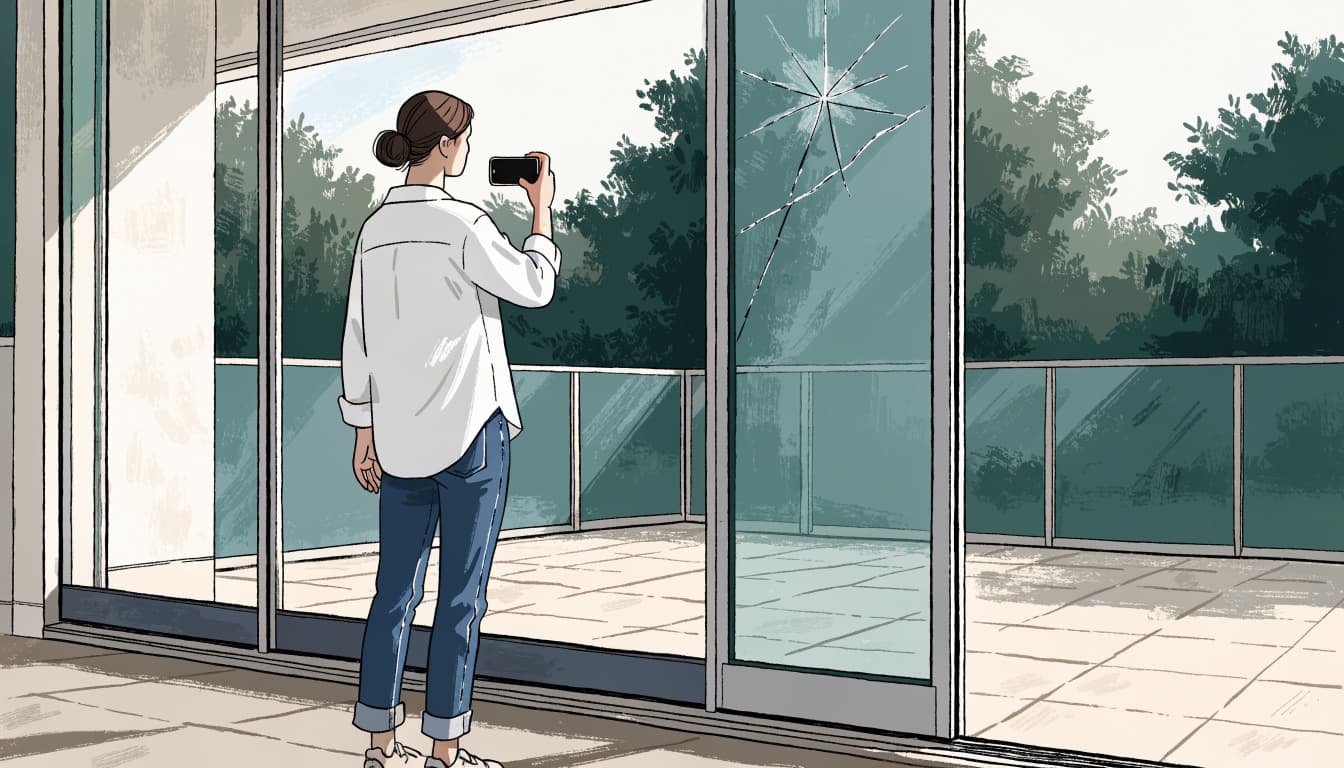
Capture the whole opening and individual parts
Start with a wide photo showing the entire door, frame, and nearby wall. Then take closer images of visible damage without touching the glass.
Include both sides when you can reach them safely. Different angles can reveal cracks, displaced hardware, or gaps that disappear in a single photograph.
Record the handle, latch area, bottom track, and threshold as separate subjects. Also photograph nearby flooring or trim if it shows damage.
Keep the original image files. An annotated copy can highlight a small defect, while the untouched original preserves the complete view.
Write down when you noticed each problem
Record the date you first noticed the damage and what you saw. Keep the description concrete: a cracked pane, bent handle plate, or water on the interior floor.
Separate the time you discovered the problem from the time you believe it happened. Those dates aren't always the same.
Include earlier photos if they show the door's previous condition. However, don't treat an old photo as proof that every component remained unchanged afterward.
Note any cleanup or temporary work, including who performed it. This preserves context when later photos show a different condition.
Identify Which Door Components Are Damaged
A sliding door combines glass, a moving panel, a frame, rollers, seals, and locking hardware. Describing the entire assembly as "broken" can hide the actual repair need.
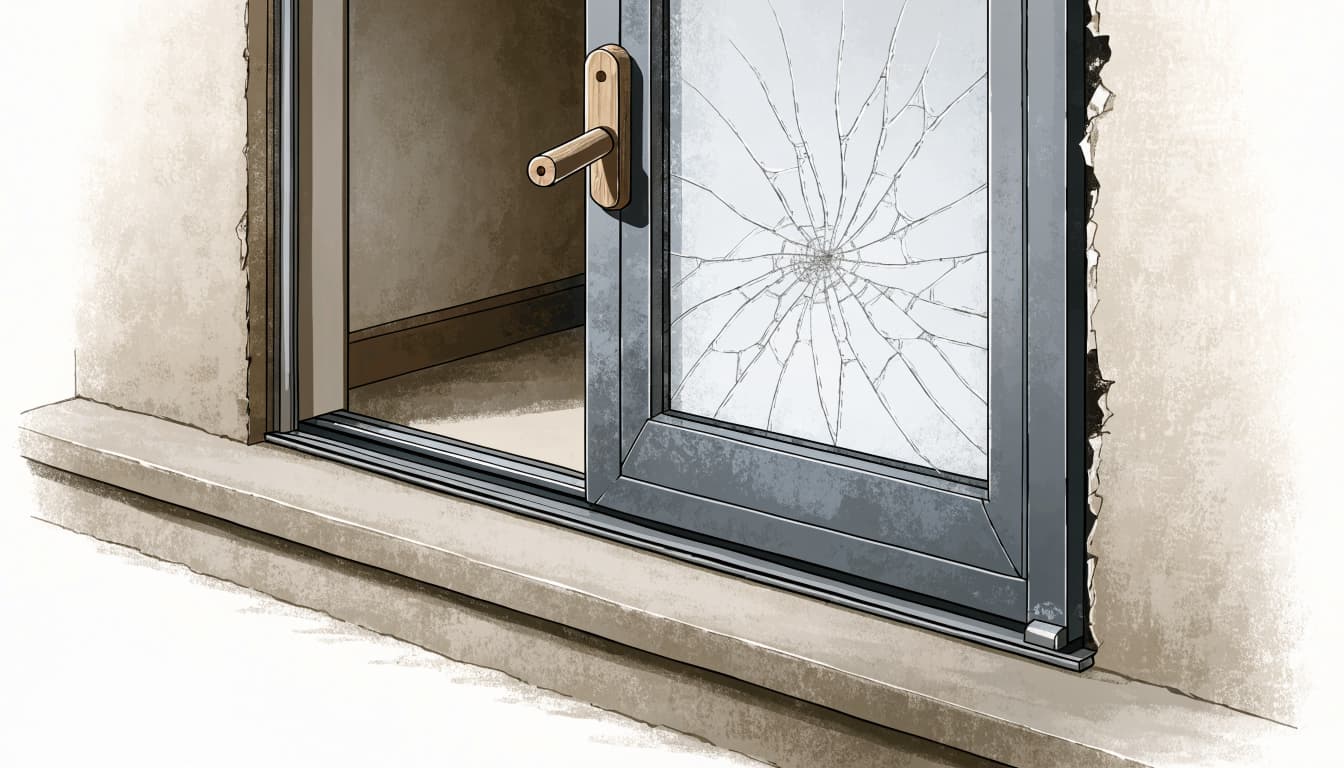
Distinguish broken glass from other glass problems
Photograph visible cracks and shattered areas without pressing against the pane. Note where the damage appears, including whether it reaches the edge.
Also distinguish cracks from scratches or moisture between panes. Fogging inside an insulated glass unit is a different condition from a fresh fracture.
Our guide to patio door glass damage and safety explains the practical differences between glass problems and repair options.
A sound frame may allow glass-only work. However, that repair decision requires an assessment of the panel and surrounding assembly, not a close-up photo alone.
Separate frame, track, and hardware damage
Look for visible bends, uneven gaps, displaced trim, and damage around mounting points. Photograph those areas without removing the panel.
Our guide to signs of a warped sliding door frame helps distinguish frame concerns from a simple grip problem.
Record whether the handle is loose, the latch fails to engage, or the panel drags. Only describe movement you can observe safely; a cracked door doesn't need an operating test.
A difficult pull doesn't identify the failed part by itself. Rollers, track damage, alignment, or the handle may each contribute, so avoid naming a cause before the condition is clear.
Separate Damage Evidence From Coverage Decisions
Good documentation describes the door's condition. It doesn't establish that insurance covers a particular repair.
For sliding glass door insurance discussions, keep three things distinct: observed damage, an explanation of its cause, and the coverage decision. A repair estimate may address the first two without answering the third.
Describe the event without guessing
Write what you directly observed. If you heard an impact and then saw broken glass, record those facts separately.
When you discovered damage later, say when you found it. Don't supply an exact time or cause that you don't know.
The same care applies to older problems. A handle that had been loose for months belongs in the condition history, even if you noticed another defect recently.
A factual record leaves room for a professional diagnosis without turning your first impression into a firm conclusion.
Keep written coverage explanations with the record
Keep policy documents and any written coverage explanation alongside the damage record. Preserve the wording rather than reducing it to a vague note such as "door covered."
If an explanation addresses only glass, don't assume it also addresses the frame, hardware, or an optional upgrade.
Likewise, a contractor's recommendation to replace a complete door is a repair opinion. It isn't a coverage determination.
A photo can show a cracked pane, but it can't establish why the pane cracked or which repairs insurance will pay for.
Organize Photos, Notes, and Repair Documents
Keep everything for the damaged door in one folder. Separate original photos, condition notes, professional assessments, and repair paperwork so each document remains easy to find.
Use filenames that identify the subject and date. Clear names are more useful than a folder full of nearly identical phone-generated filenames.
Preserve a consistent condition history
Arrange photos chronologically, including earlier images that show existing wear. Keep newer damage descriptions separate from maintenance observations.
For example, don't combine a longstanding hard-to-grip pull and newly cracked glass into one unexplained statement about a "failed door."
Track symptoms also deserve their own notes. Our sliding door track repair guide explains why cleaning, roller work, and track replacement solve different problems.
If a technician identifies the cause of a symptom, retain that assessment with your original observation. This keeps your account intact while adding the diagnosis.
Keep the proposed work specific
A useful repair document identifies the component, the condition, and the proposed work. Glass replacement, roller replacement, latch repair, and complete door replacement are different jobs.
Keep temporary safety work separate from permanent repairs. Similarly, distinguish restoring damaged parts from adding a more comfortable handle.
Save invoices and descriptions of completed work, not just the final payment record. If a repair changes the appearance of the door, before-and-after photos provide useful context.
Don't handle sharp debris or keep unstable glass simply to preserve evidence. Clear photographs and professional repair records are safer ways to document dangerous components.
Match the Repair to the Problem Before Upgrading
A replacement handle can make daily use easier, but it belongs after the glass, panel movement, and locking function are sound.
Our sliding door repair cost guide separates handle work, roller repairs, and glass work. That distinction helps keep a small grip improvement separate from a larger repair.
Repair failed operating parts first
If the panel grinds or drags, address the track and rollers before adding a handle. A larger grip won't make a damaged wheel roll correctly.
Likewise, a retrofit won't rebuild a worn mortise lock or repair damaged mounting points. Broken locking hardware needs a repair suited to that hardware.
Once the door moves smoothly and latches properly, assess how the existing pull feels. A shallow finger recess can remain uncomfortable even when the rest of the door works correctly.
That is where a sliding glass door replacement handle can address a separate, everyday usability problem.
Add a no-drill grip to compatible hardware
Our Luuv Handle fits over compatible existing hardware with a 7.25-inch by 1-inch door plate. The original lock and latch remain in place.
Luuv Handle is made in the USA, and its patented design is protected until 2037. It requires no alteration to the door and no drilling.
Installation takes about 30 seconds on a compatible door. Because the product adds a grip over existing hardware, it doesn't replace a failed lock or damaged door assembly.
Keep this optional improvement separate from damage-restoration paperwork unless a written coverage explanation expressly includes it.
Frequently Asked Questions
Does a cracked sliding door mean the whole door needs replacement?
A crack identifies a glass problem, but it doesn't describe the condition of the entire assembly. The frame, moving panel, rollers, and glazing support also matter.
When those parts are sound, glass-only work may be appropriate. However, visible frame damage or other operating problems can change the repair recommendation.
Photograph the full door as well as the crack, then leave cracked-glass handling and heavy-panel removal to a qualified professional. The complete assessment helps distinguish a pane problem from a broader door problem.
A replacement handle doesn't change that assessment. It improves grip only after the door is safe and operating correctly.
What if the only problem is an uncomfortable handle?
First distinguish discomfort from failed hardware. A shallow pull on a smoothly operating, securely latching door is different from a snapped handle, loose mounting plate, or broken lock.
Our retrofit is intended to improve the grip on compatible existing hardware. It doesn't restore missing structural parts or repair the latch mechanism.
Measure the existing plate before choosing a retrofit; our required dimensions are 7.25 inches by 1 inch. Also consider clearance with the screen door and surrounding frame.
Document the original condition before installing an upgrade, so the earlier photos remain separate from the improved setup.
Keep the Damage Record Clear and the Repair Appropriate
A useful sliding glass door insurance record shows what changed, where the damage appears, and which components need attention. It keeps observations, repair recommendations, and coverage explanations separate.
Protect the opening safely and document its condition before repair work changes the evidence. Once the glass, track, and lock are sound, a compatible retrofit handle can improve grip without adding a door-alteration project.
The right repair addresses the failed part while preserving the parts that still work.