

You can check sliding door setting blocks for visible wear by looking at any exposed portions near the bottom edge of the glass. Look for changes or damage without removing trim or disturbing the pane. On many doors, the blocks are concealed, so a visual check has limits.
If your door sticks or the glass appears uneven, the cause could be elsewhere in the panel. Start with a careful look at what setting blocks do and where they sit.
Where Sliding Door Setting Blocks Sit
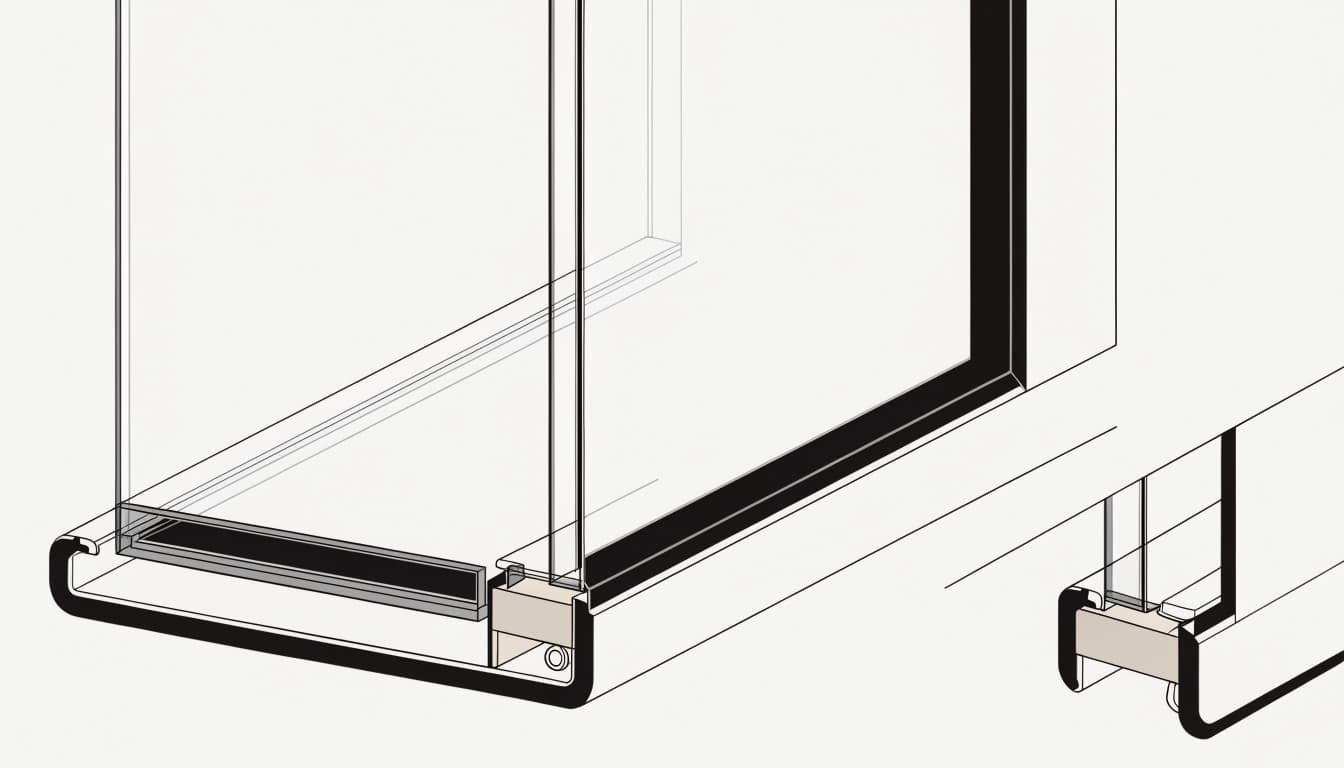
Setting blocks support the glass inside the door's sash, the frame surrounding the pane. They sit between the glass edge and the surrounding frame rather than under the whole door.
Glass support is different from door support
The setting blocks help support the glass within the sash. Rollers, on the other hand, support the moving panel as it travels along the track. A door can have a problem with either part, and a dragging panel doesn't establish that its setting blocks are worn.
The illustration shows the relationship between a block, the glass edge, and the lower frame. Your door's construction may look different, and its supports may not be visible with the panel assembled.
The blocks may be hidden
Glazing components and the sash can cover the edges of the glass. You may see only a narrow joint where the glass meets the frame, rather than the support underneath.
If you can't see a block, don't treat that as evidence that one is missing. A reliable assessment may require access that a glass or sliding-door professional should handle.
Prepare for a Hands-Off Inspection
Before looking closely, clear furniture and other obstacles away from the doorway. Keep children and pets out of the area while you inspect it, and use a flashlight to illuminate the lower glass edge and sash.
Look at the door in place. You don't need to lift the panel, press on the glass, or remove a glazing strip to make an initial assessment. Those actions can disturb the parts you're trying to inspect and turn a simple visual check into a more difficult job.
Stop using the door if the glass is cracked, the frame is distorted, or the panel feels unstable. Keep people away from the affected area and contact a qualified glass or door professional.
If the glass and frame appear sound, observe the door's position before moving it. Note any obvious change in the space between the panel and jamb, then check the lower sash for visible damage. Photos taken before any cleaning can help you describe a concern later.
What Visible Wear Can Look Like
A setting block that's exposed enough to see may show a change in shape or condition. These observations are useful to record, but they don't establish the condition of every support inside the door.
Changes in an exposed block
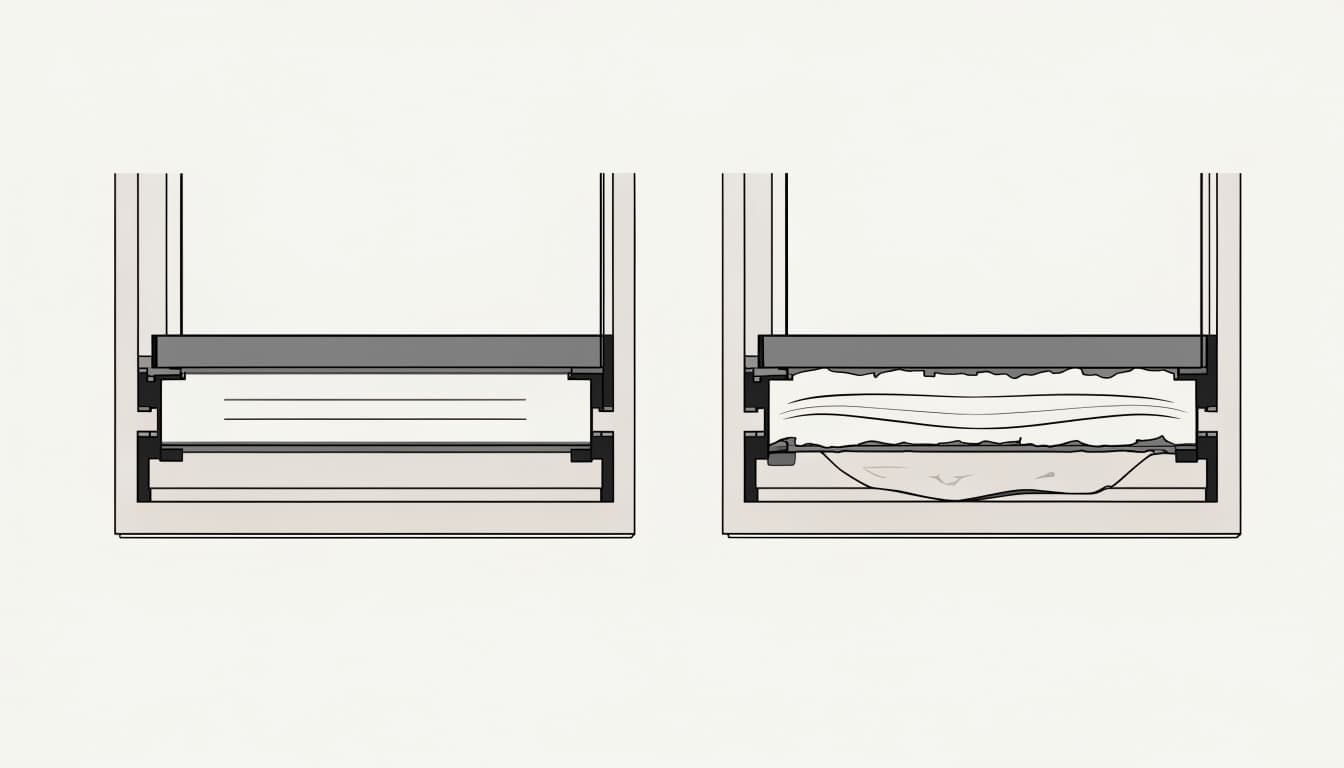
Look for an exposed piece that appears cracked, flattened, or out of position. If you can see only a small portion, photograph it rather than pulling it out for a closer look.
The illustration compares an intact-looking support with one that appears compressed. It shows the kind of difference you might notice, though it isn't a diagnosis for your door.
Dirt or an uneven visible edge can make a component difficult to identify. If you aren't certain you're looking at a setting block, leave it in place and photograph the surrounding frame too.
Changes around the glass edge
Look along the visible joint between the pane and the sash. A section that looks different from the rest, a loose-looking glazing piece, or an apparent change in the glass position deserves attention.
Don't push the pane to see whether it moves. A photo and a description of what you noticed give a technician a starting point without putting pressure on the glass.
Check the Door Without Disturbing the Glass
A visual inspection works best when you keep track of what you can see and what remains concealed. Follow these steps while the panel stays in place:
- Look at both lower corners. Use a flashlight and inspect the glass-to-frame joint from inside and outside where you can reach it safely.
- Scan the bottom sash. Note visible damage, corrosion, or anything that appears loose. Don't remove trim or insert a tool into the joint.
- Record any exposed support. Photograph a piece that appears cracked, flattened, or displaced, along with enough of the surrounding door to show its location.
- Observe the panel's position. Look at the gap between the panel and jamb. An uneven gap is worth mentioning, although it doesn't identify the cause.
- Test movement only if the door appears sound. Slide it gently using the existing handle. Stop if it catches hard, grinds, shifts unexpectedly, or requires force.
You can also note whether the latch meets its keeper normally. Trouble latching may help a technician assess the door, but it doesn't tell you which component is responsible.
If you can't see the supports, write that down too. A concealed block has not passed or failed the inspection; its condition remains unknown.
Other Problems Can Mimic Setting Block Trouble
A door's symptoms can point to several different parts. Keeping those possibilities separate helps you avoid ordering a handle, roller, or glass repair based on a guess.
Dragging, scraping, or rattling
Debris in the track can interfere with movement. Worn rollers, a damaged running surface, or a misaligned panel can also make a door difficult to slide. Start by looking for accessible dirt and obstructions, provided the glass and frame are sound.
Our sliding glass door maintenance checklist covers routine track and hardware care. If the door continues to grind or catches after the accessible track is clean, leave the diagnosis to a sliding-door technician.
Rattling has its own possible causes, including loose hardware or movement elsewhere in the door. Our guide to sliding glass door rattling covers additional places to look without assuming the glass supports are at fault.
Fog or damage in the glass
Moisture or a persistent haze between panes can indicate a failed seal in an insulated glass unit. Cleaning the exposed surfaces won't remove moisture trapped inside that sealed space. A glass professional can assess the unit and the surrounding sash.
Cracked glass calls for a different response. Keep people and pets away, avoid operating the panel, and arrange professional help. Don't press on the crack or use a handle upgrade as a reason to keep using the door.
When to Call a Glass or Door Professional
If you can see possible damage to a setting block, a professional can assess the glass support along with the sash and other components. Call for help as well when the blocks are concealed and you suspect the glass has shifted.
Share What You Observed
Show the technician your photos and describe where you saw the concern. Mention whether the panel drags, the latch has become difficult to operate, or the visible joint around the glass has changed.
Include any damage to the lower sash or frame. These details help distinguish a concern with the glass support from a problem with the rollers, track, or door opening.
An etched mark near a lower glass corner or a manufacturer label on the frame may also be useful. Photograph it if it's visible without moving or disturbing the panel.
Discuss the Scope of the Work
Ask the professional to explain which component needs attention and what the proposed work includes. If access to the glazing is necessary, the technician can determine how to handle the panel and support the glass for that door.
Heavy sliding panels are awkward to control. Don't remove one yourself to get a better look at a concealed setting block. Likewise, leave cracked glazing and distorted frames to a qualified professional.
If you receive an estimate, ask whether it includes cleanup and a final check of door movement and latch operation. That makes it easier to understand what will be addressed.
Repair the Glass or Replace the Door?
A concern with the glass doesn't automatically mean you need a complete sliding door. When the sash remains sound and the other components work well, a professional may be able to address the glazing while retaining the existing frame.
For example, a failed insulated glass unit may be replaceable within a serviceable sash. The replacement glass must meet the requirements of the door and installation. Our patio door glass guide explains some of the glass types used in these doors.
A broader replacement may make more sense when the frame has extensive rot or several components have substantial damage. Repair cost also matters when it approaches the cost of a new unit.
Ask what each proposed repair would solve. A new handle won't straighten a damaged sash, and new glass won't correct worn rollers. Matching the work to the condition of the door can help you avoid replacing parts that still work.
When a Replacement Handle Helps
Once the glass is secure and the door moves and latches properly, you may still find the original pull uncomfortable. A shallow grip can make an otherwise sound door frustrating to use.
Our sliding glass door replacement handle fits over compatible existing hardware. It's designed for a 7.25-inch by 1-inch door plate, and the original lock and latch stay in place. Our retrofit handle fitting guide covers what to look for if a handle doesn't sit flush.
Luuv Handle is made in the USA and patented through 2037. It requires no alteration to the door and no drilling. Interior handles cost $22, exterior handles cost $30, and an inside-and-outside bundle costs $50.
A better grip can make daily use more comfortable. It won't repair worn glass supports or make an unstable panel safe to operate.
Keep the Inspection in Perspective
A hands-off look can reveal a visible concern, but concealed sliding door setting blocks can't be assessed through the frame. Record what you see and leave the glazing undisturbed.
If the glass is cracked, the panel is unstable, or you suspect its support has shifted, arrange a professional inspection. Once the door is sound, you can address a separate grip problem without changing the door itself.