

A sliding glass door inspection can reveal problems worth addressing before you buy a home. Open and close the door, test the lock, and look for damage around the glass, frame, and threshold.
A door that's awkward to grip may need a handle upgrade, while grinding, leaks, or a failed latch point to separate repairs. Here's how to tell the difference during a viewing or home inspection.
Start With a Careful Walkthrough
Ask to operate the sliding door during your visit, and include it in your home inspection. If the property has more than one slider, test each one separately. Doors exposed to different weather conditions or levels of use may have different problems.
Bring a flashlight and your phone. The light helps you see debris and damage in the lower track, while photos give you a record of anything you want the inspector to assess. A tape measure is useful if you're considering a handle upgrade after closing.
Start inside, then look at the door from the patio. Check both the moving panel and the fixed panel, along with the screen door if there is one. Notice whether furniture, blinds, or flooring make the door difficult to reach.
Avoid taking hardware apart or making adjustments during a viewing. A buyer's inspection is a chance to observe and document, not to repair someone else's property. If the panel feels unsafe or won't move without force, stop and note the problem.
Test How the Door Opens and Closes
A good sliding glass door inspection includes more than a quick pull on the handle. Move the panel slowly through its full range, then close it again. Use steady pressure near the existing handle rather than twisting it or pulling on the frame.
Notice where the door catches
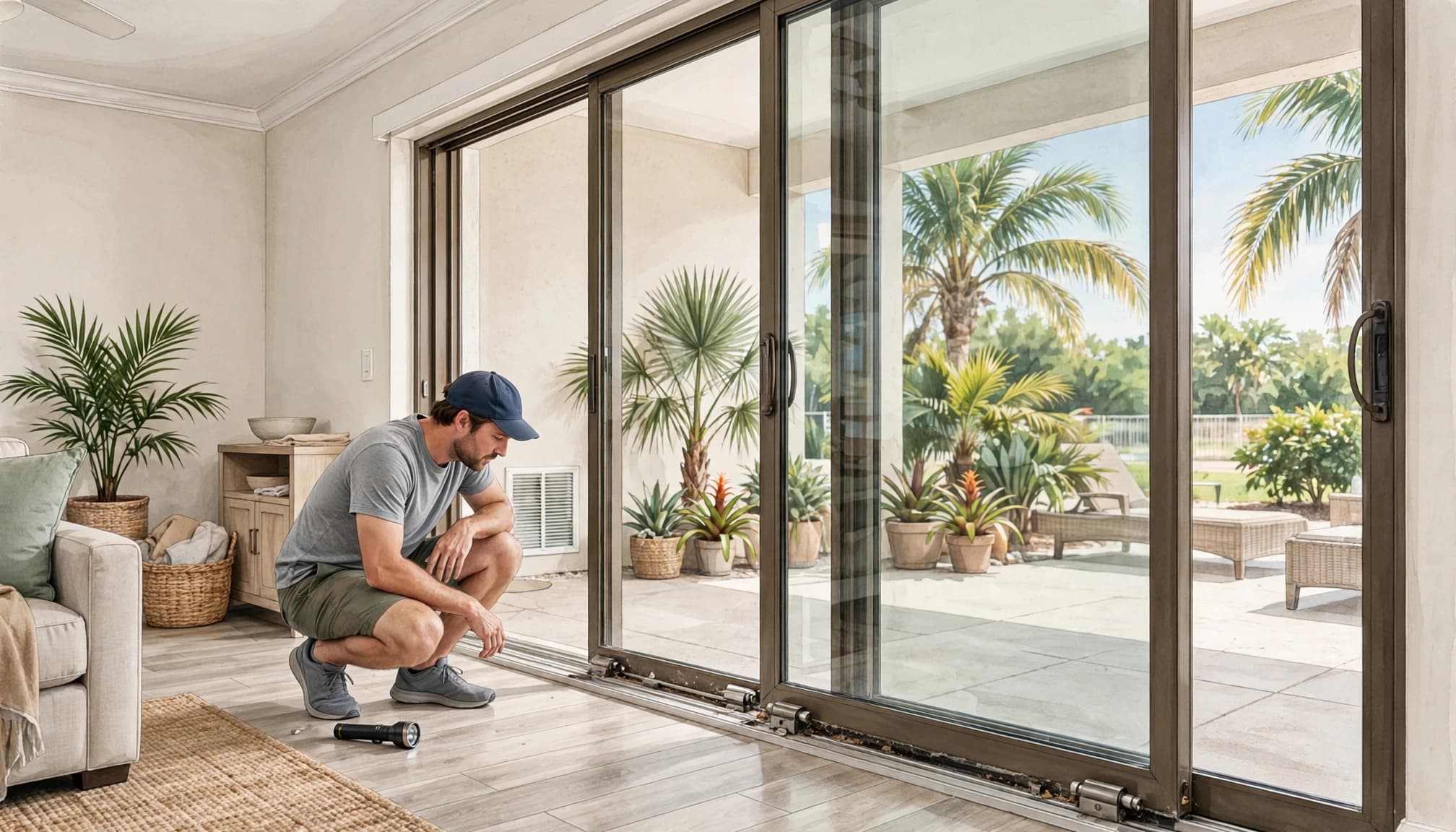
If the panel catches at the same spot each time, look at that section of the track. A small stone, packed dirt, or a visible dent could be interfering with travel. Photograph the area and tell your inspector where the panel stops.
Dragging throughout the opening is a different clue. Dirty or worn rollers, or a panel that needs adjustment, may be involved. The symptoms alone don't identify the failed part, so ask for an assessment before assuming that a new handle will solve the problem.
Watch the panel as it closes
The door should reach the closed position without lifting, slamming, or pulling sideways. Look at the vertical edge where the moving panel meets the frame. An uneven gap or a latch that misses its keeper can point to an alignment issue.
Our guide to sliding door alignment explains how the meeting edges and latch fit together. During a purchase inspection, document the gap rather than adjusting the rollers yourself.
Inspect the Track, Threshold, and Frame
The lower track and surrounding frame can reveal more than a door's age. Look for signs that the panel has been rubbing, water has collected, or the opening has shifted.
Look closely at the lower track
Shine your flashlight along the full length of the track. Dirt and pet hair are common, but bent metal, a damaged running surface, or heavy corrosion deserve a closer look. Check that the visible drainage openings aren't blocked by debris or paint.
Inspect the threshold and adjacent flooring too. Staining, swollen trim, or soft flooring near the door can indicate water intrusion or concealed damage. Our patio door threshold guide covers the signs that warrant further assessment.
Don't pry up trim or lift the frame to investigate. A qualified contractor can determine whether the damage extends beyond what you can see.
Check the frame and surrounding wall
Look along the top and sides for bowed sections, separated joints, cracked sealant, and gaps between the frame and surrounding wall. Also look at the finish around the door for peeling paint or discoloration.
A gap doesn't automatically mean the whole frame has failed. It does give you something to show your inspector, especially if the door also sticks or the latch has stopped lining up. Our guide to warped sliding door frames describes common warning signs and repair options.
Examine the Glass and Seals
Look through each panel in daylight, and view the glass from an angle. Check for cracks, chips near the edges, scratches, and cloudy areas that remain visible after the surface is clean.
If a double-pane unit has persistent fog or moisture between the panes, the insulating seal may have failed. Surface condensation is different and can appear under certain indoor conditions. An inspector or glass professional can help distinguish the two.
Next, look at the weatherstripping around the moving panel and where the panels meet. Torn, missing, or flattened material may allow drafts or moisture into the home. A draft alone doesn't establish the cause, but it's useful to note alongside visible gaps.
Avoid relying on an etched mark as proof that the entire door meets a particular rating or requirement. Glass markings can provide information about the pane, but they don't establish the condition of the frame, installation, or surrounding opening.
If the glass is cracked or loose, keep clear of the panel and ask a qualified professional to assess it. Don't attempt to remove or shift a heavy glass door yourself.
Check the Handle and Lock Separately
The handle is the part you'll touch every day, but it doesn't tell you everything about the door. Test the grip and the lock as separate parts of your inspection.
Try the handle from both sides
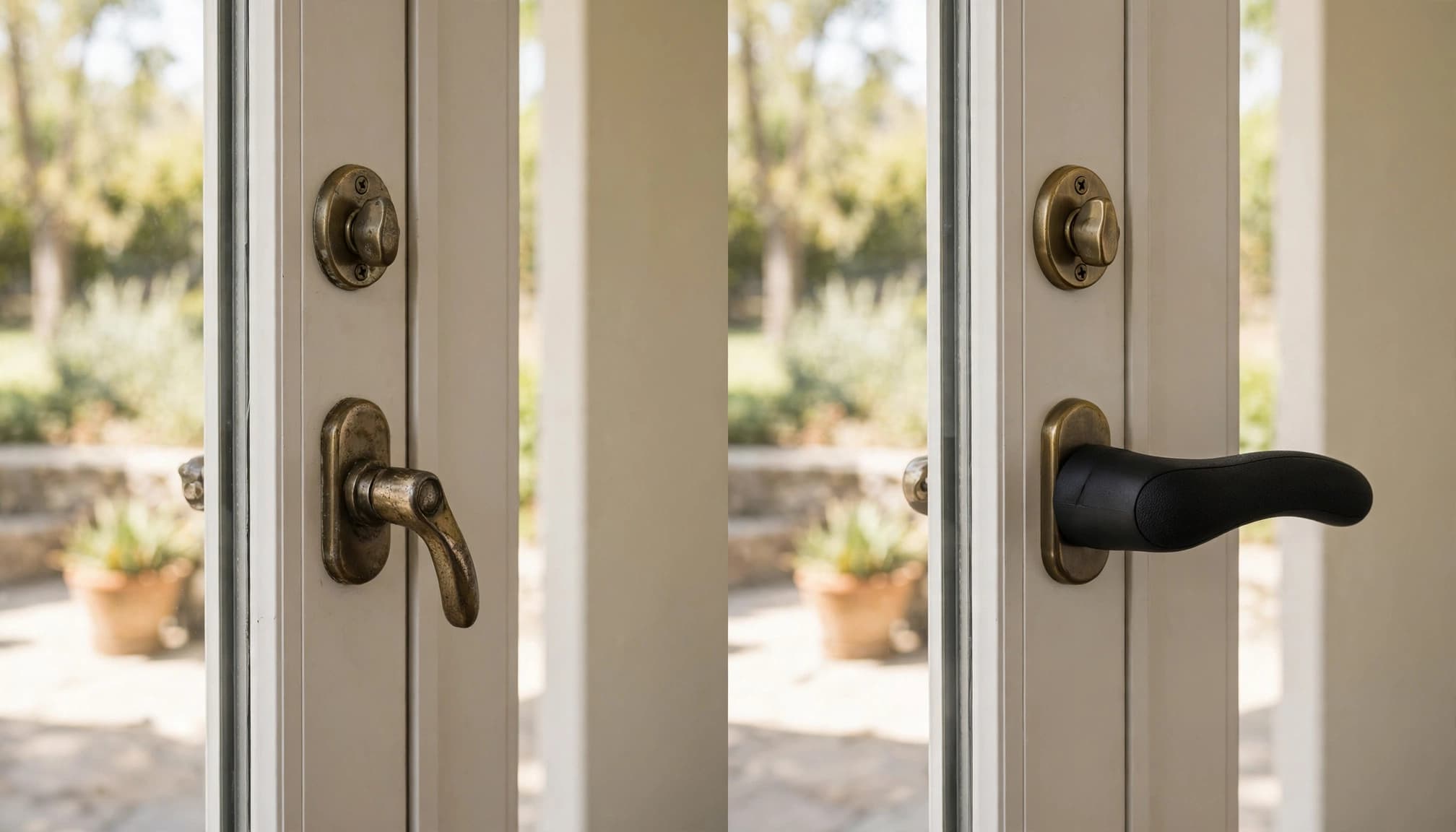
Open and close the panel using the interior pull, then try the exterior handle if the door has one. Notice whether your hand fits comfortably and whether the handle rocks or shifts when you use it.
A shallow pull can make a working door feel awkward. Loose or broken mounting hardware, however, needs attention before adding a grip over it. Take a photo of both sides so you can discuss the condition with your inspector or contractor.
Test the latch without forcing it
With the panel closed, operate the lock and confirm that the latch engages its keeper. Then apply gentle pressure to the closed panel to see whether it remains latched. Unlock it and open the door again.
If you have to lift the panel to make the latch catch, note that detail. The issue could involve alignment, the keeper, or the lock assembly. A comfortable handle won't repair a broken lock or make a door secure by itself.
For a panel that won't reach the closed position, our guide to troubleshooting a patio door covers the parts that may need attention.
Decide Whether a Retrofit Handle Fits Your Needs
Once the door moves, closes, and locks properly, you can decide whether the original grip works for you. A sliding glass door replacement handle can make sense when the existing pull is too small or uncomfortable, even though the underlying hardware works.
Measure the existing plate
Our Luuv Handle retrofit fits compatible sliding doors with a 7.25-inch by 1-inch door plate. Measure the outside of the existing plate and consider the handle's orientation. Also look at the space between the handle and any sliding screen so the two won't interfere.
The retrofit fits over compatible existing hardware. It isn't a universal fit, and it shouldn't be forced onto a bent, brittle, or badly corroded plate. Damaged mounting hardware or a failed lock assembly needs its own repair.
Choose a grip without altering the door
Our handle uses steel and water-resistant oak. It's made in the USA and is a patented product until 2037. The retrofit requires no alteration to the door and no drilling, and the original lock and latch remain in place.
Interior and exterior options let you choose where you need a better handhold. White and bronze finishes offer a choice for coordinating with the door. Once installed, test the grip with the door open, then close the panel and operate the latch.
Use Your Findings Before You Commit
A dirty track, an uncomfortable handle, and a damaged frame call for different responses. Share the observations with your home inspector rather than grouping every issue under "sticky door."
Ask the inspector to describe the condition and recommend further evaluation where needed. For cracks, suspected water damage, significant frame distortion, or a panel that won't close safely, a qualified sliding door or glass contractor can assess the work.
When you receive a repair estimate, look at what it includes. A quote for cleaning and adjustment addresses a different scope than one for rollers, glass, or frame work. If replacement is proposed, ask for the reason and compare it with the repair option.
Before your inspection contingency expires, discuss the findings and any repair requests with your real estate agent. The terms of your purchase contract determine your options and deadlines. Keep photos and the inspection report with your records so the concerns are clear.
Frequently Asked Questions
Should a sliding door move without any resistance?
Some resistance is normal, but the panel should move with steady pressure. Grinding, jumping, or a need to lift and shove it deserves further inspection.
Does a hard-to-open door always need new rollers?
No. Dirt or a dent in the track can interfere with movement, and a small handle can make a working panel awkward to control. An inspection can narrow down the cause before you pay for parts.
Can a handle upgrade fix a door that won't lock?
A retrofit handle improves grip; it doesn't repair the lock assembly or correct a misaligned panel. Have the latch, keeper, and door alignment assessed first.
Make the Door Part of Your Buying Decision
A sliding glass door can look good while hiding a problem with its track, glass, or frame. A careful test gives you useful details to share with your inspector before you commit.
Once the door operates and locks correctly, an uncomfortable grip is a separate, often simpler issue. Focus on the cause of each problem, then choose the repair or handle upgrade that fits.