

Reducing road noise through a sliding glass door starts with finding where sound enters, then addressing gaps or worn parts before considering a larger upgrade. For many doors, that means looking closely at the seals, track, and frame.
The glass itself can also let traffic noise reach the room, so a complete fix may involve more than weatherstripping. Start with a careful inspection to decide where your effort belongs.
Key Takeaways for a Quieter Patio Door
A door that rattles or doesn't close evenly may need different attention than a door that works smoothly but still lets in steady traffic noise. Inspect the moving panel, its seals, and the frame before deciding on a repair.
A replacement handle can make the door easier to grip, but it isn't an acoustic treatment. Likewise, keep drainage openings clear and preserve access to the door when adding curtains or other room treatments.
Find Where Road Noise Is Entering

Listen near the door when traffic is passing and the panel is fully closed and latched. Move your attention around the edges, then listen near the middle of the glass. You aren't measuring sound levels, but you may notice a draft, a rattle, or an uneven gap that points you toward the problem.
Compare the sound near the door with the sound near other windows and exterior walls. Road noise can enter through more than one part of a room, so a repair at the slider may not address every sound you hear.
Listen for rattles and gaps
A buzz or tapping sound is different from steady tire noise. Loose hardware, a panel that doesn't sit evenly, or worn components may deserve attention if the door rattles when wind or traffic passes.
Our guide to sliding glass door rattling covers common sources of movement and noise. Avoid pushing hard against the glass to test it. Instead, look for visible movement and note when the sound occurs.
Notice how the door closes
Slide the panel closed at its normal pace. It should reach the frame and latch without lifting, slamming, or pulling sideways. An uneven gap, a panel that stops short, or a latch that misses its keeper suggests a fit or alignment issue.
A door can also close properly and still let in traffic noise through the glass. In that case, concentrate on the whole opening rather than assuming the handle or latch is responsible.
Inspect Seals and Sliding-Door Gaps
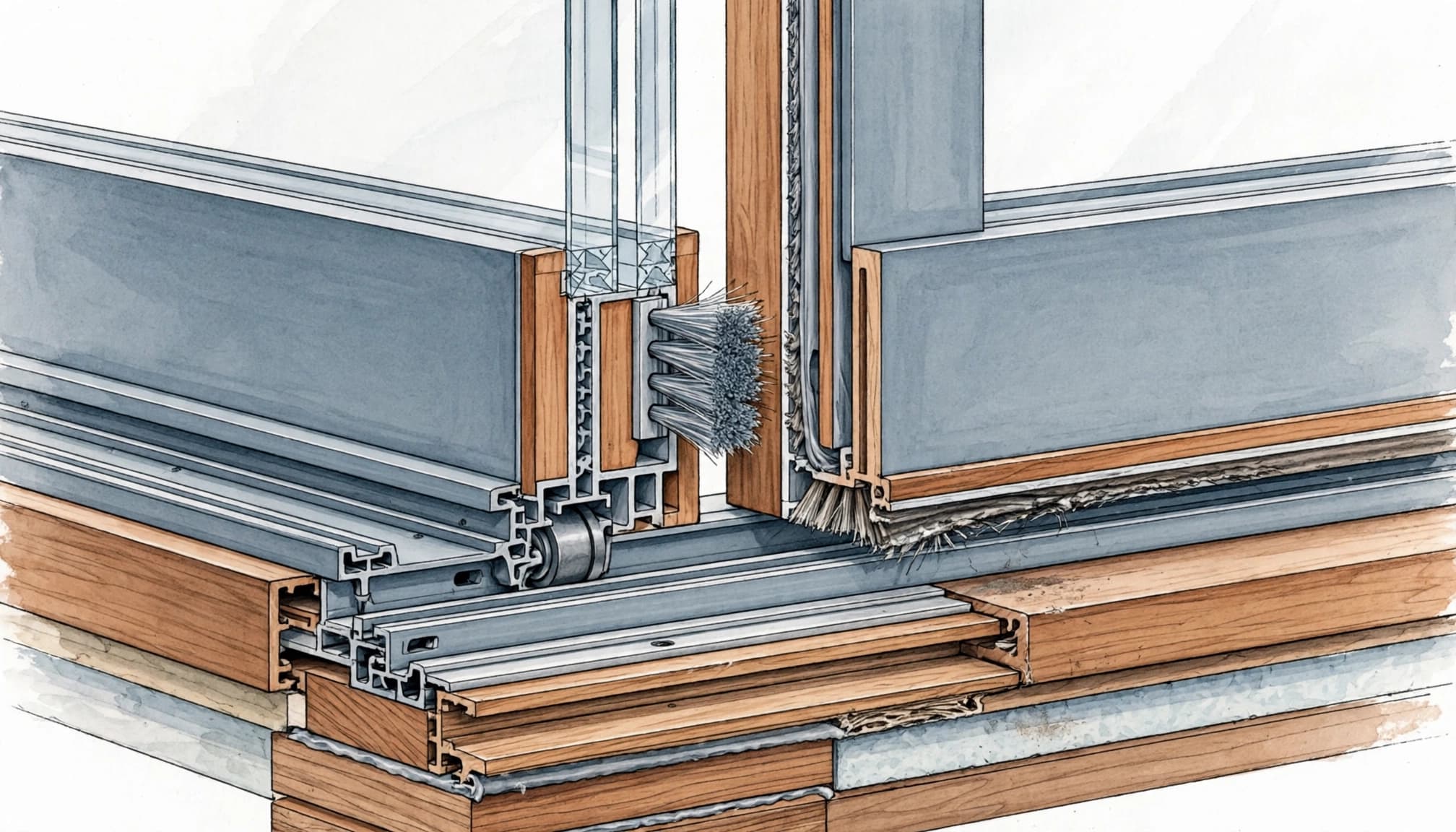
Weatherstripping helps seal the spaces around a moving panel while allowing it to slide. With the door open, look for sections that are flattened, torn, missing, or pulling away from their mounting channel.
Pay attention to the vertical edge where the moving and fixed panels meet, as well as the surfaces the door contacts when closed. A seal may look intact in one spot and be worn in another.
Match the existing seal
Sliding doors use different weatherstrip shapes and attachment methods. If a section needs replacement, match its profile and how it attaches rather than choosing a product based on color alone.
Thicker material isn't automatically a better choice. A seal that presses too hard can make the panel harder to move and put extra wear on the rollers. Our guide to patio door weatherstripping replacement explains what to look for when matching a seal.
Look around the frame, too
Inspect the joint between the stationary door frame and the surrounding wall. Visible gaps or deteriorated material may point to a separate issue outside the moving panel's weatherstrip.
If you see water damage, a shifting frame, or a gap that appears to be growing, have a door professional assess the opening. Those conditions deserve attention beyond a quick attempt to cover the gap.
Clean the Track and Assess Door Movement
A dirty track can keep a panel from moving smoothly or closing as it should. Before assuming that the weatherstripping has failed, remove loose debris from the lower channel and observe how the door travels.
Vacuum the track, including its corners, then use a damp cloth or soft brush to remove remaining dirt. Avoid heavy oil: it can trap grit and make the door harder to move. Our sliding glass door maintenance guide covers routine care for the track and hardware.
Keep drainage openings clear
Sliding door tracks often have openings intended to let water drain. Don't block them with filler, tape, or a strip of material in an attempt to seal every visible opening.
If water pools in the track or enters the room, address that issue alongside the noise concern. Drainage problems and worn seals can occur near the same area, but they don't necessarily have the same cause.
Recognize a mechanical problem
After cleaning, open and close the door again. Grinding, dragging, jumping, or a panel that needs to be lifted can point to worn rollers, a damaged track, or an alignment problem.
A heavy panel doesn't automatically mean the seal needs replacement. If cleaning doesn't improve its movement, a sliding-door technician can assess the rollers and frame. Avoid removing a heavy glass panel yourself unless you have the equipment and experience to handle it safely.
Consider the Glass and the Whole Door
If the panel closes properly and the seals are in good condition, the glass and door assembly may still be part of the path for traffic noise. Look at the entire opening before spending money on another seal or handle.
A door specialist can discuss an interior secondary panel or a replacement door designed with noise control in mind. Each option changes the opening differently, so consider how you'll operate the door and what access you need to the patio.
Compare changes to the opening
An interior panel adds another element inside the existing opening. Consider where it would sit, how it would be opened, and whether it would interfere with the handle or everyday access.
A replacement door is a larger project. It can make sense when the existing frame, panel, and hardware need substantial work, but a sound door with one damaged seal may call for a narrower repair.
Keep expectations practical
The glass is only one part of the assembly. The frame, movable panel, seals, and installation all matter when deciding how to address outside sound.
Ask a professional to describe the work included in a proposal, including what happens to the existing trim and door opening. That makes it easier to compare a targeted repair with a complete replacement.
Use Curtains Without Blocking the Door
Heavy curtains can make a room feel softer and give you another way to adjust the space when traffic is distracting. They also help with light control and privacy, which may be useful if the door faces a busy street.
Choose curtains that can be moved fully aside when you need to use the door. Keep fabric clear of the track, latch, and walking path so it doesn't catch in the panel or create a trip hazard.
Curtains affect the room as well as the window area. Try closing them during a typical period of traffic and decide whether the change is useful for your space. Keep the door accessible, especially if it forms part of an emergency exit.
Decide When to Repair or Replace
The right choice depends on the condition of the door and where you hear the noise. Begin with cleaning and inspection, then address a clearly damaged seal or mechanical part before considering a larger project.
A focused repair may be appropriate when the frame is sound and the issue is limited to a worn component. A technician can also identify whether a panel that won't close evenly needs attention at the rollers or latch.
A broader assessment makes sense when you find several problems together, such as a damaged frame, recurring water entry, and a door that no longer operates smoothly. Our guide to sliding glass door leaks covers signs that water is entering around the opening.
Don't seal over a drainage route or damaged frame to hide a symptom. If the glass is cracked, the track is bent, or the panel is unstable, stop using the door and arrange professional help.
Choose a Handle for Grip, Not Soundproofing
Once the door moves and latches properly, you may still find that the original pull is shallow or awkward. A sliding glass door replacement handle can make a compatible door easier to hold and control during everyday use.
Our Luuv Handle fits over compatible existing hardware and leaves the original lock and latch in place. It's made in the USA, is a patented product until 2037, and requires no alteration to the door and no drilling.
Find the right fit and finish
Our retrofit is designed for a door plate measuring 7.25 inches by 1 inch. Measure the outside of your existing plate and consider clearance around any screen door. Our sliding door hardware fit guide covers compatibility and other parts you may encounter.
We offer white and bronze finishes, with interior and exterior options. Listed prices are $22 for an interior handle, $30 for an exterior handle, and $50 for an inside-and-outside bundle.
Keep the repair priorities separate
The retrofit adds a more substantial handhold over a working plate. It doesn't replace a broken lock, repair rollers, or seal gaps around the glass.
Address those issues first, then consider the grip as a comfort upgrade. Don't force a retrofit onto hardware that is bent, brittle, or badly corroded.
Frequently Asked Questions
Does weatherstripping stop all traffic noise?
Weatherstripping addresses gaps around the movable door panel, but traffic sound can reach a room through the glass and other parts of the opening. Inspect the existing seal and match any replacement to the door rather than expecting one strip to solve every noise concern.
Can I seal the bottom track completely?
Keep the door's intended drainage openings clear. Covering the entire track can interfere with water drainage and may also prevent the panel from moving correctly. Clean the channel and look for damaged seals instead.
Will a new handle make the room quieter?
A handle's job is to give you a secure, comfortable grip. Our retrofit handle doesn't replace the door's weatherstripping or change its glass. If traffic noise is your concern, inspect those parts of the opening separately.
When should I call a sliding-door professional?
Call for help when the panel grinds after cleaning, sits unevenly, or won't close and latch safely. Cracked glass, a bent track, water damage, and a loose or shifting frame also warrant professional attention.
Start With the Door's Condition
Good sliding door noise reduction begins with a clear picture of the opening. Inspect the seals, clean the track, and notice whether the panel closes evenly before choosing a repair.
If the door works well but the grip feels awkward, our compatible retrofit handle is a separate way to improve daily use. Addressing each problem at its source helps you choose the right work for your door.